Work in process inventory refers to the materials and labor that have been started but not yet completed in the production process.
It's a crucial component of a company's inventory management system.
Work in process inventory is typically valued at the average cost of production, which is calculated by dividing the total cost of production by the number of units in process.
This valuation method ensures that the work in process inventory is accurately reflected in the company's financial statements.
What Is Work in Process
Work in process (WIP) inventory refers to partially-completed goods within any production round. Businesses who sell highly-customized products are more likely to have WIP inventory than businesses who purchase final products from a supplier.
WIP is an accounting and financial term that refers to the value of goods and products that are in the process of being manufactured or assembled but are not yet completed. This concept is particularly important in industries where goods go through multiple stages of production before reaching the final finished goods stage.
Related reading: Cost of Goods Available for Sale

WIP represents the total costs incurred in the manufacturing process, encompassing direct materials, direct labor, and manufacturing overhead. As such, it serves as a transitional category within the inventory accounts on a company's balance sheet.
WIP is reported as an asset on the balance sheet, including the accumulated costs of direct materials, direct labor, and manufacturing overhead for products that are in various stages of completion but not yet finished. This increases the total assets of the company.
The costs associated with WIP are not recognized as expenses until the goods are completed and transferred to the finished goods inventory. This delay in expense recognition aligns with the matching principle in accounting, where costs are matched with the revenue they help generate.
Monitoring changes in the WIP account over time can provide insights into a company's production efficiency. A substantial increase in WIP might indicate an increase in production activities, while a decrease could suggest that products are moving through the production process and being completed.
The following list illustrates the different ways WIP is used in a company's financial analysis:
- Asset Value: WIP represents the investment made in the production process and serves as an indicator of the value tied up in goods that are still in the manufacturing phase.
- Revenue Recognition: The costs associated with WIP are not recognized as expenses until the goods are completed and transferred to the finished goods inventory.
- Insight into Production Efficiency: Monitoring changes in the WIP account over time can provide insights into a company's production efficiency.
- Financial Ratios and Analysis: Analysts and stakeholders often use information about WIP to assess a company's financial health and operational efficiency.
Accounting Treatment

Accounting Treatment is a crucial aspect of managing work in process inventory. Companies may attempt to complete all work in process items for simpler financial statements.
The goal is to eliminate pending products and only report completed goods. When these goods are completed, they are transferred to inventory to be treated as a cost of goods sold when purchased by a customer.
Work in progress assets are often larger endeavors that require capitalization. This is the case when the work in progress investment is not an inventory item.
For example, if a company builds an entirely new headquarters office, that project is considered work in progress to be capitalized when it is completed.
Readers also liked: Cost of Goods Sold
Calculating Work in Process
Calculating Work in Process is a crucial step in managing your inventory. You need to have three variables: Beginning Work in Process Inventory, Production Costs, and Finished Goods.
The Beginning Work in Process Inventory is the previous quarter's ending work in process inventory, which carries over as the next quarter's beginning work in process inventory.

Production Costs are a sum of your raw materials used, labor costs, and any overhead such as machine operating costs.
Finished Goods is your total cost of goods manufactured (COGM), which is calculated by adding raw materials, direct labor, overhead, and beginning inventory work in process inventory, then subtracting ending work in process inventory.
The formula for calculating WIP inventory is (Beginning WIP Inventory + Production Costs) – Finished Goods = Ending WIP Inventory.
Here's an example of how to use this formula: Let's say you have a beginning WIP inventory of $50,000, production costs of $75,000, and a finished goods cost of $20,000. Plugging these numbers into the formula, you get: $50,000 + $75,000 – $20,000 = $105,000 (your ending WIP inventory).
If this caught your attention, see: Ending Inventory
Importance and Role
Work in process (WIP) inventory plays a crucial role in the supply chain, and it's essential to understand its importance. WIP inventory is considered an asset on the balance sheet, but it's best practice to hold as little of it as possible.
An excess of WIP inventory can be a symptom of congestion within the supply chain, which can lead to increased operating costs and reduced productivity. You must store WIP inventory somewhere, and holding unsellable inventory for an extended period will increase inventory carry costs and drag down profitability.
WIP inventory represents capital tied up in raw materials and overhead costs, which means you're not putting your capital back to work for you in the form of finished (sellable) goods. Unfinished products are at higher risk for loss or damage in the process.
WIP supports cost control and production planning by providing real-time visibility into production processes. This allows better resource allocation, identifies cost drivers, facilitates just-in-time production, optimizes scheduling, and ensures quality control.
By calculating WIP inventory, you can make informed decisions around production processes and reduce excess inventory. This is key for businesses that want to maintain a streamlined supply chain and increase operational efficiency.
Here are some ways WIP inventory can be leveraged as an asset rather than a liability:
- Free up storage space for finished goods that are ready to create revenue.
- Put your capital back to work for you in the form of finished (sellable) goods.
- Reduce the risk of loss or damage to unfinished products.
Tracking and Prevention
Tracking and preventing work in process (WIP) inventory buildup requires a combination of accurate forecasting and effective inventory management. To achieve this, work closely with suppliers for the most accurate projections of lead times possible.
Implementing lean manufacturing principles, such as Just-in-Time (JIT) and Kanban, can also help improve inventory management. JIT ensures inventory is ordered and received only when needed for production, minimizing excess inventory and reducing inventory costs.
Collaborating with suppliers and using demand-sensing technology can increase forecasting accuracy. By sharing data and insights with suppliers, businesses can develop more precise demand forecasts, reducing the risk of overstocking or stockouts.
To track WIP inventory accurately, consider using Time and Materials Tracking, Job Costing, or Counting Physical Inventory. Time and Materials Tracking involves tracking hours worked and materials used to calculate project costs accurately.
For your interest: Bill of Materials Odoo
Prevent Buildup
Having low WIP inventory levels is ideal, as it can lead to lower costs and improved productivity.

To prevent a buildup of WIP inventory, it's essential to work closely with suppliers for accurate projections of lead times.
Accurate inventory cycle counts are also crucial, and an integrated Warehouse Management System (WMS) can provide real-time inventory counts.
Small to mid-size businesses can access enterprise-grade inventory management by outsourcing fulfillment to a 3PL or 4PL.
Implementing lean manufacturing principles, such as Just-in-Time (JIT) and Kanban, can improve inventory management and minimize excess inventory.
Collaborating with suppliers and using demand-sensing technology can increase forecasting accuracy and reduce the risk of overstocking or stockouts.
Here are some strategies to prevent WIP inventory buildup:
- Work closely with suppliers to get accurate projections of lead times.
- Use an integrated Warehouse Management System (WMS) for accurate, real-time inventory counts.
- Implement lean manufacturing principles like Just-in-Time (JIT) and Kanban.
- Collaborate with suppliers using demand-sensing technology.
How to Track
Tracking work in process inventory accurately is crucial for project success. You can use time and materials tracking to calculate project costs accurately, especially for projects billed on time and materials.
Time-tracking software and inventory management systems can help catch this data in real time, giving visibility into WIP inventory levels and project expenses. This can be a huge time-saver and help you stay on top of project costs.
Worth a look: Materials Management

Regularly counting and checking materials and equipment at project sites or warehouses is also a good idea. This helps spot any discrepancies or potential issues with the inventory, but it's a time-consuming process.
You can assign costs to specific projects or tasks based on the resources used, which is known as job costing. This tracks direct costs like materials and labor and indirect costs like overhead expenses.
Here are some methods to track work in process inventory:
- Time and Materials Tracking
- Job Costing
- Count Physical Inventory
Financial Aspects
Work in process assets may be treated as short-term or long-term assets, depending on the project's duration and the company's accounting treatment.
The nature of work in process may be slightly different from work in progress, with work in process referring to items with quicker turnover and work in progress taking years to complete.
Work in progress assets are usually treated as long-term assets because they may take years to complete and the financial benefits may not be fully recognized within the next year.

Companies may attempt to complete all work in process items to eliminate pending products and report only completed goods on their financial statements.
Work in progress assets require capitalization if the work in progress investment is not an inventory item, and may incur depreciation expense over its useful life.
Construction companies may use specific work in progress accounts, such as construction in progress or construction work in progress, to indicate similar types of work.
To calculate WIP inventory, you need to know the beginning WIP inventory, production costs, and finished goods, and use the formula: beginning WIP inventory + production costs – finished goods.
Works in process (WIP) is included in the inventory line item as an asset on your balance sheet, along with raw materials and finished goods.
Industry and Application
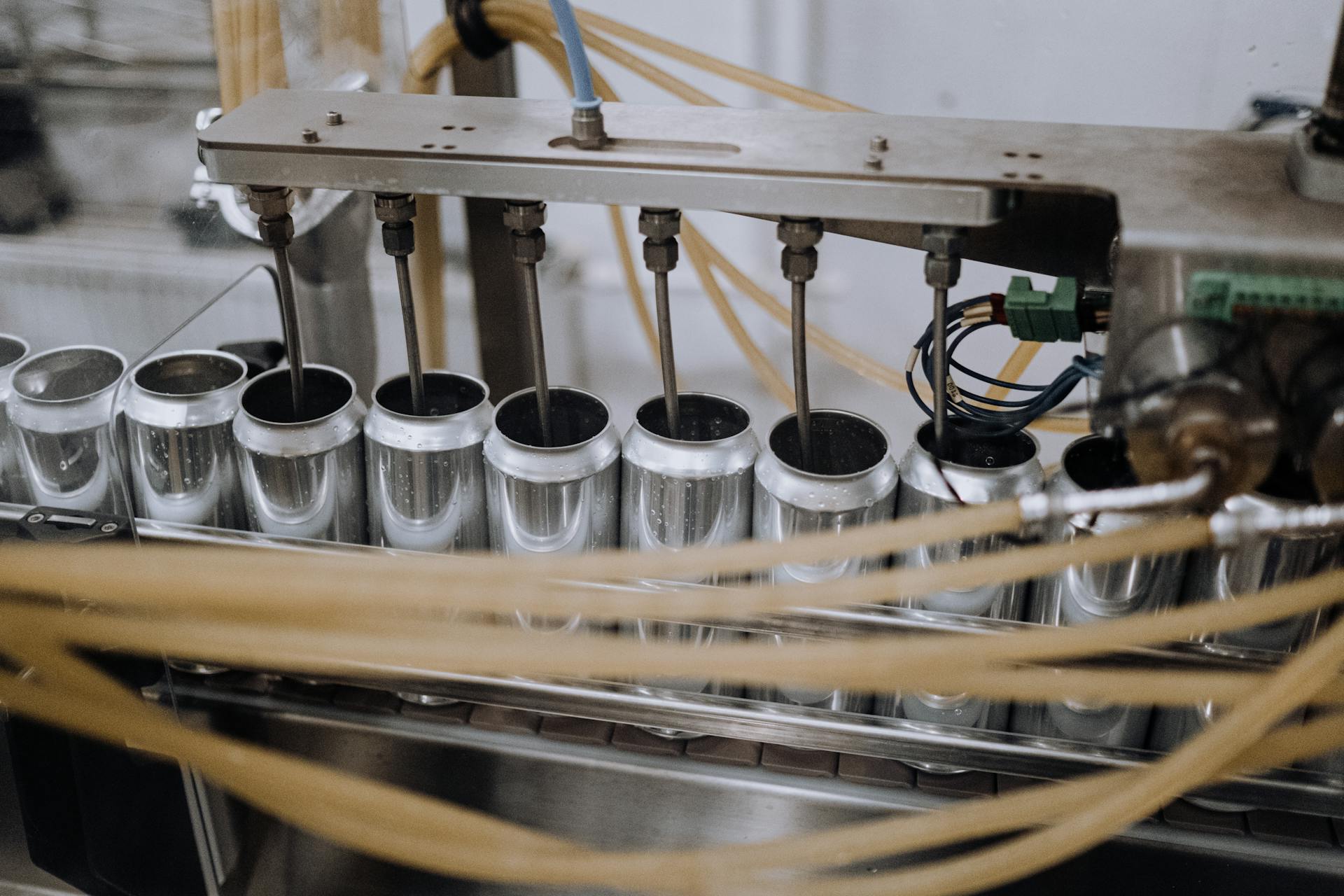
Work in process is often used in manufacturing, where standardization and repetition are key. This industry relies heavily on partially completed goods, making work in process a valuable tool.
Work in process is also tied to construction and other large build industries. This is because these industries often use a billing scheme called progress billings, where companies get paid based on the percentage of completion of the project.
In these industries, work in process helps companies track their progress and get paid accordingly.
Key Differences
Many companies use both terms interchangeably, but there are subtle differences between work in process and work in progress.
In accounting or financial reporting, work in process specifically refers to the value of partially completed goods or products within the production process.
In industries like construction, engineering, or software development, projects often involve complex processes and multiple stages of completion, making them refer to as "work in progress".
The costs linked with incomplete goods in the manufacturing process, including raw materials, direct labor, and overhead expenses, are typically associated with work in progress.
Planning, designing, testing, and reworking stages can take weeks, months, or even years to finish in these time-intensive efforts.
Industries

Work in process is a valuable tool for industries where standardization and repetition are key. Manufacturing is a prime example, where partially completed goods are a norm.
Work in progress is often tied to construction and other large build industries. This is because these industries involve complex projects that require progress billings, where companies get paid based on the percentage of completion.
In manufacturing and construction, work in process helps companies manage their production and build processes more efficiently.
Nutshell and Overview
Work in process is an asset account used to report inventory items not yet completed. This account is crucial for companies that manufacture goods, as it helps track the value of partially finished products.
A company has started taking raw materials and converting them to a finished product to sell. Work in process is used to report manufactured, standardized goods.
It's a way to keep track of the inventory value that's in progress, but not yet ready for sale.
Frequently Asked Questions
Is WIP good or bad?
Too much WIP can be bad for efficiency and throughput, as it leads to costly context switching. Understanding the optimal WIP level is key to maximizing productivity
Featured Images: pexels.com