A Chamber of Commerce is a local business organization that aims to promote and support the growth of businesses in its community. It's usually made up of business owners, entrepreneurs, and other stakeholders who come together to address common issues and opportunities.
Chambers of Commerce are often established in cities, towns, and even rural areas, and they can be a valuable resource for small business owners who are just starting out. By joining a Chamber, business owners can tap into a network of experienced professionals who can offer advice, guidance, and support.
One of the key roles of a Chamber of Commerce is to provide a voice for local businesses in the community. By advocating for policies and initiatives that support business growth, Chambers can help create a more favorable business environment.
Check this out: Digital Commerce Growth Strategy
What is a Chamber of Commerce?
A chamber of commerce is an organization of businesses that work together to advance their collective interests and the community at large. They've existed in the US for over two centuries, with many established before the jurisdictions they represent.
Business owners in towns and cities form these local societies voluntarily to advocate on behalf of the community, economic prosperity, and business interests. They're not part of the government, but work closely with elected and appointed officials.
Chambers of commerce focus on five primary goals: building attractive communities, promoting them, ensuring future prosperity, representing the employer community, and reducing transactional friction. They're all about creating a pro-business climate and thriving employers.
Most chambers are led by private-sector employers, self-funded, and organized around boards of volunteers. They're independent and share a common ambition for sustained prosperity in their community or region.
Local businesses are voluntary paying members of a chamber, and the membership elects a board of directors to set policy and guide the organization. The board then hires a chief executive and staff to run the chamber.
There are over 7,500 chambers of commerce in the United States, each working to advance their community's interests and economic prosperity.
A different take: Union of Chambers and Commodity Exchanges of Turkey
Types of Chambers
A Chamber of Commerce is a diverse organization that comes in many forms.
One type of Chamber is a Local Chamber, which serves a specific geographic area, such as a city or town. These Chambers are often the most well-known and accessible to the public.
Another type is a Regional Chamber, which covers a larger area, such as a county or group of cities. Regional Chambers often have more resources and can provide more comprehensive services.
Chambers can also be categorized by their focus, such as a Trade Chamber, which focuses on international trade and commerce.
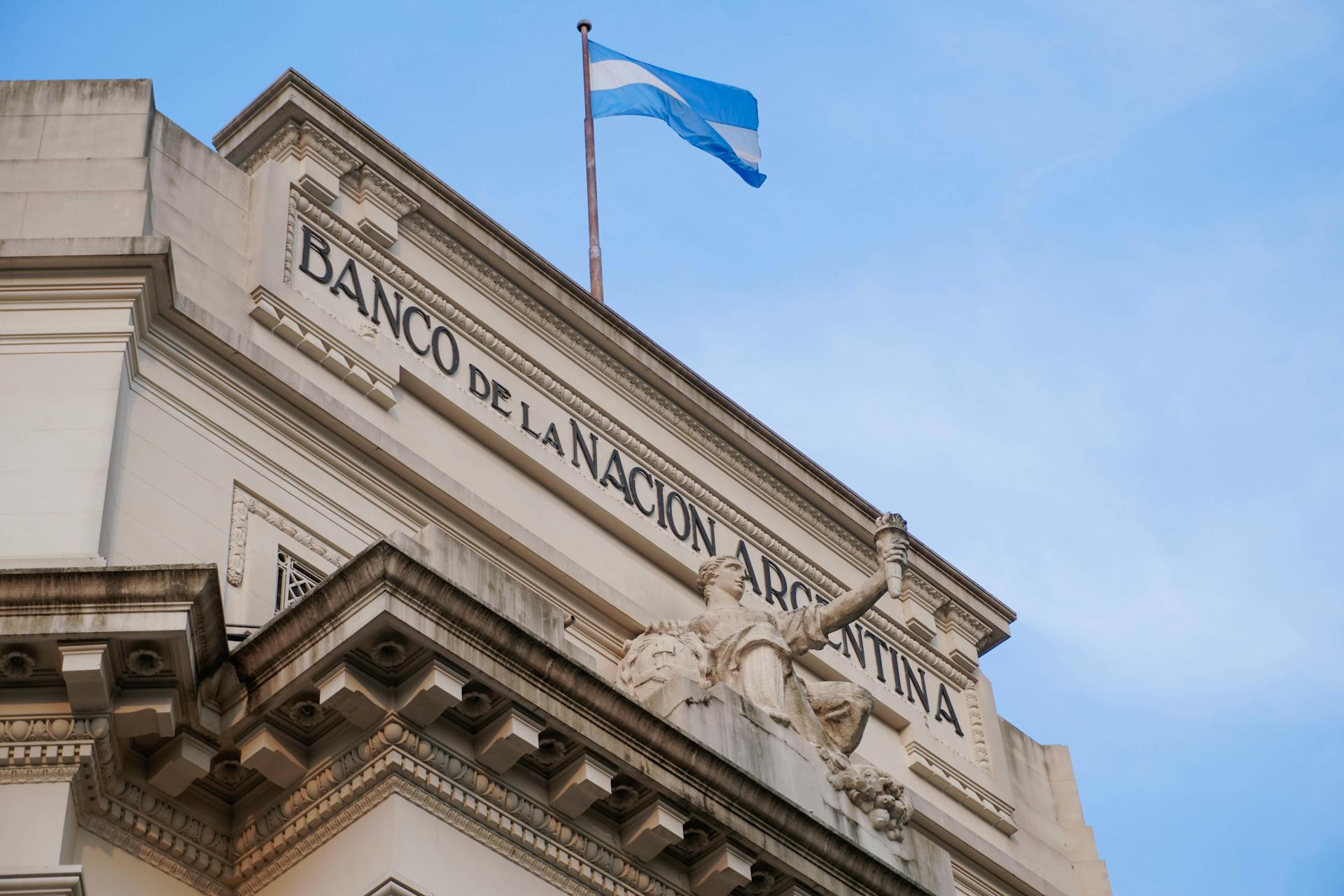
A fresh viewpoint: Banco Chambers
City
City chambers of commerce have a long history in the US. The Charleston Chamber of Commerce is one of the oldest, dating back to colonial 1773.
The Boston Tea Party was organized by Boston's Chamber of Commerce in 1773. This tax protest was a pivotal moment in American history.
In 2005, there were 2,800 chambers of commerce in the United States. This number includes both city and regional chambers.
Curious to learn more? Check out: John T. Chambers
City chambers often serve as a voice for local businesses, advocating for their interests. They can also provide valuable resources and support to entrepreneurs and small business owners.
The Association for Chamber of Commerce Executives estimates that there are thousands more city chambers of commerce in the US, established as strictly volunteer entities.
State
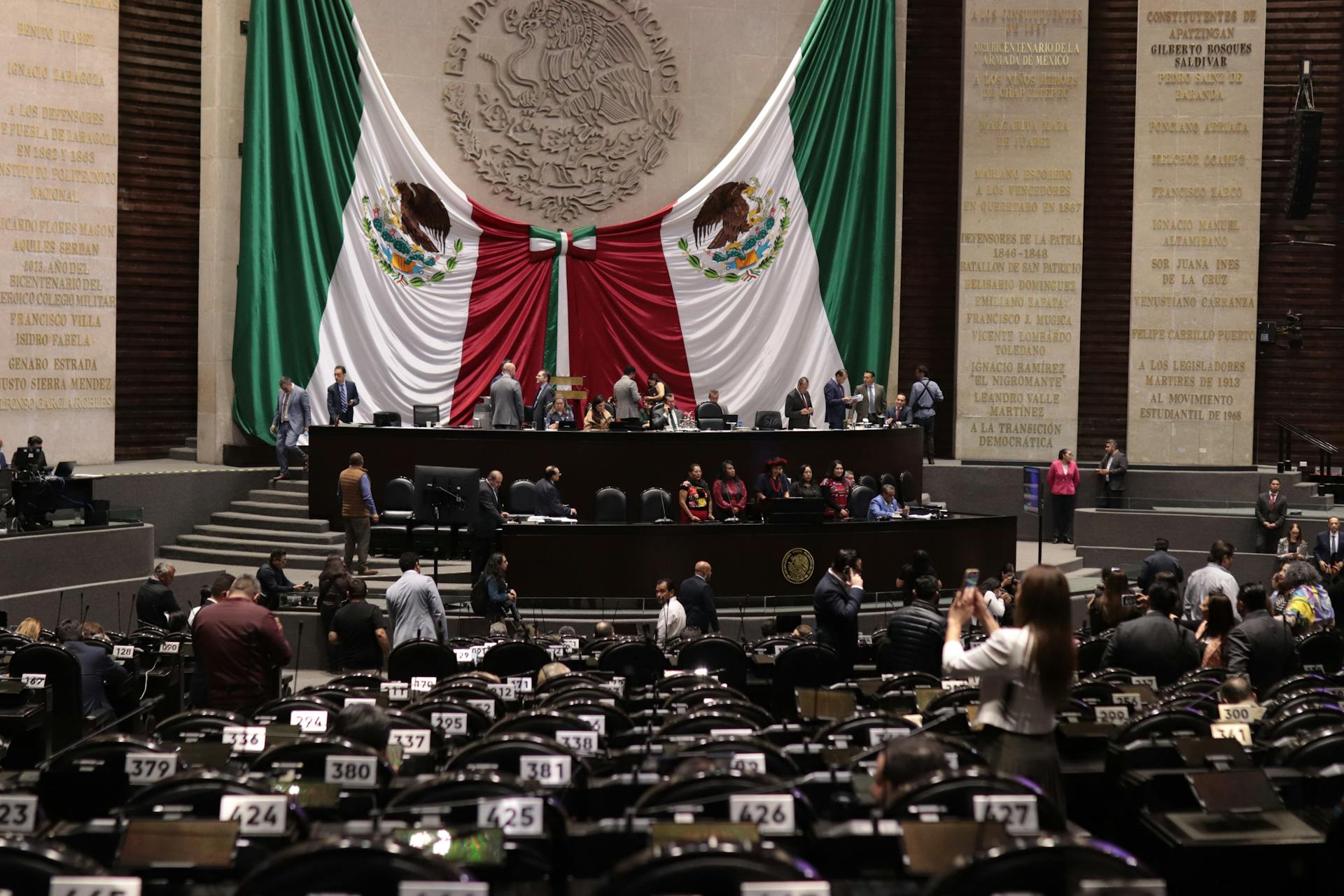
State chambers of commerce play a unique role in representing the business community at the state level. They work closely with government officials, including governors, state representatives, and US Senators, to shape legislation that impacts businesses.
State chambers are different from local and regional chambers, which focus on local issues. They have a broader scope, addressing state and federal issues that affect the business community.
State chambers have a long history, dating back to the 1590s when they were first introduced. They have been advocating for businesses ever since.
State chambers serve as a respected voice for the entire business community, providing a third-party perspective on important legislation. They work to create a better business environment, which benefits everyone involved.
Here are some key characteristics of state chambers of commerce:
- They work on state and federal issues.
- They have a long history, dating back to the 1590s.
- They work closely with government officials.
National
National chambers of commerce play a vital role in addressing the domestic need for information, providing services to their members at no fee or cost in most cases.
These services can be a game-changer for small businesses and entrepreneurs, offering them a platform to connect with other professionals and access valuable resources.
Some national chambers also offer memberships to other associations, such as the NRA, at a very low fee, providing even more benefits to their members.
This can be a great way for businesses to expand their network and stay up-to-date with industry trends, all while supporting a good cause.
Structure
Chambers of commerce have varying business models and organizational missions. Some chambers may offer services that compete with local businesses.
Larger chambers tend to rely less on membership dues revenue than smaller ones. About one-third of US chambers include economic development corporations and/or tourism and visitors bureaus.
Chambers often have multiple revenue sources beyond membership dues. Event income is the most common source of revenue for many chambers.
Recommended read: E Commerce Revenue Models
Although chambers are non-profit entities under federal tax law, they can engage in business activities. These activities, known as unrelated business income, are subject to business income taxes.
Many chambers establish charitable foundations, known as 501(c)(3) corporations, to support specific parts of their agenda. The rules for these foundations differ from those for 501(c)(6) organizations.
The largest metro or state chambers can employ up to 100 people. Most chambers, however, have staffs of fewer than five and budgets under half a million dollars.
Chamber professionals perform a range of tasks, including communications, finance, marketing, and event planning. Some chambers specialize in activities like economic development, tourism, research, and advocacy.
For more insights, see: An Organization Engaged in Commercial Industrial or Professional Activities
Membership
Membership in a chamber of commerce is a private, volunteer model, where companies are not obligated to become members. This means businesses can choose to join or not.
Membership rolls can range from a few dozen firms to over 20,000, so there's no typical chamber of commerce. In most cases, it's the company that becomes a member, not an individual.
A company can join multiple chambers to advance their market or policy interests. Many mid-size to large firms do this, especially if they have locations in different areas.
Dues amounts are typically determined by the size of the member company, such as employee count or annual revenue. Some chambers have adopted pay-as-you-go or funding models based on specific categories or services provided.
Here's a breakdown of the factors that can influence dues amounts:
By joining a chamber of commerce, you can receive access to discounts on goods and services, such as shipping, office supplies, and software. Members may also offer discounts and special rates to other members.
Networking and Community
Joining a chamber of commerce can be a great way to expand your business network and build relationships with local business owners. You'll meet other members of your community and form business relationships that can lead to valuable partnerships.
City Chambers work on the local level to bring the business community together, which can result in a business-to-business exchange. This is a great way to connect with other local businesses and find new opportunities.
Many business owners join their local chamber of commerce for networking opportunities, and it's a great way to have a network to turn to for assistance if your business ever runs into trouble.
You might enjoy: What Is a Company Structure in Business
Models and Characteristics
Chambers of commerce come in all shapes and sizes, with membership ranging from a few dozen to over 800,000, as seen in the Paris Île-de-France Regional Chamber of Commerce and Industry.
Some chambers are voluntary, while others are required by law, and their funding can come from a variety of sources, including local government and non-profit organizations.
Chambers can be quite localized, operating in individual neighborhoods within a city or town, or they can be international, with some even joining global bodies like the International Chamber of Commerce (ICC) and Worldchambers.
Curious to learn more? Check out: Bank of Credit and Commerce International
Multilateral
Multilateral models are formed of companies and sometimes individuals from different countries with a common business interest towards or in a specific country.
These chambers can be active in representing the interests of local and foreign investors in that specific country, achieved through promotion and proactivity regarding the general business environment.
Members of multilateral chambers may benefit from a broad range of activities that enhance the visibility and reputation of their business.
Multilateral chambers of commerce are independent entities strengthening business relations and interactions between all economic players.
Models

Models are the foundation of any successful project, and understanding the different types can make all the difference.
There are three main types of models: static, dynamic, and hybrid. Static models are used for predicting a single point in time, while dynamic models can forecast multiple points in time.
A static model is like trying to guess the weather on a specific day, whereas a dynamic model is like predicting the weather for an entire week.
Dynamic models are more complex and require more data, but they provide more accurate results. Hybrid models combine the strengths of both static and dynamic models to create a more robust forecasting tool.
One example of a hybrid model is the combination of a static model for short-term forecasting and a dynamic model for long-term forecasting.
A fresh viewpoint: Types of E-commerce
Characteristics
Chambers of commerce can vary significantly in size, with some having as few as a few dozen members and others boasting over 800,000 members, like the Paris Île-de-France Regional Chamber of Commerce and Industry.
In the United States, chambers of commerce operate differently than organizations like the Better Business Bureau, where membership is either voluntary or required by law.
Some chambers are partially funded by local government, while others are non-profit, and a few are a combination of both.
Chambers of commerce can be part of larger organizations, such as state, national, or international bodies, like the United States Chamber of Commerce, the British Chambers of Commerce, and Eurochambres.
Compulsory or Public-Law Chambers
Compulsory or public-law chambers are a type of chamber of commerce where enterprises of certain sizes, types, or sectors are obliged to become members.
In countries like France, Germany, Italy, Spain, Austria, Japan, and Indonesia, this model is common. The main tasks of these chambers include foreign trade promotion, vocational training, regional economic development, and general services to their members.
The state gives these chambers responsibilities of public administration in various fields, which they exercise in order management. This means they have a significant role in governing industries and commerce.
In Germany, the chambers of commerce and industry, as well as the chambers of skilled crafts, are public statutory bodies with self-administration under the state ministry of economy. Enterprises are members by law according to the chamber act of 1956.
The biggest German chamber of commerce, IHK Munich, has an impressive 350,000 member companies. Germany also has compulsory chambers for "free occupations" like architects, dentists, engineers, lawyers, notaries, physicians, and pharmacists.
Frequently Asked Questions
What are the disadvantages of chambers of commerce?
Chambers of commerce may not be suitable for all businesses, particularly those without a physical presence or local target market, and can also come with upfront costs and time commitments
Featured Images: pexels.com