E-commerce has come a long way since its inception, and today we have various types of e-commerce that cater to different needs and purposes.
Business-to-Business (B2B) e-commerce is a type of e-commerce where businesses sell products or services to other businesses, often in bulk. This type of e-commerce is common in industries such as manufacturing and wholesale.
In B2B e-commerce, companies can automate their purchasing processes, reduce costs, and improve supply chain management. For instance, a manufacturer can purchase raw materials from a supplier online, streamlining their operations and saving time.
Consumer-to-Consumer (C2C) e-commerce is another type, where individuals sell products or services to other individuals. This type of e-commerce is popular on online marketplaces like eBay and Craigslist.
In C2C e-commerce, individuals can buy and sell goods and services directly with each other, often at a lower cost than traditional retail. For example, a person can sell their used electronics on eBay, reaching a wider audience.
Suggestion: E Commerce Revenue Models
B2B E Commerce
B2B e-commerce is a type of e-commerce where transactions happen between two businesses, often involving larger quantities and longer-term relationships compared to B2C transactions.
Around 80% of total transactions are comprised of B2B transactions, including sharing of information, commercial negotiations, and distribution of goods.
Businesses use B2B e-commerce to source products in bulk, often directly from manufacturers, and can browse suppliers, compare prices, and arrange orders for thousands of products.
Alibaba is a global leader in B2B e-commerce, allowing businesses to build strategic relationships with suppliers and streamline the supply chain by connecting them directly to manufacturers and wholesalers.
- Indiamart (Indian B2B marketplace)
- ThomasNet (industrial suppliers)
- Grainger (industrial tools and supplies)
B2B e-commerce enables businesses to reduce costs, speed up procurement, and exercise real-time control over their stock-in-transit and distribution systems.
B2C
B2C is the most common type of e-commerce, where businesses sell products or services directly to consumers. This model allows businesses to reach a broad audience of consumers.
Amazon is a prime example of B2C e-commerce, offering millions of products across various categories and making purchases directly from their platform. Consumers can browse and make purchases at their convenience.
On a similar theme: Online Banking Is an Example of What Type of E-commerce

B2C transactions involve business firms and their customers, and are facilitated by e-business, which enables activities like marketing, promotion, and delivery to be carried out at a lower cost and faster pace.
Companies can use online surveys to find out who is buying what and how satisfied their customers are, and customers can use call centres to make inquiries and lodge complaints 24 hours a day, seven days a week.
Examples of B2C ecommerce include meal kit services like HelloFresh and online furniture retailers like Wayfair. These businesses offer a direct-to-consumer experience, with a focus on convenience and variety.
Here are some examples of B2C e-commerce businesses:
- Myntra (fashion)
- Flipkart (electronics, home goods)
- Zappos (footwear)
- HelloFresh (meal kits)
- Wayfair (online furniture)
B2C ecommerce allows businesses to earn less on average per sale, but the higher sales volume typically makes up for it. The shorter decision-making timeframe for B2C transactions is a key advantage for businesses.
C2C Commerce
C2C Commerce involves transactions between individual consumers, where people sell their products or services directly to each other. This type of e-commerce is facilitated by third-party platforms that enable users to connect with potential buyers.
Platforms like eBay, OLX, and Quikr provide a marketplace for consumers to buy and sell goods and services. These platforms also offer payment gateways and customer support to make the process smoother for both buyers and sellers.
eBay is a leading C2C platform where individuals can auction off or sell products directly to other consumers. Whether it's a vintage collectible or second-hand electronics, eBay connects consumers in a peer-to-peer marketplace.
The payment intermediary technology has emerged to support C2C activities, such as PayPal, which holds funds for sellers until the goods have been shipped and accepted by the buyer.
Some popular C2C platforms include:
- OLX (classified ads and direct sales)
- Poshmark (fashion resale)
- Facebook Marketplace (local buying and selling)
- Avito
- BlaBlaCar
Common Ecommerce Models
There are several common ecommerce models to consider when setting up an online store. One of the most popular models is the B2B (Business-to-Business) model, which involves interactions between businesses. This model is ideal for companies that want to establish partnerships and make deals online.
The B2C (Business-to-Consumer) model is another common ecommerce model, where businesses provide goods and services directly to individual consumers. This model is great for companies that want to save on rent and warehouse spaces.
If this caught your attention, see: Dhl Ecommerce Warehouse
The B2G (Business-to-Government) model involves interactions between businesses and government entities, often through online procurement portals. This model can be complex but can also be profitable due to the government's reliability as a client.
In addition to these models, there's also the C2C (Consumer-to-Consumer) model, where individual consumers buy and sell goods and services to each other. This model is popular on platforms like eBay and Avito.
Here are some of the most common ecommerce models:
The D2C (Direct-to-Consumer) model is a modern and emerging type of ecommerce, where companies attract customers directly to the brand through social media and other channels. This model is popular among companies like Nike, which has withdrawn from the Amazon platform and created its own mobile application.
A different take: Different Types of Insurance Companies
Marketplaces
Marketplaces are platforms where customers and service providers interact, covering a wide range of topics and industries.
Customers post the tasks they need to be done, and service providers offer their price for completing the work.
For example, eTXT copywriting marketplace allows customers to find skilled writers for creating high-quality texts in various formats.
Marketplaces generate revenue by charging a commission when customers transfer money to service providers.
Online Directories

Online directories are websites that list links to other internet resources or online stores. They're a great way for customers to search for specific products or services online, like cosmetic services.
Customers use online directories to find what they're looking for, and the revenue for these directories often comes from providing space for online stores to feature links to their products. This can be a win-win for both parties.
Group Buying Services
Group buying services are platforms where a group of people collectively purchases a large quantity of a product from a seller at wholesale prices.
This allows sellers to expand their customer base and offer discounts, which benefits both parties involved. The service itself earns revenue from selling the rights to access these discounts.
A unique perspective: E-Land Group
Dropshipping and White Label
Dropshipping is a quick-start, low-overhead model that allows you to earn money online without dealing with inventory or shipping merchandise. It's a simple concept, but it's not a guarantee of easy money.
Here's an interesting read: E S a Payments
Some of the caveats to consider include super-thin profit margins, unreliable suppliers with slow shipping, and inconsistent or poor-quality products. You'll need to partner with an outstanding vendor to ensure success in this space, since you're responsible for returns, refunds, and other issues that arise with orders.
The best products for dropshipping offer easy shipping and require limited customer support, such as face masks, office supplies, health and beauty aids, and tech accessories like cell phone cases.
White label merchandise is a model that involves selling products from one or more third-party suppliers under your own business branding, common in cosmetics, personal care, and related industries. This can help your small ecommerce company reduce manufacturing costs while building a name for yourself in the selected sector.
To succeed with white label merchandise, make sure you've done the research to select an in-demand product, otherwise you could end up stuck with items you won't be able to sell or have to heavily discount, significantly affecting your profit margin.
Dropshipping
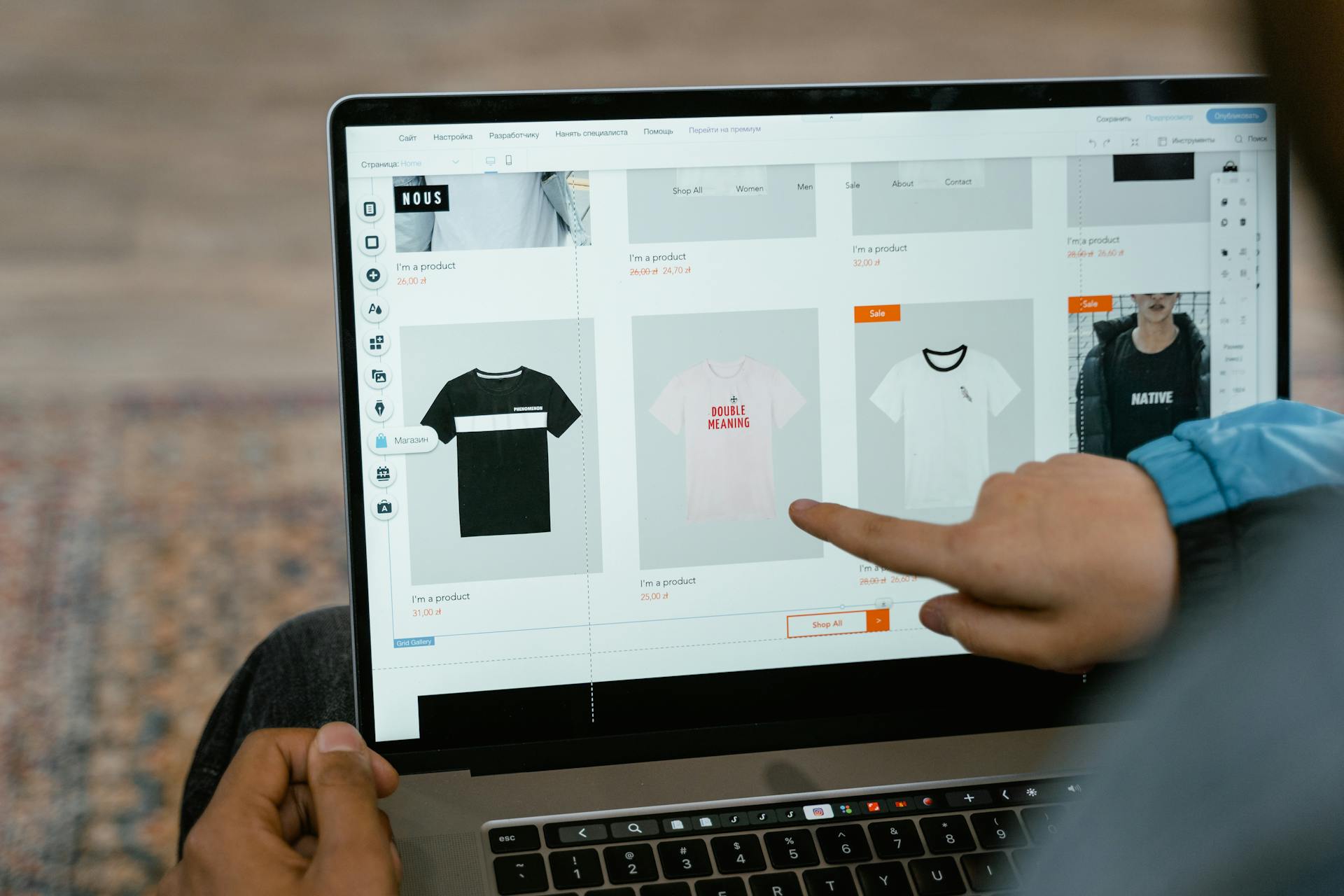
Dropshipping is a low-overhead business model that allows you to earn money online without dealing with inventory or shipping merchandise.
You'll need to partner with an outstanding vendor to ensure success, as you're responsible for returns, refunds, and other issues that arise with orders.
Some of the best products for dropshipping offer easy shipping and require limited customer support.
Common examples include face masks, office supplies, health and beauty aids, and tech accessories like cell phone cases.
Dropshipping isn't a guarantee of easy money, and you should be aware of the caveats, including super-thin profit margins, unreliable suppliers, and inconsistent or poor-quality products.
Here are some examples of products that may not be ideal for dropshipping due to these issues:
For another approach, see: What Shipping Company Does Shein Use
White Label Merchandise
The white label merchandise model can help your small ecommerce company reduce manufacturing costs while building a name for yourself in the selected sector.
Common in cosmetics, personal care, and related industries, white label merchandise involves selling products from one or more third-party suppliers under your own business branding.
Before investing in a white label business model, make sure you've done the research to select an in-demand product, otherwise you could end up stuck with items you won't be able to sell or have to heavily discount, significantly affecting your profit margin.
This model can be a good option if you're looking to get started quickly and don't want to handle production and inventory management yourself.
To ensure success with white label merchandise, select a product that is in demand and has a clear market need, so you can build a loyal customer base and establish your brand's reputation.
A different take: How Does Print on Demand Work with Etsy
Private Label and Subscription
Private label merchandise can be a great way to get your product to market without breaking the bank, as it minimizes start-up and marketing costs.
You can find a manufacturer who will create your product based on your specs and distribute it for sale by B2C businesses or large retailers like Amazon.
Using an on-demand production facility also gives you the freedom to switch to another vendor if you encounter quality or service issues.
Subscription services are another profitable model, with mail order and meal kits like Stitch Fix being popular alternatives to in-person styling services.
By offering a product or service that makes sense for your subscribers to receive at repeated intervals, you can create a predictable stream of income for as long as your customers remain active.
Private Label Merchandise
The private label merchandise model is a great way to bring your product ideas to life without breaking the bank. You find a manufacturer who creates the item based on your specs, and they distribute it for sale by businesses or directly to consumers.
This model minimizes your start-up and marketing costs, freeing you up to focus on new product development if that's your area of expertise. You can also switch to another vendor if you encounter quality or service issues.
Using an on-demand production facility prevents you from spending too much money on products you can't sell. This flexibility is a major advantage of the private label model.
The private label model can work well if you have a solid prototype and a clear understanding of your target market.
On a similar theme: Etsy Business Model
Subscription Service
Subscription services have become a lucrative business, with meal kits expanding rapidly in recent years. Meal kits have been a huge success, and it's easy to see why.
Fashion boxes like Stitch Fix are also popular as an affordable alternative to in-person styling services. They offer a convenient and personalized way for customers to receive new clothes.
You can adopt this business model to offer a product or service that makes sense for your subscribers to receive at repeated intervals. This can create a predictable stream of income for as long as your customers remain active.
Beauty and personal care boxes sell well in the ecommerce space, offering a convenient way for customers to receive new products at home. This type of subscription service can be a great way to generate recurring revenue.
Discover more: Paypal Is a Profitable Growth Stock with New Management
Traditional Retail
Traditional retail is a great way to go if you want control over the quality of the products you sell. You can source items from various suppliers depending on your customer needs.
Operating a traditional retail model requires providing value that your clients can't get anywhere else. Grocery stores like Whole Foods are a good example of this.
To earn the merchandise markup, you need to offer something unique, such as outstanding customer service or access to high-quality products. Big-box stores like Target also excel in this area.
Exclusive app-based coupons and home delivery are just a couple of features that can set your online retail store apart. Drive-by order pickup is another convenient option to consider.
Worth a look: Online Credit Card Account
Types of E-commerce
Types of e-commerce are categorized based on who is buying and who is selling. The most common types are B2B and B2C, which account for around 80% of total transactions.
B2B commerce involves interactions between businesses, such as making deals and establishing partnerships. Dedicated internet platforms are used for B2B negotiations.
A significant advantage of B2C is that companies save on rent for retail and warehouse spaces. This type of e-commerce involves providing goods and services to individual consumers for personal use.
Broaden your view: B2b E Commerce Web Portal
Around 80% of total transactions are comprised of B2B transactions, which include sharing of information, commercial negotiations, and distribution of goods.
C2C commerce consists of transactions taking place between two or more customers. This type of e-commerce is facilitated by third-party platforms that enable users to sell directly to one another.
Some examples of C2C platforms include eBay, OLX, and Quikr. These platforms provide market system security to such transactions, which would otherwise be missing if buyers and sellers interact in the anonymity of one-to-one transactions.
Here are the main types of e-commerce:
- B2B (Business-to-Business)
- B2C (Business-to-Consumer)
- C2C (Consumer-to-Consumer)
Government and Business
Government and Business e-commerce involves transactions between businesses and government agencies. Companies provide goods and services to local, state, or federal governments.
Business to Government (B2G) e-commerce is a key aspect of this, allowing businesses to interact with government agencies in a transparent and efficient manner. Dedicated procurement portals are often used to invite businesses to bid on contracts for services like infrastructure projects, technology upgrades, or military supplies.

SAP Ariba and GovWin are two notable examples of platforms used for government procurement. B2G e-commerce streamlines the process, providing businesses with the opportunity to secure long-term contracts worth millions.
In addition to B2G, Consumer to Government (C2G) e-commerce also plays a significant role. This model enables individuals to pay government-related fees, taxes, or utilities online, making it more convenient for citizens to fulfill civic duties.
Here are some examples of C2G e-commerce platforms:
- Online utility payment portals (electricity, water)
- Tax filing websites (income tax, property tax)
Government
Government agencies are now using e-commerce to streamline interactions with businesses and citizens. This includes online portals for businesses to bid on contracts and for individuals to pay government-related fees.
Companies like SAP Ariba and GovWin are making it easier for businesses to interact with government agencies through online procurement portals. These platforms provide a secure and efficient way for businesses to bid on contracts and access government contracting intelligence.
Governments are also using online portals to allow citizens to pay taxes, renew licenses, and access public services. Online tax filing portals and utility payment portals are becoming increasingly popular, making it convenient for citizens to fulfill their civic duties.
Here are some examples of online portals used by governments:
- SAP Ariba (government procurement)
- GovWin (government contracting intelligence)
- Online utility payment portals (electricity, water)
- Tax filing websites (income tax, property tax)
To Business
As a business owner, you may be wondering what kind of ecommerce enterprise you should start. One option is a Business-to-Business (B2B) enterprise, which sells services and products to other businesses.
B2B businesses often market items that companies need for their own operations, like software-as-a-service companies do. They can also be facilities management providers, offering services like cafeteria and maintenance staffing.
B2B sales take longer than B2C sales, but they're more valuable on average. Big examples of B2B businesses include companies like Dropbox and Sodexo.
Featured Images: pexels.com