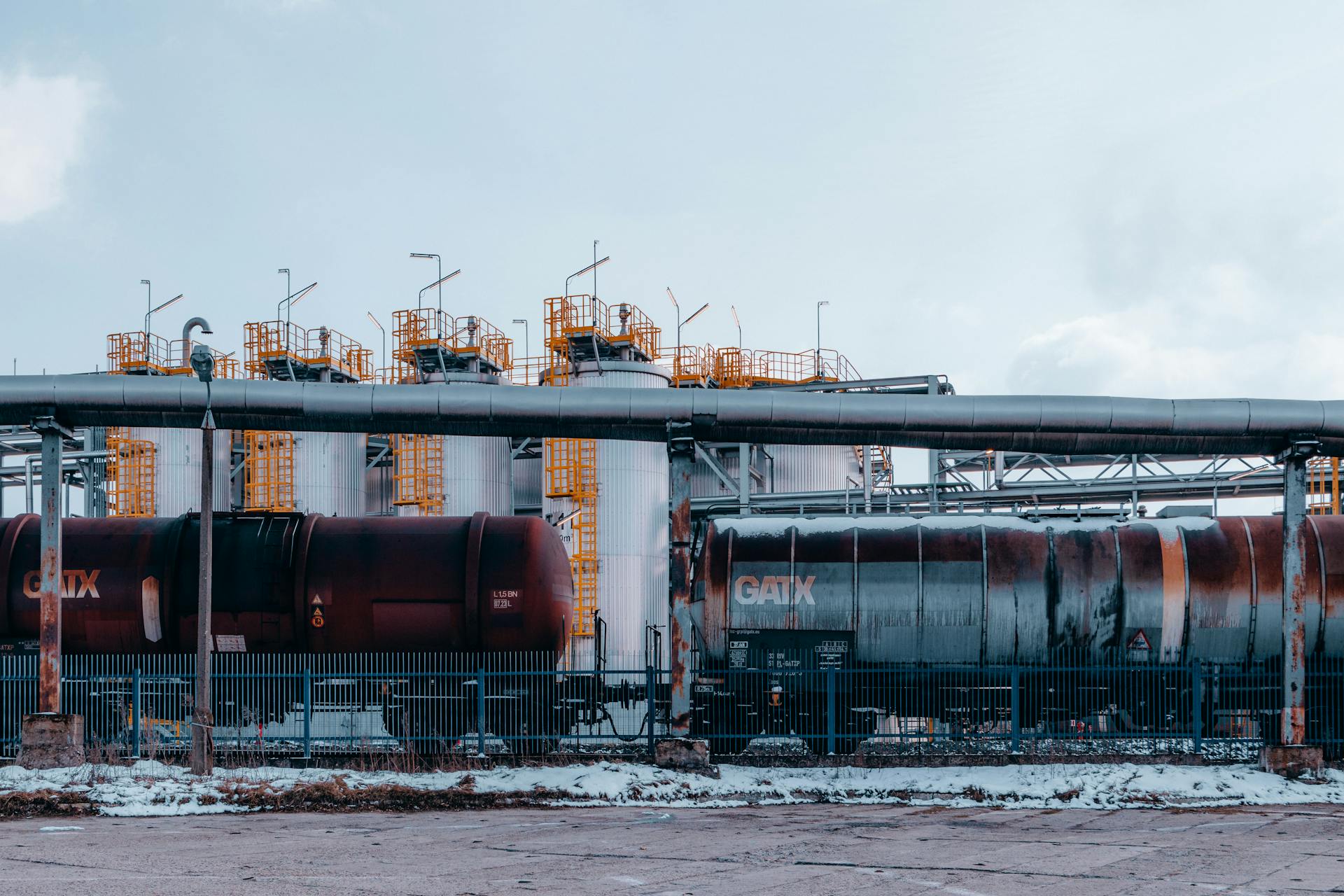
Syncrude's operations have had a significant impact on the environment, particularly in terms of water usage. The company uses a massive amount of water to extract bitumen from the oil sands, with some reports indicating that it uses over 1.5 million liters of water per day.
This has led to concerns about the impact on local waterways and wildlife. Syncrude's tailings ponds, which store the waste water and sediment from the extraction process, have been known to leak and spill, contaminating the surrounding environment.
The community surrounding Syncrude's operations has also been affected by the company's activities. The town of Fort McMurray has grown significantly as a result of the oil sands development, with many residents working for Syncrude or supporting the industry in other ways.
Syncrude has made efforts to mitigate its impact on the environment and community, such as implementing new technologies and practices to reduce water usage and improve waste management.
You might enjoy: Community Interest Company
Ownership and Operations
Syncrude is a joint venture owned by four partners: Suncor Energy (58.74%), Imperial Oil (25%), Sinopec (9.03%), and CNOOC (7.23%). This unique ownership structure means Syncrude is not traded directly, but rather through its individual owners.
The ownership board plays a crucial role in Syncrude's operations, approving annual operating budgets and proposed capital spending projects. They also provide funding for these activities based on their ownership share.
Suncor has taken over as the operator of the Syncrude Joint Venture, a move that's expected to drive greater efficiencies and competitiveness across Suncor's assets in the Wood Buffalo region. This change reflects Suncor's confidence in the Syncrude asset and is part of a multi-year strategy to improve operational performance.
Since 2016, Suncor has grown its ownership in Syncrude from 12% to 58.74% through acquisitions. This significant increase in ownership has given Suncor more control over Syncrude's operations.
A different take: Joint Venture
Controversies and Lawsuits
Syncrude has been involved in a notable lawsuit with Greenpeace Canada. In August 2008, the company filed a lawsuit against Greenpeace for $120,000, plus costs, after 11 activists visited the company's Aurora North oil sands site to unfurl anti-oil sands banners.
The lawsuit names the activists individually, with Syncrude citing safety concerns as the reason for filing the lawsuit. Syncrude spokesperson Mark Kruger stated that the activists were "unfamiliar with an industrial operation, and unfamiliar with some of the safety hazards that can be present."
This incident occurred shortly after a major environmental incident at the site, where 1,600 migrating ducks died after landing on a tailings pond in April 2008. Syncrude was fined $3 million for this incident.
Greenpeace Lawsuit
In August 2008, Syncrude Canada filed a lawsuit against Greenpeace Canada for $120,000, plus costs.
The lawsuit was a result of 11 Greenpeace activists trespassing on the company's Aurora North oil sands site to unfurl anti-oil sands banners and block a tailings pipe.
Syncrude Canada cited safety concerns as the reason for the lawsuit, stating that the activists were unfamiliar with industrial operations and safety hazards.
The activists' actions were a response to a tragic event in April 2008, where 1,600 migrating ducks died after landing on a tailings pond at the Syncrude site.
The company was subsequently fined $3 million.
Syncrude Canada's lawsuit also named the activists individually, likely to prevent similar incidents in the future.
Check this out: Companies (Model Articles) Regulations 2008
Suncor Fined $390,000 Over Worker's Death

Suncor Energy was fined $390,000 for violating workplace safety regulations, following a worker's death at one of its facilities.
The worker died in an accident in the summer of 2022.
The incident was investigated by regulatory authorities.
Suncor Energy has a history of safety incidents at its facilities.
The company has been fined multiple times for violating workplace safety regulations.
The fine of $390,000 is a significant penalty for the company.
It's a reminder that workplace safety is a top priority.
The incident highlights the importance of adhering to safety protocols.
Companies must take responsibility for ensuring a safe working environment.
Worth a look: Suncor Energy
Environmental Impact
Syncrude has made efforts to mitigate the environmental impact of its operations in northern Alberta. The company has developed a system for stabilizing the surface of its tailings ponds, allowing for revegetation to take place. This has enabled about 3,000 hectares of its older waste piles to be returned to pasture and forest.
Syncrude has also introduced a herd of native wood bison to its reclamation areas, managed in conjunction with a local First Nations community. This initiative demonstrates the company's commitment to restoring the natural environment.
Current practice involves returning overburden and tailings to worked-out pit areas as part of the land reclamation process. This approach helps to minimize the environmental footprint of Syncrude's operations.
Syncrude's membership in Canada's Oil Sands Innovation Alliance (COSIA) also highlights its efforts to address environmental concerns.
Additional reading: Veolia Environmental Services
Production and Upgrades
Syncrude's facilities have a nameplate capacity to produce nearly 375,000 barrels a day when operating at peak capacity and under optimal conditions.
The company's Base Mine has a capacity of 7,250t/hr, while the North Mine has a capacity of 7,500t/hr and the Aurora Mine has a capacity of 11,000t/hr.
Syncrude produces a high-naphtha, low-sulphur synthetic crude, known as Syncrude Sweet Blend crude oil, which is then sent to refineries in Canada and the United States.
In 2006, 94.25 million barrels of synthetic crude were produced by Syncrude, which currently provides 15% of Canada's petroleum needs.
Discover more: African Risk Capacity
Production
Syncrude's facilities can produce nearly 375,000 barrels a day at peak capacity, but average out to 350,000 barrels a day due to required downtime.
The Base Mine has a capacity of 7,250t/hr, while the North Mine has a slightly higher capacity of 7,500t/hr.
The Aurora Mine has the highest capacity of the three, producing 11,000t/hr.
At Mildred Lake, the processing capacity is 230,000 barrels/day.
In 2006, Syncrude produced a staggering 94.25 million barrels of synthetic crude.
Syncrude currently meets 15% of Canada's petroleum needs.
Upgrades
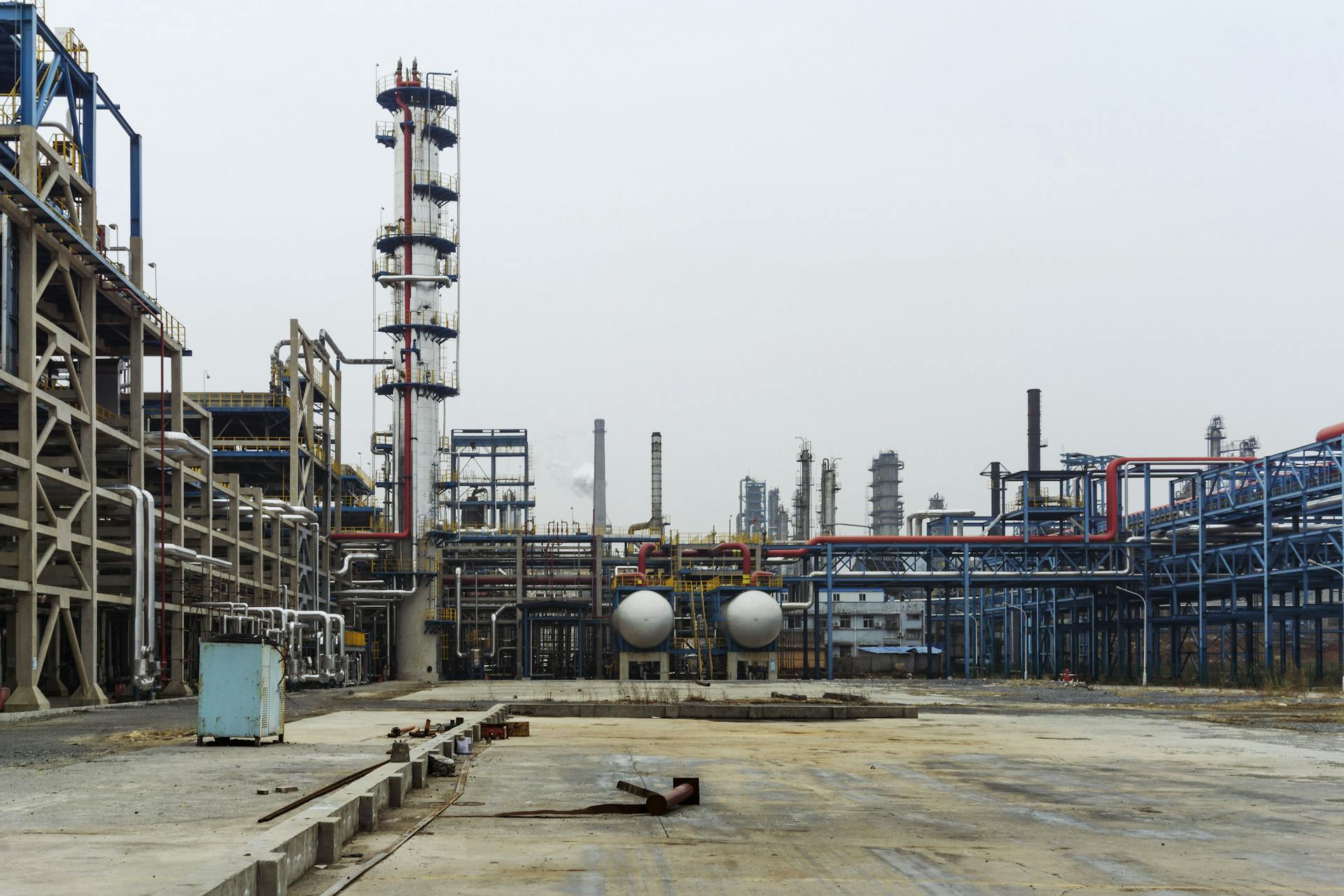
Raw bitumen is upgraded to synthetic crude through vacuum distillation or a coking process that removes part of the carbon content, producing hydrocarbon gases, naphtha, and gas oils.
The coking process also produces petroleum coke as a byproduct, which is a significant amount. Adding hydrogen to the feedstock can reduce the tonnage of surplus petroleum coke produced.
Further treatment and blending of the upgraded crude gives Syncrude's principal product, Syncrude Sweet Blend crude oil, a high-naphtha, low-sulphur synthetic crude.
Additional reading: Shanxi Coking Company
Surface Mining and Extraction
Syncrude has revolutionized its mining operations with the introduction of shovel-and-truck mining, which provides greater flexibility compared to its original dragline and bucket-wheel reclaimer method. This new approach allows for more efficient and effective extraction of oil sand.
The company's fleet of P&H 4100 mining shovels, supported by Terex/O&K RH400 hydraulic excavators, enables the quick and easy transportation of run-of-mine oil sand to in-pit crushing stations. From there, the oil sand is slurried and pumped to the bitumen extraction plants via a hydrotransport system developed by Syncrude.
This hydrotransport system has significantly improved materials handling in the district's mining operations, allowing for the efficient transportation of oil sand slurry from the mine to the plant.
Worth a look: Centegra Health System
Surface Mining
Surface mining has become a more flexible and efficient method, thanks to the use of shovel-and-truck mining. This approach has largely replaced the original dragline and bucket-wheel reclaimer method used by Syncrude.
Syncrude's fleet of P&H 4100 mining shovels and Terex/O&K RH400 hydraulic excavators play a crucial role in this process. They work together to dig run-of-mine oil sand directly from the pit faces.
The oil sand is then hauled to in-pit crushing stations, where it's processed before being slurried and pumped to the bitumen extraction plants. This hydrotransport system, developed by Syncrude, has revolutionized materials handling in the district's mining operations.
Suggestion: First Chicago Method
Bitumen Extraction
Bitumen extraction is a crucial step in the oil sand processing process. The Syncrude facility uses a warm-water extraction process to separate bitumen from sand.
The process begins with oil sand being mixed with hot water and caustic soda in tumblers, forming a slurry. This mixture is then discharged onto vibrating screens where large material is rejected.
The slurry is subsequently fed into four primary separation vessels, where bitumen froth floats to the top and the sand sinks and settles. This separation process recovers over 90% of the bitumen resource.
The middlings are pumped to tailings oil recovery vessels and the resulting froth is recycled to the primary separation vessels. This process is repeated before the bitumen froth is de-aerated, heated, and further treated.
The mixing during slurry transport from the mine to the plant is sufficient to begin the separation process. This is an efficient step in the overall extraction process.
Disruptions and Shortages
Syncrude has a history of disruptions that have impacted oil production. In 2019, Syncrude agreed to pay a significant fine, reflecting the depth of their remorse about an incident.
These disruptions can have a ripple effect on the oil industry. Syncrude's production was reduced by 20% in March 2020, and by 1.6 million barrels in December 2019.
See what others are reading: Aker Floating Production
A major fire at Syncrude's facility in 2017 caused a steep shortage of synthetic crude supplies for Canadian heavy oil producers. This shortage was significant because synthetic crude is lighter and upgraded, making it essential for operations.
Here are some key statistics about Syncrude's production and disruptions:
Syncrude produces 360,000 barrels of oil per day, which is roughly 10% of all Canadian oil production. This highlights the significant impact that Syncrude's disruptions can have on the oil industry.
The Future
Syncrude is planning a major expansion that will take the project to the next level. This expansion will enable the project to achieve full production of up to 500,000 barrels a day.
The next phase of construction will include building two additional trains in undeveloped leases known as Aurora South. This will be a significant step towards reaching the project's full potential.
Syncrude's SO2 reduction project, announced in September 2008, is already operational and has helped cut emissions by 60%.
Frequently Asked Questions
How is Syncrude produced?
Syncrude is produced by upgrading bitumen, a viscous mixture of hydrocarbons, extracted from oil sands at Syncrude Canada Ltd.'s mines. The process involves mining oil sands and extracting the bitumen at the Mildred Lake and Aurora mines.
Featured Images: pexels.com