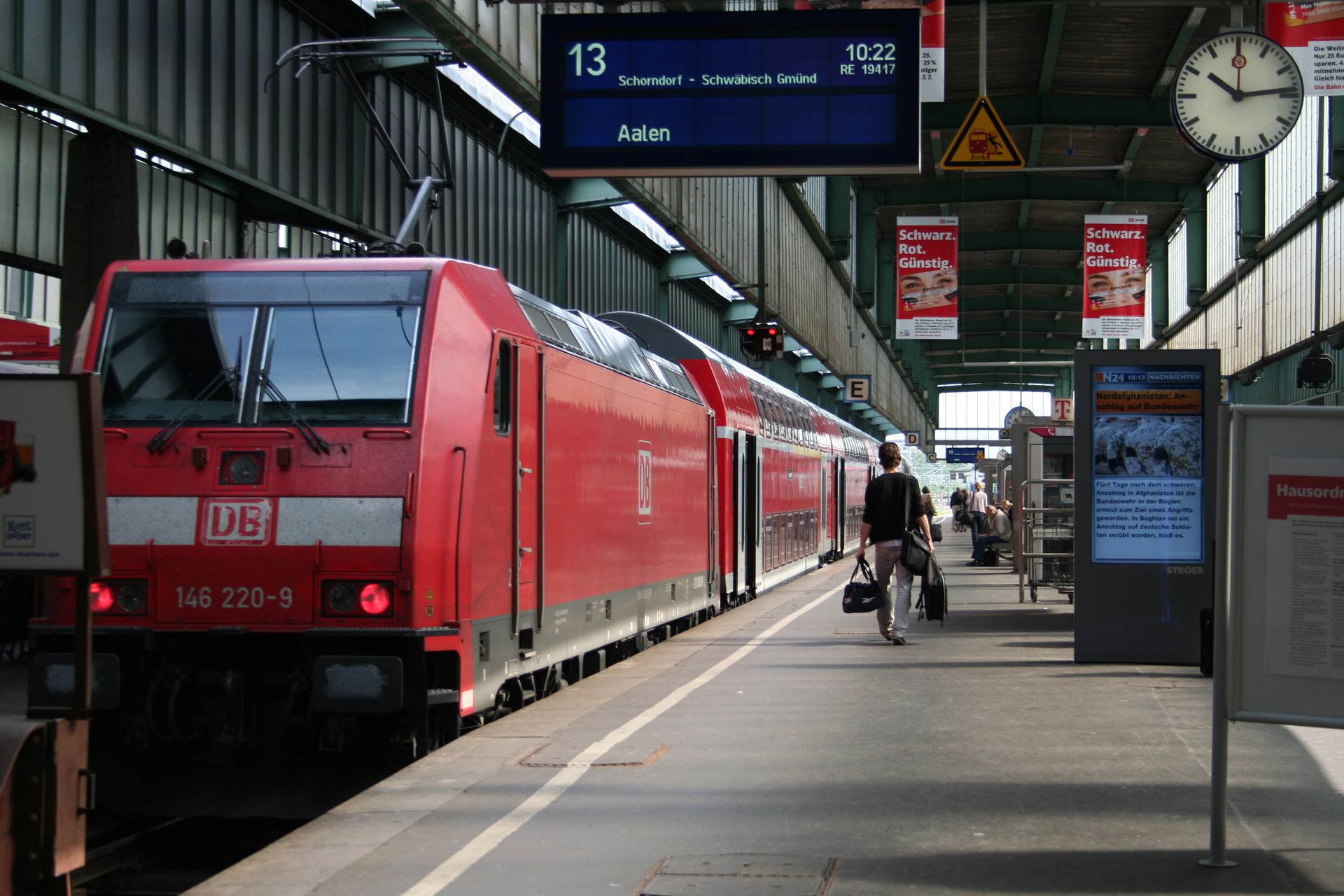
DB Regio is a German passenger rail transport company that operates a significant portion of the country's regional rail network. They're responsible for transporting millions of passengers every year.
DB Regio's operations are focused on providing efficient and reliable services to its customers. This includes operating trains on various routes across Germany, often in partnership with local transport authorities.
Some of the key services offered by DB Regio include local and regional trains, as well as night trains and special trains for events and festivals.
Check this out: Regional Rail, LLC
History of DB Regio
DB Regio emerged in 1999 as a result of the rail reform, emerging from the local transport division of Deutsche Bahn AG.
The company was initially formed as DB Regio GmbH, with its sole purpose being the preparation for the outsourcing of Deutsche Bahn's local passenger transport division.
Its articles of association were concluded on February 12, 1998, and the company was entered in the commercial register on April 6, 1998.
For another approach, see: Deutsche Bahn
DB Regio Aktiengesellschaft was spun off and entered in the commercial register on June 1, 1999, with an initial share capital of DM 800 million.
The company's articles of association had already been adopted on November 24, 1998, and Klaus Daubertshäuser was the first chairman of the board.
DB Regio was restructured in 2001-2002, replacing a centrally controlled company with nine independent national companies, resulting in 400 jobs being saved.
The regional rail and road traffic was transferred to nine regional lines in January 2002, with DB Regio holding a 92 percent market share in local rail passenger transport in Germany.
DB Regio achieved 70 percent of its turnover from federal state payments for local public transport in 2007, with 29 percent coming from ticket sales.
See what others are reading: Virgin Rail Group
DB Regio Development
DB Regio Sverige was given a contract to operate local trains for 10 years starting from December 12, 2010.
The company has undergone several restructurings since 2010, with the most notable ones being the merger of two regions, Southwest and Rhine-Neckar, to form DB Regio Southwest on January 1, 2015, and the merger of DB Regio Südwest and DB Regio Hessen to form DB Regio Mitte on January 1, 2017.
In 2016, DB Regio announced that it would participate in award procedures with smaller, more flexible units, leading to the founding of regional traffic Start Germany and its regional subsidiaries.
Consider reading: Indonesian Regional Development Bank
Development Since 2010
DB Regio has undergone significant changes since 2010. In 2010, ÖstgötaTrafiken awarded DB Regio Sverige a 10-year contract to operate local trains starting December 12th.
The company has continued to evolve, with a major restructuring taking place on January 1, 2015. This saw the merger of two regions, Southwest and Rhine-Neckar, to form the new DB Regio Southwest region.
Another significant change occurred on January 1, 2017, when DB Regio Südwest and DB Regio Hessen merged to form DB Regio Mitte. This move aimed to create a more efficient and streamlined operation.
DB Regio also announced plans to participate in award procedures with smaller, more flexible units in the late summer of 2016. This led to the founding of regional traffic company Start Germany, which has seen success in the Lower Elbe network since 2017.
The COVID-19 pandemic had a significant impact on DB Regio's operations, with capacity utilization falling to around 70 percent of the previous level in 2020.
Consider reading: SpareBank 1 Nøtterøy–Tønsberg
Biofuel Journey Through Baden-Württemberg
DB Regio is taking a big step towards sustainability by introducing biofuel trains in Baden-Württemberg.
57 DB Regio trains are now running through Baden-Württemberg using biofuel.
This is a significant move towards reducing carbon emissions, with these trains producing around 90 per cent less CO2 emissions than diesel.
The biofuel trains are making a real difference, and it's great to see DB Regio leading the way in this area.
The trains are running smoothly, and passengers are enjoying the benefits of a more environmentally friendly journey.
DB Regio's commitment to sustainability is inspiring, and it's clear that they are dedicated to making a positive impact on the environment.
DB Regio Structure
DB Regio operates regional trains on behalf of the Bundesländer or their Landkreise, which order and pay for services.
The company doesn't operate trains on its own account, instead, it focuses on business development and framework functions for regional units.
DB Regio's headquarters in Frankfurt supports regional units in areas like price and revenue management, marketing, and traffic planning.
Corporate Structure
DB Regio's corporate structure is quite unique. Unlike its long-distance counterpart DB Fernverkehr, DB Regio does not operate trains on its own account.
Services are ordered and paid for by the Bundesländer or their Landkreise, with some states awarding long-term contracts to DB Regio, usually lasting between 10 to 15 years.
The headquarters of DB Regio in Frankfurt is responsible for business development, focusing on the framework and service functions for regional units in the conclusion of transport contracts and tenders.
It supports the regions in areas like price and revenue management, marketing, and traffic planning.
The S-Bahn Berlin, Hamburg, Munich, Rhein-Main, and Stuttgart are coordinated and controlled by the headquarters.
Recommended read: Rayonier Inc Headquarters
Rail Division (Schiene)
The rail division of DB Regio is quite complex, but it's broken down into manageable parts.
The rail division is divided into seven regions, which helps to streamline operations and improve service efficiency.
DB Regio also operates five urban commuter trains, known as S-Bahn, directly from its headquarters.
Here are the main components of the rail division:
- Regions
- S-Bahn
- DB RegioNetz Verkehrs GmbH
Bus Division
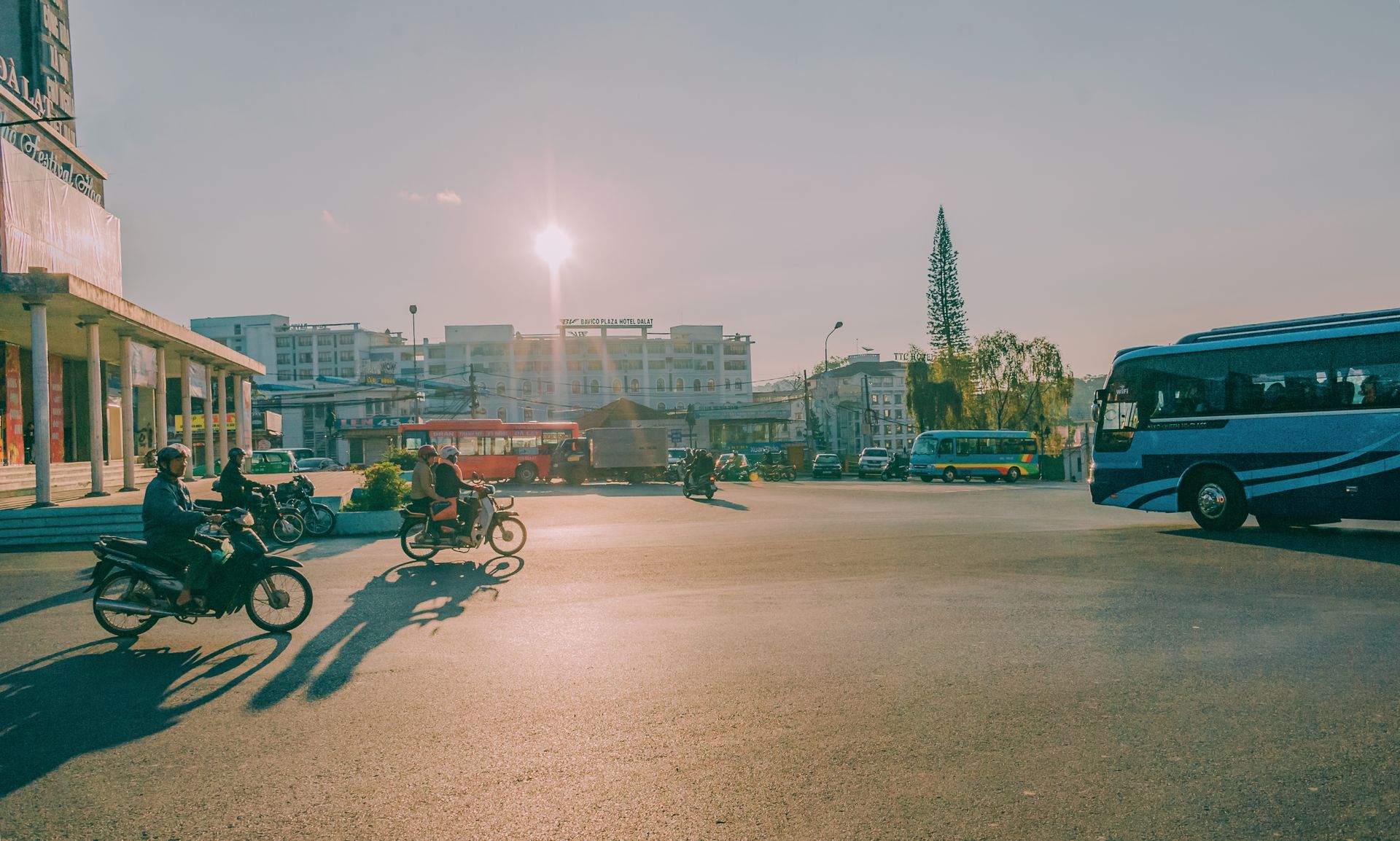
The bus division of DB Regio is a significant part of the company's operations, with 23 bus companies under its umbrella. These companies own majority interests in other bus companies, giving DB Regio a strong presence in the German bus transport market.
DB Regio Bus is one of the largest providers of bus transport in Germany, carrying about 725 million passengers annually. This is a remarkable number, and it's no wonder that DB Regio Bus has a traffic volume of 8.4 billion passenger kilometers.
DB Regio Bus operates a fleet of around 13,400 buses nationwide. This is a massive operation, and it's impressive to think about the logistics involved in managing such a large fleet.
DB Regio Bus has a market share of about 9 percent in the regular bus market in Germany as of 2014. This is a significant share, and it's a testament to the company's success in the industry.
See what others are reading: Aveos Fleet Performance
Here's a list of some of the bus companies that are part of DB Regio Bus:
- Weser-Ems-Bus (Bremen)
- Autokraft (Schleswig-Holstein)
- Südniedersachsenbus (Lower Saxony)
- Westfalenbus (North Rhine-Westphalia)
- Ostwestfalen-Lippe-Bus (North Rhine-Westphalia)
- Rheinlandbus (North Rhine-Westphalia)
- Rhein-Nahe-Bus (Rhineland-Palatinate)
- Rhein-Mosel-Bus (Rhineland-Palatinate)
- Busverkehr Hessen (Hesse)
- Südwestbus (Baden-Württemberg)
- Rhein-Neckar-Bus (Baden-Württemberg)
- Regiobus Stuttgart (Baden-Württemberg)
- Regionalverkehr Alb-Bodensee (Baden-Württemberg)
- Südbadenbus (Baden-Württemberg)
- Oberbayernbus (Bavaria)
- Untermainbus (Bavaria)
- Ostbayernbus (Bavaria)
- Frankenbus (Bavaria)
- DB Regio Bus Ost GmbH (Brandenburg)
- Busverkehr Märkisch-Oderland (Brandenburg)
- Busverkehr Oder-Spree (Brandenburg)
- BEX Bayern Express & P. Kühn GmbH (Berlin)
Hintergründe zur Baumaßnahme Berlin-Hamburg
The DB Regio Structure involves a significant project called the Generalsanierung Berlin–Hamburg.
This project is a major undertaking that requires a lot of information and background knowledge.
The Generalsanierung Berlin–Hamburg is located on the Berlin-Hamburg route.
For those interested in learning more, all the important information and background data can be found here.
The project's details and further links can be accessed through this source.
Additional reading: Target Background Check Company
Klasse Unterwegs: Bahnexkursionen gewinnen
DB Regio offers educational train excursions for school classes to learn about democracy and human rights at exciting learning destinations.
These excursions are designed to answer important questions about how our democracy works and why human rights are essential.
DB Regio gives away train vouchers for these educational trips, making it easy for schools to participate.
By taking part in these excursions, students can gain hands-on experience and make unforgettable memories while learning.
A different take: Metropolitan Educational Enterprises
DB Regio Operations
DB Regio Operations cover a wide range of regional train services in Germany, with routes stretching from Berlin to Dresden and beyond.
Some of the most notable routes include the RE2 from Hennigsdorf to Cottbus Hbf, which stops at several major cities along the way, and the RE5 from Rostock Hbf to Berlin Südkreuz, which connects two major cities in the north of the country.
DB Regio Operations also operate several regionalbahn (RB) services, including the RB14, which runs from Wustermark to Berlin Südkreiz, and the RB20, which runs from Potsdam Griebnitzsee to Hennigsdorf (b Berlin).
Ticket Offers
DB Regio offers a range of ticket options to suit different travel needs.
The Schöne-Wochenende-Ticket is a flat-rate ticket that allows up to five people to travel on all DB Regio local trains throughout Germany on Saturdays or Sundays.
This ticket was first introduced in 1995 and includes travel in local public transport in almost all transport associations.
Additional reading: Thomson Travel Group
Country tickets, available in single and multi-person versions, allow journeys throughout a specific region at a flat rate.
Over ten million country tickets are sold every year, with the first national ticket being introduced in Bavaria in 1997.
The Quer-durchs-Land-Ticket was introduced in 2009, offering a nationwide ticket option that closes the gap between the Schöne-Wochenende-Ticket and country tickets.
Integrated Planning and Dispatch System
DB Regio's integrated planning and dispatch system is a game-changer for their operations. They've successfully introduced digital planning and dispatch in several regions, Regio networks, and commuter railway services.
This system allows for real-time coordination and optimization of train schedules, ensuring a smooth and efficient ride for passengers. DB Regio has adopted this system across several networks.
The benefits of this system are numerous, including improved punctuality, reduced waiting times, and enhanced customer satisfaction.
If this caught your attention, see: Scoot Networks
Bahn
DB Regio Operations offer a range of regional trains, including the Regionalbahn (RB) and Regional-Express (RE) services. The RB services connect various cities and towns in the region, with routes such as RB14 connecting Wustermark to Berlin Hbf and Berlin Südkreuz.
Some popular RB routes include RB20, which runs from Potsdam Griebnitzsee to Hennigsdorf (b Berlin), and RB21, which connects Potsdam Hbf to Berlin Gesundbrunnen. If you're traveling from Berlin to Potsdam, you can take RB22 from Flughafen BER to Königs Wusterhausen.
The RE services, on the other hand, offer more frequent and faster connections between cities. For example, RE2 runs from Hennigsdorf to Cottbus Hbf, stopping at various stations along the way. If you're traveling from Berlin to Dresden, you can take RE15 from Hoyerswerda to Dresden Hbf.
Here are some of the key RE routes:
Keep in mind that these routes and schedules are subject to change, so it's always a good idea to check the latest information before your trip.
Unterwegs Mit Respekt
DB Regio Operations has launched a campaign called "Unterwegs mit Respekt" to promote a culture of respect and kindness in regional transportation in Berlin, Brandenburg, and Mecklenburg-Vorpommern.
The campaign focuses on creating a more positive and inclusive environment for passengers, encouraging simple acts of kindness such as a friendly smile or a brief "thank you".
A friendly glance, a short "thank you", or a respectful manner can make a big difference in making the journey more enjoyable for everyone.
By promoting a culture of respect and kindness, DB Regio Operations aims to create a fair, safe, and appreciative community among passengers and staff.
The campaign sets a positive example for how we can all contribute to a more considerate and respectful environment in our daily lives.
DB Regio Technology
DB Regio is upgrading its fleet with state-of-the-art Coradia Stream trains from Alstom, with 17 modern high-capacity electric multiple units set to arrive in Germany.
These new trains will be used on the Main-Weser subnetwork, improving service and efficiency.
DB Regio is also cutting consumption by up to 11.5 million litres of diesel per year by installing driver assistance systems on its trains.
The company has also adopted an integrated planning and dispatch system across several networks, successfully partnering with IVU to digitalize planning and dispatch in several regions.
Alstom to Equip 215 S-Bahn with ETCS and ATO
DB Regio has partnered with Alstom to upgrade 215 S-Bahn trains with advanced technology.
Alstom will retrofit the trains with European Train Control System (ETCS) Level 2 and 3, as well as Automatic Train Operation (ATO) GoA2. This will increase the efficiency and safety of the trains.
DB Regio's survey found that public transport is expected to play a key role in reducing traffic and climate change, which is a major goal of this project.
The retrofitting of the trains is part of the landmark rail project Stuttgart 21, aimed at modernizing the rail network in Germany.
Take a look at this: Stadler Rail
Introducing Sustainable Driver Assistance Systems
DB Regio has taken a significant step towards sustainability by introducing driver assistance systems on its trains. This move can reduce consumption by up to 11.5 million litres of diesel per year.
These systems are designed to optimize train performance and reduce energy consumption. By streamlining train operations, DB Regio aims to make its services more efficient and environmentally friendly.
Stadler Expands Alternative Drive Technologies Leadership
DB Regio has ordered more FLIRT Akku type trains from Stadler, further solidifying Stadler's position as a leader in alternative drive technologies.
Stadler is expanding its market leadership in alternative drive technologies.
DB Regio's order of FLIRT Akku type trains from Stadler has been confirmed, demonstrating the growing demand for these types of trains.
The order was announced on June 9, 2020, by Global Railway Review.
Stadler's expertise in alternative drive technologies is being recognized by major players in the industry, such as DB Regio.
Broaden your view: Stitch Fix Type Companies
DB Regio Partnerships
DB Regio has formed partnerships with various companies to enhance its services.
One notable partnership is with the mobility service provider, FlixBus, to offer integrated ticketing and services.
DB Regio also partners with the German Federal Railway (Deutsche Bahn), which allows for seamless connections and ticketing across both networks.
Alstom Signs Contract for 29 Double-Deck Coradia Stream
Alstom Signs Contract for 29 Double-Deck Coradia Stream trains have been ordered by DB for the Hesse region.
These modern trains will increase transport capacity and reduce travel times for passengers.
The contract includes 29 Coradia Stream High-Capacity trains, designed to meet the growing demand for efficient and reliable transportation in Germany's Hesse region.
The trains will be delivered by Alstom, a leading manufacturer of rail equipment, to provide improved service for commuters and travelers alike.
Siemens Mobility Receives Authorisation
Siemens Mobility received authorisation for delivery of the new Mireo regional multiple-unit trains to Germany.
This was the first order for the Mireo trains.
The authorisation was received in February 2020.
DB Regio Fleet and Equipment
DB Regio's fleet is quite impressive, with a total of 487 locomotives (diesel and electric) in operation.
The company also operates 4,066 multiple units (diesel and electric), which is a significant number of vehicles.
DB Regio has a large collection of coaches, with 11,936 in total.
Here's a breakdown of the types of rolling stock used by DB Regio:
- Locomotives: 487 (diesel and electric)
- Multiple units: 4,066 (diesel and electric)
- Coaches: 11,936
Fleet
DB Regio's fleet is a force to be reckoned with, boasting a massive collection of rolling stock.
As of 2023, DB Regio utilises 487 locomotives, which is a substantial number.
These locomotives are joined by 4,066 multiple units, which are likely used for passenger transportation.
DB Regio's fleet also includes 11,936 coaches, a staggering number that speaks to the company's commitment to providing reliable service.
Here's a breakdown of DB Regio's fleet:
- Locomotives: 487 (diesel and electric)
- Multiple units: 4,066 (diesel and electric)
- Cars: 11,936
Stock Images
DB Regio uses a variety of stock images to promote their fleet and services, including photos of their trains and stations.
These images are often used on their website, social media, and marketing materials to showcase their modern and efficient trains.
DB Regio's trains are equipped with comfortable seating and large windows, making them a popular choice for commuters and tourists alike.
The company's website features a gallery of high-quality images showcasing their trains and stations in various settings and conditions.
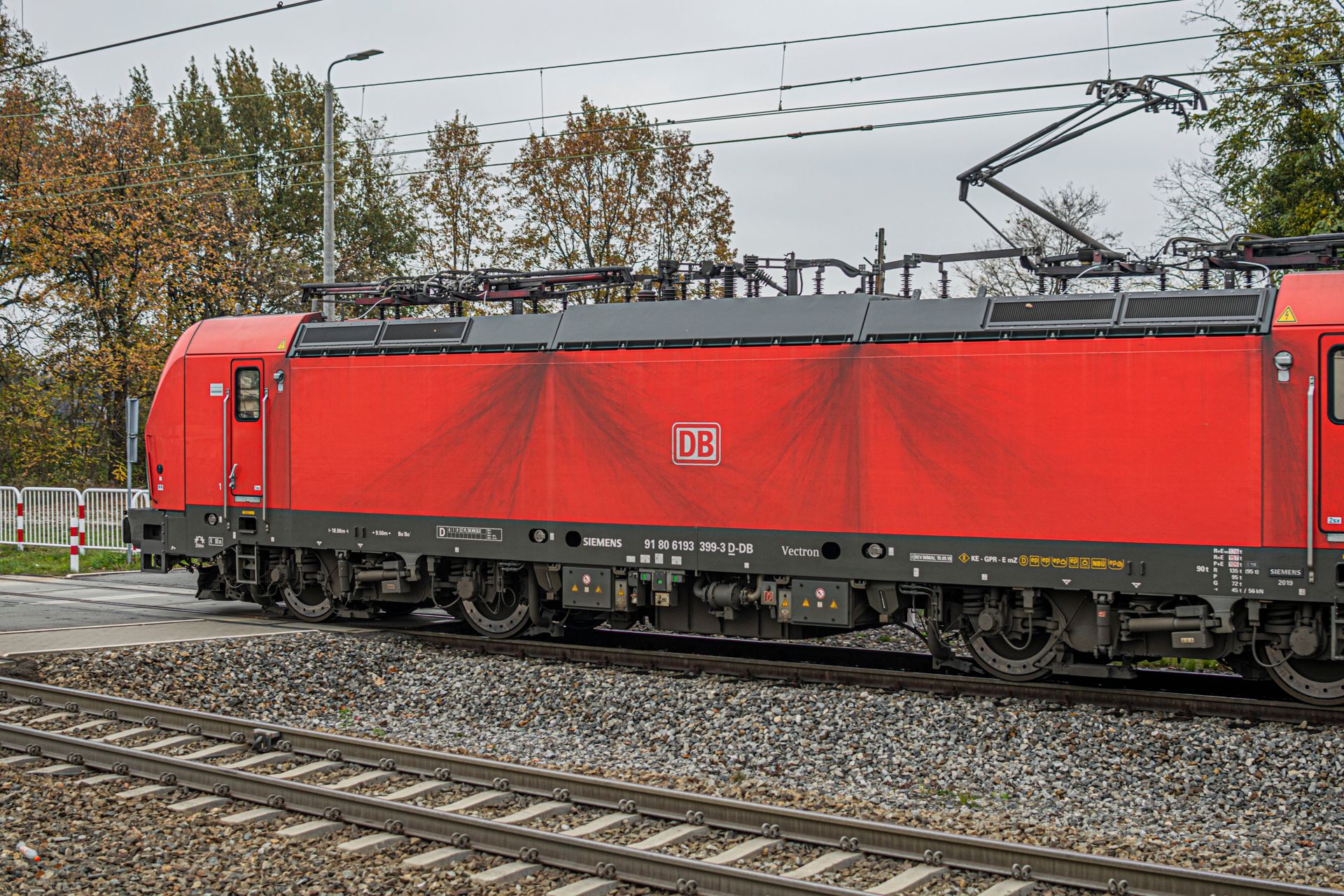
DB Regio's stock images are often used to highlight the benefits of traveling by train, such as scenic views and convenient routes.
The images are also used to promote special offers and discounts, encouraging customers to book their tickets online.
DB Regio's fleet includes a range of trains, each with its own unique features and characteristics, which are showcased through their stock images.
The company's marketing materials often feature images of happy passengers enjoying their journeys, which helps to create a positive and welcoming atmosphere.
DB Regio's stock images are an essential part of their branding and marketing strategy, helping to promote their services and attract new customers.
Take a look at this: State Organization for Marketing of Oil
Featured Images: pexels.com