
China's unemployment rate has been a pressing concern in recent years, with the country's vast population and rapidly changing economy creating unique challenges.
The official unemployment rate in China has been steadily decreasing, from 5.3% in 2018 to 5.2% in 2019.
China's youth unemployment rate, however, remains a cause for concern, with over 18% of young people aged 16-24 unemployed in 2020.
Unemployment Trends
The unemployment rate in China has fluctuated over the years, with some periods showing significant changes. In 2008, the registered urban unemployment rate was 4.2%, increasing by 0.2 percentage points from 2007.
The unemployment rate has been steadily decreasing since 2015, with a notable drop to 3.9% in 2017. This is a positive trend, indicating a more stable employment market. However, the surveyed urban unemployment rate in 2019 stood at 5.2%, which is higher than the registered rate.
Here's a brief overview of the unemployment rates in China from 2015 to 2019:
2008
In 2008, the total employed population in China was 774.80 million, a significant increase from the previous year.
The urban population saw a substantial boost, with 302.10 million people employed in urban areas, a net increase of 8.60 million.
This growth led to an increase in new jobs created, with 11.13 million positions added to the urban workforce.
The registered urban unemployment rate was 4.2% at the year end, a 0.2 percentage point increase over 2007.
Explore further: Employment Gap Year
2019
In 2019, the total employed population in China was 774.71 million, with 442.47 million people employed in urban areas. This accounted for 57.1% of the national total, an increase of 1.1 percentage points compared to the end of 2018.
Urban employment grew by 13.52 million new jobs in 2019, a decrease of 90 thousand compared to the previous year. The surveyed urban unemployment rate stood at 5.2% at the end of 2019, while the registered urban unemployment rate was 3.6%.
The number of migrant workers nationwide reached 290.77 million, a growth of 0.8% from 2018. Of these, 174.25 million migrant workers were employed outside their hometowns, up by 0.9%, while 116.52 million worked locally, an increase of 0.7%.
Here is a breakdown of the urban surveyed unemployment rate in 2019:
Data and Methodology
The Monthly Labor Force Survey in China uses a stratified, multi-stage sampling method with probability proportional to size (PPS) to select households for surveying.
This method involves randomly selecting neighborhood committees, followed by systematic sampling of households within these areas.
Approximately 340,000 households are surveyed each month, covering all prefecture-level and county-level regions in mainland China.
The survey has a 90% confidence level, with a relative error of the urban surveyed unemployment rate within 2%. For example, if the estimated urban unemployment rate is 5%, the actual rate is expected to lie between 4.9% and 5.1%.
The unemployment rate is calculated by dividing the number of unemployed individuals by the total labor force, which includes only the employed and unemployed populations.
The total labor force excludes the non-labor force population, such as retirees or students not seeking employment.
The surveyed unemployment rate is defined as the percentage of the unemployed population relative to the sum of the employed and unemployed populations, calculated through a sample survey estimation.
The formula for the surveyed unemployment rate is: Surveyed Unemployment Rate = (Number of Unemployed Persons) / (Number of Unemployed Persons + Number of Employed Persons) × 100%.
Curious to learn more? Check out: Number of Employees Morgan Stanley
2010
In 2010, 11.68 million new jobs were created in urban areas in China, a significant increase over the previous year.
This number is impressive, and it's clear that the Chinese economy was experiencing a period of growth during this time. The registered urban unemployment rate was 4.1% at the end of 2010, a decrease of 0.2 percentage points from 2009.
The total number of migrant workers in China reached 242.23 million in 2010, an increase of 5.4% over 2009. This is a substantial number, and it highlights the importance of migrant workers in China's labor market.
Among these migrant workers, 153.35 million were employed outside their hometowns, up by 5.5%, while 88.88 million worked locally, an increase of 5.2%.
Worth a look: Pregnant Workers Directive 1992
2018
In 2018, China's total employed population was 775.86 million, with a significant portion of 434.19 million working in urban areas.
The country saw a notable increase in new jobs created in urban regions, with 13.61 million added during the year, a 0.10 million increase compared to the previous year.
The surveyed unemployment rate in urban areas stood at 4.9% at the end of 2018, a 0.1 percentage point decrease from the previous year.
The registered unemployment rate was also lower, at 3.8%, down by 0.1 percentage point.
The total number of migrant workers reached 288.36 million in 2018, an increase of 0.6% over 2017.
Here's a breakdown of the urban surveyed unemployment rate in 2018:
Definition and Method
The surveyed unemployment rate is calculated using a simple formula: it's the number of unemployed persons divided by the sum of unemployed and employed persons, multiplied by 100%. This gives us a percentage that represents the proportion of unemployed individuals within the labor force.
For your interest: Payday Loan Unemployed
The formula is Surveyed Unemployment Rate = (Number of Unemployed Persons) / (Number of Unemployed Persons + Number of Employed Persons) × 100%.
To calculate the unemployment rate in China, the number of unemployed individuals is divided by the total labor force, which includes only the employed and unemployed populations, excluding non-labor force populations.
The labor force in China is defined as individuals aged 16 and above who worked at least one hour for pay or profit during the reference week, or those temporarily absent from work due to reasons such as training, vacation, or illness.
Employed persons also include those who intend to return to work within one month. Unemployed persons, on the other hand, are individuals aged 16 and above who were not employed during the reference week but had actively sought work within the previous three months.
The urban unemployment rate represents the ratio of unemployed persons to the combined total of employed and unemployed persons within urban areas.
China's surveyed unemployment rate is derived from the Monthly Labor Force Survey, which uses a stratified, multi-stage sampling method with probability proportional to size (PPS). This method involves randomly selecting neighborhood committees and then systematically sampling households within these areas.
Discover more: How Many Employees Does Jpmorgan Chase Have
Data Coverage
The data used for this analysis comes from the National Bureau of Statistics of China, specifically the Monthly Labor Force Survey. This survey covers the entire mainland China, providing a comprehensive view of the labor market.
The survey is compiled based on the data collected from the entire mainland China, leaving out Hong Kong, Macao, and Taiwan.
A fresh viewpoint: Day Labor
Causes and Factors
China's unemployment trends are heavily influenced by globalization, technological advancements, and industrial restructuring. This integration into the global market has made its manufacturing and export-oriented industries central to its economy.
Global economic fluctuations and changes in demand directly impact employment in these sectors, leading to significant labor market disruptions. Increased import competition, for instance, has been linked to such disruptions in developed economies.
Technological innovation and automation have also played a role in shaping China's labor market, with the adoption of advanced manufacturing technologies leading to a reduced demand for low-skilled labor. Machines and automated systems replace human workers in certain tasks, displacing low-skilled positions while potentially creating opportunities for high-skilled labor.
China's efforts to adjust its industrial structure have contributed to unemployment trends, resulting in a mismatch between the skills of the existing workforce and the requirements of emerging industries. This mismatch leads to structural unemployment, necessitating policies that address skill development and labor market flexibility.
Take a look at this: China Equity Market
Causes
China's unemployment trends are influenced by globalization, technological advancements, and industrial restructuring. This has led to significant labor market disruptions, particularly in developed economies.
Global economic fluctuations and changes in demand have a direct impact on employment in China's manufacturing and export-oriented industries. Increased import competition has been linked to job losses in these sectors.
The adoption of advanced manufacturing technologies has led to a reduced demand for low-skilled labor, as machines and automated systems replace human workers in certain tasks. Automation can lead to job displacement in manufacturing enterprises, particularly affecting low-skilled positions.
China's efforts to adjust its industrial structure have contributed to unemployment trends. This transition often results in a mismatch between the skills of the existing workforce and the requirements of emerging industries.
The COVID-19 pandemic has particularly affected young people in China's labor market, contributing to growing youth unemployment. This has been aggravated by a mismatch between the skills of college graduates and the skills needed by the market.
Curious to learn more? Check out: Active Labour Market Policies
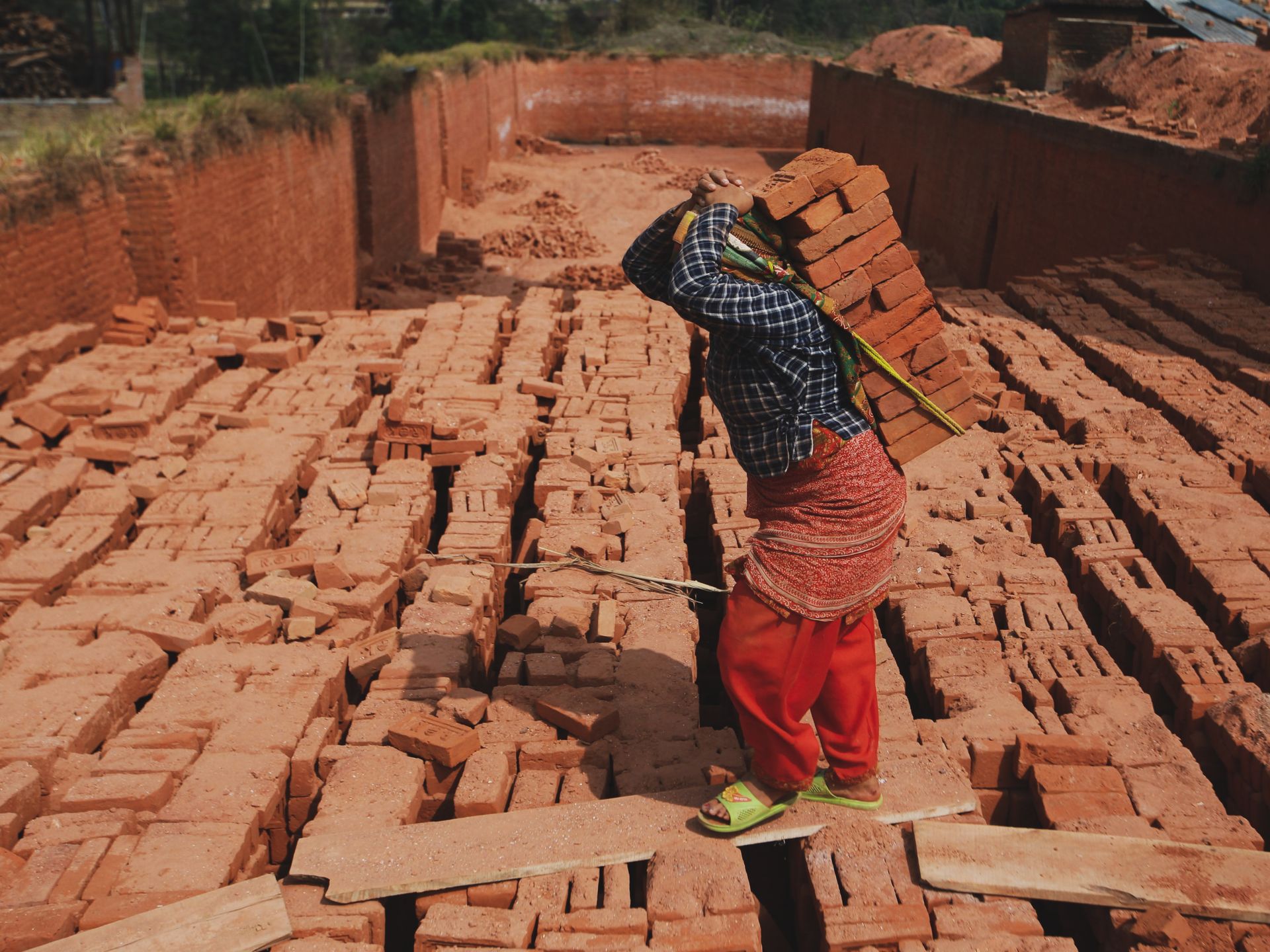
China is gradually transitioning from a low-value-added manufacturing economy to one focused on services and advanced technologies. This shift has led to job losses in traditional industries, especially in manufacturing.
The rise of robotics and artificial intelligence has displaced many low-skilled jobs in China. For instance, some factories have reduced their workforce by 30% to 50% through automation.
Urbanization and Tensions
Chinese cities continue to attract migrants, creating pressure on urban infrastructure and social security systems.
High urban unemployment rates can exacerbate social inequalities and tensions between local and migrant populations.
Informal Employment
Informal Employment can have a significant impact on individuals and the economy as a whole. Approximately 30% of China's workforce is employed in the informal economy, making them particularly vulnerable to economic shocks and crises like the COVID-19 pandemic.
This large number of informal workers can make it difficult for the government to track and regulate their employment, leaving them without access to basic benefits and protections. The informal economy can be a result of various factors, but one major reason is the lack of job opportunities in the formal sector.
Migrant Workers
China's rural labor migration has led to a significant increase in urban unemployment, especially among non-technical workers from rural areas, particularly less educated women and younger workers.
The number of registered migrant workers in China stands at around 288.4 million as of 2018, with a significant portion of them coming from rural areas.
Migrant workers in China are predominantly young, with the majority being between the ages of 20-39. In 2024, the distribution of migrant workers by age is expected to be:
The Chinese government has introduced a five-year action plan to enhance job stability for migrant workers, incorporating supportive policies and targeted training. This plan aims to incentivize companies to retain employees by providing partial refunds on unemployment insurance contributions for those with low-layoff rates.
Migrant workers in China earn an average nominal monthly income of around 4,500-5,000 yuan, depending on the industry. In 2022-2024, the average monthly income of migrant workers by industry is expected to be:
The government has also expanded an occupational injury insurance pilot program for new employment types, such as the platform economy, which, as of June 2024, covered nearly 9 million workers across seven provinces.
Youth and Labor Market
Youth unemployment is a significant concern in China, particularly among young graduates. About 20% of young people aged 16 to 24 are unemployed, highlighting a mismatch between academic training and the labor market's actual needs.
The COVID-19 pandemic has had a disproportionate impact on young people, with the labor market being hard-hit. The pandemic has aggravated a pre-existing issue of a mismatch between the skills of college graduates and the skills needed by the market.
The Chinese government has introduced various policy measures to address unemployment and support labor market stability. These measures include unemployment insurance, vocational training, and reemployment programs.
Youth-targeted measures have been implemented to stabilize the labor market. These measures aim to cushion the impact of job loss and facilitate workforce adaptation to economic restructuring and technological advancements.
The labor market in China is expected to undergo significant changes between 2014 and 2024, with the number of employees increasing. However, the exact extent of this increase is not specified.
The Chinese government's policies aim to create more jobs for young people in the long term. Short-term actions are also being taken to address the issue of youth unemployment.
You might like: Youth Unemployment
Social and Economic Impact
Unemployment in China has a significant social impact, with many young people feeling hopeless and disconnected from society. In 2020, over 18 million young people aged 16-24 were unemployed.
The economic burden of unemployment is substantial, with the government estimating that each unemployed person costs the economy around 30,000 yuan per year. This adds up to a staggering 540 billion yuan per year.
Unemployment can lead to poverty and social unrest, with many families struggling to make ends meet. In rural areas, unemployment rates are particularly high, with some villages reporting unemployment rates as high as 30%.
The government has implemented various policies to address unemployment, including vocational training programs and job placement services. However, these efforts have been slow to show results, and many young people remain skeptical about their future prospects.
Sectors and Industries
The manufacturing sector has been significantly impacted, with overcapacity and global competition forcing many companies to downsize.
In some cases, this has led to factory closures and job losses for workers who relied on these companies for employment.
The real estate sector has also been hit hard, with the bankruptcies of major companies like Evergrande contributing to job losses in construction and related services.
This has had a ripple effect, causing job losses not just in the construction industry, but also in related services such as architecture and engineering.
Broaden your view: Ccb China Construction Bank
Manufacturing Sector
The manufacturing sector has been significantly impacted, with overcapacity and global competition forcing many companies to downsize.
Many companies in the manufacturing sector are struggling to stay afloat due to the intense competition they face from other countries.
Overcapacity is a major issue in the manufacturing sector, with many factories producing more goods than there is demand for.
This has led to a surge in layoffs and downsizing, as companies try to cut costs and stay competitive.
The impact of global competition on the manufacturing sector cannot be overstated, with many companies feeling the pinch from cheaper imports.
A unique perspective: Australian Companies in China
Real Estate Sector

The real estate sector has been hit hard by the crisis, leading to job losses in construction and related services. Many major companies, like Evergrande, have filed for bankruptcy, making a big impact on the industry.
The bankruptcies of major companies have caused a ripple effect, affecting many jobs in construction and related services. This has led to a significant decline in the real estate sector.
Job losses in construction and related services have had a devastating effect on many families, making it harder for them to make ends meet. The real estate crisis has been particularly harsh on these workers.
For your interest: Leisure Employment Services Ltd V HM Revenue & Customs
Government Policies and Programs
The Chinese government has taken steps to address unemployment through various policy measures, including unemployment insurance, vocational training, and reemployment programs.
These policies aim to cushion the impact of job loss and facilitate workforce adaptation to economic restructuring and technological advancements.
Investments in infrastructure projects have also been made to boost employment, particularly in rural areas and medium-sized cities. Over 500 billion yuan (about €65 billion) was allocated to public projects in 2023.
Professional retraining programs have been implemented to address skill mismatches, with a program launched in 2024 aiming to train 10 million workers in technological skills by 2026.
The Chinese government is indeed taking concrete steps to address unemployment and promote labor market stability, and these efforts are yielding positive results.
Key Insights
The labor force participation rate in China has been a pressing issue, with the rate fluctuating over the years.
The monthly surveyed urban unemployment rate in China has been on the rise, with a significant increase expected between 2022 and 2025.
Unemployment in China is particularly challenging for workers in industrial and manufacturing sectors, who have been left behind in the country's transition to a service- and technology-based economy.
The Chinese government has introduced ambitious policies to address these challenges, including infrastructure investments and support for small and medium-sized enterprises.
However, these initiatives alone may not be enough to meet the demands of a transforming economy, and deeper structural reforms are necessary to reduce social inequalities.
Featured Images: pexels.com