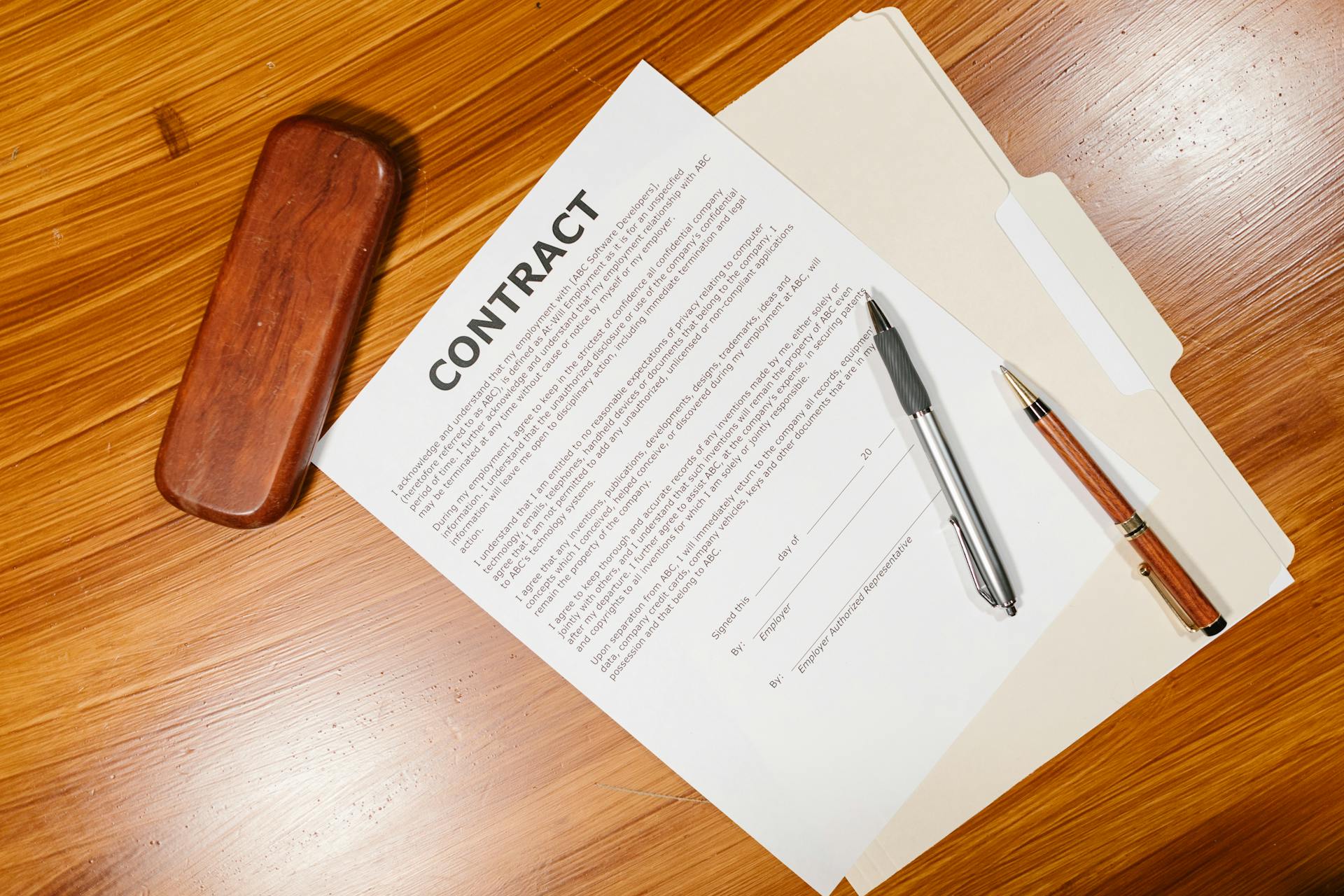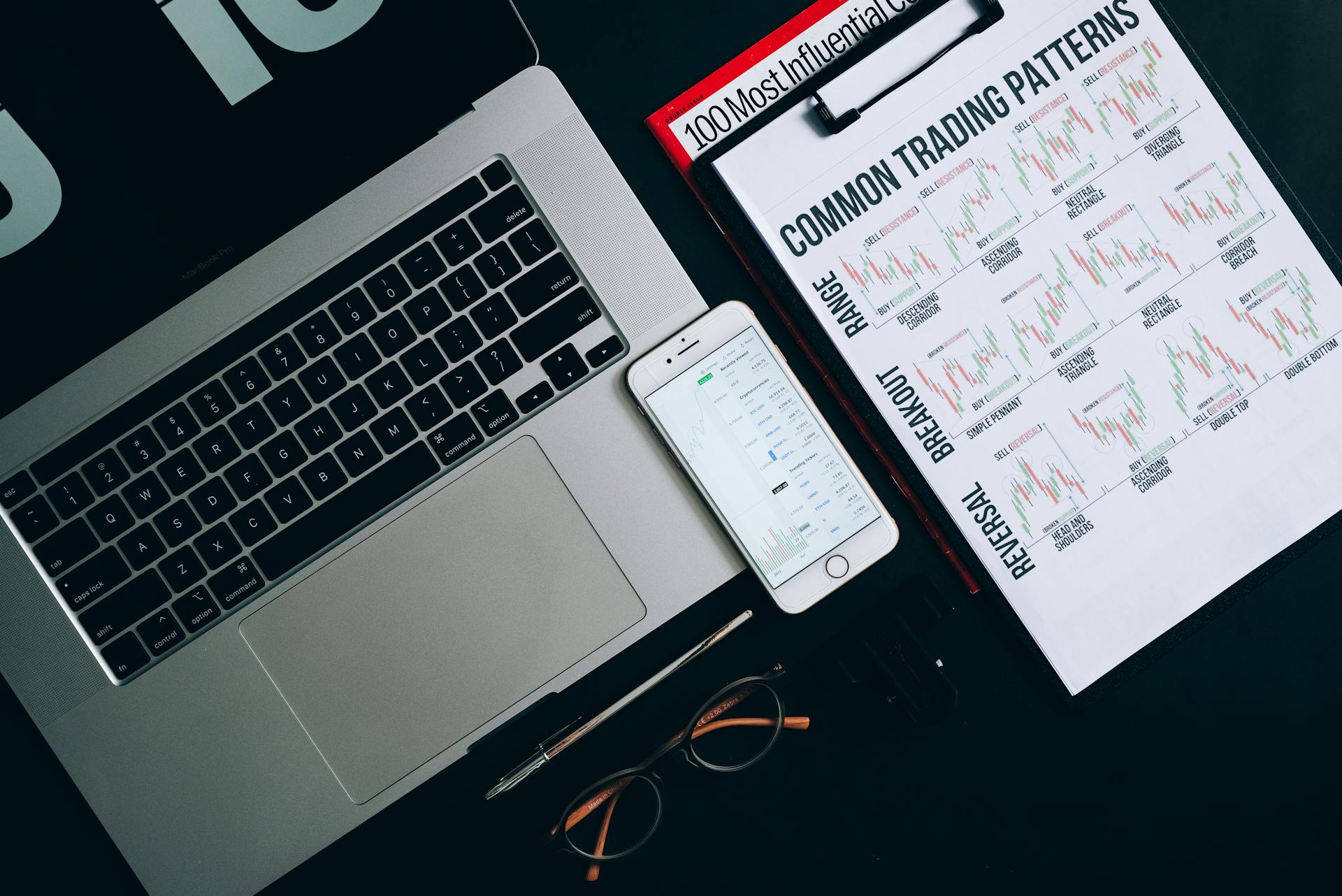
There are several types of trading contracts, and understanding the differences between them is crucial for making informed investment decisions.
For example, a futures contract is a type of trading contract that involves buying or selling an asset at a predetermined price on a specific date in the future.
In contrast, a forward contract is similar to a futures contract, but it is traded over-the-counter (OTC) rather than on an exchange.
Options contracts, on the other hand, give the buyer the right, but not the obligation, to buy or sell an asset at a predetermined price.
See what others are reading: Difference between Future and Forward Contracts
Types of Trading Contracts
There are several types of trading contracts, each with its own unique characteristics. Futures contracts, for instance, are agreements to buy or sell a particular asset at a predetermined price on a predetermined date, often used in commodities and indices.
Options contracts, on the other hand, give the holder the right, but not the obligation, to buy or sell an underlying asset at a predetermined price on a predetermined date, frequently used to speculate on price movements and hedge against losses.
Futures and forward contracts are similar, but distinct. Futures are exchange-traded, standardized, and margined, while forwards are traded over-the-counter, customized, and not margined.
Here's a summary of the main differences between futures and forwards:
Contracts for Differences (CFDs) are another type of trading contract, where the buyer and seller agree to exchange the difference between the opening and closing price of the contract, allowing traders to speculate on price movements without owning the underlying asset.
Common in Trading
In trading, there are several types of contracts that traders use to speculate on price movements or hedge against losses. Futures contracts, for example, are agreements to buy or sell a particular asset at a predetermined price on a predetermined date.
Futures contracts are frequently used on commodities and indices, and they can be traded on an exchange. They're also used by farmers to lock in prices for livestock and crops to avoid fluctuations.
Readers also liked: What Is a Futures Contract
Options contracts, on the other hand, give the holder the right, but not the obligation, to buy or sell an underlying asset at a predetermined price on a predetermined date. This type of contract is frequently used to speculate on price movements.
Forward contracts are similar to futures contracts, but they're privately negotiated agreements between the buyer and seller. They're commonly used in the forex market.
Contracts for Differences (CFDs) are agreements between the buyer and seller to exchange the difference between the opening and closing price of the contract. This type of contract allows traders to speculate on price movements without owning the underlying asset.
Here are some key differences between futures and forward contracts:
As you can see, futures contracts are traded on an exchange, are standardized, and have less credit risk. Forward contracts, on the other hand, are traded over-the-counter, are customized, and have more credit risk.
A unique perspective: Top Etfs by Volume
Interest Rate
Interest Rate futures contracts decrease in value when interest rates go up because higher interest rates make new debt more desirable and old debt less desirable.
As interest rates rise, the price of existing bonds drops to compensate for the new rates being higher. This change can affect the value of an interest rate futures contract.
Declining interest rates, on the other hand, can prop up an interest rate futures contract, making it more valuable.
Suggestion: Trade Futures Contracts
Expiry and Settlement
Expiry, or expiration, is the time and day when a futures contract stops trading and settles. This typically occurs on the third Friday of certain trading months.
For equity index futures and interest rate futures, expiry happens when the back month futures contract becomes the front-month futures contract, and the front-month futures contract becomes the back month futures contract. This can cause a surge in trading volume as traders roll over positions to the next contract.
The final settlement price for a futures contract is determined on the expiry date. There are two main methods of final settlement: physical delivery and cash settlement.
Physical delivery involves the transfer of the underlying asset, such as commodities or bonds, from the seller to the buyer. This method is used for a minority of contracts, with most being canceled out by purchasing a covering position.
Cash settlement, on the other hand, involves a cash payment based on the underlying reference rate, such as a short-term interest rate index or the closing value of a stock market index. This method is used for most futures contracts, especially those that cannot be settled by delivery of the referenced item.
Curious to learn more? Check out: What Type of Reinsurance Contract Involves Two Companies
Here are the key differences between physical and cash settlement:
Keep in mind that final settlement is distinct from trade settlement, which confirms that the security has been fully paid for and delivered, and mark-to-market settlement, which keeps the price of the contract commensurate with the price of the underlying asset.
Contract Pricing and Arbitrage
Contract pricing and arbitrage are crucial concepts in trading contracts. In a perfect market, the price of a futures contract is determined by arbitrage arguments, where the forward price represents the expected future value of the underlying asset discounted at the risk-free rate.
The arbitrage mechanism is not applicable when the deliverable commodity is not in plentiful supply or when it doesn't yet exist. This is typical for commodities like agricultural crops before the harvest or Eurodollar Futures.
The price of a futures contract is determined by the present value of an unbiased expectation of the price of the asset at the delivery date. This is represented by the equation:
F(t,T) = E[S(T)]
where F(t,T) is the futures price at time t for delivery at time T, and E[S(T)] is the expected future price of the asset.
The relationship between futures and spot prices depends on variables like storage costs, dividend or income yields, and convenience yields. These costs and yields can be summarized in the following equation:
F(t,T) = S(t) + y - u
where F(t,T) is the futures price, S(t) is the spot price, y is the convenience yield, and u is the storage cost.
In a perfect market, the futures price should be equal to the forward price, but in practice, market imperfections like transaction costs and restrictions on short selling prevent complete arbitrage. As a result, the futures price varies within arbitrage boundaries around the theoretical price.
Here's a summary of the variables that affect futures pricing:
These variables are essential to understand when trading futures contracts. By keeping them in mind, you can make more informed decisions and navigate the complex world of contract pricing and arbitrage.
Market Structures and Exchanges
Futures contracts are traded on exchanges, which have become a crucial part of the financial landscape. This innovation was introduced in the 1970s by the Chicago Mercantile Exchange (CME) and led to the creation of many new exchanges worldwide.
The CME Group, for instance, operates the CBOT and CME, trading currencies, interest rates, and various commodities like corn, soybeans, and gold. Similarly, the Dubai Mercantile Exchange (DME) specializes in trading Oman Crude, Dubai Platts, and Singapore Fuel Oil.
There are over 90 futures and futures options exchanges worldwide, including the London International Financial Futures Exchange (LIFFE), Deutsche Terminbörse (now Eurex), and the Tokyo Commodity Exchange (TOCOM). Some notable exchanges include the Intercontinental Exchange (ICE Futures Europe), NYSE Euronext, and the Shanghai Futures Exchange (SHFE).
Market Structures
Market Structures are a crucial aspect of commodity markets. They determine how prices are set and traded.
A contango market is one where futures prices are higher than the expected spot price, making it more expensive to buy a commodity for future delivery. This is often seen in markets where there's a surplus of the commodity.
In a normal market, futures prices are above the current spot price, and far-dated futures are priced higher than near-dated futures. This is a stable market structure.
Backwardation, on the other hand, occurs when the price of a commodity for future delivery is lower than the expected spot price. This is often seen in markets where there's a shortage of the commodity.
An inverted market is similar to a backwardation market, but it's characterized by futures prices being below the current spot price and far-dated futures being priced lower than near-dated futures. This market structure is less common.
A fresh viewpoint: Spot Contract
Exchanges
Exchanges play a crucial role in the financial markets, providing a platform for buyers and sellers to trade various financial instruments. There are over 90 futures and futures options exchanges worldwide.
The Chicago Mercantile Exchange (CME) introduced contracts on financial instruments in the 1970s, which became hugely successful and overtook commodities futures in terms of trading volume and global accessibility. This innovation led to the introduction of many new futures exchanges worldwide.
Some notable exchanges include the CME Group, which operates the CBOT and CME, and the NYMEX, which trades energy and metals. The Dubai Mercantile Exchange (DME) is another prominent exchange, known for trading Oman Crude, Dubai Platts, and Singapore Fuel Oil.
The Intercontinental Exchange (ICE) Futures Europe trades energy, including crude oil, heating oil, and gas oil, while the NYSE Euronext absorbed Euronext and merged with the London International Financial Futures and Options Exchange (LIFFE). LIFFE had previously taken over the London Commodities Exchange (LCE) in 1996.
Here's a list of some of the major exchanges:
- CME Group (CBOT and CME)
- Dubai Mercantile Exchange (DME)
- Intercontinental Exchange (ICE Futures Europe)
- NYSE Euronext
- Eurex
- South African Futures Exchange – SAFEX
- Sydney Futures Exchange
- Tokyo Commodity Exchange TOCOM
- Tokyo Financial Exchange – TFX
- Osaka Exchange OSE
- London Metal Exchange
- Intercontinental Exchange (ICE Futures U.S.)
- JFX Jakarta Futures Exchange
- Montreal Exchange (MX)
- Korea Exchange – KRX
- Singapore Exchange – SGX
- ROFEX – Rosario (Argentina) Futures Exchange
- NCDEX – National Commodity and Derivatives Exchange, India
- National Stock Exchange of India
- EverMarkets Exchange (EMX)
- FEX Global
- Dalian Commodity Exchange (DCE)
- Shanghai Futures Exchange (SHFE)
- Zhengzhou Commodity Exchange (ZCE)
- China Financial Futures Exchange (CFFEX)
Contract Regulations and Definitions
In the United States, futures transactions are regulated by the Commodity Futures Trading Commission (CFTC), an independent agency of the US government. The CFTC has the authority to impose fines and other punishments on individuals or companies that break rules.
Each exchange can have its own rules, and under contract, can fine companies for different things or extend the fine that the CFTC hands out. This means that even if the CFTC regulates a transaction, the exchange itself may have additional rules to follow.
The CFTC publishes weekly reports containing details of the open interest of market participants for each market segment with more than 20 participants. These reports are released every Friday, including data from the previous Tuesday.
A futures contract is defined as a derivative that gives the buyer leveraged exposure to a commodity asset. This means that the buyer is essentially betting on the price of the asset to increase.
The CFTC's Commitments of Traders Report (COT-Report) contains data on open interest split by reportable and non-reportable open interest, as well as commercial and non-commercial open interest. This report is released every Friday.
Here are the key components of a futures contract:
- There exists in the market a quoted price for delivery of the asset.
- The price of entering a futures contract is equal to zero.
- The holder receives the difference between the futures price at two different times.
- At the expiration date, the holder pays the spot price and is entitled to receive the asset.
Types of Contracts
There are two main types of contracts: futures and forwards. Futures contracts are exchange-traded, highly standardized, and have significantly less credit risk due to the clearing house guarantee.
Futures contracts are traded on an exchange, and their counterparty for delivery is chosen by the clearing house. This is in contrast to forwards, which are traded over-the-counter and can be unique.
Here's a comparison of futures and forwards:
Exchange Vis-À-Vis OTC
Futures are always traded on an exchange, whereas forwards can be traded over-the-counter or simply be a signed contract between two parties.
The main difference between futures and forwards is that futures are highly standardized, being exchange-traded, whereas forwards can be unique, being over-the-counter. This means that futures contracts are more transparent and have less credit risk.
In the case of physical delivery, the forward contract specifies to whom to make the delivery. The counterparty for delivery on a futures contract is chosen by the clearing house.
Here's a comparison of the two:
The Futures Industry Association estimates that 6.97 billion futures contracts were traded in 2007, an increase of nearly 32% over the 2006 figure. This highlights the popularity and growth of futures trading.
Physical
Physical contracts are a type of futures contract that involves the physical delivery of assets after the expiration date.
Farmers who buy crop futures, for example, will receive crops at the end of the contract. Crude oil is another popular physical future, and each futures contract involves 1,000 barrels of crude oil.
Physical delivery is common with commodities, but it's not a guarantee. Most contracts are canceled out by purchasing a covering position, meaning buying a contract to cancel out an earlier sale or selling a contract to liquidate an earlier purchase.
The majority of energy contracts on the NYMEX use cash settlement upon expiration, but some contracts, like Treasuries on the CBOT, settle via physical delivery.
Physical contracts offer several benefits, including the opportunity to acquire a physical asset you can use right away, and the ability to lock in a price for a volatile asset.
However, physical contracts also come with some drawbacks, such as not everyone having enough space for a physical delivery, and shipping costs.
Broaden your view: Asset Trading
Financial
Financial futures are a type of contract that focuses on equities and other securities that don't require physical delivery. You can receive stock, Treasury bills, CDs, and other assets through financial futures.
One benefit of financial futures is that they allow for leveraged exposure, which can increase your total returns. This can be especially useful for investors looking to maximize their gains.
However, it's essential to remember that leverage can also lead to higher losses due to unfavorable price movements. This is a risk that investors need to be aware of when trading financial futures.
You must fulfill the contract at expiration, which means you cannot walk away from a futures contract like you can with an options contract. This is a key difference between financial futures and other types of contracts.
Here are some examples of financial futures contracts:
- Leveraged exposure can increase your total returns.
- No need to worry about the asset's physical delivery.
- Can lock in a price.
But keep in mind:
- Leverage can lead to higher losses due to unfavorable price movements.
- You must fulfill the contract at expiration.
Stock
Stock contracts offer a way to gain exposure to the underlying asset with the use of leverage.
Stock futures allow you to lock in a price to buy or sell 100 shares of a stock, which gets exercised at expiry. This means you can control a larger position with a smaller investment.
To succeed with stock futures, you need to consider macroeconomic conditions and analyze the underlying stock. The underlying stock can perform differently from the broader market.
Investors who use stock futures should be aware that the underlying stock can be affected by various factors, including fiscal policy, inflation, and interest rate changes.
If you're interested in stock contracts, here are some tools that can help you make informed decisions:
- Advanced Stock Screener Tools
- Options Trading Chain Analysis
What is a Lot
A lot in futures trading is the standardized contract size for a commodity or financial instrument, representing the quantity being traded.
The exchange determines the lot size, which affects the minimum quantity you can trade.
This standardized contract size also impacts your margin requirements, making sure you have enough funds to cover potential losses.
In other words, the lot size affects how much you need to put up as collateral when trading futures contracts.
The lot size is a crucial factor in futures trading, as it directly influences your overall risk.
Derivatives and Leverage
Derivatives can provide significant leverage, which is the situation where the amount of capital required to trade a contract is less than the market exposure it gives.
For example, a forward contract can require a margin of just 5% to be paid to the broker, as we saw in the currency hedging example where the company had to pay $1,000 to lock into a contract worth $20,000.
This means the company has full exposure to currency movements of $20,000 with only a $1,000 payment.
If the $20,000 are never received, the exposure is still there, highlighting the risks of leverage in derivatives.
A key aspect of leverage is that it can amplify both gains and losses. In the case of the currency hedging example, if the currency movements go in the company's favor, they could gain much more than the $1,000 they paid. However, if the movements go against them, they could lose much more than the $1,000 they paid.
Here's a breakdown of the leverage in the currency hedging example:
- Margin required: $1,000 (5% of $20,000)
- Market exposure: $20,000
Risk Management and Hedging
Futures contracts are designed to mitigate the risk of default by either party in the intervening period, with both parties required to put up initial cash, or a performance bond, known as the margin.
To mitigate the risk of default, the product is marked to market on a daily basis, where the difference between the initial agreed-upon price and the actual daily futures price is re-evaluated daily.
Hedgers, including producers and consumers of a commodity or asset owners, use futures contracts to reduce or remove risk on the swap, such as farmers selling futures contracts for crops and livestock to guarantee a certain price.
Farmers often sell futures contracts for crops and livestock to guarantee a certain price, making it easier for them to plan.
Investment fund managers use financial asset futures to manage portfolio interest rate risk without making cash purchases or sales, and companies can use currency futures to hedge the currency risk of capital inflows.
Derivatives are powerful tools for risk management, allowing companies to hedge against various risks, such as currency fluctuations and commodity price volatility.
Companies often use derivatives to hedge against various risks, such as currency fluctuations, interest rate changes, and commodity price volatility, but misuse of derivatives has cost companies a lot of money in the past.
Understanding how to strategically use derivatives for risk management is key for corporate finance professionals, as derivatives can give exposure to other types of risk, notably liquidity and counterparty risk.
If this caught your attention, see: What Is the Currency Trading
Options and Swaps
Options are a form of derivatives that give holders the right, but not the obligation to buy or sell an underlying asset at a pre-determined price, somewhere in the future. Options can be categorized into calls and puts, where a call is the option to buy a futures contract, and a put is the option to sell a futures contract.
The strike price of an option is the specified futures price at which the futures is traded if the option is exercised. For options on futures, the Black model is used to price them similarly to those on traded assets. Options on futures expire more frequently than futures themselves, often daily.
The price of an option is determined by supply and demand principles and consists of the option premium, or the price paid to the option seller for offering the option and taking on risk. Options have a few advantages over other derivatives, including that they are not binding and offer useful hedging tools.
A swap is an agreement between two parties to exchange cash flows on a determined date or in many cases multiple dates. Swaps can have lives of 20-30 years, but are most commonly used to hedge interest rate risk on loans which have lives of 3-5 years.
Recommended read: Option Contract
Swaps
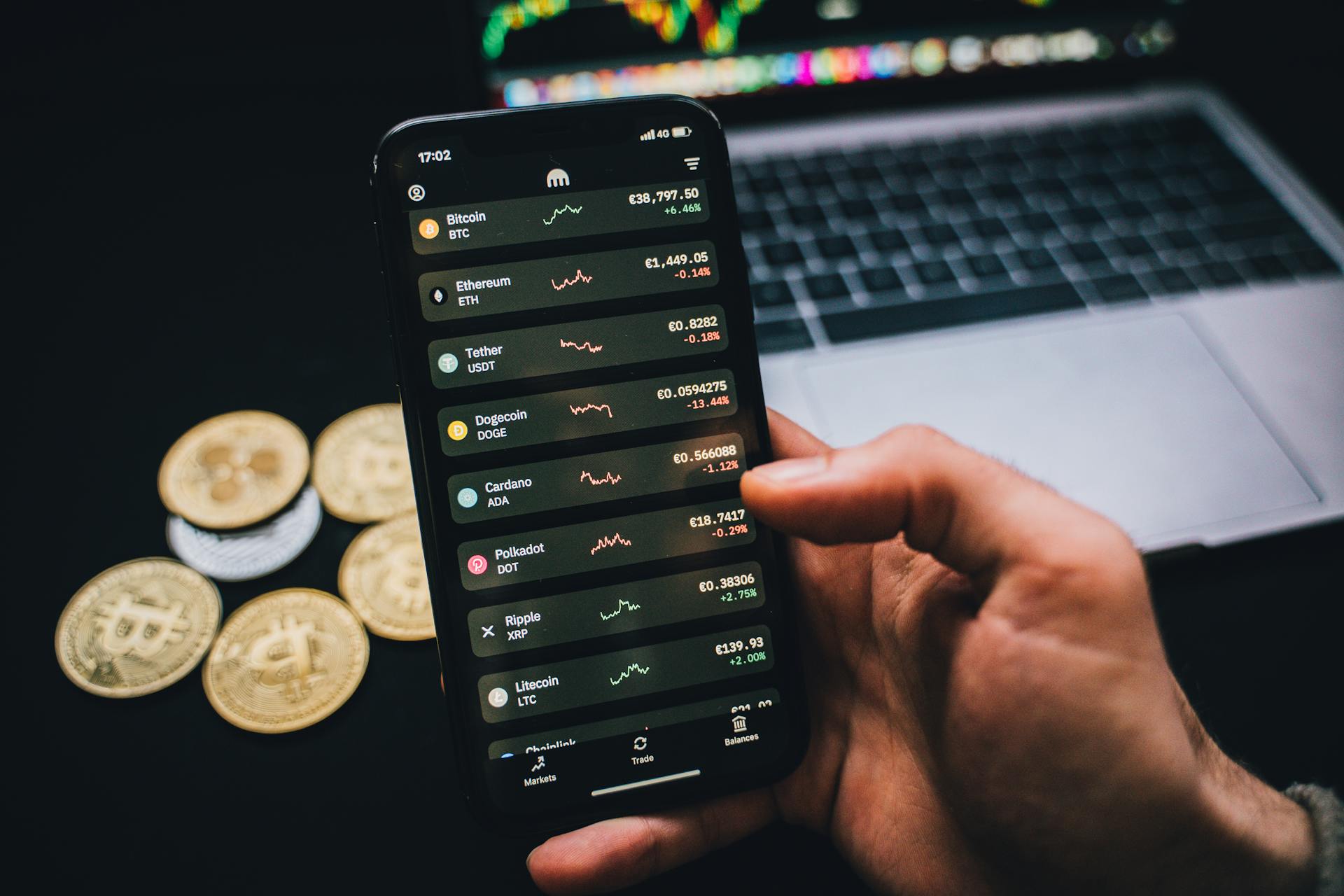
Swaps are agreements between two parties to exchange cash flows on a determined date or multiple dates. They're often used to hedge against risks, like interest rate changes or commodity price fluctuations.
A key aspect of swaps is that one party agrees to pay a fixed rate while the other party pays a floating rate. For instance, an airline company might agree to pay a fixed price for a pre-determined quantity of kerosene, while a bank agrees to pay the spot price.
Swaps can be used to hedge different types of longer-term risks, including interest rate risk on loans. They're commonly used for loans with lives of 3-5 years, but can also be used for risks spanning 20-30 years.
Swaps are analogous to a series of forward contracts, extending over a longer time period. Unlike forwards, which have settlement dates going out not more than around 12 months, swaps can have lives of 20-30 years.
Here are some key differences between swaps, forwards, and options:
- Forwards – no ‘upfront premium’ on a forward, price is simply the pre-agreed price for future delivery
- Options – pricing involves risk modelling
- Swaps – Present value of future cash flows exchanged between parties
Options
Options give you the right to buy or sell an underlying asset at a fixed price at a later date.
This flexibility is what makes options so appealing, as you have the choice to either take the pre-agreed fixed price under the option agreement or just walk away and transact at the current market price.
A relatively small investment in the option's premium can control a much larger value of the underlying asset, making options a high-risk, high-reward investment.
Options can be categorized into two main types: call options and put options. A call option is the right to buy an underlying asset, while a put option is the right to sell an underlying asset.
Options can be exercised if the current market price is more favorable than the strike price, or they can be let expire if the current market price is less favorable.
There are three positions on which the holder of an option can find themselves: in the money (ITM), at the money (ATM), and out of the money (OTM).
See what others are reading: Investment Types
In the money (ITM) options are exercised because the strike price is more favorable than the spot price. At the money (ATM) options are not exercised because the strike and spot price are equal. Out of the money (OTM) options are let expire because the strike price is higher than the spot price.
Options have a few advantages over other derivatives, including the fact that they are not binding and give you the right to buy or sell an underlying asset without obligating you to do so.
Consider reading: Types of Money
Contract Basics
Futures contracts are based on various types of tradable assets, including commodities, securities, currencies, and intangibles like interest rates and indexes. This variety is reflected in the many different kinds of futures contracts that exist.
Trading on commodities began in Japan in the 18th century with the trading of rice and silk, and similarly in Holland with tulip bulbs. This marked the early days of futures contract trading.
Here are some examples of futures contracts based on different types of assets:
- Foreign exchange market – see Currency future
- Money market – see Interest rate future
- Bond market – see Interest rate future
- Equity market – see Stock market index future and Single-stock futures
- Commodity market
- Cryptocurrencies – see Perpetual futures
A futures contract is essentially a promise to buy or sell an asset at a set price on a specific date. This is reflected in the definition of a futures contract, which states that the holder receives the amount F(s,T)−F(t,T) during any time interval [t,s].
Contract Definition
A futures contract is a derivative that gives the buyer leveraged exposure to a commodity asset. It's a way for buyers and sellers to agree on a price for an asset at a later date.
The price of entering a futures contract is equal to zero. This means that the contract itself doesn't cost anything, but the buyer and seller are still obligated to fulfill their obligations.
There are many different kinds of futures contracts, reflecting the many different kinds of "tradable" assets about which the contract may be based. This includes commodities, securities, currencies, and intangibles such as interest rates and indexes.
Here are some examples of different types of futures contracts:
- Foreign exchange market – see Currency future
- Money market – see Interest rate future
- Bond market – see Interest rate future
- Equity market – see Stock market index future and Single-stock futures
- Commodity market
- Cryptocurrencies – see Perpetual futures
Futures contracts give the buyer the obligation to buy a specific asset at a set price on the expiration date, while sellers are obligated to sell the asset on the expiration date at the agreed-upon price.
Vix
VIX is a useful tool for investors looking to hedge against market downturns. It's a measure of market price volatility that tends to gain value as markets become more volatile.
Investors can gain leveraged exposure to market price volatility through VIX futures. This can be a powerful way to amplify potential gains in a volatile market.
As markets become more volatile, VIX tends to increase in value. This can make it a useful hedge for investors looking to protect their portfolios from significant losses.
VIX futures offer investors a way to speculate on market volatility, but they can also be used as a hedge against market downturns.
Featured Images: pexels.com