
Single-entry bookkeeping is a straightforward and simple method of recording financial transactions. It involves recording each transaction only once, in a single entry, in the accounting records.
In single-entry bookkeeping, you record every transaction, whether it's an income or an expense, in a single entry. This can be done using a simple notebook or a spreadsheet.
Single-entry bookkeeping is often used by small businesses or individuals who have simple financial needs. It's a great way to get started with bookkeeping, as it's easy to understand and implement.
What is Single-Entry Bookkeeping
Single-entry bookkeeping is an accounting system used to keep track of a business's finances, where each transaction is recorded in a single entry.
This system is often used in a "cash book", a journal with columns that organize transaction details like date, description, and whether it's an expense or income.
A cash book is a larger version of a check register, using columns to organize different uses of cash for your business.
Curious to learn more? Check out: How to Start a Bookkeeping Business Online
Each transaction gets a line in the cash book, which should include the date, description, income or expense, and balance.
Here are the key items to record in a cash book:
- Transaction date
- A brief description of the transaction
- Transaction value: this can be placed in either an income (credit) or expense (debit) column
- Balance: a running tally of cash on hand
The cash book should also include a column for notes and accurate financial records.
At a minimum, a cash book should record the transaction date, description, transaction value, and balance.
You can also add a column for notes and accurate financial records to keep track of your finances.
The first entry in the cash book should be the cash balance at the beginning of the accounting period, and the last line should be the cash balance at the end of the accounting period.
Here's an example of a single-entry bookkeeping example for using a cash book:DescriptionDateNotesExpense (Debit)Income (Credit)Account BalanceStarting Balance6/12,000Rent6/38001,200Sales6/85001,700Supplies6/202001,500Ending Balance6/301,500
Recommended read: Notes Payable Accounting Journal Entry
Advantages and Importance
Single-entry bookkeeping is a simple and practical method for small businesses and individuals who aren't interested in or don't have experience with accounting. It's based on the income statement, also known as a profit or loss statement.
The IRS reports that many individuals and small businesses use single-entry bookkeeping. This method is suitable for cash-based businesses, as it efficiently tracks cash transactions.
Single-entry bookkeeping can be simple and straightforward, even for non-accounting professionals. It's also cost-effective, eliminating the need for expensive accounting software or personnel.
Here are some key benefits of single-entry bookkeeping:
- Simplicity: Easy to learn and implement
- Time-saving: Saves valuable time compared to double-entry bookkeeping methods
- Cost-effective: Eliminates the need for expensive accounting software or personnel
- Provides basic financial insights: Tracks income, expenses, and cash flow effectively
Single-entry bookkeeping can be readily adjusted to your specific business needs and provides a starting point that can be upgraded to double-entry bookkeeping as your business grows. It's also focused on producing a business's income statement, also called a profit and loss report, which is a key document to understand your company's financial health.
Intriguing read: Small Business Accounting and Bookkeeping
How to Implement
To implement single-entry bookkeeping, start by setting up a spreadsheet to track your income and expenses. This will give you a basic picture of your financial situation.
You can add a cash book to your spreadsheet to keep a more detailed record of your income and expenses. This is especially helpful if you have multiple sources of income or expenses.
To add more detail to your cash book, consider adding category account columns to separate different types of income and expenses.
A different take: Cash Method of Accounting
Example and Tutorial
Single-entry bookkeeping is a straightforward system that records each transaction with just one line. This makes it easy to track income and expenses.
In a single-entry cash book, you'll list the date of each transaction, a brief description, whether it's income or an expense, and the running bank balance. The bank balance changes with each new transaction.
You can also add columns to record invoice numbers and reconcile entries with your bank statement. This helps ensure accuracy and makes it easier to review your financial records.
Mary's bakery uses single-entry bookkeeping to track her weekly income and expenses. Her records show a clear picture of her business's financial activity.
A single-entry cash book is a simple spreadsheet that's easy to set up. It's a great tool for small businesses or those just starting out.
Each transaction in a single-entry system has one line, unlike double-entry systems that require two lines per transaction. This makes single-entry bookkeeping a more streamlined process.
Related reading: What Is Prepaid Expenses
Comparison and Limitations
Single-entry bookkeeping has its limitations, and it's essential to understand them before deciding on a system for your business.
Single-entry bookkeeping can make it harder to track liabilities and assets, which can be a significant issue for larger companies with numerous assets like vehicles, buildings, or office furniture.
Inaccurate books are a risk of single-entry bookkeeping, as there is no matching system like with double-entry, increasing the risk of common accounting errors.
Lack of information is another drawback, as single-entry bookkeeping shows less information about your business's financial health, whereas double-entry bookkeeping provides a detailed record of all the money coming in and going out of your business.
Here are some specific limitations of single-entry bookkeeping:
- Inaccurate books
- Lack of information
- Difficult tracking of assets and liabilities
Difference Between and Double
In a single-entry system, each transaction has one line, unlike a double-entry system with two lines for each transaction.
This means that in a single-entry system, you only need to record the date, a brief description, whether the money is coming in or out, and the running bank balance.
Here's an interesting read: Imprest System
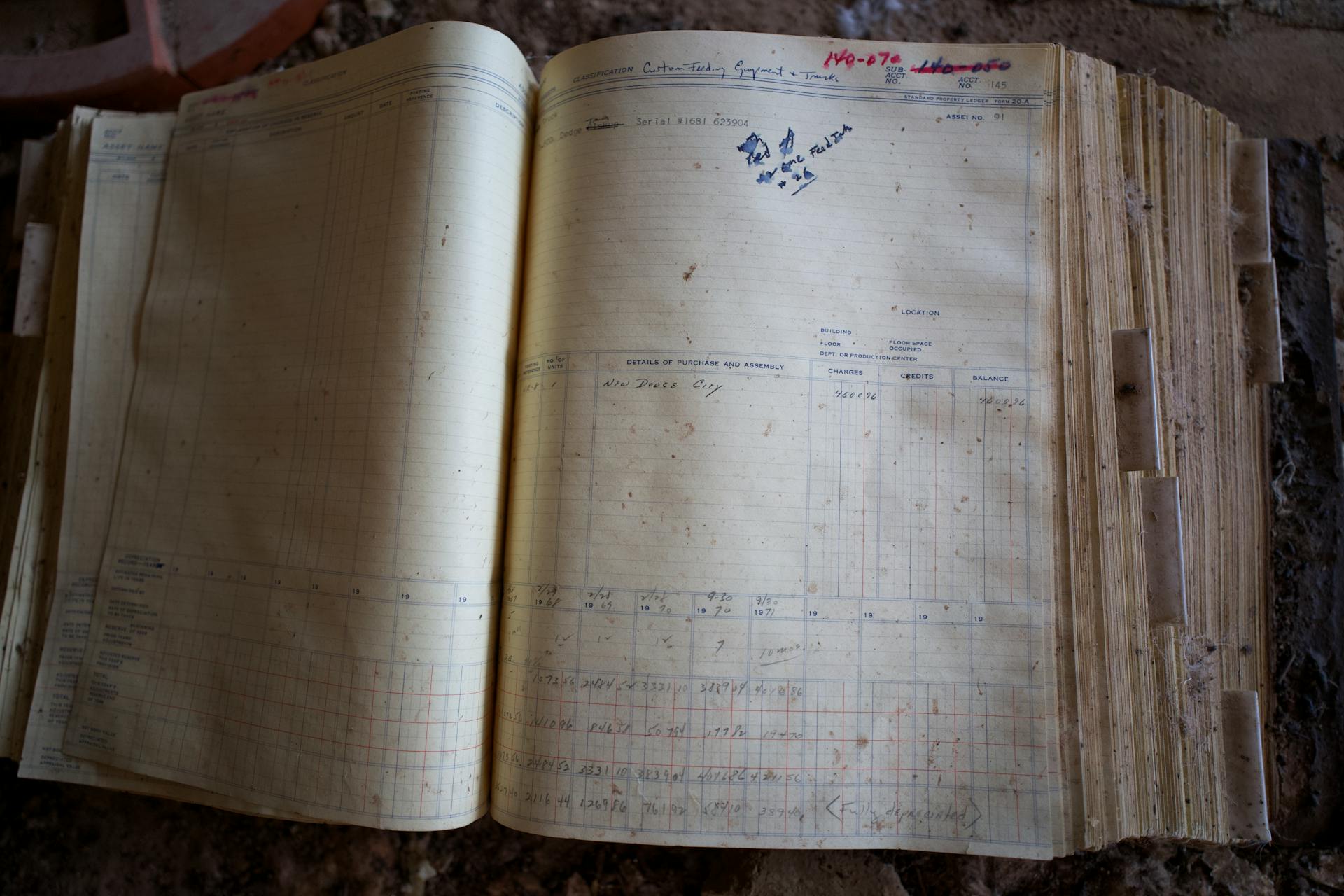
A single-entry system is a simplified way of keeping track of business transactions, but it may not be as detailed as a double-entry system.
Each transaction in a single-entry system records the date it occurred and a brief description, making it easy to see what happened.
You can also add a reference column to record invoice numbers and a reconciliation column to tick off if you've matched the entry to what's on your bank statement.
Pros and Cons of a System
Single-entry bookkeeping has its pros and cons. It's a simple system that's suitable for small businesses with limited activity, as it only requires recording transactions once. This makes it easy to adapt to your specific business needs.
One advantage of single-entry bookkeeping is that it efficiently tracks cash transactions, which are predominant for many small businesses. However, this also means it's harder to track liabilities and assets.
A single-entry system is also easy to upgrade to double-entry bookkeeping as your business grows. However, this won't be an issue if you're in a creative service-based business with few expenses related to producing your work.
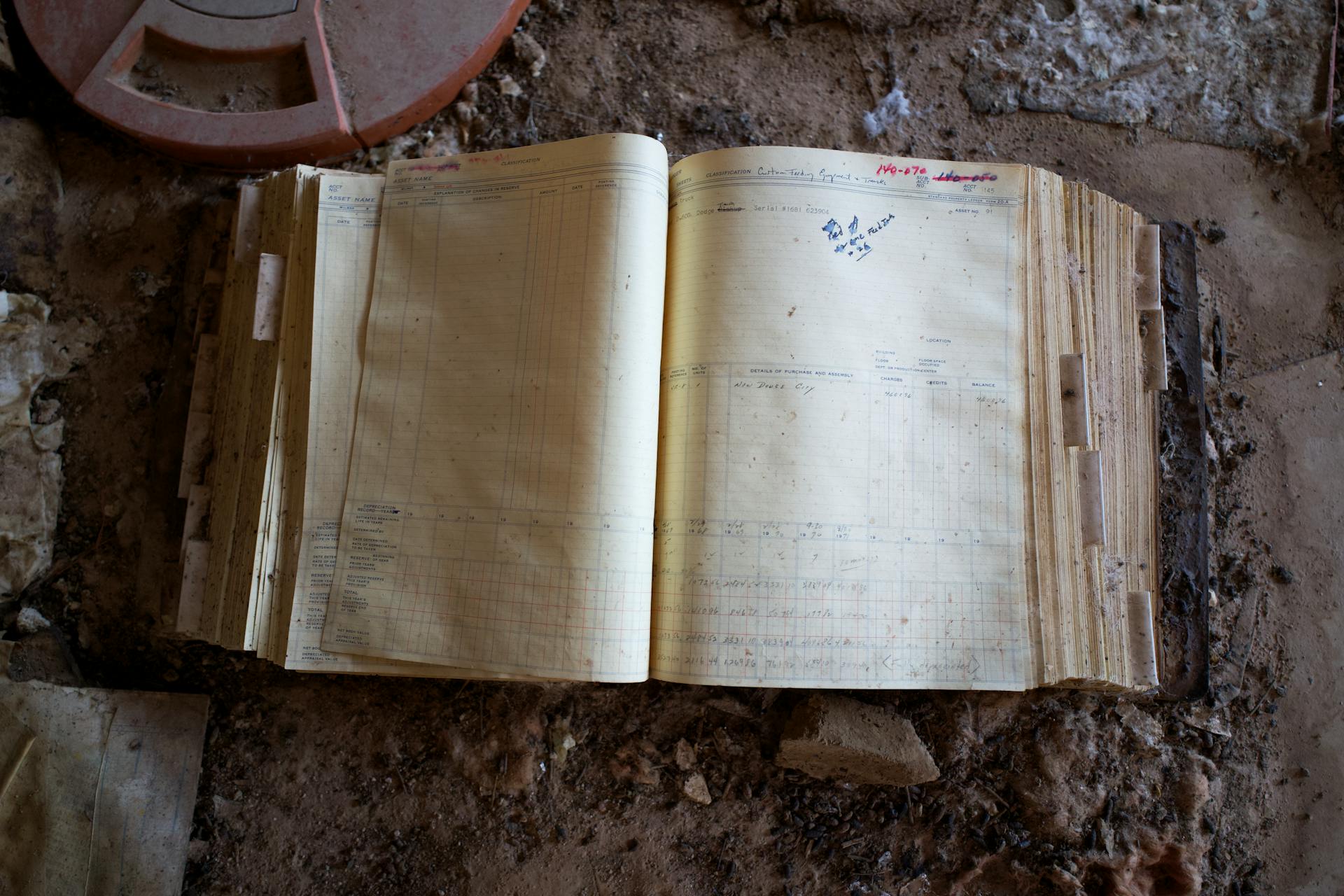
The main problem with single-entry bookkeeping is that it doesn't include accounts like accounts receivable, accounts payable, and inventory. This makes it harder to generate a balance sheet or income statement.
A key report produced by single-entry bookkeeping is a business's income statement, also called a profit and loss report (or a “P&L”). However, this report doesn't provide a detailed record of all the money coming in and going out of your business.
Here are the main pros and cons of single-entry bookkeeping:
- Suitable for small businesses with limited activity
- Easy to adapt to specific business needs
- Can be upgraded to double-entry bookkeeping as your business grows
- Suitable for cash-based businesses
However, single-entry bookkeeping also has some significant drawbacks, including:
- Inaccurate books due to lack of matching system
- Lack of information about business's financial health
- Difficult tracking of assets and liabilities
Reports and Analysis
You can use a single entry bookkeeping spreadsheet to make a Profit and Loss report, also known as an Income Statement.
This report is very simple and can be calculated by subtracting Total Expenses from Total Income.
If your income doesn't cover your expenses, you'll end up with a loss.
To turn things around and make a profit, you need to decide what changes to make to your business.
You can calculate your Net Profit (or loss) by using the formula: Total Income minus Total Expenses.
Broaden your view: Accounting Entry for Accrued Expenses
Who Uses and Benefits
Single-entry bookkeeping is a great option for small businesses and individuals with simple financial needs. If you make less than $5 million in annual gross sales or have less than $1 million in gross receipts for inventory sales, you may be able to use single-entry bookkeeping.
You're likely a good candidate for single-entry bookkeeping if you operate as a sole proprietorship, partnership, S Corp, or LLC. This method is also suitable for service businesses that collect customer payments at the point of sale.
Single-entry bookkeeping is particularly beneficial for freelancers and sole proprietors who need to track income and expenses for tax purposes. Home-based businesses can also use single-entry bookkeeping to keep tabs on their financial activity effectively.
Here are some key characteristics of businesses that can benefit from single-entry bookkeeping:
Frequently Asked Questions
What is the difference between single and double bookkeeping?
Single-entry accounting records each transaction once, while double-entry accounting records each transaction twice, as a debit and a credit, providing a more comprehensive financial picture
What are the three types of bookkeeping?
There are three main types of bookkeeping: single-entry, double-entry, and virtual bookkeeping, each offering unique advantages for businesses of varying sizes and complexities. Let's dive deeper into the specifics of each method to see which one suits your company best.
Featured Images: pexels.com