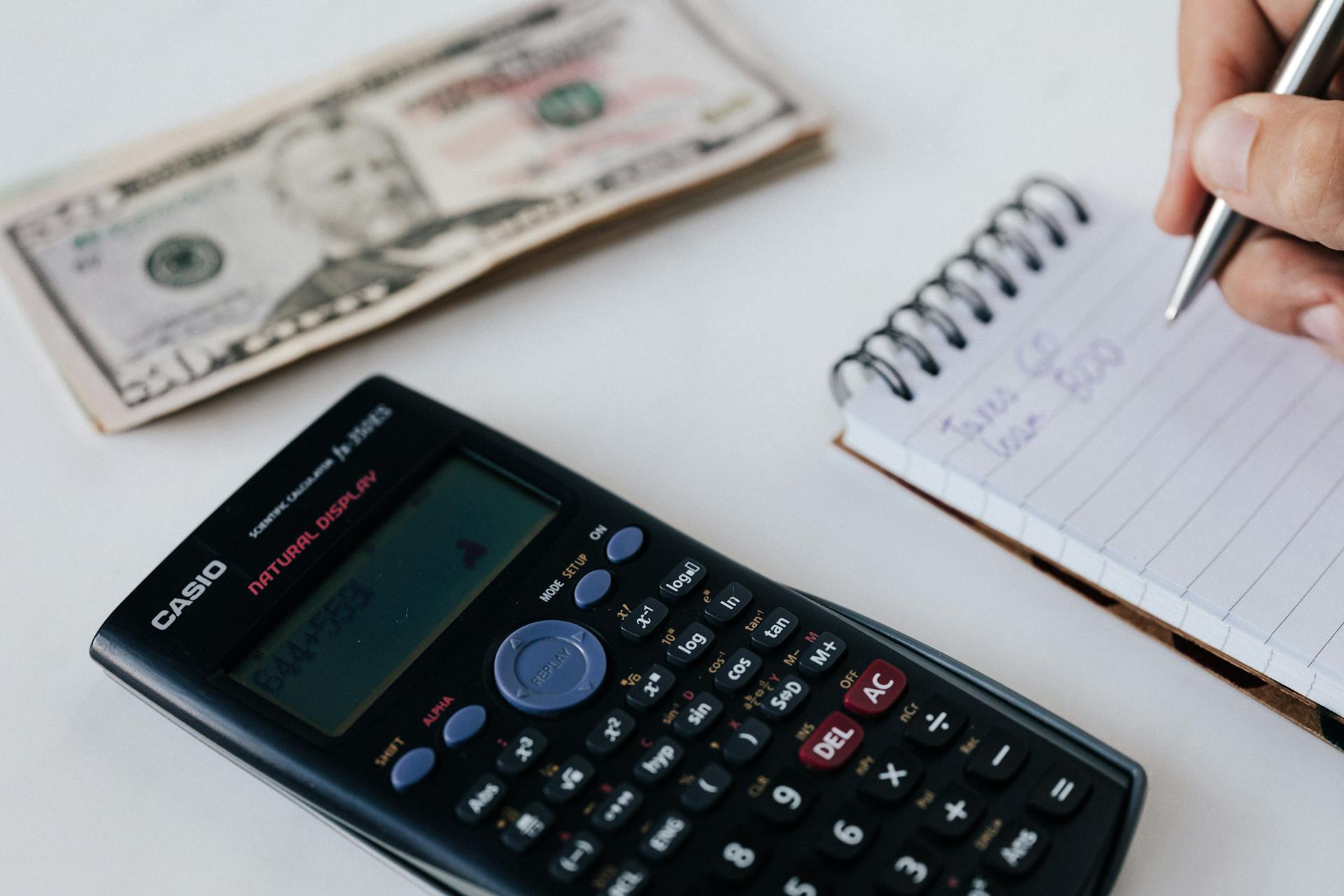
The cash method of accounting is a straightforward approach that many small businesses and individuals use to track their finances. It's based on the idea that revenue and expenses are recorded when cash is received or paid out, respectively.
The cash method is often preferred by those who don't have complex financial transactions or a large volume of sales. This method is also useful for businesses that operate on a cash basis, where customers pay upfront for goods or services.
One key benefit of the cash method is that it's easy to understand and implement.
What Is the Cash Method
The cash method is a straightforward accounting approach that recognizes revenues and expenses when cash is actually received or paid out.
This method contrasts with accrual accounting, which recognizes income at the time the revenue is earned and records expenses when liabilities are incurred, regardless of when cash is received or paid.
Check this out: Dividend Payment in Cash Flow Statement
The cash method is often used by small businesses that rely on cash payments for transactions, either for sales or expenses.
In fact, certain small businesses with average annual gross receipts of $25 million or less can generally use the cash method for federal income tax purposes.
If you're considering the cash method, it's essential to have processes in place for tracking outstanding payments to ensure accurate financial records.
This method can provide a simple and easy-to-understand financial picture, but it may not be suitable for businesses that rely heavily on credit.
Discover more: How to Record Payments in Quickbooks Online
Benefits and Advantages
The cash method of accounting is a popular choice for small business owners and independent contractors. It's simpler and less expensive than accrual accounting, making it a suitable option for those who carry no inventory.
One of the main benefits of the cash method is its ease of use. Many small businesses avoid employing accountants and using complex accounting systems because of its simplicity.
Simplicity is just the beginning. The cash method also provides a clear picture of actual cash flow, which is crucial for managing day-to-day operations. This is especially important for businesses that rely on cash flow to stay afloat.
The cash method can also offer tax benefits by deferring taxable income recognition. This means you don't have to pay taxes on income you haven't yet received.
Here are some of the key advantages of the cash method:
- Simplicity: Easier to implement and understand.
- Cash flow management: Provides a clear picture of actual cash flow.
- Tax benefits: Can offer tax advantages by deferring taxable income recognition.
Disadvantages and Limitations
Cash basis accounting has its limitations. It can paint an inaccurate picture of a business's health and growth.
A decline in sales one month can be masked by a large number of clients paying their invoices with the same period, making it difficult to project future earnings and identify trends.
Cash basis accounting can make obtaining financing more difficult due to its high probability of inaccuracies.
Not all businesses can use cash basis accounting. Corporations and partnerships with a corporation as a partner cannot use it if their average annual receipts exceed $27 million.
Cash basis accounting doesn't show accounts payable or accounts receivable, leaving a business without an accurate picture of its long-term finances.
If this caught your attention, see: Basis of Accounting
Choosing the Right Method for Your Business
Choosing the right accounting method for your business can be a daunting task, but understanding your options can help you make an informed decision. You can choose between the cash and accrual method of accounting, but the IRS requires businesses with over $25 million in average annual gross receipts from sales for the 3 preceding tax years to use the accrual method.
Businesses must use the same method for tax reporting as they do for their own accounting records. Some businesses may find a modified cash-based accounting system works best, where accrual accounting is used for long-term assets, and a cash basis is used for short-term assets.
If you're a small business with average annual gross receipts of $25 million or less for the past three years, you can generally use the cash method for federal income tax purposes. However, certain restrictions may apply, and you'll need to ensure there are processes for tracking outstanding payments.
Intriguing read: Average Cost Method
You may need to file Form 3115 with the IRS during the taxable year in which you want to make a change in accounting method. The IRS may not approve the change in accounting method depending on certain circumstances.
Here are the key factors to consider when choosing an accounting method:
- Whether you use cash payments for transactions, for either sales or expenses.
- Whether you rely on credit, either for your customers or your own bills.
- Whether you need to track outstanding payments.
Ultimately, understanding both cash-basis and accrual-basis accounting will help you pinpoint the right method for your company. It will give you access to the data you need for smart, informed financial decision-making, the cornerstone of any small business.
Suggestion: Other Comprehensive Basis of Accounting
Tax Planning and IRS Position
The cash method of accounting offers some advantages for tax planning, but it's not without its drawbacks. One of the main advantages is that you can accelerate payment of business expenses before year end to maximize tax deductions.
This means you can pay bills early to reduce your taxable income for the year. For example, if you have a large expense due in January, you can pay it in December to get the deduction for that year.
Readers also liked: What Is Prior Year Accumulated Depreciation
The IRS has taken notice of these advantages and has discouraged the use of the cash basis of accounting for tax purposes. They've seen how companies can manipulate their financial statements to minimize taxable income, especially when it comes to inventory.
The IRS has even stated that companies using the cash basis of accounting may not report any inventory in their financial statements. This can lead to manipulation of taxable income to an enormous extent.
In fact, reporting inventory at year end can be particularly problematic, as it can be used to manipulate taxable income.
You might like: How to Import Bank Statements into Quickbooks
Applicability and Examples
The cash method of accounting is surprisingly versatile and can be applied to various types of businesses.
A construction company can use the cash method to recognize revenue only upon project completion, when cash is received. This approach can lead to misleading income statements if a project spans multiple years.
Farming businesses, qualified personal business corporations, and entities with average gross receipts of $5,000,000 or less for the last three fiscal years can also use the cash method.
For small businesses, the decision to use the cash method depends on the average annual gross receipts and whether they use cash payments for transactions.
For more insights, see: Are Land Improvements Depreciated over 15 Years
Example Of
In a cash-basis accounting system, revenue is only recognized when cash is received. This can lead to misleading income statements if a project spans multiple years.
A construction company is a great example of this, as they often secure contracts that pay out upon project completion. This means they can only record revenue when the project is finished and they receive the cash.
Large losses in one year followed by significant gains in the next can create a misleading picture of a company's financial health. This is because expenses are recorded as they're paid, rather than when they're incurred.
Explore further: Public Company Accounting Oversight Board
Applicability in Other Businesses
The cash method of accounting isn't just limited to construction companies. Other types of businesses, such as farming businesses, can also use this method.
In fact, qualified personal business corporations and entities with average gross receipts of $5,000,000 or less for the last three fiscal years can also use the cash method.
The cash method is a great option for small businesses that rely heavily on cash payments for transactions.
Comparison with Accrual Method
The cash method of accounting has its own set of benefits and drawbacks when compared to the accrual method.
One key difference is that the cash method recognizes revenue and expenses when cash is received or paid, whereas the accrual method recognizes them when earned or incurred, regardless of when cash changes hands.
The accrual method provides a more complete and accurate picture of a company's financial position and results of operations, but it can also be time-consuming and complex.
In contrast, the cash method is generally simpler and easier to manage, but it may not accurately reflect a company's financial situation.
Businesses with average annual gross receipts of $25 million or less can use the cash method for federal income tax purposes, but they must use the accrual method if they have investors or lenders.
The cash method can also mask cash flow problems, making a business seem more profitable than it is, potentially leading to a cash crunch.
However, if a business relies on credit for transactions, the accrual method may provide a more accurate financial picture.
Ultimately, the choice between the cash and accrual methods depends on the specific needs and circumstances of the business.
Check this out: Deferred Income Accounting Entry
Featured Images: pexels.com