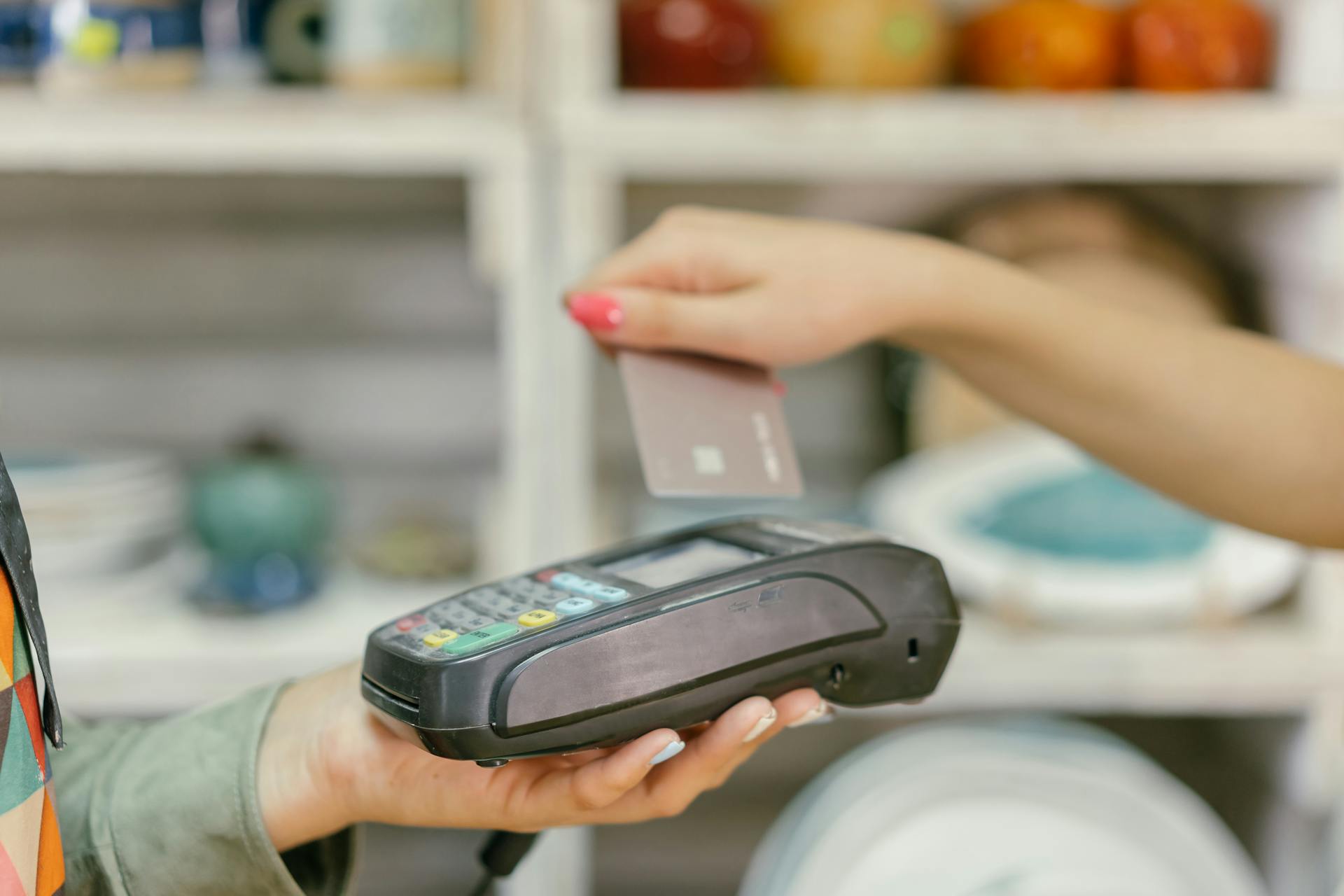
There are several types of payment gateways, each with its own set of features. The most common type is the Online Payment Gateway, which allows customers to make payments online through a website or mobile app.
This type of payment gateway is often used by e-commerce businesses and can be integrated with various payment methods, including credit cards, PayPal, and bank transfers.
One of the key features of an Online Payment Gateway is encryption, which ensures that sensitive customer information is protected.
Encryption is a must-have for any online payment system, as it prevents hackers from accessing customer data.
In addition to encryption, an Online Payment Gateway may also offer features such as recurring payments and subscription management.
Recurring payments allow businesses to automatically charge customers on a regular basis, which can be especially useful for subscription-based services.
Another type of payment gateway is the Mobile Payment Gateway, which is designed specifically for mobile devices.
Mobile Payment Gateways often use QR codes or NFC technology to facilitate payments.
They may also offer features such as in-app purchases and mobile wallet integrations.
Some businesses may also use a Point of Sale (POS) Payment Gateway, which is designed for in-person transactions.
POS Payment Gateways often use card readers and PIN pads to process payments.
They may also offer features such as inventory management and sales tracking.
Discover more: Online Banking Features
What Is a Payment Gateway
A payment gateway is a digital service that facilitates secure and encrypted transactions between a merchant and their bank and/or processor after a purchase is made. It's like a bridge that enables the transfer of funds from the customer's preferred payment method to the merchant.
A payment gateway offers a secure, frictionless experience that allows customers to make purchases via multiple channels and with any major form of payment. This reduces costs by eliminating the need for multiple vendors.
With an omnichannel payment gateway solution, you increase sales by offering convenient payment choices that keep customers happy. By providing a seamless payment experience, you can reduce cart abandonment and increase customer satisfaction.
A payment gateway is necessary for secure and convenient transactions. It's not just about accepting payments, but also about providing a smooth and hassle-free experience for your customers.
How Payment Gateways Work
Payment gateways are the unsung heroes of online transactions, working behind the scenes to ensure that your payments go through smoothly. They act as the digital equivalent of a point-of-sale terminal in a physical store, but with additional layers of security and verification.
A payment gateway sends the customer's transaction details to the merchant's bank, which forwards it to the customer's bank, verifying available funds and transaction legitimacy before sending back an approval code. This process is known as authorization.
To prevent fraud, payment gateways verify the cardholder's identity through security measures such as 3D Secure protection, which prompts the cardholder for a password or a one-time passcode. This is known as authentication.
The payment gateway sends final transaction details to card networks like Visa or Mastercard for processing, which is known as clearing. Clearing can also involve other payment networks the business uses, such as PayPal or cryptocurrency platforms.
You might enjoy: Credit Card Payment Networks
The entire process of processing a transaction through a payment gateway typically takes 2-3 seconds. However, the process from authorization to settlement to funding can take up to 3 days.
Here's a breakdown of the typical transaction process through a payment gateway:
- The order is placed
- The payment gateway may allow transaction data to be sent directly from the customer's browser to the gateway
- The merchant forwards the transaction details to their payment gateway
- The payment gateway converts the message from XML to ISO 8583 or a variant message format
- The payment processor forwards the transaction information to the card association
- The issuing bank validates the request and sends a response back to the payment processor
- The payment processor forwards the response to the payment gateway
- The entire process is repeated to "clear" the authorization by consummating the transaction
- The merchant submits all their approved authorizations to their acquiring bank for settlement
- The acquiring bank makes the batch settlement request of the credit card issuer
- The credit card issuer makes a settlement payment to the acquiring bank
- The acquiring bank deposits the total of the approved funds into the merchant's nominated account
Types of Payment Gateways
There are three main types of payment gateways that merchants should be aware of.
As a merchant, you should be aware of three main types of payment gateways: on-site payments; redirects; and checkout on-site, payment off-site.
On-site payments allow customers to enter their payment information directly on your website, providing a seamless and secure checkout experience.
Additional reading: Google Checkout
What Are the Different Types?
There are three main types of payment gateways that merchants should be aware of.
The first type is on-site payments, which allow customers to enter their payment information directly on your website.
Redirects are another type, which temporarily direct customers to a third-party website to complete their payment.
Checkout on-site, payment off-site is the third type, where customers complete their payment on your website, but the payment processing happens on a separate, secure server.
Recurring
Recurring payments are a game-changer for both merchants and customers, providing a win-win situation that benefits everyone involved. This type of payment schedule creates a convenient and flexible experience for customers, who can set up a frequency via a hosted payment page, Application Programming Interface (API), or virtual terminal.
Recurring payments increase cash flow and improve customer retention for merchants. This is because payments come in on time, every time, which means merchants can rely on a steady stream of income.
By using a PCI-compliant payment scheduler, merchants and customers can rest assured that their transactions are secure and compliant with industry standards.
Take a look at this: How Long Does Wiring Money Take Internationally
Checkout On Site, Complete Off Site
Checkout on site, complete payment off-site is a common type of payment gateway used by merchants. This type of payment gateway allows customers to complete the checkout process on the merchant's website, but the actual payment processing happens off-site.
The payment gateway performs a variety of tasks to process the transaction, including converting the message from XML to ISO 8583 or a variant message format, and forwarding the transaction information to the payment processor used by the merchant's acquiring bank. This process typically takes 2-3 seconds.
The payment processor forwards the transaction information to the card association, which may act as the issuing bank or route the transaction to the correct card issuing bank. The issuing bank validates the request and sends a response back to the payment processor with a response code to indicate whether the request was approved or denied.
Here's a step-by-step breakdown of the payment processing flow:
- The payment gateway converts the message from XML to ISO 8583 or a variant message format.
- The payment processor forwards the transaction information to the card association.
- The issuing bank validates the request and sends a response back to the payment processor.
This type of payment gateway also provides tools to automatically screen orders for fraud and calculate tax in real time prior to the authorization request being sent to the processor.
International Capabilities
You can sell online to customers in other countries without limitations, thanks to ecommerce's global reach.
Ecommerce has made it possible to attract and sell to customers internationally, and your payment gateway should make it easy to accept more than one currency.
This means you can reach a broader customer base and increase sales opportunities.
Your payment gateway should be able to handle international transactions, including multiple currencies, to make it simple for you to sell online globally.
Is PayPal a?
PayPal provides similar services to both a payment gateway and a payment processor, allowing merchants to safely accept and redeem payments to their bank accounts.
PayPal offers a gateway service called PayFlow, which is a key part of its payment processing services. This service enables merchants to securely process payments online.
PayPal's merchant accounts share many properties with a processor, making it a unique service that combines elements of both payment gateways and processors.
Here's a breakdown of the services PayPal offers:
PayPal provides both payment gateway and payment processing services, making it a versatile payment solution for merchants.
Payment Gateway Features
A payment gateway with optional features can be a game-changer for businesses that need extra protection or flexibility.
You may need additional fraud protection to safeguard against malicious transactions, or buyer authentication to verify the identity of customers.
Recurring payments are also a common requirement for businesses that offer membership fees or subscription-based services.
White Label Solution
A white label solution is a payment gateway feature that allows third parties to fully brand the payment gateway's technology as their own. This means they can own the end-to-end user experience without bringing payments operations in-house.
This approach can be beneficial for payment service providers, e-commerce platforms, ISOs, resellers, or acquiring banks who want to offer a seamless payment experience to their customers without the added responsibility of managing payments and compliance.
Some of the key features of a white label payment gateway include electronic funds transfer and merchant services.
Here are some of the benefits of a white label solution:
- Allows third parties to fully brand the payment gateway's technology
- Enables end-to-end user experience without managing payments operations
Hosted Versus Self-Hosted
Hosted payment gateways send customers to a different website to enter payment details, making it easy to get started and ensuring PCI compliance.
You'll need to weigh the benefits of a seamless customer experience against the potential drawbacks of not having control over the checkout process.
A self-hosted payment gateway collects credit card information from your site, providing a holistic customer experience, but it also puts the responsibility for security squarely on your shoulders.
Explore further: Worldremit Customer Service Phone
To avoid added liability, you'll need a self-hosted option that can provide PCI compliance.
Hosted payment forms are a secure way to accept eCommerce credit card payments without a shopping cart, reducing PCI scope and liability.
This option is a great choice for businesses that want to minimize their risk and focus on providing a smooth checkout experience.
Check this out: Pci Dss Payment Gateway
Features and Functionality
A payment gateway should deliver features that optimize payments and provide a seamless processing experience. This includes support for multiple payment methods, such as credit cards, bank transfers, and mobile payments.
To ensure a smooth checkout process, a payment gateway should be able to handle various payment types and currencies. This can include features like real-time currency conversion and automatic payment method selection.
Security is a top priority, so a payment gateway should have robust security measures in place, such as encryption and tokenization. This helps protect sensitive payment information from unauthorized access.
A good payment gateway should also be able to handle failed payments and provide a seamless retry process for the customer. This can include automatic payment retries and customizable retry logic.
By considering these features and functionality, businesses can choose a payment gateway that meets their needs and provides a seamless payment experience for their customers.
Virtual Terminal
A virtual terminal is essentially a POS device in the cloud that lets you take payments over the phone or via mail.
It's a great solution for businesses that need to process transactions remotely.
You don't need to install any software to get started - just log into the gateway and you're good to go.
A virtual terminal can handle credit, debit, or ACH one-time or recurring transactions.
Here's an interesting read: What Is a Virtual Card Payment
Payment Gateway Services
Payment acceptance can be complex, but with the right payment gateway, you can consolidate and streamline your processing into a single solution.
Payment gateways like PayPal offer similar services to both a payment gateway and a payment processor, allowing merchants to safely accept and redeem payments to their bank accounts.
PayPal's gateway service, PayFlow, is a great example of how a payment gateway can work.
A payment gateway like PayPal's PayFlow can help you secure customer data and comply with PCI standards.
You can also consider using a payment gateway service like PayPal's, which provides a secure and convenient way to accept payments.
Here are some key features to look for in a payment gateway service:
Some payment gateway services, like PayPal's, also offer a gateway service that can help you build your own payment gateway.
This can be a great option if you're looking for a high degree of customization and control over your payment processing.
Cost
Payment gateway costs can add up quickly, so it's essential to understand the fees involved.
Some payment gateways charge a combination of initial setup fees, a flat monthly fee, and a small fee for each transaction. Square, for example, charges a 10-cent fee on most card transactions.
For more insights, see: International Money Wire Transfer Fee
A flat monthly fee is also common, and can vary depending on the provider. Stripe charges a flat monthly fee, but the exact amount isn't specified.
Some payment gateways may also charge a fraction of each purchase, like Square's 2.6% of payment volume. Stripe charges 2.9%, plus 30 cents per transaction.
Equipment and installation fees may also be tacked on, depending on the provider. These fees can add up quickly, so be sure to review them carefully.
Average payment gateway fees can vary widely, depending on the provider and your requirements. Review and understand fees before choosing your provider.
Broaden your view: Apple Monthly Payments
Payment Gateway Integration
Payment gateway integration is a crucial step in setting up a secure and efficient payment system for your business. Obtaining API credentials, such as API keys or merchant IDs, is typically the first step in the integration process.
This allows your website to communicate securely with the payment gateway's servers. Integrating the payment gateway may involve using pre-built plug-ins or libraries, integrating APIs directly into your website's code, or utilizing third-party ecommerce platforms with built-in payment gateway support.
For your interest: Venmo Integration
The specific steps and requirements will vary depending on the type of payment gateway and your website's platform. However, having a clear understanding of the integration process can help you navigate the process more efficiently.
Here is a summary of the typical steps involved in payment gateway integration:
Integration
Integration is a crucial step in the payment gateway process. It's what allows your website to securely communicate with the payment gateway's servers.
To obtain the necessary API credentials, you'll need to get API keys or merchant IDs, which grant your website access to the payment gateway's services.
The integration process can be done in several ways, including using pre-built plug-ins or libraries, integrating APIs directly into your website's code, or utilizing third-party ecommerce platforms with built-in payment gateway support.
Integrating a payment gateway with your software can save you time and provide greater accuracy in transaction reconciliation. APIs allow two applications to talk to each other, while plugins allow you to modify your existing software platform.
The steps for payment gateway integration typically involve obtaining API credentials, integrating the payment gateway, and deploying it on your live website.
Here's a breakdown of the integration process:
- Obtaining API credentials (API keys or merchant IDs)
- Integrating the payment gateway (using pre-built plug-ins, APIs, or third-party ecommerce platforms)
- Deploying the payment gateway on your live website
Hosted Form
A hosted form is a secure way to accept eCommerce credit card payments without the need for a shopping cart. It's hosted by the payment gateway, so sensitive payment data doesn't pass through your system, reducing your PCI scope and minimizing your liability.
You can implement a hosted form using a standard template or customize it to fit the look and feel of your website. This way, you can maintain a cohesive brand experience for your customers.
A hosted payment form is a convenient option for getting started with payment gateway integration, as it helps ensure PCI compliance. However, it doesn't allow you to control the whole customer checkout experience.
Here are some key benefits of using a hosted form:
- Reduced PCI scope and liability
- Secure payment processing
- Convenient implementation options
Payment Gateway Security and Fraud Protection
To protect your customers' credit card data, ensure your payment gateway is PCI-compliant. This will help build trust with your customers and encourage them to complete the sale.
As a merchant, you need to be proactive about security to avoid any potential issues. If customers don't trust your website with their information, they're unlikely to complete the sale.
To outsmart fraud and increase customer confidence, you need an innovative fraud solution that delivers cyber security intelligence. This will help you accept more good transactions and reduce fraud rates.
A good fraud solution should be able to detect and prevent fraudulent activity, giving you peace of mind and protecting your business.
Expand your knowledge: Four Corners Model for Payment Security
Payment Gateway Customer Experience
A smooth payment gateway experience is crucial for customer satisfaction. You don't want your customers to get frustrated if your website won't accept their preferred payment method.
Security is essential, but it's not the only thing to consider. Your payment gateway should let you process the payment types your customers prefer.
Consider reading: T Mobile down Payments
A good payment gateway will help you avoid lost sales and customer dissatisfaction. If your website can't handle a customer's preferred payment method, they might just take their business elsewhere.
Your payment gateway should be able to handle a variety of payment types, including credit cards, debit cards, and online payment services like PayPal.
For your interest: Gift Cards as Payment
Payment Gateway Optional Features
Some businesses may require extra features that other merchants don't provide, like additional fraud protection.
These features can be a lifesaver for businesses that handle a lot of transactions, especially if they're selling high-value items or dealing with sensitive customer information.
Additional fraud protection can help prevent chargebacks and keep your business safe from financial losses.
Buyer authentication is another important feature that can verify a buyer's identity and reduce the risk of fraudulent transactions.
The ability to process recurring payments, like membership fees, can also be a game-changer for businesses that offer subscription-based services.
Payment Gateway Basics
A payment gateway is the bridge between a merchant's website or application and the payment processor. It securely transmits payment information to the payment processor for processing.
Payment information is typically entered into an eCommerce website, hosted payment form, or mobile app, or hand-keyed into a virtual terminal. This information is then sent to the payment gateway, which forwards it to the payment processor for processing.
In today's digital economy, payment gateways have expanded to create a seamless purchasing experience across all sales channels and devices. They can integrate payments with existing software, process transactions at a point-of-sale system or on a mobile device, and even accept NFC payments.
What Is a CPU?
A CPU, or Central Processing Unit, isn't actually related to payment gateways, but I'll explain what it is for context. It's the main component of a computer that performs calculations and executes instructions.
A CPU is responsible for handling the basic arithmetic, logic, and control operations of a computer, but it's not relevant to our discussion of payment gateways.
A payment processor, on the other hand, is responsible for the movement of funds between the customer and merchant, passing the customer's credit card information to the issuing bank to request a hold of funds.
Here are the key differences between a payment processor and a payment gateway:
- A payment processor is responsible for the movement of funds between the customer and merchant.
- A payment gateway is the “gateway” between merchant and payment processor and is responsible for obtaining the customer’s credit card information and payment data from the merchant.
Do You Need?
Do You Need a Payment Gateway?
If you accept credit card payments online or on a mobile device, you'll need a payment gateway. Without it, you won't be able to verify a customer's credit card information, process payments, or finalize the sale.
A payment gateway is not necessary if your business is brick-and-mortar only, as your point-of-sale terminal will authorize the credit card payment using the chip reader.
If you plan to offer a hybrid of online and offline sales, it can make sense to incorporate a payment gateway into both your ecommerce and in-store checkout process.
The Basics
A payment gateway is a crucial tool for any business that wants to accept online payments. It's essentially a middleman between your business and the payment processor, allowing you to securely process transactions.
You might enjoy: Online Payments for Business
To start, a payment gateway is not just for online transactions. It can also be used to process swiped or dipped transactions at a point-of-sale system (POS) or on a mobile device. This is possible due to the expanded capabilities of gateway technology in today's payments industry.
Payment information is typically entered into an eCommerce website, hosted payment form, or mobile app. Alternatively, it can be hand-keyed into a virtual terminal.
Here are some key features of a payment gateway:
- Integrates payments with existing software that merchants and consumers use daily
- Processes swiped or dipped transactions at a point-of-sale system (POS) or on a mobile device
- Accepts tapped or waved transactions using near field communication (NFC) technology
A payment gateway can both process and authorize a transaction, which is a key difference between it and a payment processor.
Payment Gateway Examples
Payment gateways are the backbone of online transactions, connecting merchants to their acquiring banks and facilitating secure payment processing.
Square is a notable example of a payment gateway, offering flexible mobile payments for retail businesses. Its Square Reader technology allows customers to swipe their payment cards for processing through a mobile phone's electronic connection.
Large banks like Bank of America and JPMorgan Chase also offer sophisticated payment gateway systems to their customers. Merchants can choose from various payment gateway technologies as long as they are compatible with their merchant acquiring bank.
PayPal provides payment gateway services, and Payeezy is another alternative payment gateway that helps merchants establish or improve their customers' online shopping experience.
First Data
First Data offers a payment gateway that allows businesses to accept secured payments through their website. This solution provides real-time authorization responses from major card brands and local payment providers.
With First Data Gateway, businesses can access a range of services including tokenization, hosted payment form options, and a virtual terminal for manual transactions.
Payeezy
Payeezy is an alternative payment gateway that offers a dynamic eCommerce solution to help merchants sell online and compete in the ever-changing marketplace. It provides easy access to everything needed to establish or improve customers' online shopping experience.
Payeezy goes beyond accepting payments, empowering merchants to think bigger and work smarter. This is a key feature that sets it apart from other payment gateways.
Payeezy's payment gateway is designed to make it easy to sell online, giving merchants the tools they need to succeed in today's competitive market.
Is Google Wallet a Payment Method?
Google Wallet is a digital wallet that makes it easier to interact with payment gateways. It stores encrypted card data on users' phones, allowing them to safely pay without having their cards present.
Google Wallet is not a payment gateway itself, but rather a tool that facilitates interactions with payment gateways.
Example of a
Payment Gateway Examples are all around us, and they come in many shapes and sizes. Square is a great example of a payment gateway that allows merchants to easily accept payments at ad-hoc locations like conventions or farmer's markets.
Square's technology, known as the Square Reader, is a small piece of hardware that attaches to a merchant's mobile phone, allowing customers to swipe their payment card for processing. The Square Reader sends the payment information to the merchant's acquiring bank, which then processes the information momentarily.
A different take: Top Merchant Banks
Large banks like Bank of America and JPMorgan Chase also offer sophisticated payment gateway systems to their customers. These systems are often used in conjunction with merchant acquiring bank services.
Payment gateway providers can be financial institutions, dedicated payment service providers, or specialized fintech companies. PayPal, for example, provides payment gateway services, making it easier for merchants to accept payments online.
Here are some examples of payment gateway providers:
Google Wallet is a digital wallet that makes it easier to interact with payment gateways. It stores encrypted card data on a user's phone, allowing them to safely pay without having their cards present.
Payment Gateway Key Takeaways
Payment gateways are interfaces used to collect consumer payment information, which is a crucial aspect of online commerce.
In physical stores, payment gateways consist of point-of-sale (POS) terminals used to accept credit card information by card or by smartphone.
Online stores use payment gateways as "checkout" portals to enter credit card information or credentials for services.
Payment gateways are distinct from payment processors, which use customer information to collect payments on behalf of the merchant.
There are also payment gateways that facilitate payment in cryptocurrencies like Bitcoin.
Here's a quick rundown of the types of payment gateways:
- Physical stores: POS terminals
- Online stores: "Checkout" portals
- Cryptocurrencies: Specialized payment gateways
Featured Images: pexels.com