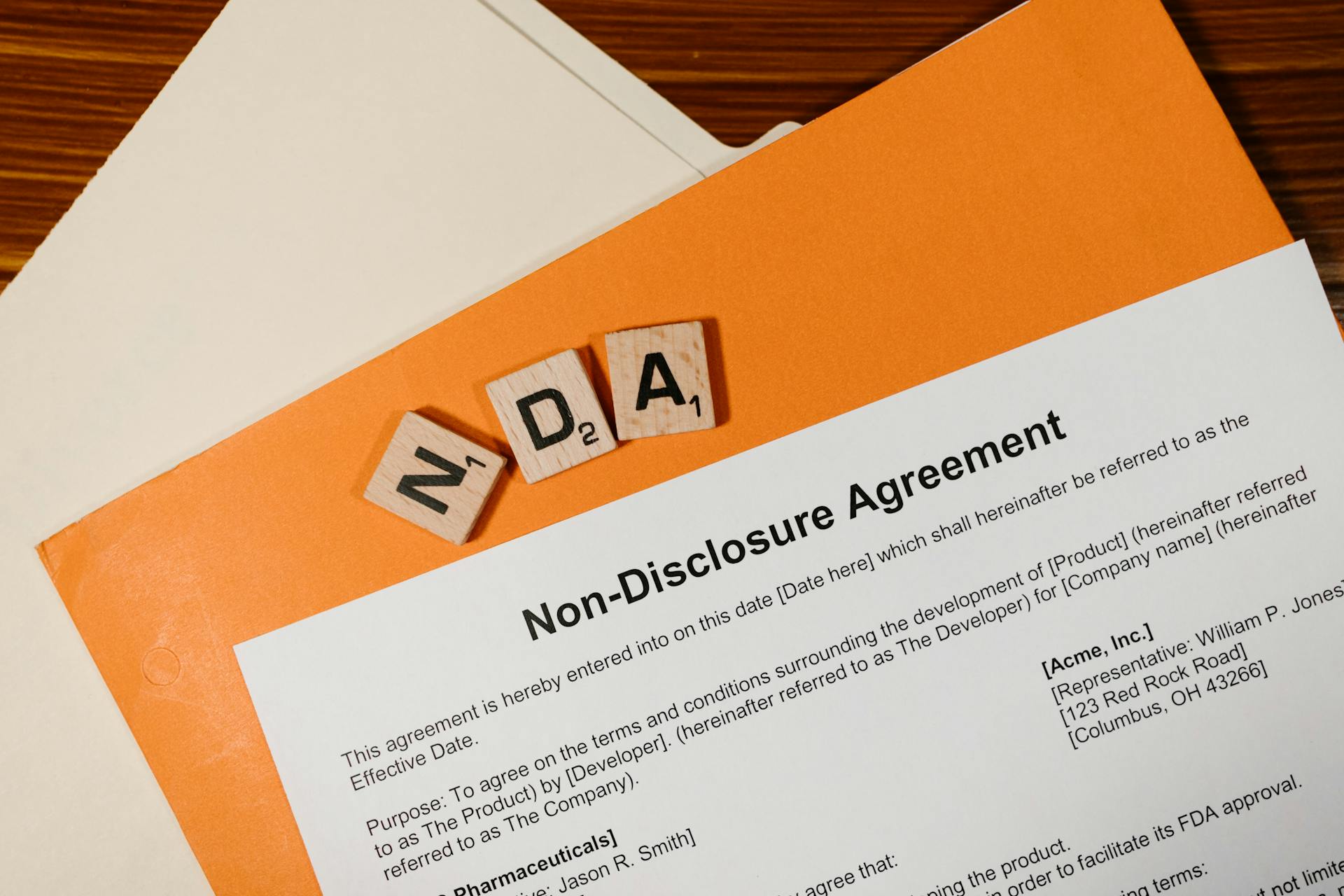
The NLRB's confidentiality agreements are facing new scrutiny. The agency has been criticized for requiring employees to sign agreements that restrict their ability to discuss workplace issues.
This trend is particularly concerning in cases involving labor disputes. In one notable case, the NLRB required employees to sign agreements that prohibited them from discussing their wages and working conditions.
The implications of these agreements are far-reaching. They can prevent employees from exercising their right to organize and engage in collective bargaining.
The NLRB's use of confidentiality agreements has sparked a debate about the balance between employee free speech and employer interests.
Readers also liked: Should I Sign an Arbitration Agreement with My Employer
NLRB Decisions and Precedents
The NLRB's stance on confidentiality agreements has been a topic of debate. In 2020, the Trump-era NLRB issued two decisions holding that non-disparagement and confidentiality provisions in severance agreements were lawful.
These decisions, Baylor and IGT, allowed employers to include such provisions as long as they were voluntary and didn't affect the terms and conditions of employment. However, this precedent was short-lived.
Recommended read: Confidentiality Provisions in Settlement Agreements
The NLRB later overruled these decisions in McLaren Macomb, reverting to earlier precedent that prohibits employers from using provisions that have a "reasonable tendency to interfere with, restrain, or coerce the employee's rights under Section 7 of the NLRA."
The McLaren Macomb decision specifically highlighted the issue with broad non-disparagement and confidentiality provisions that could deter employees from filing unfair labor practices or assisting in NLRB investigations.
NLRB Rules and Violations
The NLRB has specific rules governing confidentiality agreements, which can have significant implications for employees and employers alike. The NLRB considers confidentiality agreements to be overly broad if they restrict employees from discussing their own wages, benefits, or working conditions.
If a confidentiality agreement is deemed overly broad, the NLRB may find that it violates the National Labor Relations Act. This can lead to costly penalties and damage to an employer's reputation.
The NLRB has ruled that confidentiality agreements can be valid if they are narrowly tailored to protect legitimate business interests, such as trade secrets or confidential information. For example, in the case of a company that develops proprietary software, a confidentiality agreement may be necessary to protect the company's intellectual property.
Take a look at this: NLRB V. Noel Canning
However, even narrowly tailored confidentiality agreements can still be problematic if they are used to suppress employee discussions about union organizing or other protected activities. The NLRB has found that such agreements can be a form of retaliation against employees who engage in protected activities.
In one notable case, the NLRB ruled that a confidentiality agreement was overly broad and violated the NLRA because it prohibited employees from discussing any "confidential" information, without defining what that term meant. This lack of clarity made it difficult for employees to know what information was off-limits for discussion.
Case Studies and Examples
Let's take a look at some case studies and examples of NLRA confidentiality agreements in action.
In the case of NLRB v. Katz, the court ruled that a confidentiality agreement that prohibited employees from discussing their wages and benefits was an unfair labor practice.
Confidentiality agreements can be used to protect trade secrets and confidential business information, but they must be carefully drafted to avoid violating the NLRA.
In the case of a company called D.R. Horton, the NLRB found that a confidentiality agreement that prohibited employees from discussing their working conditions was an unfair labor practice.
Employees are generally free to discuss their working conditions with their coworkers, but confidentiality agreements can sometimes be used to restrict this right.
In the case of a company called Banner Health, the NLRB found that a confidentiality agreement that prohibited employees from discussing patient information was an unfair labor practice.
Confidentiality agreements can be used to protect sensitive information, but they must be carefully drafted to avoid violating the NLRA.
The NLRB has also found that confidentiality agreements that prohibit employees from discussing their union activities are an unfair labor practice.
Confidentiality agreements can be used to protect confidential information, but they must be carefully drafted to avoid violating the NLRA.
In the case of a company called Boeing, the NLRB found that a confidentiality agreement that prohibited employees from discussing their safety concerns was an unfair labor practice.
Employees have a right to discuss their safety concerns with their coworkers and the NLRB has ruled that confidentiality agreements that prohibit this are an unfair labor practice.
Worth a look: Labor Peace Agreement
Takeaways
The NLRA prohibits employers from requiring employees to sign confidentiality agreements that restrict their ability to discuss wages, benefits, or working conditions.
Confidentiality agreements that restrict employees from discussing workplace issues can be a violation of the NLRA.
The NLRB has found that such agreements can be overly broad and limit employees' ability to engage in protected concerted activity.
Employers should carefully review their confidentiality agreements to ensure they do not restrict employees' rights under the NLRA.
The NLRB has the authority to investigate and litigate complaints about confidentiality agreements that may be in violation of the NLRA.
Employers who have been found to have violated the NLRA by requiring overly broad confidentiality agreements may be required to rescind the agreements and pay back wages to affected employees.
Featured Images: pexels.com