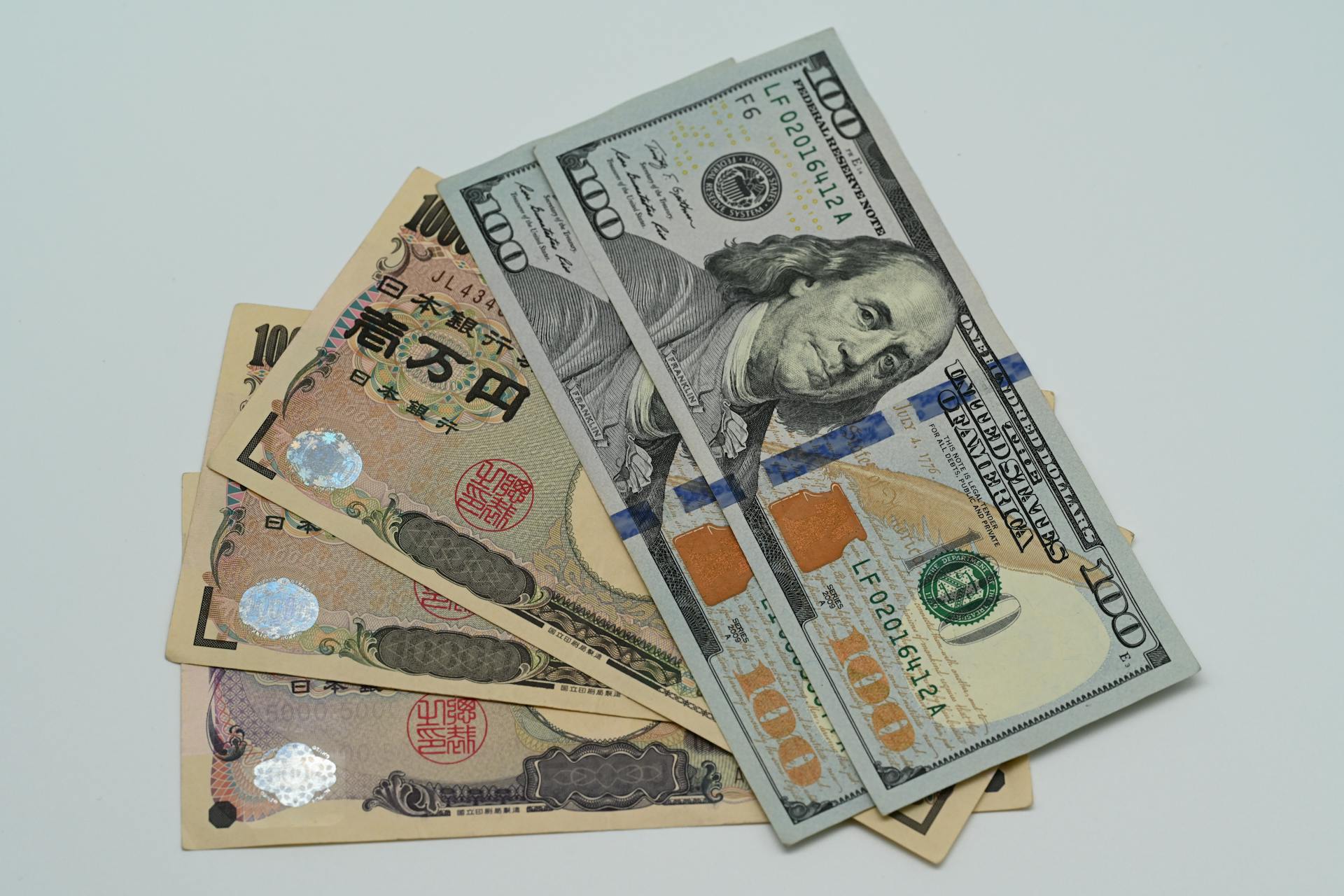
Foreign exchange reserves are a vital component of a country's financial arsenal, and understanding how they accumulate and are managed is crucial for anyone interested in international finance.
Countries accumulate foreign exchange reserves by earning foreign exchange through exports, foreign investment, and remittances from their citizens working abroad. This foreign exchange is then added to their reserve accounts.
A country's foreign exchange reserves can be held in various forms, including foreign currencies, gold, and special drawing rights (SDRs). The International Monetary Fund (IMF) issues SDRs, which are a synthetic currency pegged to a basket of major currencies.
Accumulating foreign exchange reserves is a long-term process that requires careful planning and management.
What Are Foreign Exchange Reserves?
Foreign exchange reserves are assets held by central banks or states in the form of foreign currencies or gold. They ensure that the country has sufficient liquidity to carry out foreign exchange transactions or cope with a balance of payments deficit.
Foreign exchange reserves can be held in various forms, including foreign banknotes, foreign bank deposits, foreign treasury bills, and short and long-term foreign government securities. These assets are also known as reserve assets.
A central bank can use its foreign exchange reserves to intervene in FX markets and influence its currency's exchange rate. For example, if the European Central Bank sells some of its dollar reserves for euro, the euro will appreciate against the dollar.
Foreign exchange reserves are assets on a central bank's balance sheet, along with domestic credit. They are classified as reserve assets in the capital account of the balance of payments.
Some common types of foreign exchange reserves include:
- Gold bullion
- Unallocated gold accounts
- Special drawing rights
- Currency
- Reserve position in the IMF
- Interbank position
- Other transferable deposits
- Other deposits
- Debt securities
- Loans
- Stocks (listed and unlisted)
- Investment fund shares
- Financial derivatives, such as forward contracts and options
Accumulation and Management
Foreign exchange reserves have been growing at a rapid pace since the end of the Bretton Woods system in the early 1970s. This is counterintuitive, as many countries adopted flexible exchange rates, which in theory don't require reserves.
In many countries, foreign reserves have grown more than GDP and imports. The only ratio that remains relatively stable is foreign reserves over M2.
The Banque de France manages its foreign exchange reserves through proprietary transactions, which include managing foreign exchange reserves, transactions on behalf of foreign central banks, and monetary policy operations.
The Banque de France holds its foreign currency assets primarily in US dollars, but also invests in other currencies to diversify its risk.
Benefits and Importance
Foreign exchange reserves play a crucial role in maintaining a country's economic stability. They provide a cushion against economic shocks and help countries manage their exchange rates.
Having sufficient foreign exchange reserves allows countries to import essential goods and services, even during times of economic downturn. This is evident in the case of Japan, which has maintained a large foreign exchange reserve to mitigate the effects of the 2011 tsunami.
Foreign exchange reserves also enable countries to implement monetary policy effectively. As seen in the example of China, a country with a large foreign exchange reserve can use it to intervene in the foreign exchange market and manage inflation.
Precautionary Aspect

Maintaining reserves is crucial for countries to prepare for potential crises, especially balance of payments crises. The International Monetary Fund (IMF) was created to help countries accumulate reserves and borrow from it in times of need.
Countries maintain reserves to ensure no interruption in international trade. A common rule followed by central banks is to hold at least three months of imports in reserve.
The creation of the IMF was a response to the need for countries to accumulate reserves. The process of obtaining resources from the Fund is not automatic, which can cause problematic delays, especially when markets are stressed.
Countries engaging in international trade often maintain reserves to cover several months of imports. The ratio of reserves to foreign trade is closely watched by credit risk agencies.
The Bottom Line
Foreign exchange reserves can provide a vital buffer for countries in times of crisis, serving as a safeguard against a country's own currency losing value. This is especially important for countries like China, which holds the world's biggest foreign exchange reserve.
China's massive reserve is a testament to the country's economic prowess and strategic decision-making. According to the Federal Reserve Bank of St. Louis, China's total reserves excluding gold are substantial.
Having a large foreign exchange reserve can also provide a country with greater financial flexibility and stability. This is crucial for countries that rely heavily on international trade, like Russia, which has seen its FX reserves slip from its grasp.
Here's a rough breakdown of the top countries with the largest foreign exchange reserves:
Note: The exact reserve amounts are not specified in the provided article sections, but China and Russia are mentioned as having significant reserves.
Costs and Adequacy
Maintaining large currency reserves comes with costs. Fluctuations in exchange rates result in gains and losses in the value of reserves, and the purchasing power of fiat money decreases constantly due to devaluation through inflation.
A central bank must continually increase the amount of its reserves to maintain the same power to manage exchange rates. Reserves of foreign currency may provide a small return in interest, but this may be less than the reduction in purchasing power of that currency over the same period of time due to inflation.
You might like: Inflation and Foreign Exchange Rate
The cost of reserves can be measured in various ways, including the spread between government debt and the yield on reserves. However, this measure can overstate the cost, as higher reserves can decrease the perception of risk and thus the government bond interest rate.
The Swiss National Bank's experience with accumulating reserves during the 2008 crisis is a notable example. The bank accumulated reserves for 15 months, but ultimately let the currency appreciate, resulting in a loss of CHF 27 Billion or 5% of GDP in 2010.
Reserves that are above the adequacy ratio can be used in other government funds invested in more risky assets or as insurance to time of crisis. Norway, Singapore, and Persian Gulf States are among the countries that could use their excess reserves in this way.
For your interest: Government Securities Interest Rate
Costs
Maintaining large currency reserves comes with a cost. Fluctuations in exchange rates result in gains and losses in the value of reserves.
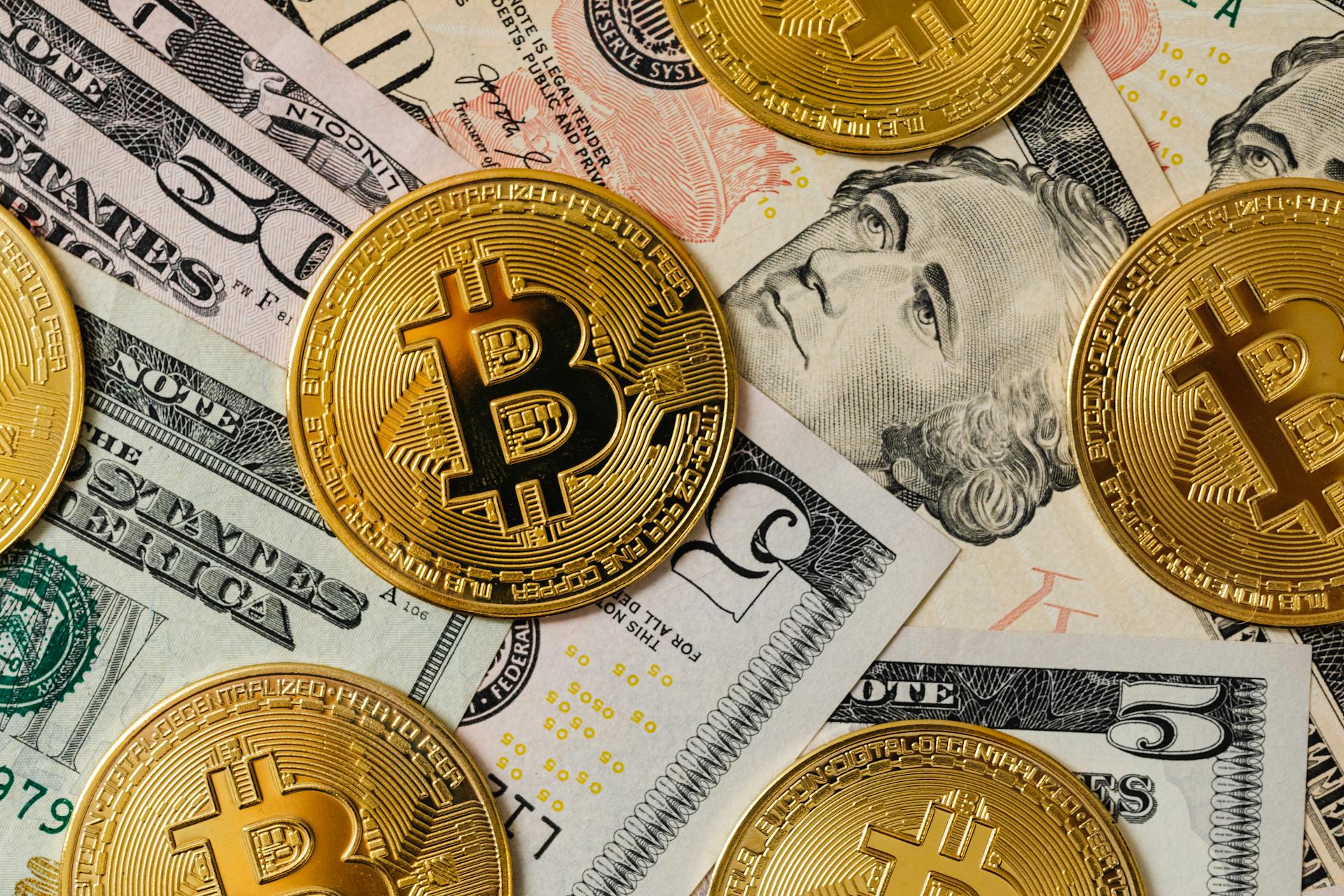
The purchasing power of fiat money decreases constantly due to devaluation through inflation. This means a central bank must continually increase the amount of its reserves to maintain the same power to manage exchange rates.
A central bank may receive a small return in interest on its foreign currency reserves, but this may be less than the reduction in purchasing power of that currency over time due to inflation. This results in a negative return known as the "quasi-fiscal cost".
Large currency reserves could have been invested in higher-yielding assets, potentially generating more revenue than the return on reserves. However, this would have meant forgoing the potential benefits of holding reserves.
Calculating the cost of reserves can be tricky, but one way is to compare the yield on government debt with the yield on reserves. However, this method may overstate the cost because higher reserves can decrease the perception of risk and thus lower government bond interest rates.
Another approach is to compare the yield on reserves with the alternative scenario of investing the resources in the economy's capital stock. However, this is difficult to measure accurately.
Check this out: Interest Rate and Foreign Exchange
The cost of reserves can be significant, reaching as high as 1% of GDP for developing countries. This may seem high, but it's worth considering as a form of insurance against a crisis that could easily cost 10% of GDP.
The Swiss National Bank's experience is a case in point. In 2010, the bank accumulated reserves to resist the appreciation of the Swiss franc, but ultimately lost CHF 27 Billion, or 5% of GDP, due to the devaluation of its reserves.
Adequacy and Excess
The IMF proposed a new metric to assess reserves adequacy in 2011, which takes into account various components of the balance of payments and the probability of tail events.
This metric helps to determine the risk of a crisis and the drop in consumption during a crisis, with a higher ratio of reserves to the developed metric indicating a lower risk.
The Fund's analysis shows that reserves ratios are generally adequate among emerging markets.
For more insights, see: What Is Foreign Exchange Rate Risk
Norway, Singapore, and Persian Gulf States have reserves that are above the adequacy ratio, which can be used in other government funds invested in more risky assets or as insurance for times of crisis.
Singapore has significant government and sovereign wealth funds, including Temasek Holdings (last valued at US$375 billion) and GIC (last valued at US$440 billion).
If excess reserves were included, Norway, Singapore, and Persian Gulf States would rank higher on the lists, and the United Arab Emirates' estimated $627 billion Abu Dhabi Investment Authority would be second after China.
Worth a look: Us Dollar to Hong Kong Dollar Exchange Rate History
Global Perspective
Global foreign exchange reserves decreased by 3.0 percent in 2024Q4, reaching $12.36 trillion.
This decline was largely due to the depreciation of reserve currencies against the US dollar.
The US dollar's share in allocated reserves increased to 57.80 percent in 2024Q4, up from 57.30 percent in 2024Q3.
This increase was a result of the dollar's strength against other currencies.
Here's an interesting read: Us Bank Altitude Reserve vs Chase Sapphire Reserve
The euro's share in allocated reserves decreased to 19.83 percent in 2024Q4, down from 20.03 percent in 2024Q3.
However, if exchange rates had not moved, the euro's share would have increased by 0.71 percentage point.
The Chinese renminbi's share in allocated reserves remained unchanged at 2.18 percent in 2024Q4.
It would have increased by 0.02 percentage point if exchange rates had not moved.
Other currencies, excluding the US dollar, euro, and renminbi, made up 20.19 percent of allocated reserves in 2024Q4, down from 20.50 percent in 2024Q3.
For your interest: Railway Finance Corporation Share Price
Currency Composition Trends
Currency composition trends have shifted over the years, with a notable increase in the use of US dollars in foreign exchange reserves.
In 2019, the US dollar accounted for 61.8% of global foreign exchange reserves, a significant rise from 55.6% in 2016.
The euro, on the other hand, has seen a decline in its share, dropping from 20.5% in 2016 to 19.1% in 2019.
The Japanese yen has also experienced a decline, its share decreasing from 5.6% in 2016 to 4.6% in 2019.
The Chinese renminbi has been steadily increasing its share, rising from 1.8% in 2016 to 2.6% in 2019.
Curious to learn more? Check out: Us Foreign Currency Reserves
Country-Specific Data
Foreign exchange reserves are reported in different currencies by various countries, but the figures are converted to U.S. dollars for consistency. This is done using currency exchange rates and the gold price at the reported date.
Not all countries keep gold as reserves, as it incurs physical storage costs and risks. Countries that do keep gold as reserves are not listed separately, as the data is included in the overall foreign exchange reserves figure.
To get an idea of the foreign exchange reserves held by different countries, here is a list of some countries' reserves, excluding gold:
Countries by Currency
Countries by Currency is a fascinating topic, and it's actually closely related to foreign exchange reserves. Foreign exchange reserves are the foreign currency holdings of a country's central bank, and they can be a key indicator of a country's economic health.
The list of countries by foreign-exchange reserves is a useful tool for understanding the global economy. It shows which countries have the largest stockpiles of foreign currency, and which ones are most likely to have a stable economy.
One thing that's interesting to note is that some countries have a significant amount of foreign exchange reserves, which can be a sign of economic strength. For example, China has the largest foreign exchange reserves in the world, with over $3 trillion in holdings.
Here's a list of the top 5 countries by foreign exchange reserves, based on the latest data:
These countries have a significant amount of foreign currency at their disposal, which can help them weather economic storms and make strategic investments in other countries.
Country Wise
Country-wise forex reserves are a fascinating topic. The figures below have been converted to U.S. dollars, as different countries report data in different currencies.
The U.S. dollar equivalents have been calculated using currency exchange rates as well as the gold price at the reported date. Not all countries keep gold as reserves to avoid physical storage costs & the risks associated with it.
Here's a brief overview of the data:
Note that these figures are subject to change and might not reflect the current data.
Key Takeaways
Foreign exchange reserves are assets held by a nation's central bank in a foreign currency, including foreign currencies, bonds, treasury bills, and government securities.
Most foreign exchange reserves are held in U.S. dollars, with China being the largest foreign currency reserve holder in the world, holding over $3 trillion of its assets in a foreign currency.
Economists suggest that it's best to hold foreign exchange reserves in a currency that is not directly connected to the country's own currency, making it easier to execute international trade.
The world's top foreign exchange reserve holders include China, Saudi Arabia, and the U.S., with China holding the largest reserves of over $3 trillion.
Here's a breakdown of the top three foreign exchange reserve holders:
Russia also holds foreign exchange reserves, with most of its reserves held in U.S. dollars and some in gold, which can be a risk due to its underlying value.
Frequently Asked Questions
Who has the largest foreign exchange reserves?
As of July 2025, China holds the largest foreign exchange reserves, totaling US$3.292 trillion. This is managed by the State Administration of Foreign Exchange (SAFE) and the People's Bank of China.
What are the 5 reserve currencies?
The SDR is based on a basket of five reserve currencies: US dollar, euro, Chinese renminbi, Japanese yen, and British pound sterling. These currencies form the foundation of the SDR's value.
Featured Images: pexels.com