
Foreign exchange fraud is a serious issue that can have devastating consequences for individuals and businesses alike. It's estimated that over 10,000 people are victims of foreign exchange scams every year.
The most common types of foreign exchange fraud include fake online trading platforms, phishing emails, and unsolicited phone calls. Be wary of any unsolicited communication that claims to offer unusually high returns or guaranteed profits.
One red flag is if the company or individual is not registered with a reputable regulatory body. For example, the US Commodity Futures Trading Commission (CFTC) regulates foreign exchange trading in the United States.
What Is Foreign Exchange Fraud?
Foreign exchange fraud refers to the act of deceiving individuals or organizations into investing in or trading foreign currencies with the intention of making a profit.
It's often disguised as a legitimate investment opportunity, but in reality, it's a scam that can result in significant financial losses.
Victims of foreign exchange fraud often report being promised unusually high returns with little to no risk involved.
These promises sound too good to be true, and that's because they usually are.
In some cases, scammers may use fake websites, social media, or email to lure victims into investing in their fake foreign exchange programs.
These fake platforms may appear legitimate at first glance, but upon closer inspection, they often lack crucial details or have suspicious red flags.
Investors should be wary of any opportunity that requires them to invest a large amount of money upfront with promises of unusually high returns.
On a similar theme: Cyclical Unemployment and Recession Often Arise from in Aggregate Demand.
Types of Foreign Exchange Frauds
There are several types of foreign exchange scams that you should be aware of. One common type is the Managed Account Scheme, where scammers convince investors to hand over control of their trading accounts, promising exceptional returns through professional management.
These scammers often charge excessive management fees, misappropriate funds entirely, or engage in aggressive trading that quickly depletes the account. In some cases, they may even claim to manage billions of dollars in client funds with guaranteed returns, as was the case with Secure Investment.
A different take: Zelle or Venmo Scams
Fraudulent Broker Operations are another type of scam, where brokers operate without proper regulation and manipulate trading platforms to show false prices, create artificial slippage, or refuse withdrawals. They may also charge hidden fees or offer "bonuses" with restrictive terms that prevent withdrawals.
Some examples of these scams include IB Capital FX, which operated without proper licensing and collected over $50 million from investors.
Consider reading: In Service Withdrawals from 401 K Plans
Common Types of
Forex scams are a serious issue, and it's essential to be aware of the common types to avoid falling victim. One common type is the Managed Account Scheme, where scammers convince investors to hand over control of their trading accounts, promising exceptional returns through professional management.
These scammers often charge excessive management fees while making minimal or reckless trades, misappropriating the funds entirely, or engaging in aggressive trading that quickly depletes the account.
Another type is the Fraudulent Broker Operation, where unregulated brokers manipulate trading platforms, create artificial slippage, refuse or delay withdrawals, charge hidden fees, or offer "bonuses" with restrictive terms that prevent withdrawals.
Curious to learn more? Check out: Do Scammers Use Venmo
A notorious example of a Managed Account Scheme is the Secure Investment case, which claimed to manage over $4 billion in client funds with guaranteed returns of 1-2% monthly, only to collapse in 2014 and reveal itself as a complete fabrication.
Fraudulent Broker Operations can be devastating, as seen in the case of IB Capital FX, which operated without proper licensing while collecting over $50 million from investors.
The Signal-Seller Scam is another popular modern-day scam, where signal sellers offer a system that claims to identify favorable times to buy or sell a currency pair based on professional recommendations, often touting their vast trading experience and unique trading abilities.
Some signal sellers simply collect money from traders and disappear, while others will occasionally recommend a good trade to keep the signal money flowing.
Here are some common characteristics of signal sellers to watch out for:
The "Robot" Scam is another type of forex fraud, where scammers tout their system's ability to consistently generate money with automatic trades that require little to no human input.
Back in the Day: The Point-Spread Scam

The point-spread scam was a common forex scam that involved computer manipulation of bid-ask spreads. This scam was based on the commission of a back-and-forth transaction processed through a broker.
The point spread between the bid and ask reflects the commission of a transaction, and it typically differs between currency pairs. For instance, some brokers don't offer the normal two-point to three-point spread in the EUR/USD pair, but instead charge spreads of seven pips or more.
A pip is the smallest price move that an exchange rate makes, and it's based on market convention. Since most major currency pairs are priced to four decimal places, the smallest change is that of the last decimal point.
Factor in four or more additional pips on every trade, and any potential gains from a good trade can be eaten away by commissions. This is especially true if the forex broker structures their fees in a way that takes advantage of clients.
Take a look at this: Scrip Bid
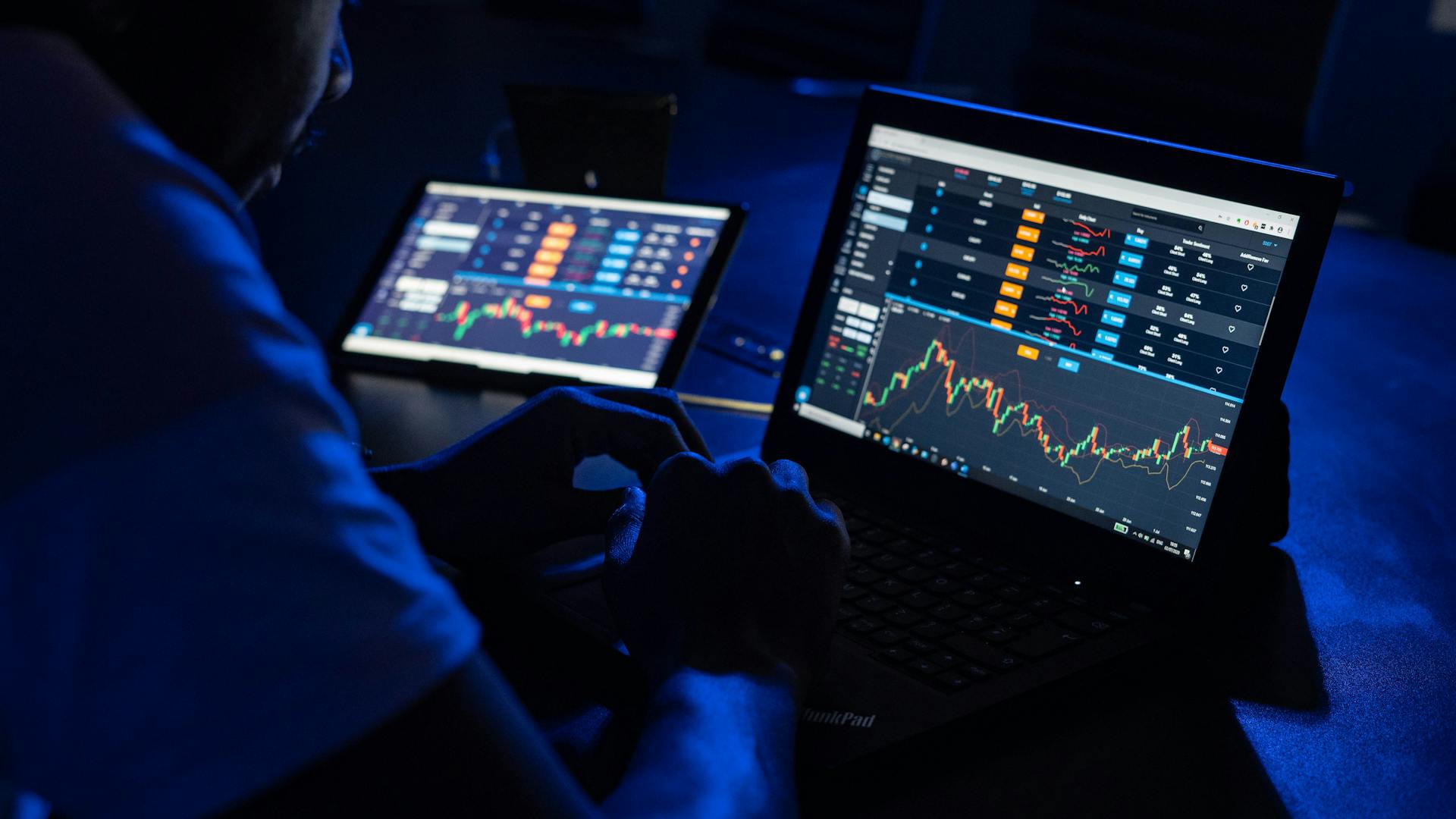
Although the point-spread scam has quieted down over the last 10 years, you should still be wary of offshore retail brokers that aren't regulated by the CFTC, NFA, or their nation of origin. Some firms have been known to pack up and disappear with clients' money when confronted about their actions.
Prevention and Protection
To avoid falling victim to foreign exchange fraud, it's essential to be vigilant and do your research. Research the broker thoroughly by looking for reviews and feedback from other traders and checking for any complaints or warnings about the broker.
Make sure the broker is registered with a reputable financial authority and has a track record of fair and transparent business practices. Dukascopy, for example, is licensed by respected financial authorities, ensuring your safety.
Verify the broker's license by visiting the website of the regulatory authority and searching for the broker's name. This will give you peace of mind knowing that the broker is held to high standards.
Be extremely cautious of anyone who guarantees profits or claims that their system is foolproof. In Forex trading, no investment is without risk, and there are no guarantees of profit.
Use a demo account to test the broker's platform, services, and customer support before committing any funds. This will help you get a feel for the broker's operations and see if they are a good fit for your trading needs.
Here are some red flags to watch out for:
If something feels off or if you have any doubts about a broker or service, trust your instincts and walk away. It's better to be cautious and miss out on a potential opportunity than to fall victim to a scam.
Steps to Take After Being Scammed
If you believe you've been scammed, stop trading immediately and attempt to withdraw any remaining funds from your account. This is crucial to secure your funds as quickly as possible.
Scammers may try to convince you to continue trading or to invest more money, but it's essential to cut off all contact. Dukascopy provides secure withdrawal processes to help protect your assets.
File a complaint with your country's financial regulatory authority and provide them with all the details of the scam. The more information you can provide, the better equipped they will be to investigate the fraud and to take action against the scammers.
Consult with a lawyer who specializes in financial fraud to explore your options for recovering your money. Your lawyer can advise you on the best course of action and can help you navigate the legal process.
Consider sharing your experience online to help others avoid falling into the same trap. Post on forums, social media, and review sites to spread the word about the scam.
Steps to Take After Being Scammed
1. Document everything: Gather all communications, transaction records, screenshots, and any evidence of your interaction with the suspected scammer.
2. Contact financial authorities: Report the scam to relevant regulatory bodies in your country.
3. File a police report: Local law enforcement may have limited jurisdiction in international fraud cases, but a police report creates an official record of the crime.
Suggestion: Iweb Share Dealing Contact
4. Contact your bank or payment provider: If you used a credit card, bank transfer, or payment service, contact them immediately to report fraud and potentially reverse charges.
5. Consult legal counsel: In cases involving substantial sums, consult with an attorney specializing in financial fraud.
6. Alert the community: Consider sharing your experience on reputable forex forums to warn others, but stick to verifiable facts rather than emotional accusations.
For your interest: Contact Your Card Issuer for More Information
Government Interventions and Whistleblowers
The US government has taken steps to address foreign exchange fraud, with the CFTC setting up a special task force in 2008 to deal with growing foreign exchange fraud. The CFTC proposed new rules in 2010 limiting leverage to 10 to 1, citing improper practices in the retail foreign exchange market.
In 2012, the SEC established the Office of the Whistleblower, led by Christopher Ehrman, a veteran of the SEC. This move aimed to encourage individuals to come forward with information about potential wrongdoing.
Recommended read: CFTC Whistleblower Program
The CFTC Whistleblower Program offers awards to those who bring original information to the CFTC, with the possibility of receiving between 10% and 30% of the sanctions collected. To report anonymously, whistleblowers must be represented by an attorney.
Here's a breakdown of the CFTC Whistleblower Program's key features:
- Offers Awards: Whistleblowers may receive between 10% and 30% of the sanctions collected.
- Anonymous Reporting: Whistleblowers may report anonymously with the help of an attorney.
- Protection from Retaliation: Employers are prohibited from retaliating against whistleblowers.
Whistleblower Legal Help
If you're considering blowing the whistle on a forex scheme, you're not alone. The CFTC Whistleblower Program is here to help you report your findings and potentially receive a significant reward.
The program offers awards to whistleblowers who bring original information to the CFTC, resulting in sanctions exceeding $1,000,000. For that information, you may receive between 10% and 30% of the sanctions collected.
To file a tip to the CFTC, simply call 866.366.2382 or file a complaint on their website. However, it's crucial to have a U.S.-based attorney to file anonymously.
A clear and thorough complaint increases the likelihood of the CFTC taking up the case. To help you prepare your complaint, consider consulting with a whistleblower law firm that has experience representing clients in similar cases.
Some key benefits of working with a whistleblower law firm include:
- Expert guidance on navigating the CFTC Whistleblower Program
- Help in collecting and organizing evidence to support your complaint
- Representation in communicating with the CFTC on your behalf
- Maximization of your potential reward
Us Government Interventions
The US Government has been actively involved in regulating the foreign exchange market to protect consumers from fraud. In August 2008, the CFTC set up a special task force to deal with growing foreign exchange fraud.
The CFTC proposed new rules in January 2010 to limit leverage to 10 to 1, citing improper practices in the retail foreign exchange market, including solicitation fraud and a lack of transparency in pricing and execution.
In 2012, the SEC established the Office of the Whistleblower, with Christopher Ehrman, a veteran of the SEC, at the helm. This office was created to encourage and protect whistleblowers who report financial misconduct.
Take a look at this: Protect Credit Cards When Traveling
Regional Variations and Risks
Forex scams have a knack for adapting to their surroundings, making it essential to understand the local landscape. In North America, scammers often exploit the regulatory complexity between the US and Canada, claiming Canadian registration to target US customers while dodging CFTC oversight.
In Europe, the implementation of ESMA restrictions on leverage for retail traders has led to an increase in unregulated brokers offering excessive leverage, which is contrary to European regulations. This is a red flag to watch out for.
Asia-Pacific is plagued by binary options scams, often operating through social media platforms with localized content targeting specific countries. Mobile-payment based scams have also increased in this region as smartphone penetration grows.
In Africa, limited financial literacy in some regions has made it easier for scammers to exploit mobile-payment based scams. This is a concerning trend that highlights the need for education and awareness.
Here's a breakdown of the regional variations in forex scams:
Understanding these regional variations can help you identify red flags specific to your situation and stay one step ahead of scammers.
Legitimate Trading and Red Flags
Legitimate forex trading operates through regulated exchanges and brokers who facilitate transactions between buyers and sellers, adhering to strict regulatory standards.
These standards include registration with financial authorities, maintenance of minimum capital requirements, segregation of client funds from operational accounts, regular financial audits, and transparent fee structures.
To verify a broker's legitimacy, follow these steps: registration with financial authorities, maintenance of minimum capital requirements, segregation of client funds from operational accounts, regular financial audits, and transparent fee structures.
Be wary of warning signs, such as wide bid-ask spreads on currency pairs, offshore brokers, and promises of guaranteed returns.
These warning signs can indicate a scam, and it's essential to do thorough research before investing in any trading opportunity.
Here are some common warning signs of forex scams:
- Promises of guaranteed returns or minimal risk
- Unregistered or dubiously regulated entities
- Pressure tactics and urgency
- Lack of transparency
- Too good to be true offers
- Complex psychological manipulation
If you see any of these signs, it's best to reconsider your decision or strategy.
Forex trading fraud occurs when fraudsters lure investors into a get-rich-quick trading scheme that guarantees a high return in very little time.
Some common types of forex fraud include wide bid-ask spreads, artificial intelligence and bots, signal sellers, and unregulated offshore brokers.
To protect yourself from forex scams, be cautious of unsolicited offers, and never invest in a trading opportunity without doing thorough research.
Key Information and Takeaways
Foreign exchange fraud is a serious issue that can have devastating consequences for traders. Always watch for scam red flags, such as guaranteed returns, artificial urgency, and fake trading platforms.
Fraudsters often use the same playbook, so it's essential to trust your gut about warning signs. If a promise seems too good to be true, it probably is. Be suspicious of unrealistic profit guarantees, testimonials that seem fake, brokers without proper licensing, or anyone pushing you to deposit funds quickly.
To stay safe, research brokers thoroughly before signing up and stick with properly regulated ones like Dukascopy. Start with small initial investments and delete unsolicited "opportunities" from your inbox immediately.
Some scams in the forex market have decreased due to tighter regulations, but problems still exist. Be cautious when dealing with offshore, unregulated brokers, and avoid wide bid-ask spreads on certain currency pairs that can make it difficult to earn profits on trades.
If you're considering a trading service, look out for major red flags like unreasonable pricing or promises of unrealistically strong results. Always check if a broker is a member of NFA's Background Affiliation Status Information Center (BASIC) before choosing them.
Here are some key red flags to watch out for:
- Unrealistic profit guarantees
- Testimonials that seem too good to be true
- Brokers without proper licensing
- Artificial urgency to deposit funds quickly
- Wide bid-ask spreads on certain currency pairs
- Unreasonable pricing or promises of unrealistically strong results
- Offshore, unregulated brokers
Country-Specific Information
If you're looking for reliable resources to help you avoid foreign exchange fraud in the UK, you're in luck. The Financial Conduct Authority (FCA) website has a comprehensive list of guides and warnings to keep you informed.
The FCA's Official Investment Firm Warning List is a public list of firms that have been warned or banned for misconduct. This list is regularly updated, so it's a good idea to check it frequently. You can find it on the FCA website.
To avoid scams, the FCA also provides an online guide on how to spot and avoid investment scams. This guide is packed with practical tips and advice to help you make informed decisions. The FCA Guide on how to report a scam is also available, in case you suspect something is amiss.
If you've been a victim of a foreign exchange scam, the FCA Investment Scam support website is a valuable resource. It offers guidance and support to help you recover from the scam. You can also stay up-to-date with the latest news on investment firms through the FCA News section.
You might enjoy: Equity Release Guide
United Kingdom
If you're looking to stay safe from scams in the United Kingdom, the Financial Conduct Authority (FCA) is a great place to start. The FCA has a public list of warnings recorded by the organization.
You can find the official FCA Investment Firm Warning List on their website, which is a great resource to check if a firm is legitimate or not. They also have an online guide on how to avoid scams, which is a must-read for anyone looking to invest or do business online.
If you suspect you've been scammed, the FCA has a guide on how to report a scam, which is straightforward and easy to follow. You can also visit their Investment Scam support website for more information and assistance.
Here are some key resources to keep in mind:
- FCA Investment Firm Warning List
- Online guide on how to avoid scams
- FCA Guide on how to report a scam
- FCA Investment Scam support website
- FCA News on Investment Firms
Fraud by Country
In the United States, credit card fraud is the most common type of identity theft, with over 15 million victims in 2020.
The UK has the highest rate of identity theft in Europe, with 1 in 5 people being a victim of identity theft.
In Australia, fraudsters often use phishing scams to steal personal and financial information from unsuspecting victims.
Germany has strict laws against identity theft, with penalties including up to 3 years in prison for offenders.
In Canada, the most common type of identity theft is credit card fraud, with over 100,000 cases reported in 2020.
In the United States, the most common way for identity thieves to steal information is through data breaches, which can occur at any business or organization that handles sensitive information.
In Australia, the Australian Securities and Investments Commission (ASIC) is responsible for investigating and prosecuting identity theft cases.
In the UK, the most common way for identity thieves to steal information is through phishing scams, which can be sent via email or text message.
In Canada, the provinces of Quebec and Ontario have the highest rates of identity theft, with over 20,000 cases reported in 2020.
For your interest: What Does Ibnr Stand for
Government and Regulatory Information
The US government has taken steps to address foreign exchange fraud. In August 2008, the CFTC set up a special task force to deal with growing foreign exchange fraud.
One of the key actions taken was the proposal of new rules limiting leverage to 10 to 1 in January 2010. This was based on a number of improper practices in the retail foreign exchange market.
The CFTC identified solicitation fraud, lack of transparency in pricing and execution, unresponsiveness to customer complaints, and targeting of vulnerable individuals as key issues. These practices were seen as a major concern for the regulatory body.
In 2012, the SEC selected Christopher Ehrman, an experienced veteran, to run the new SEC Office of the Whistleblower. This move aimed to provide a dedicated platform for reporting and addressing wrongdoing in the financial industry.
Featured Images: pexels.com