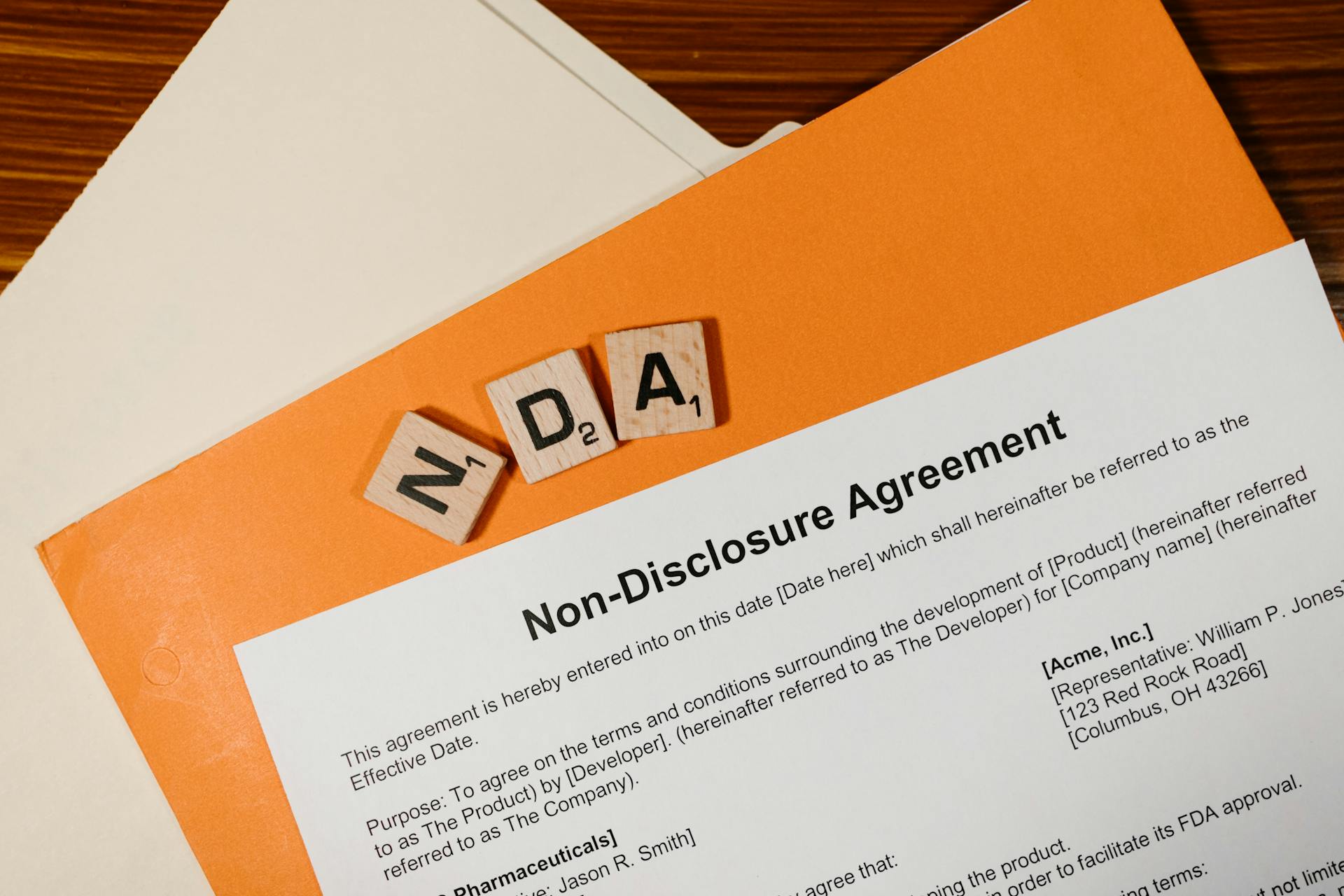
FMLA confidentiality violations can have severe consequences for employers. Employers who intentionally or unintentionally disclose an employee's FMLA status may face penalties.
Employers may be required to pay fines for FMLA confidentiality violations. The fines can be substantial, with some cases resulting in penalties of up to $100,000.
Employers must handle FMLA-related information with care. This includes keeping employee leave requests and related documentation private and confidential.
You might like: Workers Compensation Employers Liability Coverage
Employer's FMLA Obligations
Employers have specific obligations under the Family and Medical Leave Act (FMLA) to maintain confidentiality of employee medical information.
Employers must carefully consider how they maintain FMLA records, including whether they are on paper or a computer drive, and who has access to the drive.
Employers should only share medical information when it is necessary to do so, and should be aware of exceptions to the general rule of confidentiality.
Exceptions to the general rule of confidentiality include informing supervisors and managers about necessary restrictions on an employee's work or duties, and telling first aid and safety staff if the employee's physical or mental condition might require emergency medical treatment.
Explore further: Hipaa Confidentiality Statement
Employers should also be prepared to provide relevant information to government officials investigating compliance with the FMLA or other pertinent laws.
Here are some examples of when employers may need to share medical information:
- Supervisors and managers may need to know about necessary restrictions on an employee's work or duties.
- First aid and safety staff may need to know if the employee's physical or mental condition might require emergency medical treatment.
- Government officials investigating compliance with the FMLA or other pertinent laws may need to be provided with relevant information.
Employers can comply with FMLA confidentiality obligations by establishing clear policies, having a strong protocol for internal file maintenance, and understanding the kinds of leave an employee can request.
Employers should also be aware of state-specific compliance obligations, such as New York's Paid Family Leave program, which applies to certain employers.
Understanding the types of leave an employee can request, such as continuous leave or intermittent leave, can help smooth the communication process and enhance confidentiality.
Consider reading: Missouri Employers Mutual
Consequences of Confidentiality Breach
A breach of confidentiality under the FMLA can have severe consequences for employers. Employers who fail to secure employee medical information may find themselves in court, facing lawsuits from employees who have been discriminated against or retaliated against.
In a 2003 case, Doe v. United States Postal Service, an employee was ridiculed and bullied after his HIV-positive status was disclosed to his colleagues. The appeals court ruled in the employee's favor, stating that the FMLA and ADA do not force an employee to choose between seeking leave and their right to privacy.
Common confidentiality issues under the FMLA include unauthorized disclosure, lack of awareness, and inadequate documentation. Employers must maintain strict confidentiality when handling FMLA-related information to prevent discrimination or retaliation.
Here are some examples of confidentiality breaches under the FMLA:
- Unauthorized Disclosure: Employers or their representatives may inadvertently disclose an employee's FMLA status or medical condition.
- Lack of Awareness: Insufficient awareness of FMLA regulations among HR personnel, supervisors, and managers can lead to unintentional breaches of confidentiality.
- Inadequate Documentation: Poor record-keeping practices can jeopardize confidentiality.
In the case of Holtrey, the court ruled that revealing private and sensitive medical information to fellow employees could plausibly create a work environment that would persuade a reasonable employee not to request FMLA leave. This is a classic example of a materially adverse action, which can lead to retaliation claims under the FMLA.
Consequences of Confidentiality Breach
A breach of confidentiality can have serious consequences for employers. If an employer fails to secure employee medical information, they may find themselves in court.
The FMLA and ADA provide employees with the right to sue employers who fail to protect employees' sensitive information. This was demonstrated in the 2003 case Doe v. United States Postal Service, where an employee was ridiculed and bullied after disclosing his HIV-positive status to support his need for FMLA leave.
Expand your knowledge: Federal Employers Liability Act
Employers may be held liable for interference with FMLA rights if they fail to maintain confidentiality. In the case of Holtrey, the employer was found to have violated the employee's right to keep medical information private, even if they allowed the employee to take all the FMLA leave they needed.
Unauthorized disclosure of an employee's FMLA status or medical condition can occur through casual conversations or carelessness. Lack of awareness of FMLA regulations among HR personnel, supervisors, and managers can also lead to unintentional breaches of confidentiality.
A breach of confidentiality can result in a retaliation claim under the FMLA. Revealing private and sensitive medical information to fellow employees can create a work environment that would persuade a reasonable employee not to request FMLA leave.
Here are some common confidentiality issues under FMLA:
- Unauthorized Disclosure: Employers or their representatives may inadvertently disclose an employee's FMLA status or medical condition.
- Lack of Awareness: Insufficient awareness of FMLA regulations among HR personnel, supervisors, and managers can lead to unintentional breaches of confidentiality.
- Inadequate Documentation: Poor record-keeping practices can jeopardize confidentiality.
Responding to a Breach
A thorough investigation is key to determining the extent of the disclosure and identifying those responsible. This should be done as soon as you become aware of a confidentiality breach.
Corrective actions, such as retraining employees or revising policies and procedures, should be implemented immediately to prevent further breaches. This may also include enhancing safeguards to prevent similar incidents in the future.
Notifying the affected employee about the incident is crucial. Inform them about the breach and reassure them of your commitment to protecting their privacy, offering an apology for any harm caused.
Reviewing and updating your FMLA policies and procedures is essential after addressing the breach. This will help prevent similar incidents in the future and ensure compliance with FMLA regulations.
Seeking legal counsel is also necessary to assess the potential legal implications of the breach. This will help you understand the severity of the situation and take necessary steps to mitigate the consequences.
Here are the steps to take in response to a confidentiality breach:
- Investigate the breach thoroughly
- Implement corrective actions
- Notify the affected employee
- Review and update policies
- Seek legal counsel
Confidentiality Issues
A breach of confidentiality can have serious consequences for employers under the FMLA. In the case of Doe v. United States Postal Service, an employee was ridiculed and bullied after his HIV-positive status was disclosed to his colleagues. This resulted in a lawsuit against the employer.
Unauthorized disclosure of an employee's FMLA status or medical condition is a common confidentiality issue under FMLA. This can occur through casual conversations or carelessness.
Lack of awareness among HR personnel, supervisors, and managers can also lead to unintentional breaches of confidentiality. Inadequate documentation practices can jeopardize confidentiality as well.
Employers can take proactive steps to avoid confidentiality issues under FMLA, such as conducting thorough training sessions on FMLA regulations for HR personnel, supervisors, and managers.
Designating FMLA coordinators within the organization can also help manage all FMLA-related matters, including documentation and communication. Clear policies and procedures for handling FMLA requests and documentation should be developed and made accessible to all employees.
Employers should maintain accurate records of all FMLA-related interactions with employees, including the date, time, and content of conversations. Access to FMLA-related documentation should be restricted to authorized personnel only.
Here are some common confidentiality issues under FMLA:
Employers can avoid confidentiality issues by designating FMLA coordinators, developing clear policies and procedures, documenting carefully, restricting access to FMLA-related documentation, and encouraging open communication with employees on FMLA leave.
Employer Compliance Obligations
Employers can comply with FMLA confidentiality obligations by establishing clear, consistent FMLA policies, which helps internal "need-to-know" expectations become clear.
Employers need to have a strong protocol for internal file maintenance, carefully controlling who has access to an employee's confidential file.
Understanding the kinds of leave an employee can request, such as continuous leave and intermittent leave, can help smooth the communication process and enhance confidentiality.
Employers should only share medical information when it is necessary to do so, and should be aware of who is affirmatively told about the employee's condition.
FMLA regulations require employers to maintain records in conformance with the ADA confidentiality requirements, with exceptions for supervisors, first aid and safety staff, and government officials investigating compliance.
To maintain confidentiality, employers should maintain separate, secure FMLA records with limited access.
Here are some key employer compliance obligations:
- Establish clear, consistent FMLA policies
- Have a strong protocol for internal file maintenance
- Only share medical information when necessary
- Maintain separate, secure FMLA records with limited access
By following these obligations, employers can help protect employees' privacy and maintain confidentiality under the FMLA.
Responding to a Breach

Responding to a breach is crucial to prevent further damage. You need to initiate a comprehensive investigation to determine the extent of the disclosure and identify those responsible.
Investigating thoroughly is the first step in responding to a breach. This involves gathering all relevant information and evidence to get to the bottom of what happened. As soon as you become aware of a confidentiality breach, you should initiate this process.
Corrective action is also essential. Implement immediate measures to prevent further breaches, such as retraining employees, revising policies and procedures, or enhancing safeguards. This will help prevent similar incidents in the future.
You should also notify the affected employee about the incident and reassure them of your commitment to protecting their privacy. Offer an apology for any harm caused and let them know what steps you're taking to prevent future breaches.
Reviewing and updating policies is another important step. After addressing the breach, review your FMLA policies and procedures to ensure they're adequate and effective. This will help prevent similar incidents in the future.
Check this out: What Can You Do to Prevent Hipaa Violations
Seeking legal counsel is also necessary to assess the potential legal implications of the breach. This will ensure you're in compliance with FMLA regulations and can take the necessary steps to mitigate any potential consequences.
Here are the steps to take when responding to a breach:
- Investigate thoroughly
- Take corrective action
- Notify the affected employee
- Review and update policies
- Seek legal counsel
Featured Images: pexels.com