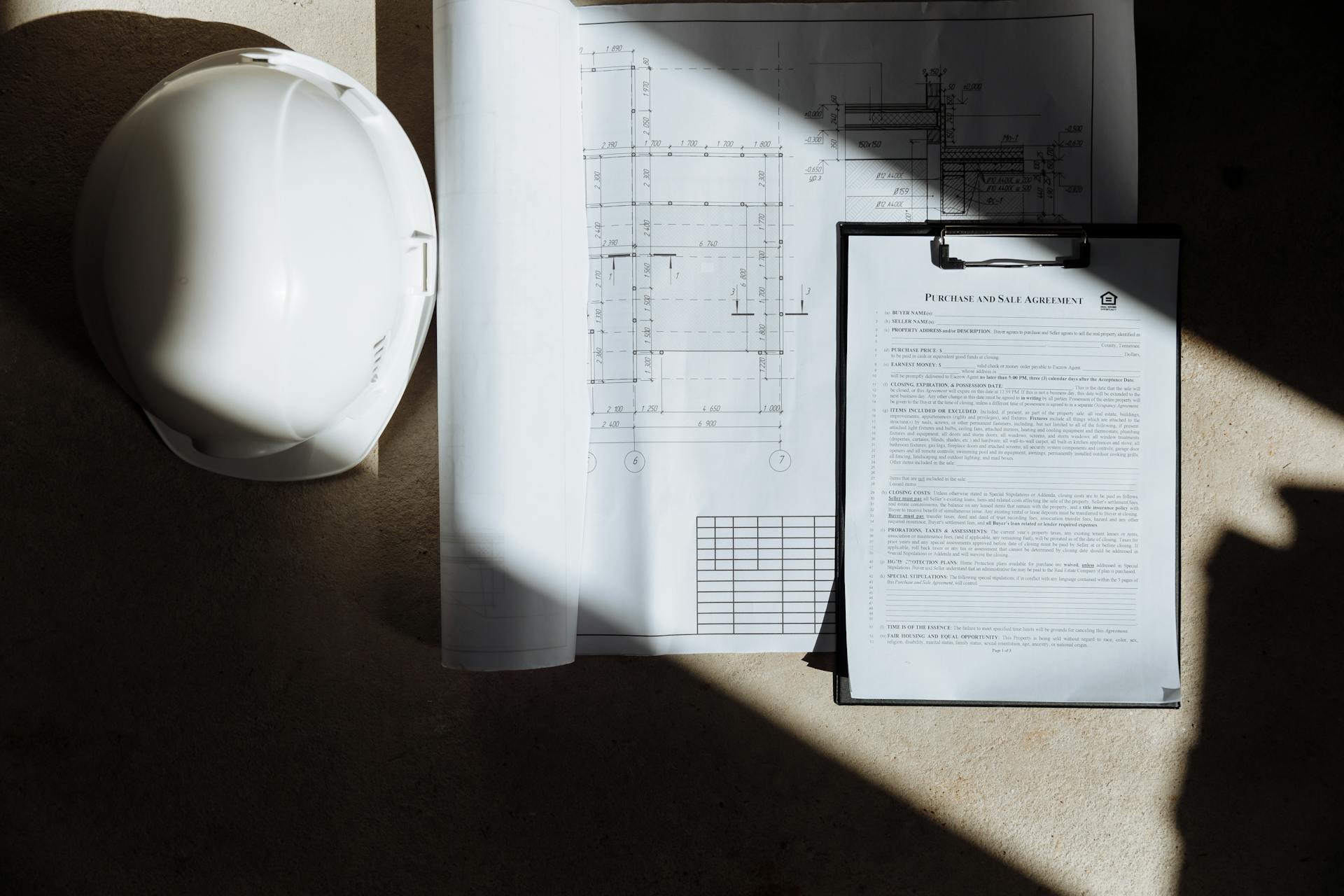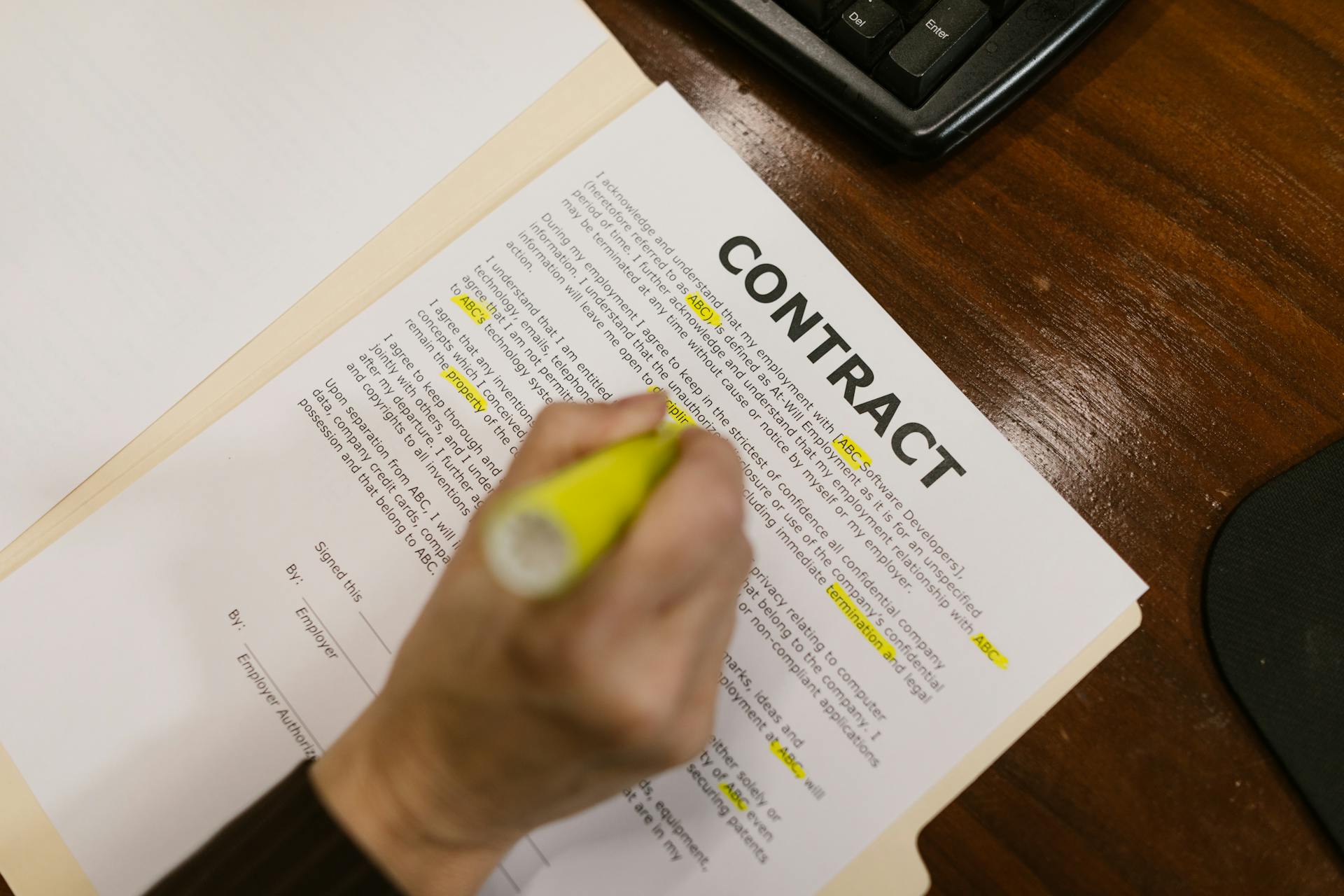
Time is a crucial aspect of any contract, and understanding the contractual provisions related to it is essential for both parties involved. A delayed performance can have significant consequences, such as incurring additional costs or even termination of the contract.
The concept of time is often defined in contracts through the use of specific terms, including "reasonable time" and "due date." For instance, a contract may specify that a party has 30 days to complete a task, but what exactly constitutes "reasonable time" in this context?
In some cases, contracts include provisions for extensions or variations of time, which can be triggered by unforeseen circumstances such as natural disasters or force majeure. This can provide a safety net for parties who are unable to meet their obligations due to circumstances beyond their control.
A well-drafted contract should clearly outline the consequences of late performance, including any penalties or fines that may be imposed.
Intriguing read: Confidentiality Provisions in Settlement Agreements
Bar Clauses in Contracts
Bar Clauses in Contracts are a crucial aspect of contractual provisions relating to time. They dictate the timeframe within which a party must submit a claim or give notice to be entitled to any relief related to issues around a construction contract.
A time bar clause, for instance, prescribes the timeframe and content requirements of a notice or claim. Non-compliance with this provision may render the whole claim invalid.
Time bar clauses are designed to ensure that contractual issues are prematurely dealt with and instigate early risk management. However, their use has evolved, and Principals have frequently leveraged these mechanisms to "ring-fence" their commercial exposure.
The enforceability of a time bar clause will depend on the law governing the construction contract and the terms of the agreement. In common law jurisdictions, the provision may be construed "contra proferentem", meaning that any uncertainty in the provision will be construed against the party which proposed or drafted the contract.
A unique perspective: Aliexpress Issues
Courts will generally not change what has been expressly agreed between two parties in a contract, and, therefore, the safest option would be to always assume that a time-bar provision will be enforced.
Here are some examples of time bar clauses found in construction contracts:
- NEC3 and NEC4 Contracts have a clause (61.3) that states the contractor's obligation to notify principals of any compensation event within eight weeks of becoming aware of the event.
- FIDIC Contracts have a clause (20.1) that states that if the contractor fails to give notice of a claim within 28 days, the Time for Completion shall not be extended, the contractor shall not be entitled to additional payment, and the employer shall be discharged from all liability in connection with the claim.
These clauses are essential for ensuring that parties comply with the contractual terms and avoid disputes.
Importance in Construction Contracts
Time bar clauses are a crucial aspect of construction contracts, and their importance cannot be overstated. They prompt early communication and timely notification of disputes, enabling faster conflict resolution.
Construction contracts typically set out the agreed price and timeframe for the completion of an agreed scope of works by a contractor. Time bar clauses dictate the timeframes within which a party must submit a claim or give notice to be entitled to any relief.
The use of time bar clauses in construction contracts has been shown to have several advantages, including timely dispute resolution, efficient claims handling, and risk management. These clauses enhance risk management by providing clarity on potential liabilities and promoting fair risk distribution.
Curious to learn more? Check out: Debt Resolution Agreement
However, the use of time bar clauses also comes with some challenges. Rigid deadlines and the risk of forfeiture are two of the main concerns. Ambiguity in application and enforcement can also lead to unintentional waivers of rights and disputes over enforceability.
Here are some of the key challenges associated with time bar clauses:
Ultimately, the enforceability of a time bar clause will depend on the law governing the construction contract and the terms of the agreement.
Types of Contracts
Standard forms of contract, like the FIDIC Yellow Book, are used globally for EPC contracts and have provisions that allocate risk between parties reasonably.
The FIDIC Yellow Book, for example, requires a notice to be given to the Engineer no later than 28 days after the claiming Party became aware, or should have become aware, of the event or circumstance.
TIOTE clauses are common in contracts involving perishable goods, such as fruits and vegetables, or goods with a seasonal value, like pumpkins.
Explore further: Aware Super
Contract Provisions
Construction contracts typically set out the agreed price and timeframe for the completion of an agreed scope of works by a contractor. Most contracts will contain provisions which allow a contractor to claim adjustments to the work time schedule and contract price.
Time-bar clauses are a common provision in construction contracts, which dictate the timeframe within which a party must submit a claim or give notice to be entitled to any relief. They are designed to ensure that contractual issues are prematurely dealt with and instigate early risk management.
The FIDIC Yellow Book standard form of contract, for example, requires the claiming party to give a notice to the Engineer no later than 28 days after the claiming party became aware, or should have become aware, of the event or circumstance.
A time bar clause is a contractual mechanism that dictates the timeframes within which a party must submit a claim or give notice to be entitled to any relief. Non-compliance with the time-bar provision may render the whole claim invalid and pose a significant financial risk.
For your interest: Provision Accounting
The FIDIC Yellow Book standard form of contract, for example, states that if the contractor fails to give notice of a claim within such period of 28 days, the Time for Completion shall not be extended, the contractor shall not be entitled to additional payment, and the employer shall be discharged from all liability in connection with the claim.
Courts will generally not change what has been expressly agreed between two parties in a contract, and will enforce time-bar provisions. In case of ambiguity, the provision may be construed "contra proferentem", meaning that any uncertainty in the provision will be construed against the party which proposed or drafted the contract.
Here are some common contract provisions related to time:
- Time-bar clauses
- Notice requirements
- Extension of time provisions
- "Time is of the essence" clauses
These provisions are designed to ensure that contractual issues are dealt with promptly and fairly, and to prevent disputes from arising. They can be found in standard form contracts such as the FIDIC Yellow Book, the NEC3 and NEC4 contracts, and the JCT contract.
Dispute Resolution
Time bar clauses in construction contracts play a crucial role in dispute resolution. They prompt early communication and timely notification of disputes, enabling faster conflict resolution.
This leads to more efficient dispute resolution, which is essential in construction projects where delays can have significant consequences.
Time bar clauses encourage parties to promptly submit claims or notices, streamlining the claims process and gathering evidence. This helps prevent disputes from escalating into full-blown conflicts.
Here's a breakdown of the benefits of time bar clauses in dispute resolution:
Tiote Can Be Imputed by Law
If your contract doesn't contain a Time is of the Essence (TIOTE) clause, courts will interpret the contract to mean that time isn't important for the parties' respective performance.
In general, the courts will look to the whole of the contract and can discern that time deadlines are important even if a TIOTE clause is absent. Other words can be used to express the concept that time is of the essence, such as in a purchase-goods contract where language like "failure to deliver the goods by the date specified shall constitute breach of contract" makes time of the essence for that part of the contract.
Worth a look: Systemically Important Financial Institution

A separate free-standing TIOTE clause serves to make time important for all duties and performances called for under the contract.
Here's an example of how courts might interpret time importance in contracts without a TIOTE clause: in the case of Rosenaur v. Pacelli, 174 Cal.App.2d 673 (1959), the court ruled that time is of the essence for an option that must be exercised within a specified time, even without an express provision to that effect.
In rare circumstances, time will be deemed crucial even in the absence of a TIOTE clause.
Dispute Avoidance
Dispute avoidance is key to resolving disputes efficiently. It's always better to address issues early on rather than raising them last minute, which can lead to lengthy disputes that rarely benefit either party.
Negotiating time-bars that suit both parties' reasonable requirements and capacity prior to signing a contract can help avoid disputes. This way, if issues arise, parties can address them promptly.
Here's an interesting read: Issues in Retirement Security
The starting point or trigger of the time-bar in a contract provision is a crucial element to determine. It can be the start of the delay or when all circumstances are known, making it essential to clarify this in the contract.
Certain issues may appear insignificant at first but can lead to significant delays. The cumulative effect of several small issues can be detrimental, making it essential to address them early on.
Parties may argue over whether delay events should be notified and assessed discretely or as part of a wider issue. For example, an employer may require notification for each day of site access restrictions, while a contractor may prefer to notify the issue as one event.
If the notice procedure has not been formally amended, but there's a common assumption between parties to deviate from it, the court may accept this. This highlights the importance of clear communication and understanding between parties.
Here are some key considerations for dispute avoidance:
Challenging Considerations
Time-bars are put in place to give employers timely notice of events that can affect the contract price and completion time, allowing them to address the issue and mitigate its impact.
This notification provides a reasonable opportunity for employers to take action and prevent further negative effects.
Ultimately, the purpose of a time-bar is to ensure that employers are given timely notification of events that may adversely impact the contract price and/or time for completion.
Employers need this information to address the underlying issue(s) and mitigate the negative effects of the event(s) going forward.
The purpose of a time-bar is not to punish contractors, but to ensure that employers are given a fair chance to respond to the situation.
Take a look at this: Economic Blackout Impact so Far
Standard Contract Forms
Standard contract forms have been developed to achieve a reasonable allocation of risk between parties. The FIDIC Yellow Book standard form of contract is used globally for EPC contracts.
Revisions to standard contract forms can impact the timeframe for notification of claims. The 2017 edition of FIDIC Yellow Book revised this timeframe for both contractor and employer claims.
The claiming party must give a Notice to the Engineer within 28 days after becoming aware or should have become aware of the event or circumstance.
Check this out: Yellow Corporation
Case Law and Uniform Code

In the United States, the Uniform Commercial Code (UCC) plays a significant role in defining contractual provisions related to time. Under the UCC, the default provision for time is "reasonable time", as stated in UCC § 2-309.
This means that if a contract doesn't specify a time for performance, a reasonable time is allowed. For example, if a contract requires payment of money, it must be performed immediately upon the thing to be done being exactly ascertained, as per Cal. Civil Code § 1657.
The "reasonable time" provision can be changed to a specific time of the essence (TIOTE) if both parties agree to it.
Worth a look: What Is an Accounting Provision
Case Law
In case law, a contractor has only five calendar days to make a detailed claim after receiving a notification. This timeframe can be seen as unreasonably onerous.
Most contractors would agree that this is an unfair expectation, and it raises questions about the use of time-bars to avoid liability for damages caused by an employer's actions.
Time-bars often only apply to a contractor's claims, while there are no specified timeframes for an employer's responses or claims.
Uniform Commercial Code
The Uniform Commercial Code ("UCC") plays a significant role in contract law, and it's essential to understand its provisions, particularly when it comes to time-related matters.
Under the UCC, the default provision related to time is "reasonable time", which is specified in UCC § 2-309.
If a contract doesn't specify a time for performance, the law assumes a reasonable time is allowed, as stated in Cal. Civil Code § 1657.
In cases where the performance can be done instantly, such as paying money, it must be performed immediately upon the thing being ascertained.
Take a look at this: Usual, Customary and Reasonable
Frequently Asked Questions
What does contractual time mean?
Contractual time refers to the duration between a contract's start and end dates, as specified in the agreement. It's also known as Contract Period or Contract Time
Featured Images: pexels.com