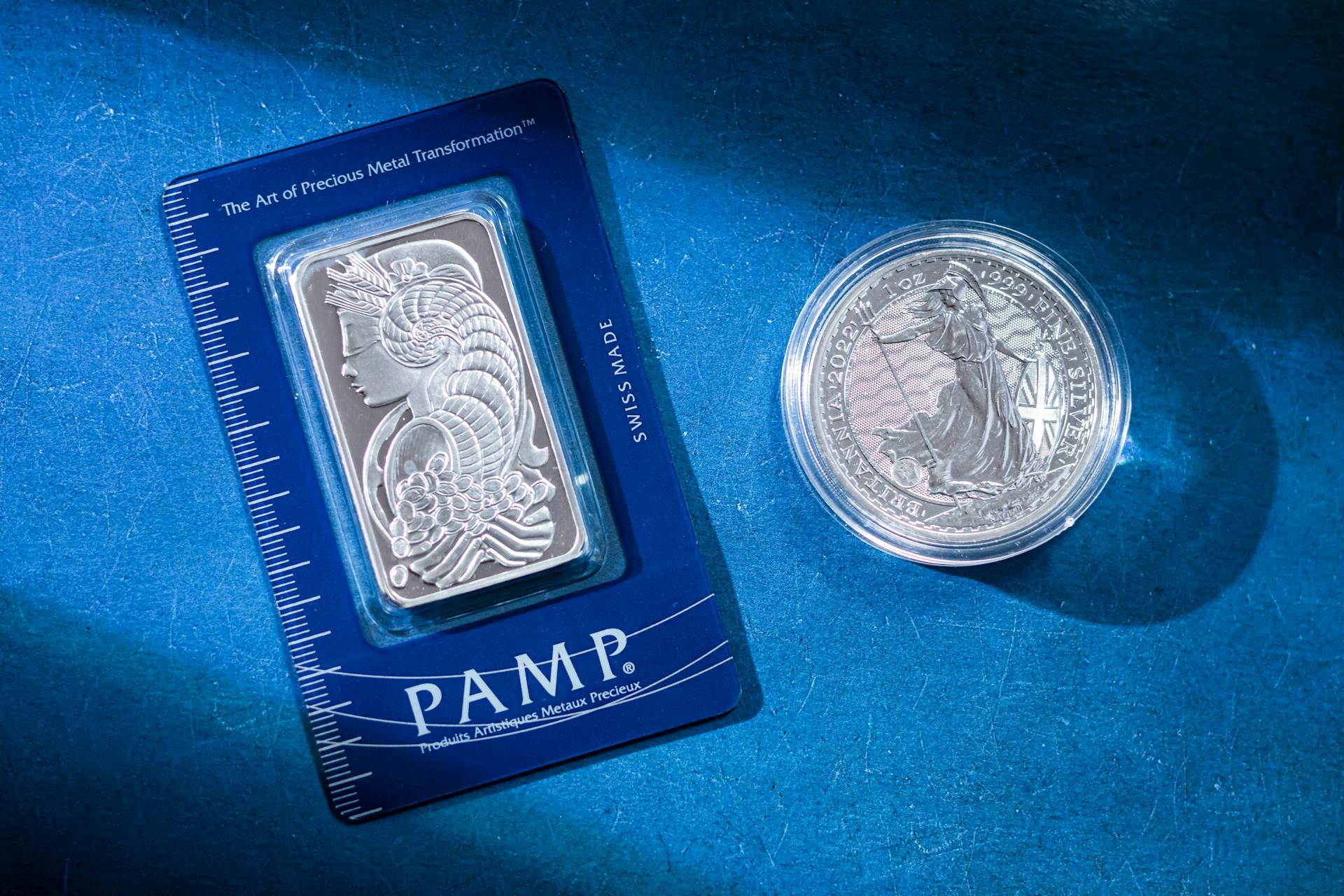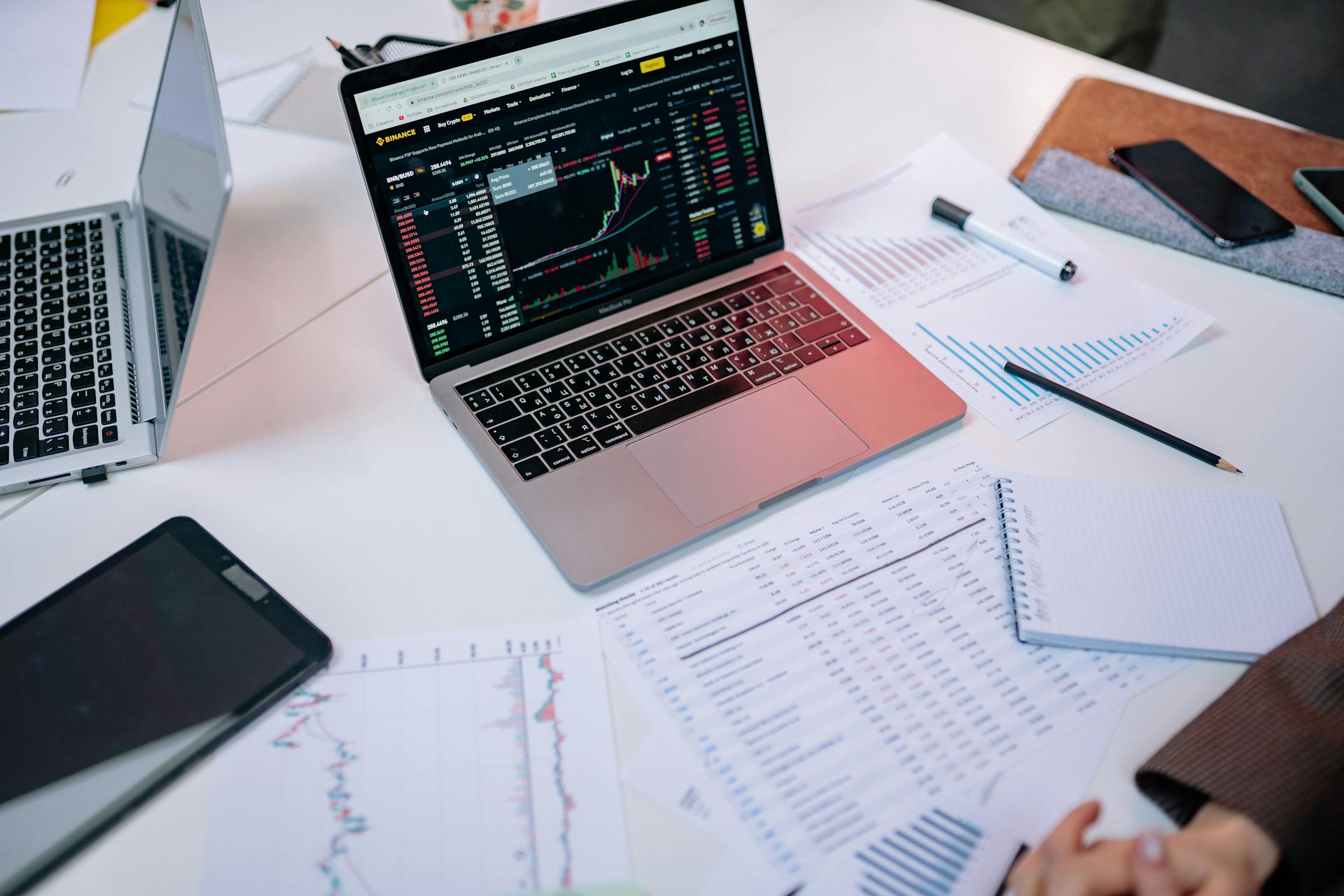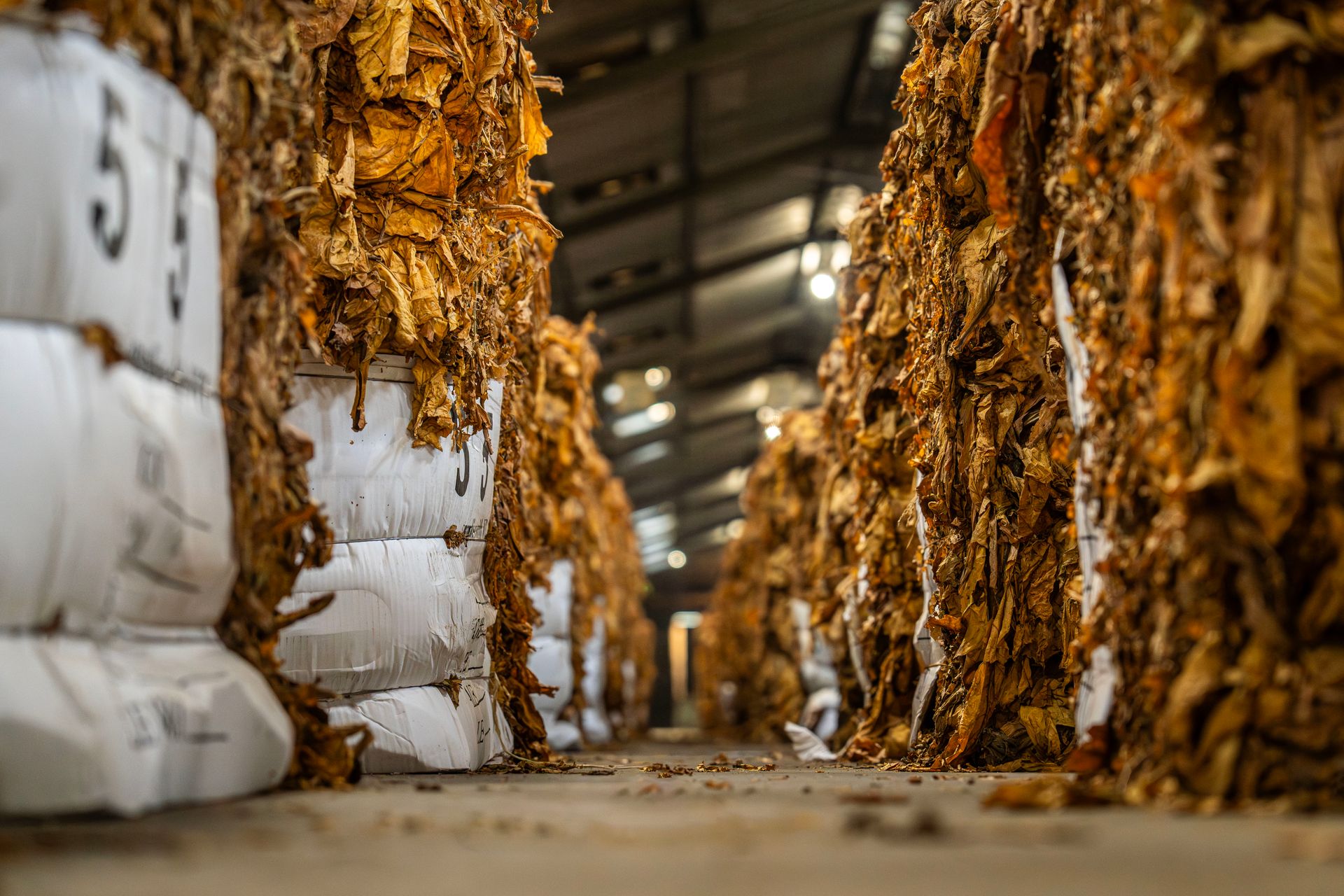
Commodity swaps are a type of financial instrument that allows companies to hedge against price fluctuations in the commodities market.
A commodity swap is essentially a contract between two parties where one party agrees to pay the difference between the fixed price and the market price of a commodity to the other party.
Commodity swaps can be used to manage risk by locking in prices for future deliveries, allowing companies to budget and plan with more certainty.
They can also be used to speculate on price movements, but this is riskier and less common.
Curious to learn more? Check out: Commodity Price Shocks
What Is a Commodity Swap
A commodity swap is a financial contract that allows parties to hedge against the volatility of a particular commodity price. It's a way to limit risk, and it's commonly used by large financial institutions and companies that rely heavily on commodities.
The contract has two main components: the floating-leg and the fixed-leg. The floating-leg is linked to the market price or a commodity index, while the fixed-leg is set in the contract.
Suggestion: Price Reporting Agency
Commodity swaps can involve various commodities, including oil, metals, natural gas, livestock, or grains. Oil is a popular choice, but it's worth noting that most swaps involve large contract sizes, making them inaccessible to individual investors.
The consumer or institution wanting a fixed price typically holds the floating-leg, while the producer holds the fixed-leg and pays a floating rate based on the commodity's spot market price.
Commodity swaps are usually cash-settled, but physical delivery can also be specified. This means that the parties involved can choose to receive the commodity itself or a cash payment based on the contract.
Commodity-for-interest swaps are another type of swap, where one party pays a return based on the commodity's price, while the other deals with a floating or fixed interest rate. This type of swap helps protect the commodity producer from the downside risk of a poor return in the event of a downturn in the commodity's market price.
You might enjoy: Pimco Commodity Real Return
Types of Commodity Swaps
Commodity swaps come in various forms to help parties manage risk and volatility in the market. There are two main types of commodity swaps: Fixed-Floating Swaps and Commodity-for-Commodity Swaps.
In a Fixed-For-Floating Swap, one party pays a fixed price, while the other party pays a floating price tied to the market price of a particular commodity. This helps hedge against volatility in prices or speculate on price movements.
Fixed-For-Fixed Swaps are relatively rare, but they do exist for specific contracts. Here, both parties agree to pay a predetermined fixed price that remains the same throughout the contract duration.
Commodity-For-Interest Swaps involve one party paying a rate based on the price of a commodity, while the other party pays a fixed or floating interest rate. This can help hedge against interest rate-related risks or those linked to commodity prices.
Fixed Floating
A fixed-floating swap is a type of commodity swap where one party pays a fixed price, while the other party pays a floating price tied to the market price of a commodity. This swap helps hedge against volatility in prices, speculate on the price movements of any particular commodity, or secure stable revenue irrespective of market fluctuations.
Most commodity swaps involve oil, but they can also include metals, natural gas, livestock, or grains. Large financial institutions, not individual investors, participate in these swaps due to the contract sizes.
The fixed price is agreed upon at the start of the swap and remains unchanged throughout the life of the swap. The floating price, on the other hand, is tied to the market price of the commodity and changes over time.
Here are some key characteristics of fixed-floating swaps:
- One party pays a fixed price, while the other party pays a floating price.
- The fixed price remains unchanged throughout the life of the swap.
- The floating price is tied to the market price of the commodity and changes over time.
Airline companies are heavily dependent on fuel for their operations, so they may enter into a commodity swap agreement to reduce their exposure to any volatility in the oil markets.
Speculation Opportunities
One of the most exciting aspects of commodity swaps is the opportunity to speculate on price changes without actually holding the physical goods. This can be a great way to participate in the market with less capital.
You can use swaps to profit from price fluctuations, even if you don't have a large amount of money to invest. This can be a game-changer for traders who want to get involved in the market without breaking the bank.
By using swaps, you can take advantage of price changes without having to worry about storage or logistical costs. This can be a huge advantage, especially for traders who are just starting out.
With commodity swaps, you can trade on price changes without having to physically hold the goods. This can be a more flexible and cost-effective way to participate in the market.
Asian (Average Price)
The Asian (Average Price) swap is a type of commodity swap where the clearing price is the average price of a future period, typically a given month. This means that the settlement of the transaction is carried out after the relevant period.
In an Asian (Average Price) swap, the buyer and seller agree on a fixed price for the commodity, in this case, rapeseed. The buyer, OTP Bank Plc, and the seller, a client, have entered into a swap transaction for 500 mt (10 lot) of Euronext (Matif) Rapeseed.
The future price of the product at the time of closing the deal was 380 EUR/mt, and the expiry month was February 2020. The final date of closing the futures contract was January 28, 2020.
Here are the key parameters of the Asian (Average Price) swap:
The Asian (Average Price) swap can result in an exchange rate gain or loss, depending on the movement of the rapeseed price. If the price falls, the seller can win on the hedge and physically sell the product at a lower rate.
Benefits and Advantages
Commodity swaps offer several benefits and advantages that make them an attractive option for managing risk and stabilizing cash flows.
One of the key benefits of commodity swaps is that they allow parties to hedge against the risk of price changes in the commodity market. This means that companies can lock in a fixed price for a commodity, protecting themselves against the risk of rising prices.
A unique perspective: Commodity Risk
Commodity swaps can also help stabilize cash flows by agreeing to a fixed price for a commodity, making budgeting and financial planning easier. By doing so, companies can predict their future costs with a high degree of certainty.
A commodity swap can be particularly valuable in volatile markets, where price changes can be sudden and unpredictable. By using a commodity swap, companies can stabilize their operating costs and protect their profit margins, regardless of market conditions.
Commodity swaps can also reduce the risk of sudden price hikes, making budgeting simpler for businesses like sugar mills, refineries, and food producers.
Here are some of the key benefits of commodity swaps:
- Hedge against future volatility - either parties in the contract can hedge against the risks of commodity market price fluctuations.
- Predictable cash flows - commodity swaps help gain predictable cash flows by agreeing to fixed prices for commodities with higher certainty.
- Risk management - commodity swaps enable the exchange of variable cash flows for fixed flows, thereby lowering exposure to price fluctuations and streamlining income.
Risks and Challenges
Commodity swaps can be a complex financial instrument, and one of the main risks is market risk, which can cause a company to pay more than the market price for a commodity if the market price falls.
Market risk occurs when the market price of a commodity moves in an unfavorable direction, resulting in increased costs and reduced profit margins. For example, if a company agrees to pay a fixed price for a commodity and the market price falls, the company will end up paying more than the market price.
Counterparty risk is another significant challenge associated with commodity swaps. This occurs when the other party to the swap fails to meet its obligations, leaving the company without the commodity it needs for its operations.
Counterparty risk can be mitigated by using a reputable counterparty and by using collateral to secure the swap. However, even with these precautions, there is still a risk that the other party will not fulfill its obligations.
If a company agrees to pay a price tied to the market price of a commodity and the other party fails to make the required payments, the company could suffer financial loss. This is a significant risk that companies must carefully consider before entering into a commodity swap agreement.
In fact, counterparty risk is so significant that it can be a deal-breaker for some companies. If a company is unsure about the creditworthiness of the other party, it may be better to avoid the swap altogether.
A fresh viewpoint: Central Counterparty Clearing
Practical Examples and Structure
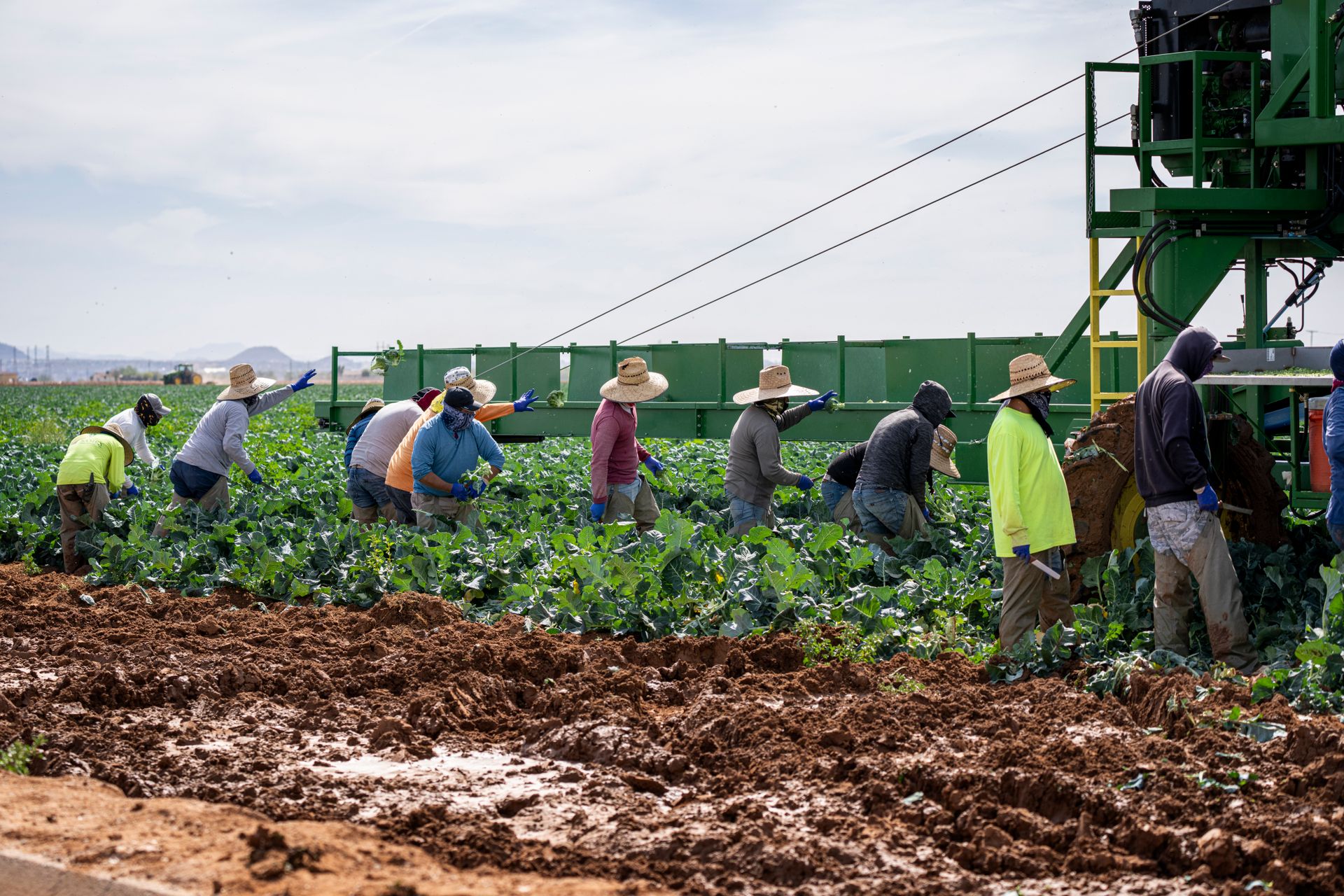
Commodity swaps can be complex, but let's break it down with some practical examples.
Company X needs to buy 250,000 barrels of oil each year for two years, and they can choose between paying the entire cost upfront or paying each year upon delivery. To calculate the upfront cost per barrel, they'd take the forward prices and divide by their respective zero-coupon rates, adjusted for time.
The upfront cost per barrel would be $49.02 + $48.54 = $97.56, which means Company X would pay $24,390,536 today to guarantee the oil. However, there's a counterparty risk, and the oil may not be delivered.
Company A enters into a commodity swap with Party B to buy oil for its operations. They agree to pay Party B a fixed price of $50 per barrel for a specified quantity of oil over a specified period. In return, Party B agrees to pay Company A a price tied to the market price of oil.
Worth a look: One Year Libor Rate History
A commodity swap has a floating-leg and a fixed-leg component. The floating-leg is linked to the market price or a commodity index, while the fixed-leg is set in the contract. Most swaps involve oil, but they can also include metals, natural gas, livestock, or grains.
Here's a breakdown of the main components of a commodity swap:
Understanding and Introduction
A commodity swap is a derivative contract where two parties agree to exchange cash flows based on an underlying commodity's prices. This allows businesses and investors to safeguard themselves from price fluctuations and swings in the commodities they sell or purchase.
Businesses and investors can use commodity swaps to discover and agree on commodity prices in the future, enabling them to make informed decisions about their investments. They can also use these swaps to diversify their portfolios and gain more exposure to the commodity market.
Some examples of commodities traded through commodity swaps include hard commodities like gold and oil, as well as soft commodities like agricultural products such as wheat, coffee, corn, and sugar.
Suggestion: International Swaps and Derivatives Association
Commodity swaps are more efficient and have lower transaction costs compared to other derivatives. They are primarily used by large financial institutions and are custom deals conducted outside of exchanges.
Here are some key benefits of using commodity swaps:
- They enable businesses and investors to safeguard themselves from price fluctuations and swings in the commodities they sell or purchase.
- They allow investors to discover and agree on commodity prices in the future.
- They enable investors to diversify their portfolios and gain more exposure to the commodity market.
- They are more efficient and have lower transaction costs compared to other derivatives.
Pricing and Considerations
Pricing a commodity swap involves considering several key factors. The forward curve of the underlying commodity plays a significant role in determining the fixed price in the swap. This is because the fixed price is derived from the anticipated future price of the commodity.
The length of the swap also impacts the fixed price, with longer-term swaps requiring higher fixed prices to cover fluctuation risks over a higher duration. Interest rates also come into play when discounting anticipated future cash flows to their current value.
Other important considerations include the cost of hedging, which depends on the liquidity of the underlying commodity market. The risk-free rate is also used as a benchmark when pricing the swap.
Take a look at this: Commodity Future Trade
Market Benchmarks
Market Benchmarks help determine commodity values based on various factors like transport logistics, storage, production, and more. The Henry Hub is a benchmark pricing hub for the North American natural gas market and a large chunk of the global LNG sector.
The Henry Hub price is used in commodity swaps, enabling market participants to speculate on future natural gas prices and manage risks. It's a crucial benchmark for the industry.
West Texas Intermediate (WTI) is a well-known crude oil benchmark for derivative contracts and swaps. The WTI price helps in exchanging cash flows and hedging against fluctuations in the future.
Brent crude oil is one of the major global benchmarks for oil worldwide, including in Europe, Africa, and the Middle East. It's used to price oil contracts and manage risks.
Here are some key market benchmarks to keep in mind:
- Henry Hub: North American natural gas market and global LNG sector
- West Texas Intermediate (WTI): Crude oil benchmark for derivative contracts and swaps
- Brent crude oil: Major global benchmark for oil worldwide
Pricing Considerations
The fixed price in a commodity swap is typically derived from the anticipated future price of the underlying commodity as seen in the forward curve.

Interest rates play a crucial role in determining the fixed price, as they are used to discount the anticipated future cash flows to their current value.
The risk-free rate is considered a benchmark when pricing a swap, and it's a key factor in determining the fixed price.
The cost of hedging can also impact the fixed price, depending on the liquidity of the underlying commodity market.
Other considerations include seasonality, commodity market structure, and credit risks among others.
Here are some key factors to consider when pricing a commodity swap:
- Forward curve: The anticipated future price of the underlying commodity.
- Hedging costs: The cost of hedging the underlying commodity, which can impact the fixed price.
- Interest rates: Used to discount the anticipated future cash flows to their current value.
- Risk-free rate: A benchmark used to determine the fixed price.
- Liquidity: The ease with which the underlying commodity can be bought or sold.
- Seasonality: The impact of seasonal fluctuations on the underlying commodity's price.
- Commodity market structure: The overall structure of the commodity market, including supply and demand dynamics.
- Credit risks: The risk of default by one or both parties to the swap.
Disadvantages
Commodity swaps come with several potential downsides that need to be carefully considered before entering into a contract.
Market risk is a primary disadvantage of commodity swaps, where the market price of the commodity can move in an unfavorable direction, affecting one or both parties to the contract.
This can lead to increased costs and reduced profit margins, as seen when a company agrees to pay a fixed price for a commodity and the market price falls, forcing the company to pay more than the market price.
Counterparty risk is another significant risk associated with commodity swaps, where the other party fails to meet its obligations, leaving one party without the commodity it needs or suffering financial loss.
Using a reputable counterparty and collateral to secure the swap can help mitigate this risk, but it's essential to be aware of the potential for counterparty failure.
The risks involved in commodity swaps can be substantial, including market risk and counterparty risk, which can have a significant impact on a company's operations and finances.
Curious to learn more? Check out: Counterparty
Featured Images: pexels.com