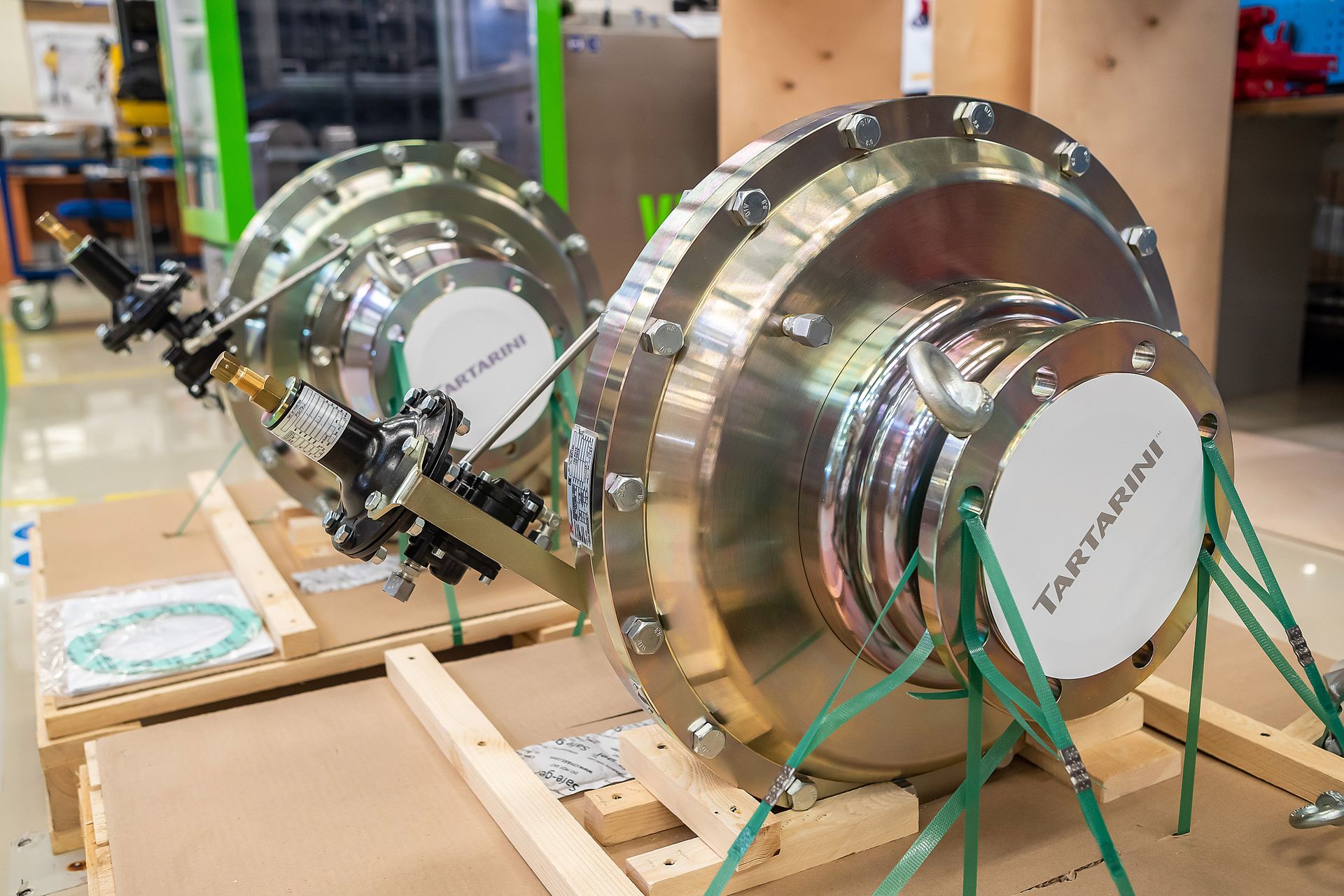
Capital goods are essential for the growth and development of any economy, and they're a crucial part of what drives innovation and progress.
Capital goods are tangible assets that are used to produce other goods and services, such as machinery, equipment, and vehicles. They're the backbone of any manufacturing process.
These goods are typically durable, meaning they can be used for a long time, and they're often used to increase productivity and efficiency. For example, a factory that installs new machinery can produce more goods in less time.
Investing in capital goods can have a significant impact on a company's bottom line, as it can lead to increased productivity, reduced costs, and improved competitiveness.
If this caught your attention, see: B Capital
What Are Capital Goods?
Capital goods are tangible assets used in the production of other goods or services, such as equipment, machinery, and vehicles. These assets are essential for businesses to operate efficiently and effectively.
The production of capital goods requires significant investment in labor, materials, and technology, which can be costly and time-consuming.
Examples of capital goods include computers, manufacturing equipment, and transportation vehicles, which are all used to produce other goods or services.
In the manufacturing sector, capital goods are used to produce intermediate goods, such as raw materials and components, which are then used to make finished products.
Importance of Capital Goods
Capital goods give you a significant edge over competitors. Bain & Company research shows that "factory-of-the-future" upgrades like digital twins and advanced robotics can lift output by 30% to 50%.
Companies buy capital goods not for direct consumption but as long-term investments, aimed at improving production capacity, efficiency, and profit.
Buying a robotic arm, renting a warehouse, or implementing an enterprise software system is a step toward envisioning how to improve production capacity, efficiency, and profit.
The ROI of capital goods is linked to their value; for example, buying an automated assembly line might come at heavy initial outlays but sharply cuts down on production time and labor costs, making it a very smart long-run investment decision.
Companies that integrate capital goods into leaner operations often see improved profit margins and market share.
Types of Capital Goods
Capital goods come in various forms, each serving a specific purpose in different industries. They can be categorized based on their physical nature and lifespan in a business.
Machinery and equipment are the broadest category of capital goods, encompassing tools that power various business functions, such as manufacturing, resource extraction, and communication. Examples include industrial robots, assembly lines, and computer hardware.
Heavy machinery, on the other hand, consists of large industrial machines used in production, construction, mining, and processing industries. These machines are crucial in producing finished products from raw materials or intermediate products.
Some examples of heavy machinery include CNC machines, assembly-line robots, and hydraulic presses. Vehicles also qualify as capital goods when they help move materials, components, or finished products through a supply chain.
Here are some examples of capital goods categorized by type:
They Encourage Innovation
Having the right capital goods can make all the difference in encouraging innovation. Research and development software, prototyping equipment, and testing tools make it easier to experiment with new ideas.
These tools help you test concepts quickly and bring innovative products to market faster than competitors who lack these resources. With the right capital goods, you can iterate and refine your ideas more efficiently.
Some examples of innovative capital goods include:
- CNC (Computer Numerical Control) machines
- Assembly-line robots
- Hydraulic presses
These machines enable mass production, improve quality consistency, and help businesses meet high-volume demands. By investing in the latest technology, companies can stay ahead of the curve and drive innovation in their industry.
Machinery and Equipment
Machinery and equipment make up the broadest category of capital goods, powering various business functions like manufacturing, resource extraction, communication, and more.
Examples of machinery and equipment include industrial robots, assembly lines, processors, kitchen appliances, agricultural machinery, computer hardware and data servers, telephone systems, and landscaping tools.
Machinery and equipment are the backbone of many industries, enabling mass production, improving quality consistency, and helping businesses meet high-volume demands.
Some specific examples of machinery and equipment include:
- Industrial robots
- Assembly lines
- Processors
- Kitchen appliances
- Agricultural machinery
- Computer hardware and data servers
- Telephone systems
- Landscaping tools
Capital Goods in Different Sectors
Capital goods play a vital role in various sectors, including manufacturing, construction, and transportation. Each industry utilizes capital goods in unique ways to streamline workflow, increase productivity, and reduce costs.
In the manufacturing industry, industrial robots are used to assemble vehicles, electronic devices, and machinery, reducing human error and increasing speed. Conveyor belts are also used to streamline workflow and reduce labor dependency in industries such as food production, packaging plants, and electronics manufacturing.
The construction industry relies heavily on heavy-duty machines like bulldozers and excavators to clear land, dig foundations, and shape terrain for construction projects. Tower cranes and concrete mixers are also essential for lifting materials in skyscraper construction or mixing concrete on-site.
Common examples of core capital goods include machine tools and manufacturing equipment, IT hardware, and automation systems. These equipment and systems are used to create factory parts or final products, run assembly lines, and package systems.
Buildings and infrastructure, such as factory buildings, office buildings, power plants, and warehouses, are also considered capital goods. These structures provide the necessary space and facilities for storage, manufacturing, assembly, and administration.
Transportation capital equipment, including cargo trucks and trailers, forklifts and pallet jacks, delivery vans and transport buses, and cargo ships and aircraft, are critical in logistics, field services, delivery operations, and supply chain management.
Here are some key examples of capital goods in different sectors:
Economic Impact of Capital Goods
Capital goods have a significant impact on the economy. They play a crucial role in assessing business investment trends and gauging future production activity.
Economists and analysts use core capital goods data to track business confidence and economic growth. This is because an increase in orders often signals business confidence and economic momentum.
Capital goods create jobs, not replace workers. They require skilled people to operate, maintain, and manage these tools and systems.
A technician servicing factory equipment or a developer customizing software represent jobs that exist because of capital investments. This is a direct result of businesses investing in capital goods.
Capital goods contribute to Gross Domestic Product (GDP) in several ways. They enable the efficient use of labor and natural resources.
Here are the ways capital goods contribute to GDP:
- Capital formation, which is a component of GDP
- Enabling the efficient use of labor and natural resources
- Allowing multiplier effects, where investment in one sector (e.g., construction) stimulates demand in others (e.g., steel, transportation)
Businesses that invest more in capital goods are seen as a leading indicator of future growth. This is why core capital goods orders are tracked monthly in countries like the U.S. and India.
Accounting and Depreciation
You won't see the full cost of capital goods on your financial statements right away, thanks to accrual accounting methods like depreciation and depletion.
Depreciation tracks how capital goods lose value over time due to wear and tear, becoming obsolete, or other factors.
You spread the expense of capital goods over their useful life, rather than taking the full hit upfront, which helps match costs with the revenue they generate.
For example, if you buy a $10,000 delivery truck with a 10-year useful life, you'd typically record $1,000 in depreciation expense each year.
Inventory or raw materials are not depreciable, making capital goods the only assets that depreciate over time.
Capital goods are considered depreciable because their value continuously declines due to normal use and tear, and technological obsolescence.
Depreciation influences tax liabilities and asset valuation, reducing taxable profits by taking the depreciation as an expense against income.
Frequently Asked Questions
What are scope 3 capital goods?
Scope 3 capital goods refer to indirect emissions from items like machinery, equipment, vehicles, and buildings that an organisation purchases or owns. These emissions can significantly contribute to an organisation's overall carbon footprint
What are 5 examples of goods?
Examples of goods include books, washing machines, cars, clothes, and computers. These everyday items are just a few examples of the many goods that are available in the market.
What is the difference between investment and capital goods?
Investment refers to the production of goods not immediately consumed, but used to produce other goods as capital. Capital goods are the actual goods produced through investment, which are used to generate more goods or services.
Featured Images: pexels.com