A capital expense, or capex, is a purchase or investment that benefits a business for more than one year.
It's a significant financial outlay, often requiring a formal approval process.
Capex can include equipment, property, or even intangible assets like software.
Understanding capex is crucial for businesses to make informed decisions about their financial investments.
Readers also liked: On the Cash Flow Statement Does Capex Include Ppe
What is Capital Expense?
Capital expense refers to the cost of acquiring, improving, or maintaining a long-term asset that benefits a business for more than one year.
These expenses are usually significant and can include purchases like machinery, vehicles, and buildings.
For instance, a company might spend $100,000 on a new factory, which would be a capital expense.
Long-term assets are typically depreciated over their useful life, which can be 5-10 years or more for some assets.
Depreciation is an accounting method used to allocate the cost of an asset over its useful life.
Capital expenses are recorded as assets on a company's balance sheet and are often used to generate revenue in the long run.
The cost of capital expenses can be recovered through future sales and revenue.
Readers also liked: Ltcm
Types of Capital Expenditure
Capital expenditures can be categorized into two main types: maintenance capex and growth capex. Maintenance capex refers to expenditures that help maintain current levels of a company's operations.
A good example of maintenance capex is spending funds on repair or conducting normal maintenance on assets, which is not considered a capital expenditure.
Growth capex, on the other hand, is used to enable an increase in future growth. This can include purchasing new equipment or software to improve efficiency and productivity.
Here are some examples of growth capex:
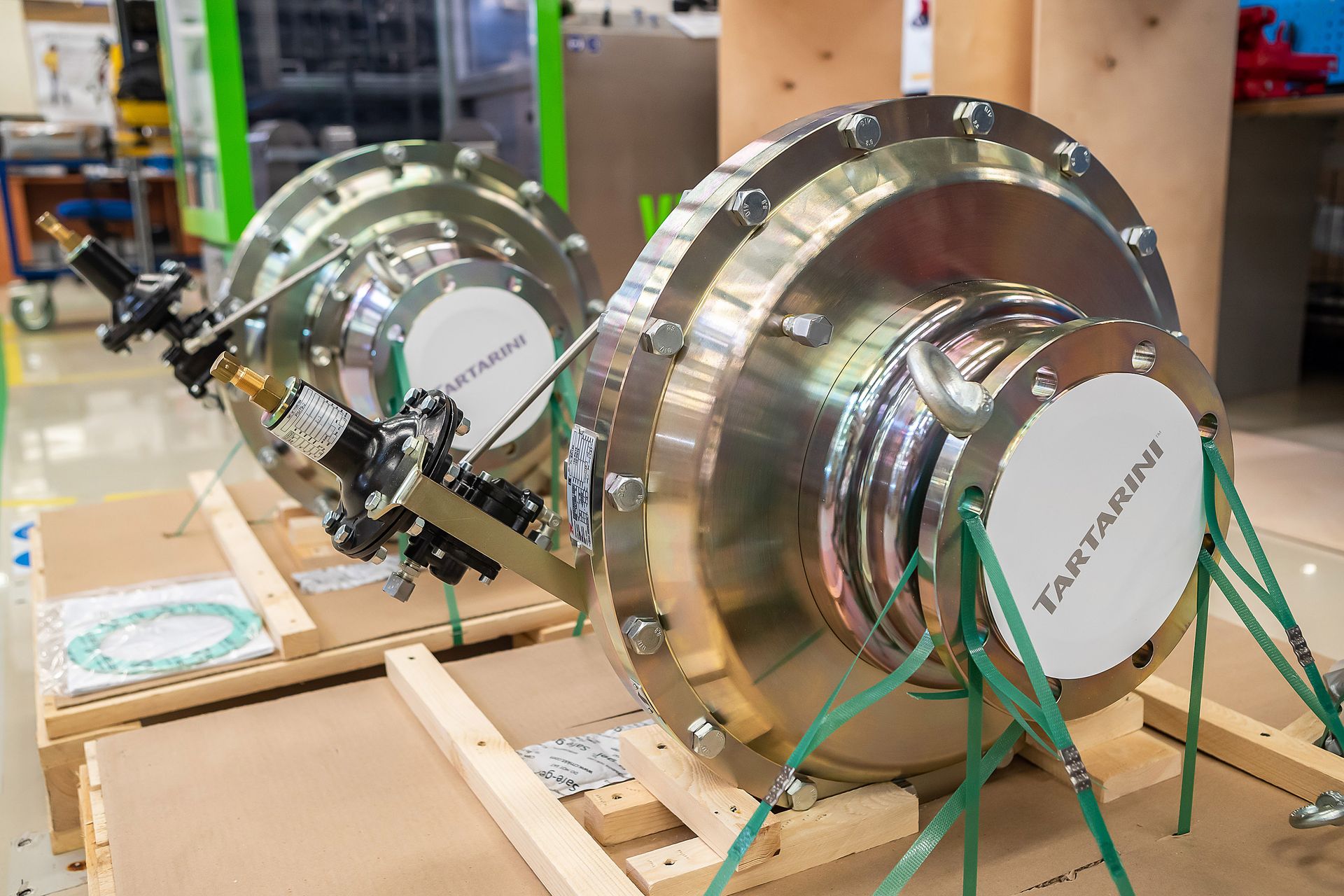
- Equipment and machinery to manufacture goods and convert raw materials into final products for sale.
- Computers or servers to support a company's operational aspects, including logistics, reporting, and communication of operations.
- Vehicles to transport goods and pick up clients or staff for business purposes.
- Patents that hold long-term value if the right to own an idea comes to fruition through product development.
Land can also be used for growth capex, especially if it's held for further development.
Importance and Benefits
Capital expenditures are essential for your business to grow and remain competitive in the long run. They can help improve operations by providing the necessary infrastructure and equipment to run efficiently.
Investing in tangible CapEx assets, such as land, buildings, and equipment, can increase the value of your assets over time. This can make them more attractive to potential buyers or investors.
Tangible CapEx assets are long-term investments that can provide value for many years, offering a steady income stream and cost savings over their useful life.
You might enjoy: Qual a Diferença Entre Opes E Capex
Intangible Assets—Driving You Forward
Intangible CapEx assets are non-physical assets that can still provide long-term value. They may not be visible or tangible, but they're critical to your success.
You can prevent competitors from using or copying your ideas, products, and services by securing intangible CapEx assets such as patents, trademarks, and copyrights.
Intangible CapEx assets can enhance your brand value if they assist you in creating a unique identity and reputation. For example, investing in intangible CapEx assets through marketing and advertising campaigns can help you build brand recognition and loyalty.
Like tangible CapEx assets, intangible CapEx assets are long-term investments that can provide value for many years. They can even be subject to depreciation, which you can use to expense the intangible asset's cost over its useful life.
Intangible CapEx assets can provide a steady income stream and cost savings over their useful life. They're a vital part of your business strategy, helping you stay ahead of the competition.
Curious to learn more? Check out: An Audit Is Useful to Financial Statement Users Because It
Reduced Costs

Reduced Costs can have a significant impact on your business.
By investing in energy-efficient equipment or infrastructure, you can reduce your CapEx costs, which can lead to increased profitability in the long run.
Planning and Budgeting
Conduct thorough research and due diligence before making any capital expense investments. Create a detailed plan for managing cash flow, ensuring that capital expenses don't impact other business areas. Outline your goals, metrics, budget, and timeline, identifying your needed resources and expertise.
Having a clear structure is essential for making informed and strategic decisions. This involves creating a budget that aligns with your business strategy and considering the long-term impact of your investments.
To ensure efficient capital expenditure budgeting, consider using good budgeting software from the beginning of the project. This will help you manage the budgeting process and reduce the risk of error.
Think long term when making capital expense investments. Consider factors such as maintenance costs, depreciation, and obsolescence, as well as identifying opportunities for growth and expansion.
To create a comprehensive budget, consider the following key areas:
- Cash flow management
- Goals and metrics
- Budget and timeline
- Needed resources and expertise
Accounting and Calculation
Calculating capital expenditures (CapEx) is a crucial step in managing your finances and making informed investment decisions. The formula for calculating CapEx is CapEx = total acquisition cost – salvage value, as seen in the example of a machine purchased for $10,000 with a salvage value of $2,000 after 5 years.
You can use either the direct or indirect method to calculate CapEx, depending on your needs and the level of accuracy required. The direct method records all CapEx costs immediately, while the indirect method observes how long-term assets change over time.
To capture accurate data, it's essential to gather reliable information, as mentioned in Example 5. You can use the direct method by adding up all individual items that make up the total expenditures, or the indirect method by looking at the value of assets on the balance sheet in conjunction with depreciation expense, as shown in Examples 6 and 7.
Here's a summary of the two methods:
By understanding the total cost of acquiring or improving an asset and estimating its future salvage value, you can accurately calculate the expected return on investment.
Formula and Calculation
Calculating Capital Expenditures (CapEx) is a crucial aspect of accounting and financial management. The formula for CapEx is simple: CapEx = ΔPP&E + Current Depreciation. This means that CapEx is the change in property, plant, and equipment (PP&E) plus the current depreciation.
You can calculate CapEx using either the direct or indirect method. The direct method records all CapEx costs immediately, while the indirect method observes how long-term assets change over time.
To calculate CapEx using the direct method, you can use the following formula: CapEx = Amount spent on asset #1 + Amount spent on asset #2 + Amount spent on asset #3 - Value received for assets that were sold. This method provides a detailed breakdown of individual asset expenses.
Alternatively, you can use the indirect method, which involves subtracting the PP&E balance in the previous period from the PP&E balance in the current period, then adding the depreciation in the current period. This method provides a more comprehensive view of CapEx over time.
Additional reading: ATM Burglaries Using Explosives
Here's a summary of the two methods:
Accurate data is essential when calculating CapEx. This includes capturing data on market trends, customer behavior, maintenance costs, and equipment performance. By capturing accurate data, you can identify areas where you can improve efficiency, reduce costs, and make more informed investment decisions.
The net capital expenditure (Net CapEx) can be calculated using either the direct or indirect method. In the direct approach, an analyst must add up all of the individual items that make up the total expenditures. In the indirect approach, the value can be inferred by looking at the value of assets on the balance sheet in conjunction with depreciation expense.
Capture Accurate Data
Capture Accurate Data is crucial for making informed CapEx investments. Accurate data helps identify areas for improvement and informs investment decisions.
To capture accurate data, you'll want to gather information on market trends, customer behavior, maintenance costs, and equipment performance. This data is essential for creating a realistic budget and generating valuable reports.
Worth a look: Fair and Accurate Credit Transactions Act
Measuring the effectiveness of CapEx investments can be difficult, particularly when it comes to long-term and indirect benefits like improved productivity or customer satisfaction.
Capturing accurate data requires careful consideration of factors like depreciation, maintenance costs, and obsolescence. These factors can complicate the measurement of success and make it harder to make informed decisions.
By capturing accurate data, you can reduce costs, improve efficiency, and make more informed investment decisions. This is especially important when it comes to making CapEx investments that will have a significant impact on your business.
Here are some key areas to focus on when capturing accurate data:
- Market trends
- Customer behavior
- Maintenance costs
- Equipment performance
Spread
The benefits of CapEx investments can be spread out over a longer period, making it hard to see the return on investment in the short term.
However, this is where depreciation comes in – it allows you to expense the asset's cost over its useful life.
You can use depreciation to maximize the value of an asset and minimize its overall cost.
This can be a game-changer for businesses that need to make large investments but want to see a return on their money.
Intriguing read: Bank Runs Nothing to See Here
Financial Statements
Capital expenditures don't appear on the income statement because they're considered investments. This is in contrast to operating expenses, which do show up on the income statement.
CapEx flows from the cash flow statement to the balance sheet, where the value of the asset is slowly reduced over time via depreciation expense.
Cash Flow Statement
The cash flow statement is a key financial statement that shows the inflows and outflows of cash and cash equivalents for a company over a specific period of time.
Capital expenditures can be found on a company's cash flow statement under "investing activities", and are considered investments that don't appear on the income statement.
Amazon had $63,645 million of capital expenditure in 2022 related to "purchases of property and equipment."
This type of spending is an important part of a company's financial picture, and can provide valuable insights into their growth and investment strategies.
The cash flow statement is typically divided into three main sections: operating activities, investing activities, and financing activities.
Balance Sheet
The balance sheet is a snapshot of your company's financial situation at a specific moment in time. It's a crucial tool for making informed business decisions.
CapEx flows from the cash flow statement to the balance sheet, where it's recorded as an asset. This means that the value of the asset is slowly reduced over time through depreciation expense.
Assets, liabilities, and equity are the three main components of the balance sheet. Think of it like a seesaw: assets on one side, liabilities and equity on the other.
Depreciation expense reduces the value of assets over time, which is a key concept to understand when analyzing a balance sheet.
Readers also liked: Contingent Liabilities in Accounting
Challenges and Considerations
Challenges with capital expenses can be significant. Market conditions and regulatory changes can affect your investments, making it difficult to accurately forecast return on investment.
Unpredictability is a major challenge in capital expenditures. Even the best forecasters can make mistakes, and organizations need to account for risks to mitigate potential losses.
CapEx investments often involve significant upfront costs, which can impact cash flow and make it difficult to invest in other business areas.
Challenges

Capital expenditures can present various challenges that you must overcome to maximize your investments.
CapEx decisions are very critical, but they also create more complexity.
Overcoming these challenges requires careful planning and execution to ensure that your investments pay off.
Capital expenditure decisions can be difficult to make due to the complexity they create.
It's essential to identify and address these challenges to maximize the return on your investments.
Intriguing read: Maximize Venture X Points
Unpredictability
Unpredictability is a significant challenge when it comes to capital expenditures. Market conditions can change rapidly, affecting the outcome of your investments.
Large upfront costs associated with capital expenditures can impact cash flow, making it difficult to invest in other business areas. This can be a major obstacle for organizations.
Unforeseen events, such as regulatory changes, can also impact your capital expenditures. You might find it difficult to accurately forecast the return on investment, leading to unexpected costs or delays.
Even the best forecasters can make mistakes, and the costs and benefits of capital expenditure decisions are usually characterized by a lot of uncertainty.
Irreversibility
Irreversibility is a significant challenge when making capital expenditures.
CapEx investments are often irreversible, which means they can't be easily undone. This highlights the importance of careful planning and due diligence.
The market for used capital equipment is generally very poor, making it difficult to recoup losses if a company needs to reverse a CapEx investment. Most forms of capital equipment are customized to meet specific company requirements and needs, adding to the challenge.
Careful planning and informed decision-making can help minimize the risk associated with irreversible CapEx investments.
Discover more: Finance Business Plan
Maintain Competitiveness
To stay ahead of the competition, it's essential to regularly review and adjust your capital expense strategy.
Investing in technology, such as cloud computing, can help reduce costs and increase efficiency. This can be seen in the example of Amazon Web Services, which reduced its capital expenses by 50% by moving to the cloud.
A well-planned capital expense budget can help businesses allocate resources effectively and make informed decisions about investments. This can be achieved by categorizing expenses into different types, such as replacement, expansion, and upgrade.
Regular asset utilization reviews can help identify opportunities to optimize capital expenses. For instance, a review of a company's equipment utilization found that 30% of its assets were underutilized, resulting in unnecessary expenses.
By regularly reviewing and adjusting your capital expense strategy, you can maintain competitiveness and achieve long-term financial goals.
Take a look at this: Utilization Management
Featured Images: pexels.com