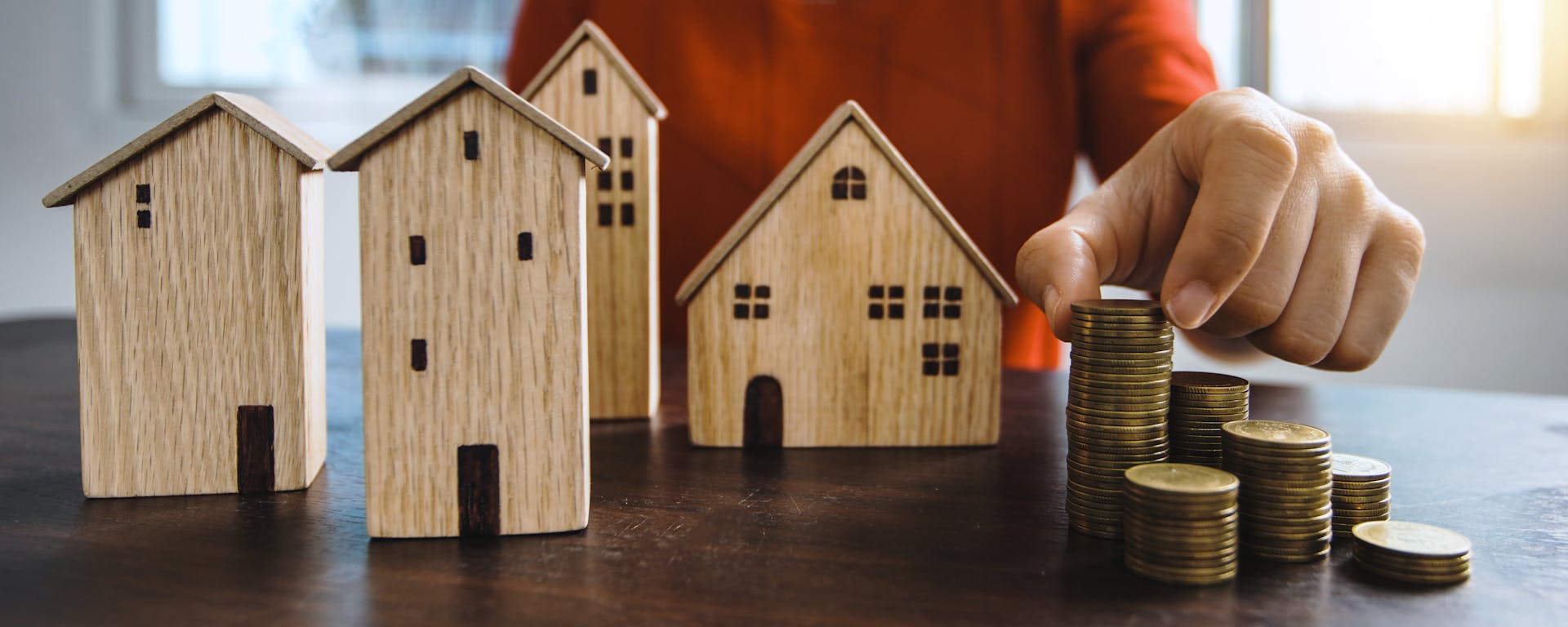
The capex model is a crucial tool for businesses to manage their capital expenditures. It helps companies make informed decisions about investments in assets that will generate future cash flows.
The capex model is based on the concept of net present value (NPV), which calculates the present value of future cash flows. As we discussed earlier, the NPV is calculated using the formula: NPV = ∑ (CFt / (1 + r)^t), where CFt is the cash flow in period t and r is the discount rate.
A company's ability to accurately forecast cash flows is critical to the capex model. This is because the model relies heavily on projections of future cash inflows and outflows.
For more insights, see: Capital Expenditure from Cash Flow Statement
What is Capex?
Capex is a type of investment that a company makes to grow or maintain its business operations. It's a long-term investment in fixed assets, such as property, buildings, technology, and equipment.
A company's capex can have a major impact on its free cash flow, making it one of the most significant outflows of cash. This is why it's essential to understand what capex is and how it affects a company's financials.
Here's an interesting read: On the Cash Flow Statement Does Capex Include Ppe
Capex is not recognized as an expense on the income statement, but rather, the cash outflow is expensed via depreciation. This means that the full cash outflow incurred from capex is recognized in the cash from investing activities section of the cash flow statement in the period when the actual purchase occurred.
There are two types of capex: maintenance capex and growth capex. Maintenance capex is used to replace or upgrade existing assets, while growth capex is used to expand a company's operations or enter new markets.
Here are some examples of long-term assets that are typically included in a company's capex:
- Land and buildings
- Plant and equipment
- Furniture and fittings
- Computers
- Motor vehicles
These assets are expected to last for more than one year, and their cost is typically written off over their useful life through depreciation.
Calculating Capex
To calculate capital expenditure (Capex), you need to track changes in a company's fixed assets (PP&E) balances and depreciation expense. The depreciation expense is usually found on the cash flow statement, where it's treated as a non-cash add-back.
The formula to calculate Capex is simple: subtract the current period PP&E from the prior period PP&E, then add depreciation. This is because depreciation is a non-cash item that reduces the carrying value of fixed assets, but doesn't involve any actual cash outlay.
Here's a step-by-step guide to calculating Capex:
- Find the current period PP&E balance on the balance sheet
- Find the prior period PP&E balance on the balance sheet
- Subtract the prior period PP&E from the current period PP&E to find the change in PP&E
- Add the current period depreciation expense to the change in PP&E to find the Capex
For example, if the current period PP&E is $25.8m, the prior period PP&E is $25.0m, and the depreciation expense is $2.2m, the Capex would be $3.0m ($25.8m - $25.0m + $2.2m).
What Are Expenditures?
Expenditures are an essential part of any business, and understanding what they are can help you make sense of your company's financials. Expenditures are the costs incurred by a company to acquire, upgrade, or maintain physical assets, such as property, equipment, and software.
A capital expenditure, or Capex, is a specific type of expenditure that involves the purchase or upgrade of long-term assets, such as buildings, equipment, or technology. This can include repairing a roof, purchasing a piece of equipment, or building a new factory.
A different take: Oaktree Capital Assets under Management
Capex is distinct from operating expenses, which are indirect costs incurred in the ordinary course of business, such as selling, general, and administrative (SG&A) expenses.
To calculate Capex, you can use the formula: Ending PP&E - Beginning PP&E + Depreciation. This formula helps you determine the change in a company's PP&E balance, which represents the Capex spend.
Here are some examples of expenditures that can be classified as Capex:
- Purchasing a new building
- Upgrading existing equipment
- Acquiring new software
- Repairing a roof
These types of expenditures are typically capitalized, meaning they are recorded as an asset on the balance sheet, rather than being expensed immediately.
How to Calculate
To calculate Capex, you need to track the changes in a company's fixed assets balances recorded on the balance sheet, along with the current period's depreciation expense from the income statement. However, a separate line item for depreciation expense is seldom found on the income statement.
You can obtain the depreciation expense from the cash flow statement, where it is treated as a non-cash add-back. If depreciation is consolidated with amortization, simply copy the D&A amount in the filing and use the search function to find the footnotes that break out the precise depreciation expense amounts.
Suggestion: Statement Describes
To calculate capital expenditure (Capex), subtract the current period PP&E from the prior period PP&E and then add depreciation. This is because depreciation is a non-cash item, and it reduces the carrying value of fixed assets on the balance sheet without an actual cash outlay.
The formula to calculate Capex is: CapEx = ΔPP&E + Current Depreciation. Where ΔPP&E represents the change in property, plant, and equipment, and Current Depreciation represents the depreciation expense for the current period.
Alternatively, you can rearrange the formula to solve for capital expenditure (Capex): CapEx = Ending PP&E - Beginning PP&E balance + Depreciation. Where Ending PP&E is the current period PP&E balance, Beginning PP&E is the prior period PP&E balance, and Depreciation is the depreciation expense for the current period.
Here's a step-by-step guide to calculating Capex:
1. Obtain the current period's PP&E balance from the balance sheet.
2. Obtain the prior period's PP&E balance from the balance sheet.
3. Subtract the prior period's PP&E balance from the current period's PP&E balance to find the change in PP&E.
4. Add the depreciation expense for the current period to the change in PP&E.
5. The result is the company's current-period CapEx spending.
By following these steps, you can accurately calculate a company's CapEx spending and gain valuable insights into its investment activities.
A fresh viewpoint: Which Change of State Is Shown in the Model?
Understanding Capex Impact
Capex can tell you how much a company invests in existing and new fixed assets to maintain or grow its business. It's any type of expense that a company capitalizes or shows on its balance sheet as an investment rather than on its income statement as an expenditure.
Capex can be found in the cash flow from investing activities in a company's cash flow statement, listed as capital spending, purchases of property, plant, and equipment (PP&E), or acquisition expenses.
Some of the most capital-intensive industries have the highest levels of capital expenditures, including oil exploration and production, telecommunications, manufacturing, and utility industries.
Here's a breakdown of how capex impacts a company's financial statements:
The amount of capital expenditures a company is likely to have depends on its industry, and capex can be calculated using data from a company's income statement and balance sheet.
How Expenditures Impact Financial Statements
Capital expenditures (Capex) play a significant role in a company's financial statements. They are treated differently on the income statement, cash flow statement, and balance sheet.
The value of acquired property, plant, and equipment (PP&E) is expensed via depreciation on the income statement, spreading the cost over the asset's useful life. This is in contrast to treating it as a one-time, immediate cash outflow on the date incurred.
On the cash flow statement, the actual full cash outflow related to Capex is captured in the cash from investing section.
The Capex amount is captured as an increase to the PP&E balance on the assets section of the balance sheet, and reduced by the non-cash depreciation expense.
To calculate Capex, you can use the following formula: Add the change in PP&E balance to the depreciation expense for the current period.
Here's a step-by-step guide to calculating CapEx:
- Find the depreciation expense recorded for the current period on the income statement.
- Locate the current period's property, plant, and equipment line-item balance on the balance sheet.
- Find the company's PP&E balance from the prior period.
- Take the difference between the two to find the change in the company's PP&E balance.
- Add the change in PP&E to the depreciation expense for the current period to arrive at the company's current-period CapEx spending.
By understanding how Capex impacts financial statements, you can gain valuable insights into a company's investment strategies and financial performance.
Operating Expenses OpEx
Operating expenses, or OpEx, are shorter-term expenses that businesses need to pay to keep running.
These expenses can be fully deducted from taxes in the same year they occur, which is a big advantage for businesses.
Operating expenses typically include costs like rent, utilities, and salaries, which are essential for daily operations.
Unlike capital expenditures, OpEx are not related to long-term investments or asset purchases.
If a business purchases a new asset, the cost is considered capital expenditure, not OpEx.
Intriguing read: Asset Light Business Model
Capex Optimization
Capex optimization is a crucial step in ensuring the financial health of a business. It involves assessing the current situation and identifying areas for improvement.
By taking a holistic approach, businesses can reduce their capital expenditures (CapEx) by up to 50%. This can be achieved through a blended top-down/bottom-up approach.
A comprehensive research across various sectors has revealed significant untapped cost savings opportunities, with potential savings amounting to a staggering 30 to 50% of expenditure.
Four-Step End-to-End Optimization
To achieve CapEx end-to-end optimization, we need to take a holistic approach. This involves assessing the existing situation and identifying areas for improvement.
We can start by focusing on a bottom-up approach, which allows us to examine every aspect of our operations and pinpoint specific areas where cost savings can be made. This blended top-down/bottom-up approach is crucial for effective CapEx optimization.
By venturing into new product segments, achieving net zero carbon footprint, and securing supply chains, companies can bolster their competitiveness and future positioning, but this requires significant capital investments in production equipment and facilities.
Our research reveals that there are untapped cost savings opportunities, with potential savings amounting to a staggering 30 to 50% of expenditure.
A clear and effective formula for success has been identified through the completion of hundreds of investment cost optimization projects.
On-site quick checks can help identify areas for improvement, while piloting specific investment projects can provide valuable insights and help refine our approach.
The project phase is a critical step in the CapEx optimization process, where we can implement the changes and adjustments we've made along the way.
Worth a look: Mayfair Capital Investment Management
Special Considerations
A ratio greater than 1.0 could mean that the company's operations are generating the cash necessary to fund its asset acquisitions.
The cash-flow-to-capital-expenditures (CF-to-CapEx) ratio is a key indicator of a company's ability to fund its capital expenditures.
A ratio of less than 1.0 may indicate that the company is having issues with cash inflows and its purchase of capital assets.
This can lead to a company having to borrow money to fund its purchase of capital assets, which can put a strain on its finances.
Discover more: Starting a Vc Firm
Capex Analysis and Ratios
The depreciation to capex ratio is a key metric to understand a company's growth profile and lifecycle stage. This ratio can be calculated by dividing depreciation by total capex.
In the early stages of a company's lifecycle, the depreciation to capex ratio is often low, indicating significant spending on growth capex. As a company matures, this ratio tends to approach 1.0, or 100%, indicating less spending on growth and more on maintenance.
The desired ratio of depreciation to capex is 100%, which can be achieved by smoothing out the assumption over a forecast period. For example, if the initial ratio is 66.7%, the formula to reach 100% by the end of the forecast is to add 6.7% each year for 5 years.
Here's a summary of the depreciation to capex ratio's implications:
- Low ratio (less than 1.0x): Mature company with limited growth opportunities
- High ratio (greater than 1.0x): Company prioritizing growth, anticipating above-market growth
Using the Capex Model
To use the CapEx model, you'll need to enter a description for the capital expenditure item, such as a LAN server or motor vehicle. For each item, enter the number of units purchased, like 20 computers, and the unit cost, such as $1,500 per computer.
The CapEx model will calculate the total cost by multiplying the quantity by the unit cost, so in this example, it would be $30,000. You'll also need to enter the year in which the asset is purchased, with 0 indicating it forms part of the opening balance sheet.
To calculate the CF-to-CapEx ratio, you'll need to divide the cash flow from operations by the capital expenditures. This ratio is industry-specific and should only be compared to a ratio derived from another company with similar CapEx requirements.
Here's a simple example of how to calculate the CF-to-CapEx ratio:
Using the Model
To use the capital expenditure model, start by entering a description for the capital expenditure item, such as a LAN server or motor vehicle.
For each item, enter the number of units purchased. For example, if twenty computers are purchased, enter 20.
The unit cost of each item should also be entered. If each computer costs 1,500, enter 1500. The capital expenditure model will calculate the total cost by multiplying the quantity by the unit cost.
Enter the year in which the asset is purchased. If the asset forms part of the opening balance sheet, enter 0. If the year column entry is left blank, the capital expenditure model will automatically allocate the expenditure under the opening column.
Here's a step-by-step guide to entering the details:
1. Description
2. Number of units purchased
3. Unit cost
4. Year of purchase
By following these steps, the capital expenditure model will allocate the expenditure to the correct year and calculate the total capital expenditure for each of the 5 years.
Operating Model
An effective Operating Model is crucial for achieving strategic objectives and meeting financial and operational targets.
Best practices in areas such as operational footprint, supply and delivery network, make-or-buy decisions, and automation levels should be considered.
A 360° total cost of ownership (TCO) assessment is essential for making informed decisions about these areas.
An optimal Operating Model can yield significant benefits, including increased EBITDA margins and improved market share.
By considering factors such as operational footprint and supply and delivery network, organizations can identify areas for cost reduction and process improvement.
A well-structured Operating Model is key to maintaining a competitive edge in today's fast-paced business environment.
By implementing a robust Operating Model, organizations can potentially boost returns on capital by 10-20%.
Worth a look: Working Capital Management Decisions Help to Determine
Capex and Taxes
Capital expenditures, or CapEx, can have a significant impact on a company's taxes. Capital expenditures aren't directly tax-deductible.
However, they can indirectly reduce a company's taxes through depreciation. This means that a company can write off a portion of the cost of an asset over its useful life, reducing pre-tax income and income taxes.
For example, if a company purchases a $1 million piece of equipment with a 10-year useful life, it can claim $100,000 of depreciation expense each year, reducing its pre-tax income by $100,000 annually.
Operating expenses, on the other hand, are fully tax-deductible and recur on a regular basis.
Key Concepts and Definitions
Capital expenditures (Capex) are payments made for goods or services that are recorded or capitalized on a company's balance sheet rather than expensed on the income statement.
Capex is essential for companies to maintain existing property and equipment and to invest in new technology and other assets for growth. This can include the purchase of land, vehicles, buildings, or heavy machinery.
A key distinction between Capex and operating expenses (OpEx) is the useful life of the asset. If an item has a useful life of less than one year, it's expensed on the income statement rather than capitalized as CapEx.
Here are some examples of CapEx:
- Purchase of land
- Purchase of vehicles
- Purchase of buildings
- Purchase of heavy machinery
CapEx can be further categorized into two types: Maintenance CapEx and Growth CapEx. Maintenance CapEx involves mandatory spending to continue operations, while Growth CapEx is discretionary spending related to new growth strategic plans.
What's Different?
Maintenance Capex is about keeping the lights on, literally. It's the required ongoing expenditures of a company to continue operating in its current state, like repairing broken equipment or periodic system updates.
Growth Capex, on the other hand, is about expanding the business. It's the discretionary spending of a company related to new growth strategic plans to acquire more customers and increase geographic reach.
Maintenance Capex is considered mandatory spending to sustain the current level of revenue and profit levels. If not replenished, ongoing operations wouldn't be able to continue.

Growth Capex, however, is discretionary spending to increase revenue and profits beyond historical levels. This can result from stealing more market share from existing incumbents, acquiring new customers quickly, capitalizing on upsell opportunities, or introducing new product lines.
The key difference between the two is the underlying intent behind the purchase. Maintenance Capex is about sustaining the current state, while Growth Capex is about driving future growth.
Here's a quick breakdown of the two:
Capex tends to be the most significant growth catalyst for companies, but it can also function as a constraint on growth for companies with limited funding or cash on hand.
Key Takeaways
Capital expenditures are payments made for goods or services that are recorded on a company's balance sheet rather than expensed on the income statement. This means they're considered long-term investments in the company's growth and operations.
Spending on capital expenditures is crucial for companies to maintain existing property and equipment, invest in new technology, and other assets for growth. It's a way for companies to upgrade and improve their operations, making them more efficient and competitive.
An item must be expensed on the income statement rather than capitalized if it has a useful life of less than one year. This is because it's not considered a long-term investment, but rather a short-term expense.
Examples of capital expenditures include the purchase of land, vehicles, buildings, or heavy machinery. These are all considered long-term investments that can benefit the company for years to come.
Here are some key differences between capital expenditures and operating expenses:
Capital expenditures are categorized into two types: maintenance capital expenditures and growth capital expenditures. Maintenance capital expenditures are required to sustain the company's current operations, while growth capital expenditures are discretionary spending to increase revenue and profits beyond historical levels.
The Bottom Line
A capex model is not a one-size-fits-all solution, and its effectiveness depends on the specific needs of a business.
By understanding the different types of capex models, such as the payback period model and the net present value (NPV) model, businesses can make informed decisions about investments.
Investing in the right assets can have a significant impact on a company's bottom line.
The payback period model, for example, can help businesses determine when an investment will pay for itself, and the NPV model can help them evaluate the potential return on investment.
Businesses should consider the time value of money when making investment decisions, as it can affect the overall cost of an investment.
A capex model can also help businesses identify areas where they can optimize their investments and reduce costs.
Recommended read: When Genius Failed
Frequently Asked Questions
What is the difference between CapEx and OpEx model?
CapEx and OpEx models differ in their approach to accounting for business expenses, with CapEx involving long-term investments in assets and OpEx covering ongoing, recurring costs. Understanding the difference between these two models is crucial for accurate financial planning and decision-making.
Featured Images: pexels.com