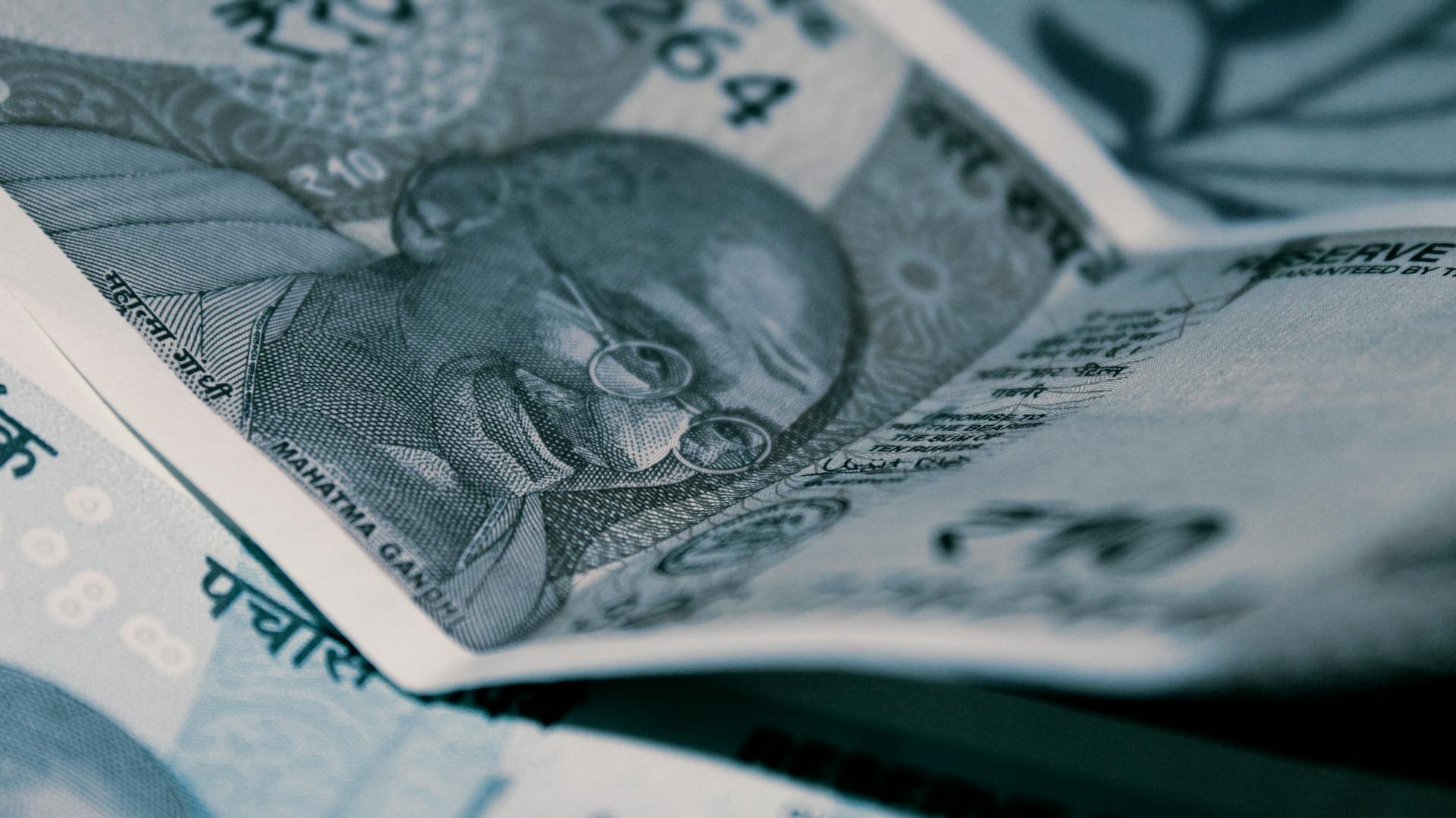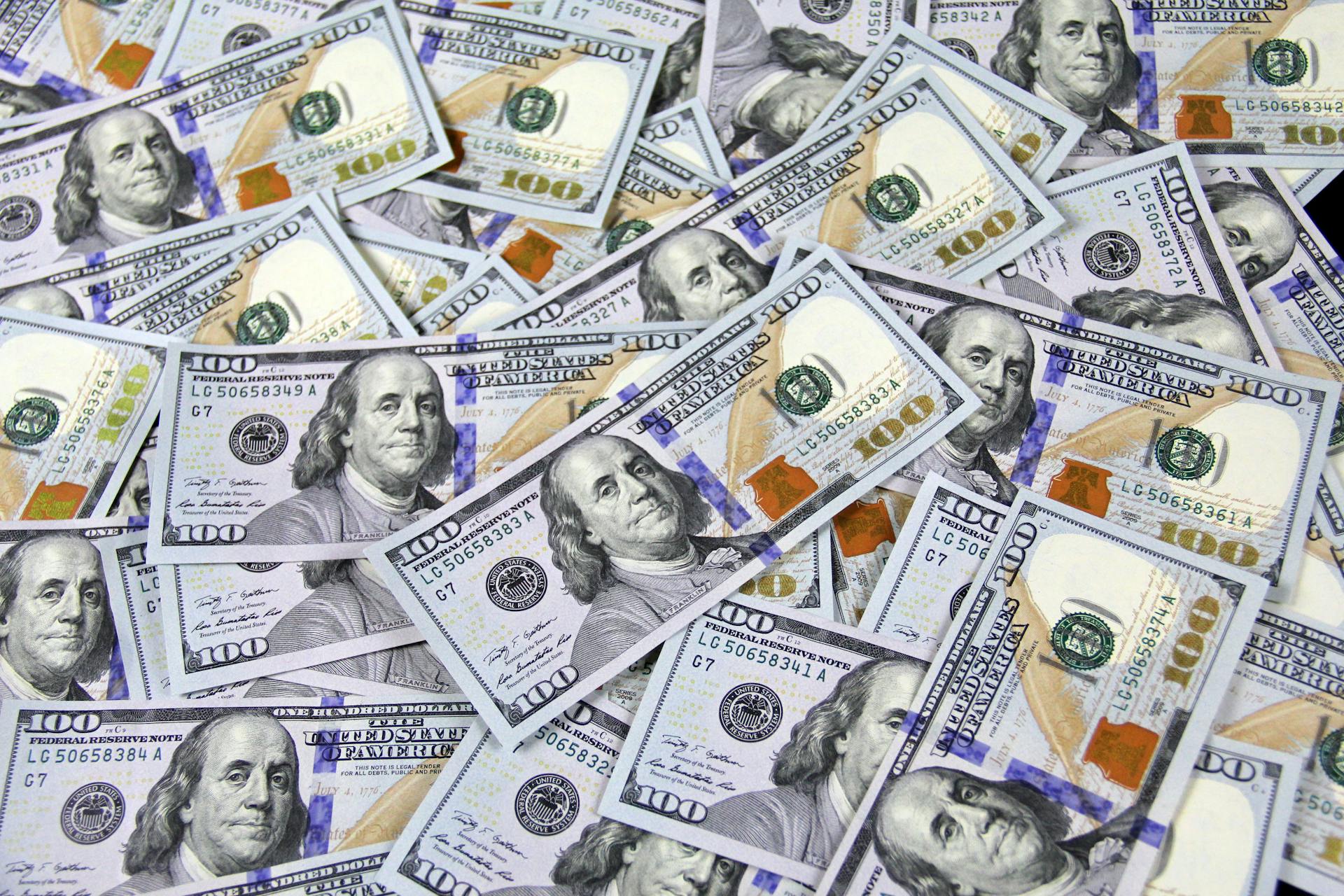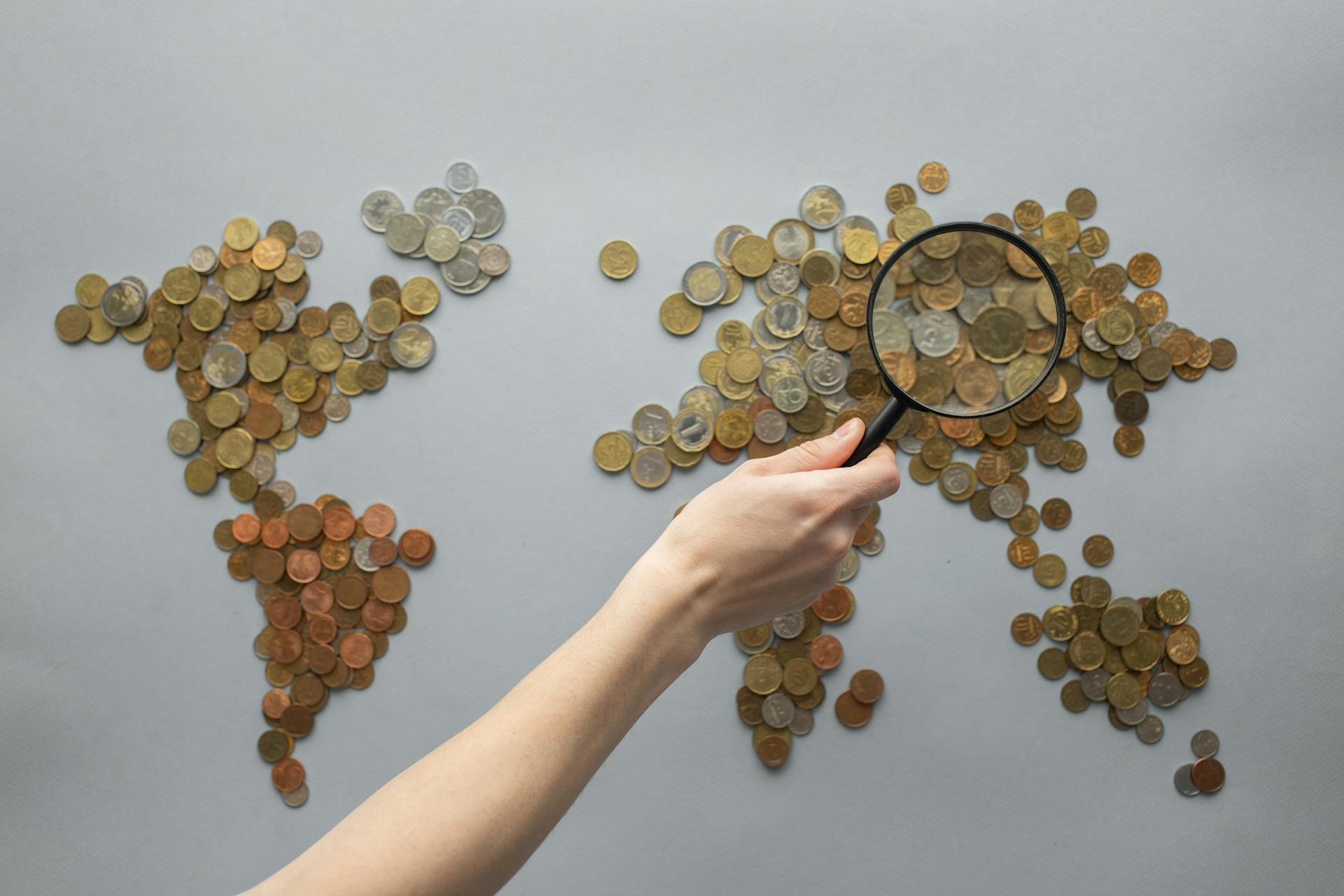
The value of world currency is determined by supply and demand in the foreign exchange market, where currencies are traded against each other.
The US dollar is the most widely traded currency, making up about 80% of all foreign exchange transactions.
The global economy relies heavily on the stability of major currencies like the US dollar, euro, and yen.
The International Monetary Fund (IMF) plays a crucial role in maintaining global currency stability by providing financial assistance and advice to countries in need.
History of Currencies
The history of currencies is a long and fascinating one. The first known currency was the Lydian stater, introduced by King Croesus in ancient Lydia around 560 BC.
Gold and silver have been used as a form of currency for thousands of years. The Lydians used electrum, a naturally occurring alloy of gold and silver, to create their early coins.
Paper money was first introduced in China during the Tang Dynasty in the 7th century. The first paper money was used as a substitute for copper coins.
The gold standard was widely adopted in the 19th century, with many countries pegging their currency to the value of gold. This system was eventually abandoned in the 20th century.
Electronic payments have become increasingly popular in recent years, with many countries adopting digital currencies.
See what others are reading: Ohio E Check Years
Global Currencies
The concept of a global currency is a topic of ongoing debate and discussion. About 60% of central bank currency reserves are held in U.S. dollars, with the dollar being used in about 90% of the world's foreign exchange transactions.
The dollar's widespread use is largely due to its stability and the fact that many commodities, such as crude oil and gold, are priced in dollars. The euro is the second most widely-held currency, making up around 20% of global reserves.
The idea of a single global currency is often proposed as a solution to the issues associated with the current system. This currency would be used for all transactions around the world, regardless of the nationality of the entities involved. However, no such official currency currently exists.
A limited alternative to a single global currency could be a world reserve currency issued by the International Monetary Fund. This currency would be used as a reserve asset by all national and regional central banks, and could help to reduce the risks associated with the current system.
For another approach, see: Single Euro Payments Area
Some evidence suggests that the world may evolve towards multiple global currencies that exchange on a singular market system. The rise of digital global currencies, such as Ven, could offer wider formats for trade as they gain strength and wider acceptance.
Here is a list of the top 10 most widely-held currencies in the world:
- USD (US dollar)
- EUR (euro)
- JPY (Japanese yen)
- BGN (Bulgarian lev)
- CZK (Czech koruna)
- DKK (Danish krone)
- GBP (pound sterling)
- CHF (Swiss franc)
- NOK (Norwegian krone)
- TRY (Turkish lira)
These currencies are widely used and held in large quantities by central banks and other financial institutions.
Currency Concepts
The U.S. dollar is widely accepted as a global currency, with about 60% of central bank currency reserves held in dollars. This is largely due to the dollar's stability in facilitating trade and financial transactions.
About 90% of the world's foreign exchange transactions are in dollars. This makes it an attractive medium of exchange for international companies.
Many commodities are priced in dollars, including crude oil, natural gas, gold, silver, copper, aluminum, platinum, wheat, corn, and soybeans. These dollar-denominated commodities are a significant part of global trade.
The euro is the second most widely-held currency, making up approximately 20% of global reserves.
Additional reading: Can Family Members Be Held Responsible for Medical Bills
De-Dollarization
De-dollarization is a significant shift in the global economy where countries are reducing their reliance on the US dollar in international trade and financial transactions. This trend is evident in the commodities space, where energy transactions are increasingly priced in non-USD currencies.
Russia, the world's second-largest oil exporter, is selling its petroleum exports in local currencies of its customers or in currencies of friendly countries. This could set a precedent for other oil producers to follow suit.
Central banks, especially in emerging markets, are diversifying their foreign exchange reserves by increasing their gold holdings. In 2022 and 2023, they collectively bought a record-high 2,173 tonnes of gold, reducing their need for US dollars and US Treasuries.
The dollar's share of global trade has declined in recent years, but this should not be confused with de-dollarization. The slight weakening in trade intensity is due to factors like cost convergence, trade liberalization, and growing service intensity of economies.
If this caught your attention, see: Domestic Liability Dollarization
Despite the decline in the dollar's share of foreign exchange reserves, it still retains its influence in global trade and finance. Dollar-denominated bank deposits, sovereign wealth funds, and private foreign assets have increased, offsetting the decline in the dollar's share of reserves.
The dollar's transactional dominance remains undisputed, especially when considering other factors like FX volumes and trade invoicing. However, new payments systems are evolving, facilitating cross-border transactions without the involvement of US banks.
Project mBridge, a multi-central bank digital currency platform, connects central and commercial banks across China, Hong Kong, Thailand, the United Arab Emirates, and Saudi Arabia without relying on the dollar. This could undermine the dominance of the dollar and western financial infrastructure.
Broaden your view: Fiscal Dominance
Key Information
There is no single world currency, but reserve currencies are used in transactions by central banks, corporations, and governments.
The U.S. dollar is the most widely used reserve currency.
About 60% of central bank currency reserves are held in dollars, and many commodities are priced in dollars.
This means that the dollar plays a significant role in international trade and finance.
Currency Systems
Currency systems vary greatly across the world, with some countries having multiple currencies and others having a single, unified currency.
The United States, for example, uses the US dollar, which is divided into 100 smaller units called cents.
In some countries, like China, the currency is not just a physical medium of exchange but also a store of value and a unit of account.
The Chinese yuan is the official currency of China and is used in conjunction with other currencies like the Hong Kong dollar.
Many countries have abandoned their own currencies and adopted the US dollar or the euro, which is the official currency of the European Union.
The euro is divided into 100 smaller units called cents, just like the US dollar.
In some countries, like Japan, the currency is not just a physical medium of exchange but also a store of value and a unit of account.
The Japanese yen is the official currency of Japan and is used in conjunction with other currencies like the US dollar.
Take a look at this: Bonds with Relatively Low Risk of Default Are Called
Currency Exchange
Currency exchange is a vital aspect of international trade and finance. The exchange rate between two currencies is determined by supply and demand in the foreign exchange market.
The European Central Bank is one of the primary sources for exchange rates, updating rates once a day. Other countries' central banks, like Deutsche Bundesbank and La Banque de France, also provide reference currency rates.
The middle-market exchange rates are calculated using the averages of aggregated prices offered by market makers and financial institutions. This ensures a fair and consistent exchange rate for all parties involved.
The most commonly traded currency pairs include EUR/USD, USD/JPY, and GBP/USD. These pairs are widely used in international trade and finance.
Here's a list of some of the most popular currencies and their exchange rates with the euro:
Currency Influence
The dollar's influence on the global economy is undeniable. About 60% of central bank currency reserves are held in U.S. dollars.
The dollar's widespread use is due to its stability as a medium of exchange between international companies. This stability has led to the dollar being used in a significant portion of the world's foreign exchange transactions, accounting for about 90% of them.
Many commodities are priced in dollars, making it a crucial part of international trade. These dollar-denominated commodities include crude oil, natural gas, gold, silver, copper, aluminum, platinum, wheat, corn, and soybeans.
The dollar's influence can be seen in the fact that most of these commodities are priced in U.S. dollars, making it a vital part of global trade and commerce.
Here are some of the dollar-denominated commodities:
- Crude oil
- Natural gas
- Gold
- Silver
- Copper
- Aluminum
- Platinum
- Wheat
- Corn
- Soybeans
The euro, the common currency of many European member states, is the second most widely-held currency and comprises approximately 20% of global reserves.
Featured Images: pexels.com