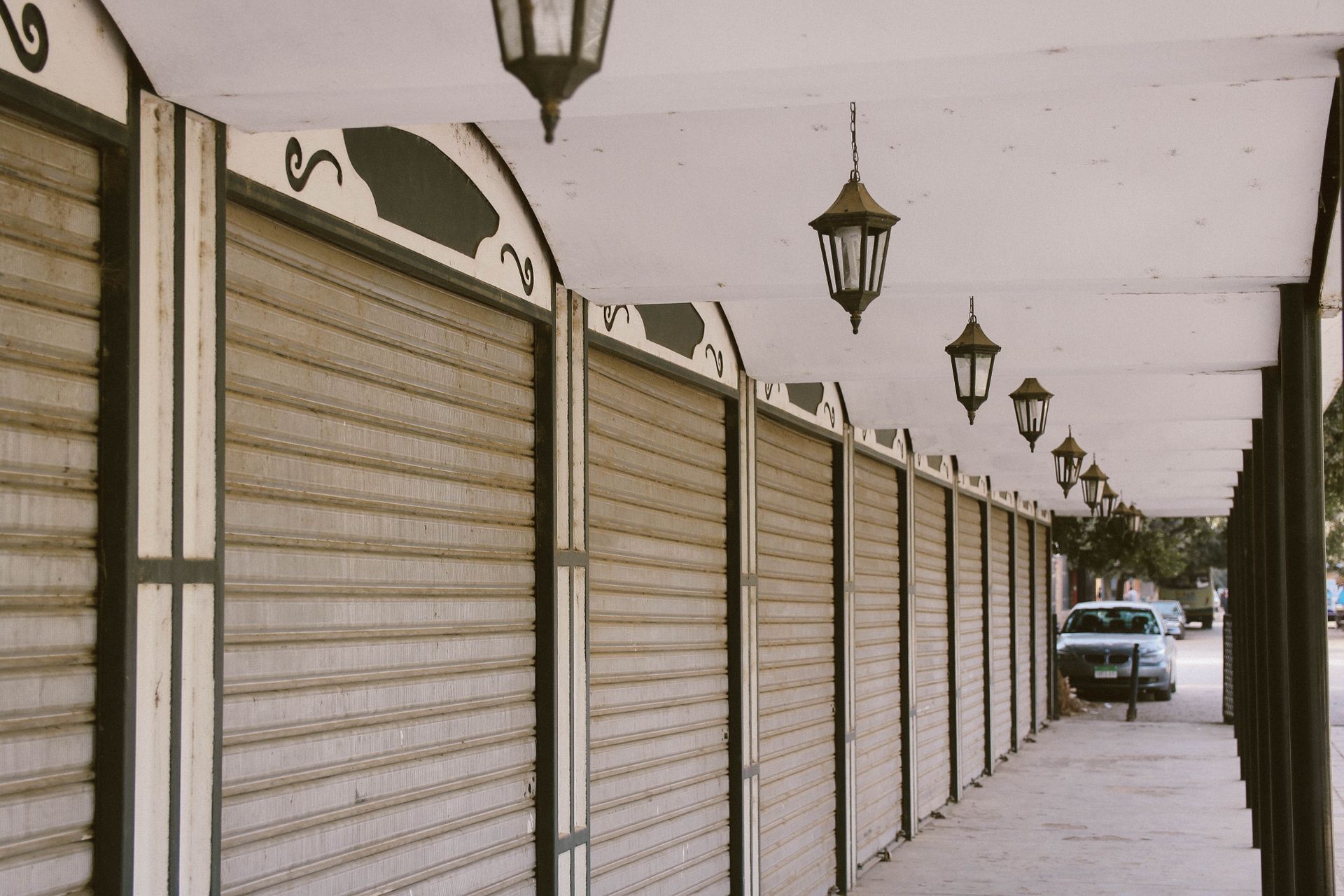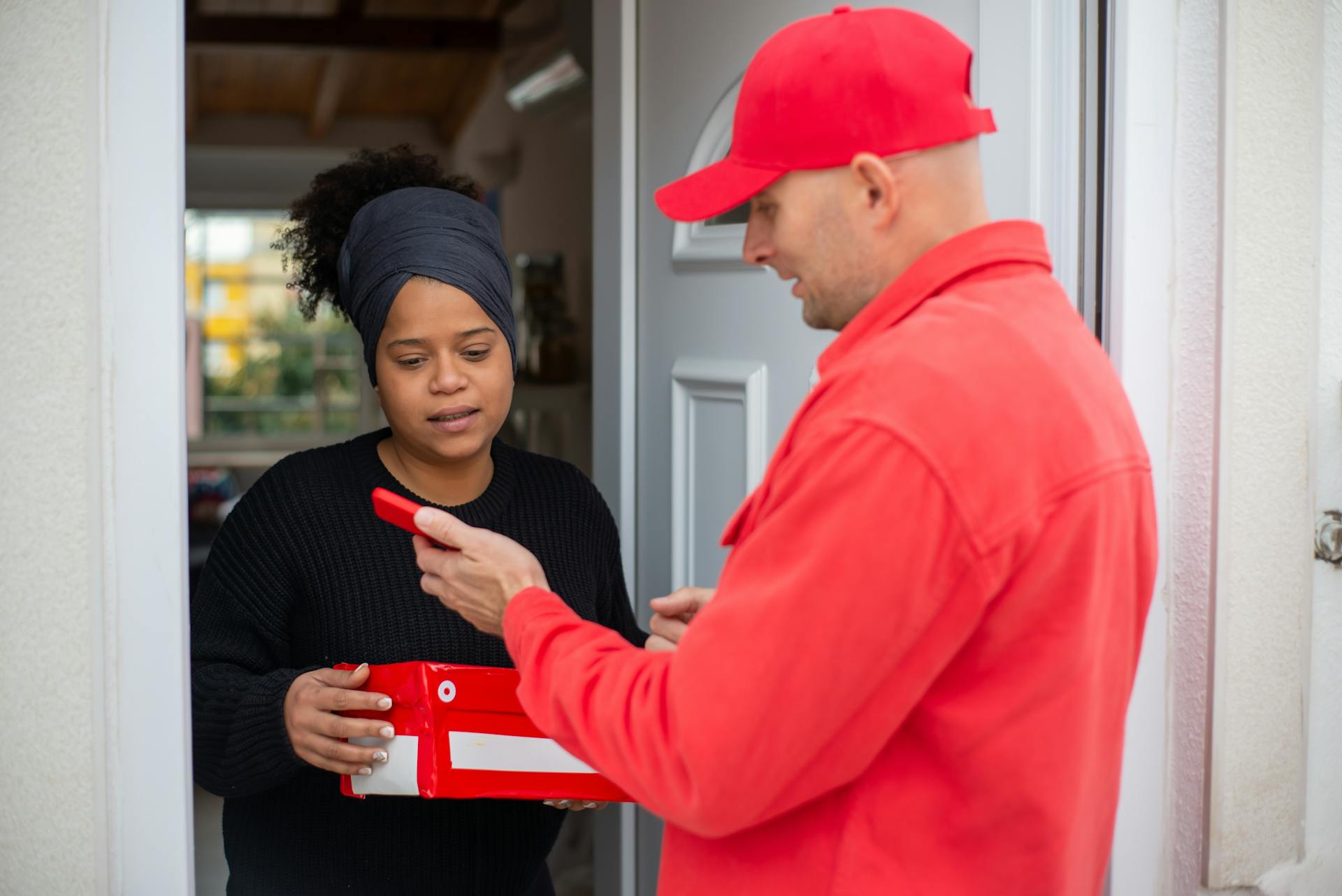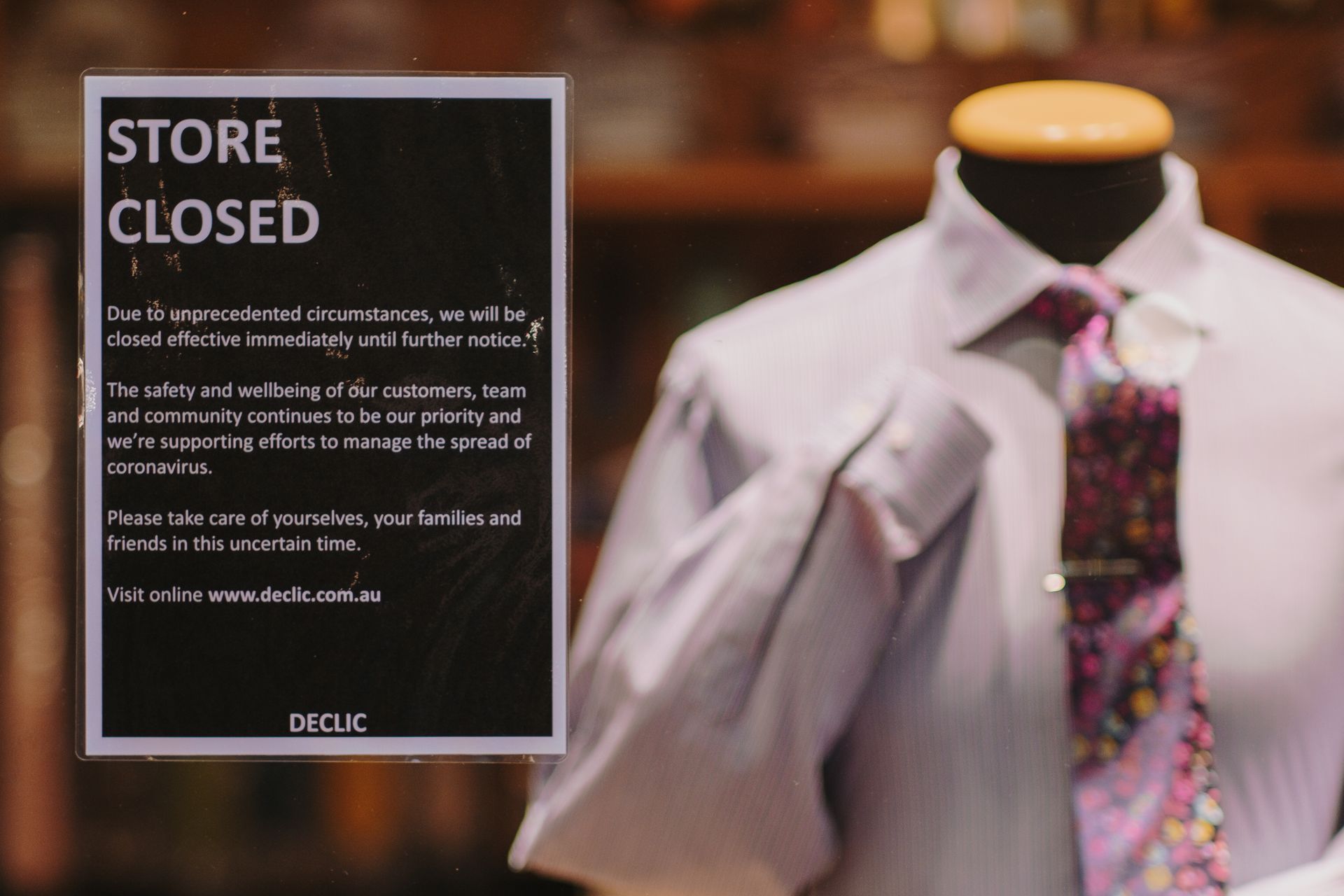
The retail industry is undergoing a significant shift. Many stores are closing their doors, leaving consumers wondering what's behind this trend. According to a recent report, over 5,000 stores closed in the United States in 2020 alone.
The rise of e-commerce is a major factor in this decline. More and more people are shopping online, and brick-and-mortar stores are struggling to keep up. Online sales have been growing steadily, with a 15% increase in 2020 compared to the previous year.
Consumers are also changing the way they shop. They're looking for convenience, flexibility, and personalized experiences. Stores that can't adapt to these changing needs are finding it harder to stay afloat.
A unique perspective: List of Korean Online Fashion Retailers
Reasons for Store Closures
Retail stores are closing at an alarming rate, and it's essential to understand the reasons behind this trend. Online shopping is often cited as a culprit, but the truth is more complex.
Online shopping has indeed been growing rapidly, with some retailers moving part of their business online to protect their market share. However, this shift has mostly been a case of "cannibalization", where online sales are simply shifting existing sales from physical stores to the digital space.
Consider reading: Daewoo Motor Sales
The impact of online shopping on retail stores is significant, especially for stores that sell products at lower prices online. This has led to store closures in areas where sales have been severely affected. In fact, many big retailers have seen their sales decline, forcing them to close underperforming stores.
A surprising trend is emerging, however: pure-play online retailers are starting to experiment with brick-and-mortar locations. This is because customers still trust brands with a physical presence, even if they initiate their shopping journey online.
Related reading: Online Retailers in Uae
Economic Factors
Rising inflation has been a significant contributor to the decline of brick-and-mortar stores. In October 2024, the US inflation rate climbed to 2.6%, up from 2.4% in September.
The cost of fuel, energy, and labor has steadily increased, tightening profit margins for retailers. This has forced many to reevaluate their physical stores.
For instance, Conn's Home Plus has filed for bankruptcy and is closing 71 stores across 13 states due to these rising costs.
Higher living costs and declining wages have eroded consumers' purchasing power, leading them to prioritize essentials over discretionary spending.
Take Family Dollar, for example, whose core customer base has been under financial strain, leading the company to announce plans to close 677 stores in 2024.
Readers also liked: Walmart Ceo Consumer Spending Inflation
Over Expansion
Over-expansion can be a recipe for disaster for retailers, as seen in the case of Starbucks. According to Howard Schultz, the brand started losing its standards and essence due to aggressive expansion. This led to unprofitable stores and poorly trained teams, causing the brand to lose its "soul".
The consequences of over-expansion can be severe, with new stores becoming less profitable or even making losses. Store closures begin when this happens. In the United States, the over-expansion of retail space has gone too far, with the country having the highest retail space per capita in the world by 2018, at 23.5 square feet per person.
Recessions
Recessions are a natural part of our economic system and can't be avoided.
They bring lower incomes, which lead to lower consumption, causing sales to decline. Store closures are a likely outcome, resulting in fewer jobs and even lower incomes.
A recession is a cycle that needs to be broken, usually by a government stimulus program.
Retailers should be prepared to run their businesses during a recession, until it runs its course.
Bad Real Estate
Indoor malls, particularly those far from major cities, have taken the biggest hits in the retail real estate market in recent years. Only the elite among them are still thriving, with Sears' remaining stores located in these select few locations.
Convenience and ease of access are now more emphasized than ever, making department stores inside fortress-like malls with vast parking lots seem outdated.
The struggles of department stores and malls are a chicken-and-egg issue. An August 2018 study claimed that the retail struggle is really a mall struggle.
Power centers sprawled in sparse suburban areas have also lagged behind their counterparts in denser suburbs or more central locations.
Some notable examples of malls struggling include:
- Sears' struggles to adapt to changing consumer preferences
- JCPenney and Macy's, which have been quicker to modernize their brands, especially Macy's
- Power centers in sparse suburban areas
These malls are often antithetical to modern values, which prioritize convenience and ease of access.
Changing Shopping Patterns
Changing shopping patterns is a reality we can't ignore. Consumers have quickly adopted digital and hybrid shopping models, making online shopping the dominant force in the retail sector.
Expand your knowledge: Social Shopping
About 81% of Americans now shop online, a sharp rise from pre-pandemic levels. This shift has led to a significant decline in foot traffic in retail stores.
The pandemic accelerated this shift, with platforms like Walmart and Amazon offering competitive pricing, a wider inventory, and doorstep convenience. Consumer preferences have shifted, and retailers who failed to adapt are now facing the consequences.
Retailers like Foxtrot, which failed to evolve its digital presence, closed physical stores in all 33 locations after failing to meet sales targets. Similarly, Rite Aid is closing down stores – 77 locations planned for 2024 after shutting 150 stores last year.
Express, an American clothing retailer, will close 95 flagship stores and all 12 Up West locations in 2024 due to declining sales and shifting consumer preferences. Brands that quickly adopted omnichannel strategies have thrived, while those who couldn’t adapt have faced challenges.
Here are some key statistics on the changing shopping patterns:
- 81% of Americans now shop online.
- 55% of Americans purchased groceries online after the pandemic, up from 36% before.
- Conn’s Home Plus filed for bankruptcy and is closing 71 stores across 13 states due to rising costs.
- Family Dollar will close 677 stores in 2024 due to its core customer base being under financial strain.
Mall and Store Performance
Mall and store performance has taken a hit due to changing consumer habits. Many retailers are struggling to adapt to the shift towards digital and hybrid shopping models.
Express, an American clothing retailer, is a prime example of this struggle. They're closing 95 flagship stores and all 12 Up West locations in 2024 due to declining sales and shifting consumer preferences. This is a stark contrast to brands that have successfully adopted omnichannel strategies and thrived as a result.
This shift in consumer behavior is not limited to a specific industry or region. It's a broader trend that's affecting malls and stores across the board.
Here's an interesting read: Walmart Predicts a Challenging 2025 Due to Inflation and Tariffs
Demographic Changes
Demographic Changes can have a significant impact on mall and store performance. This shift in population can bring store closures in areas where people are leaving and openings in areas where people are moving to.
People are shifting locations for various reasons, including jobs, climate, and taxes. This movement can lead to changes in demographics, such as an aging population.
Areas with an aging population will experience lower consumption levels and may become unprofitable for retail brands.
Mall Is Failing
A mall is failing when it's not living up to its expectations, and retailers start to get out of the mall. This can happen when the mall's traffic is dropping due to economic reasons, yet the mall operator insists on charging the same rent.
Many malls have struggled to adapt to changing consumer behavior, leading to a decline in foot traffic. In fact, one of the best malls in our area, run by a top-notch mall operator, has seen retailers close one by one due to dropping traffic.
Retailers have two choices: adapt or shut down permanently. Those that fail to evolve their digital presence, like Foxtrot, which closed all 33 physical stores, are left behind.
According to Coresight, retailers closed a record 9,800 stores in 2019, and around 9,700 stores closed in 2020. This trend continues, with over 80 companies that sell discretionary goods having filed for bankruptcy through September, up 27% from a year ago.
Curious to learn more? Check out: The Mall Group
Retailers that aren't adapting to the new reality, like Sears, are suffering from closures. They need to use an omnichannel orientation, including outlet stores, e-commerce, partnerships, and licensing agreements, to stay ahead.
Here are some key statistics on mall performance:
Landlords Adapt
Landlords are finding creative ways to adapt to the changing retail landscape, such as chopping up large boxes to fit multiple new tenants.
One approach is to redevelop the space to fit smaller retailers like TJX, Ulta, and Five Below, which prefer 20K SF boxes.
This can be a capital-intensive process, but it's often worth it if leasing is successful, as Markman noted.
Landlords with good real estate can get a return that far exceeds the old lease, such as a $4/SF Kmart lease.
Kohl's has been downsizing stores to more efficiently use space, which can be a boon to landlords looking to add revenue streams.
However, this can also be a headache, as Wright Sigmund pointed out, especially when retailers give back space with specific requirements.
Some landlords are considering being more proactive in replacing outdated retailers before they vacate, rather than waiting for them to leave.
Markman noted that high-quality real estate is often worth trying to recapture, as he's done with PetSmart.
In some cases, landlords may even consider buying out a tenant's lease, like Markman did with PetSmart.
Financial and Business Challenges
Inflation is a major culprit behind the struggles of many retailers, forcing consumers to prioritize essentials over discretionary spending. This trend has been exacerbated by the pandemic, which accelerated the shift to online shopping.
According to USA Today business editor Charisse Jones, people are still spending their money, but they're often going for the essentials and looking for the best deals or most fun experiences. This has led to some retailers thriving while others struggle.
Managing cash flow is a critical task for retailers, and failing to do so can lead to serious consequences. Cash problems can arise due to bad inventory management practices or bad cash management habits, resulting in defaulting on rent payments, loan payments, and even making payroll.
Here are some of the common financial and business challenges facing retailers:
- Defaulting on rent payments
- Defaulting on loan payments
- Inability to buy new inventory
- Inability to make payroll
- Lower sales due to less inventory freshness
Cash Crunch
Managing cash flow is a critical task for retailers, as most cash is tied up in inventory. This can lead to cash problems due to bad inventory management practices or bad cash management habits.
Retailers with poor cash management habits may take too much money out of the business, assuming that profit equals cash. However, this can lead to a low or negative cash balance, making it difficult to pay rent, loans, and suppliers.
A retailer with a large debt burden may have to either refinance that debt, sell itself, or go public, but the market may not be receptive to these options. This can lead to bankruptcy, as seen with Toys R Us and The Sports Authority.
Low profit margins, often caused by rising costs such as fuel, energy, and labor, can also force retailers to reevaluate their physical stores. For example, Conn's Home Plus has filed for bankruptcy and is closing 71 stores due to these rising costs.
Check this out: Does Walgreens Do Cash Back with Apple Pay
Here are some consequences of a low or negative cash balance:
- Defaulting on rent payments
- Defaulting on loan payments
- Inability to buy new inventory
- Inability to make payroll
- Lower sales due to less inventory freshness
If a retailer is unable to recover from a cash crunch, it may have to close its stores or seek new investors to pump in fresh working capital.
Industry-Specific Challenges
Many industries are facing significant challenges, and some are more pressing than others. One notable example is the brick-and-mortar stores closing in the dining and entertainment sector.
Sam Ash Music, a retailer of musical instruments, is closing 18 stores in 2024 due to declining demand for in-store purchases. This shift to online platforms for music equipment needs has significantly impacted their business.
Red Lobster is closing around 48 locations this year, highlighting financial issues in the restaurant industry. Inflation has increased operational costs, leading to higher food prices and reduced customer spending on outdoor dining experiences.
The restaurant industry is not the only one struggling with financial issues.
A fresh viewpoint: Does Walmart Take Capital One Credit Cards
The Road Ahead
The retail industry is in a state of transformation, not decline. In 2024, Walgreens is set to shut down 259 stores.
This shift is a result of changing consumer behaviors and preferences. Big Lots is closing 360 stores, and Macy’s is shutting down 50 locations.
To stay competitive, retailers must adapt and innovate. This includes investing in e-commerce and finding new ways to engage customers.
The retail sector is evolving, and it's up to brands to evolve with it.
Irrelevance and Decline
Many multi-department retailers have become less relevant to the new generation, failing to keep track of their taste and preferences.
Operating large stores is extremely costly, and if they can't generate enough revenue, they won't survive and will start closing their stores.
The difference in fashion between stores like Bershka and Pull & Bear, and those like Debenhams and Marks & Spencer, is a clear example of this irrelevance.
A Less Secure Future
Retail closures have made finding a new tenant a daunting task. The list of national tenants in expansion mode is shorter than the list of retailers closing stores or making small tweaks to store counts and locations.
Take a look at this: Wallstreetbets Meme Stocks List
Restaurants and fitness centers are now the most sought-after tenants, but they're inherently riskier than department stores and soft goods retailers were in the past. This is because they tend to have a shorter lifespan, often lasting only a few years.
Legacy restaurant brands like Applebee's are struggling, while new, local operators with a good concept and enthusiasm can be a better bet. However, even the best food and beverage operators can have trouble, especially if they're new and lack a history of sales.
Finding tenants more often and redeveloping space to accommodate them can be a financial and mental strain, even for proactive landlords.
See what others are reading: New Guards Group
3. Irrelevance
For multi-department retailers, being relevant to the new generation is a major challenge. They're often seen as less trendy compared to younger brands like Bershka and Pull & Bear.
Operating big stores is extremely costly. If they can't generate the required revenue, they won't survive and will start closing their stores.
The key is making financial projections to see if the quoted rent is justified by the expected sales per square foot. This is a crucial step in determining whether a store is worth keeping open.
The difference in fashion between these retailers and younger brands is stark. Debenhams and Marks & Spencer struggle to keep up with the young audience's taste.
Featured Images: pexels.com