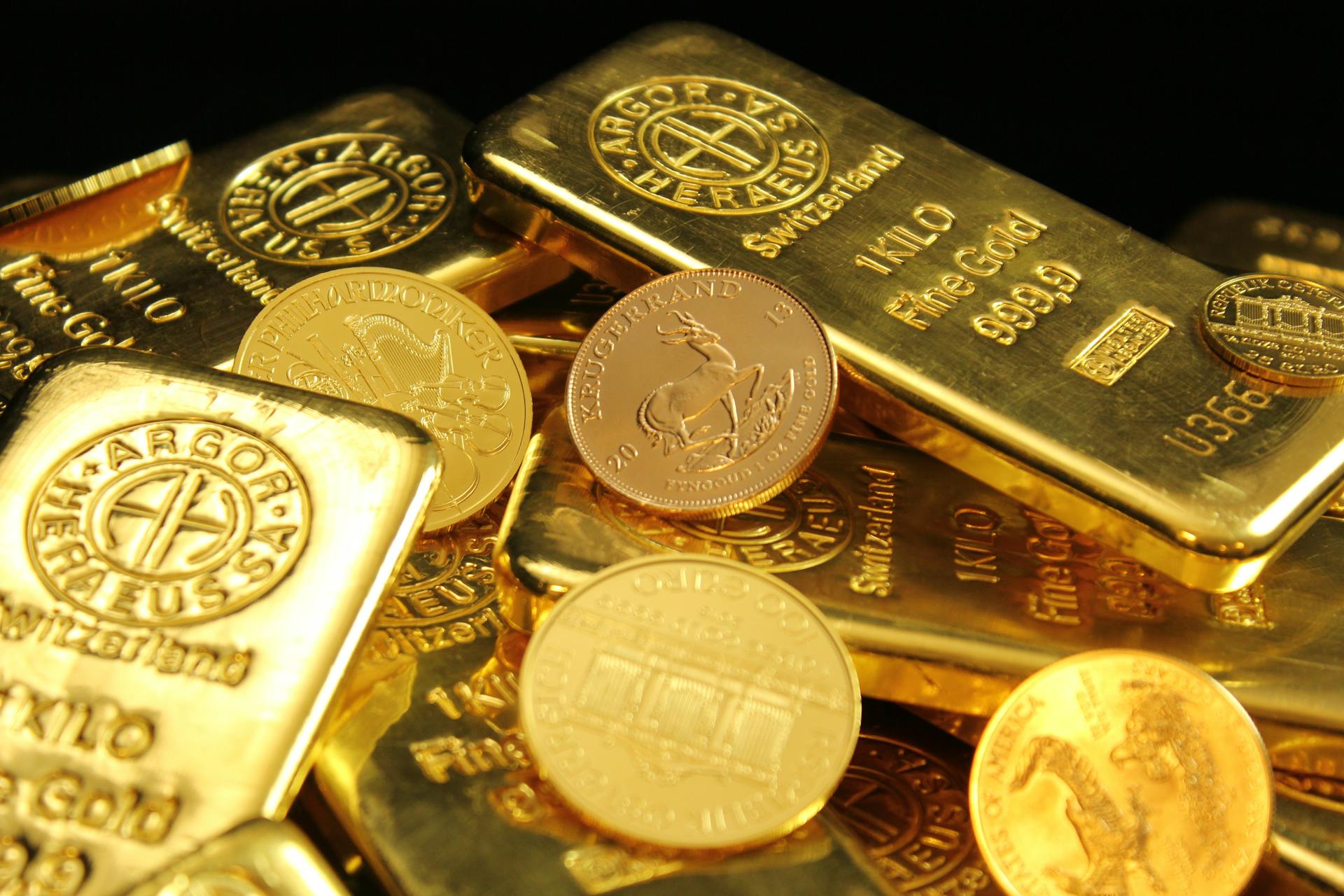
Gold prices have been on a rollercoaster ride in recent years, with fluctuations that can be both puzzling and unsettling for investors. The current high prices are largely driven by a combination of factors, including inflation, economic uncertainty, and a declining US dollar.
Global economic uncertainty has led to a surge in gold prices, as investors seek safe-haven assets during turbulent times. Gold has long been considered a reliable store of value and a hedge against inflation.
The value of the US dollar has a significant impact on gold prices, with a weakening dollar making gold more attractive to investors. As the dollar loses value, the price of gold tends to rise.
For more insights, see: Us Gold Prices per Gram
Why Gold Prices Are High
Gold prices are high due to a combination of factors. One key reason is the balance between demand and supply, which drives up the price when demand outstrips supply.
The scarcity of gold contributes to its attractiveness and value over time. Its intrinsic worth remains unaffected by currency devaluation, making it a reliable hedge against inflation.
Lower interest rates make gold more appealing as an alternative to low-yield investments. Conversely, higher interest rates can reduce gold's attractiveness and lead to a decline in its demand and price.
Gold holds cultural significance in India, especially during festivals and wedding seasons, which can lead to price surges due to heightened demand for gold jewelry.
A weaker dollar often leads to higher gold prices due to increased demand from investors seeking a hedge against inflation and economic uncertainty.
Central Bank Influence
Central banks have been buying gold at a record pace, with global purchases hitting a near 14-year high by July 2024. This trend represents a significant shift, as central banks have transformed from net sellers to aggressive buyers over the past decade.
Central banks hold paper currencies and gold in reserve, and as they diversify their reserves away from paper currencies and into gold, the price of gold typically rises. Many of the world's nations have reserves that are composed primarily of gold.
The top gold buyer in 2022 was the central bank of Türkiye, followed by Uzbekistan, India, and Qatar, while in 2023, the top gold buyers were China, Singapore, and the Czech Republic. Central banks in the various BRICS+ nations, including China, Russia, and India, are buying more gold at a faster pace.
Central banks are placing a greater emphasis on gold's value in crisis response, diversification attributes, and store-of-value credentials. This is evident in the massive inflows of gold seen in the wake of Russia's invasion of Ukraine, as countries and central banks realized the importance of being in control and eliminating counterparty risk.
Gold serves as a crucial hedge against market risks, particularly with global debt at record levels. Central banks are seeking to reduce their exposure to currencies and bonds by diversifying their reserves with gold.
A fresh viewpoint: Gold Rate Chart in India
Economic Factors
Gold prices are affected by a complex array of economic factors. The demand and supply of gold is a key determinant of its price, with an increase in demand driven by factors such as economic uncertainty or geopolitical tensions leading to a rise in its price.
Gold is often associated with the U.S. economy, so overseas tensions and other events may not affect gold values as strongly as internal conflict or domestic monetary policy. However, this doesn't mean that geopolitical factors have no impact on gold prices.
The supply of gold mainly depends on the mining production of the same. An increase in mining production can lead to a surplus of gold, causing prices to drop. Conversely, a decrease in mining production can lead to a shortage of gold, causing prices to rise.
Gold has historically served as a reliable hedge against inflation. When inflation rates rise, traditional investments may struggle to maintain value, prompting investors to turn to gold as a safeguard. Its intrinsic worth remains unaffected by currency devaluation, making it an attractive option during periods of economic uncertainty.
Lower interest rates tend to make gold more appealing since it offers an alternative to low-yield investments. Conversely, higher interest rates can reduce gold's attractiveness as other investments become more profitable, potentially causing a decline in its demand and price.
Here's a breakdown of how economic factors affect gold prices:
These economic factors can have a significant impact on gold prices, making it a complex and volatile market.
Supply and Demand
Supply and demand are the main drivers behind the high gold prices. Jewelry remains the highest source of demand for gold, accounting for approximately 88% of gold demand in Q2 2024.
The demand for gold in technology has also been on the rise, growing 11% year-over-year in the second quarter of 2024. This growth in demand is largely driven by the boom in artificial intelligence.
The supply of gold, however, has remained relatively flat over the past decade, creating a significant supply-demand imbalance. This imbalance is due to several factors, including declining ore grades and scarcity of major new deposit discoveries.
Here's an interesting read: Why Is Everything so Expensive 2024
Production
Production is a crucial aspect of the gold market, and it's essential to understand the current state of gold mine production.
Gold mine production was roughly 3,000 metric tons per year in 2020 and 2021, down from a peak of around 3,300 metric tons per year in 2018 and 2019.
Supply Constraints Support

Supply constraints are a significant factor in gold prices. Despite rising prices, gold production has remained relatively flat over the past decade.
Declining ore grades have limited gold output. Scarcity of major new deposit discoveries has also contributed to the supply constraints.
Heightened political risks in key producing regions have further reduced gold production. Environmental concerns have also limited the expansion of mining operations.
These supply limitations, coupled with robust demand, suggest that higher gold prices may persist. The tight supply situation provides fundamental support for gold prices.
Jewelry demand remains the highest source of demand for gold, accounting for approximately 88% of gold demand in Q2 2024. This robust demand, combined with supply constraints, creates a perfect storm for higher gold prices.
Is So Valuable?
Gold's value is rooted in its history as a symbol of wealth, with societies esteeming it for its aesthetic appeal and rarity. The metal has been used as a medium of exchange and a representation of wealth for thousands of years.
Its scarcity and historical significance contribute to its inherent value. Throughout history, gold has been used in various industrial applications, such as electronics and aerospace, due to its unique properties.
Gold's monetary importance is also a factor in its value, as it was used as a backing for currencies during the gold standard. Today, it maintains its significance as a global store of value and a hedge against economic volatility.
The appeal of gold, combined with its scarcity and diverse utility, continues to support its value. Its liquidity also makes it an attractive investment option, as it can be easily bought or sold in various forms such as coins, bars, and jewelry.
Gold's low correlation with other asset classes like stocks and bonds makes it a strategic asset in an investment portfolio. This means that its movement is often uncorrelated with the stock market during times of economic stress.
The SPDR Gold Trust ETF, which holds roughly 863 tons of gold, is a prime example of the demand for gold from exchange-traded funds. This demand drives up the price of gold, especially during times of economic uncertainty.
As a safe haven, gold is often sought after during turbulent times, such as economic recessions. Its enduring value and ability to maintain its value over time make it an attractive option for investors looking to protect their wealth.
Explore further: Gold as an Investment
Market Trends
Gold prices have been on a steady rise due to the ongoing economic uncertainty.
The COVID-19 pandemic has led to a surge in gold demand, with investors seeking safe-haven assets.
Central banks have also been buying gold, with the World Gold Council reporting a 15% increase in gold reserves in 2020.
This increased demand has driven up gold prices, making it a more expensive investment option.
Recovery Adds Momentum
The post-Covid pandemic recovery has sparked a significant rebound in gold jewellery fabrication, as global lockdowns eased and consumer confidence returned to the market.
Cultural factors play a crucial role in maintaining strong jewellery demand, particularly in regions where gold holds traditional significance for weddings and gift-giving.
The World Gold Council projects continued growth in annual jewellery demand, driven by increasing wealth in developing nations.
India and China's large populations represent substantial untapped demand for gold products.
This resurgence in jewellery demand adds another layer of support to the overall gold investment case.
Markets
The markets have been shifting in exciting ways, with a notable trend towards e-commerce and digital sales.
According to recent data, online sales have increased by 15% in the past year alone. This is likely due to the growing demand for convenience and flexibility in shopping.
The rise of social media has also played a significant role in the growth of e-commerce, with many consumers discovering new products and brands through platforms like Instagram and Facebook.
In the past year, 40% of online shoppers have made a purchase after seeing a product or brand advertised on social media. This highlights the importance of having a strong online presence for businesses.
The shift towards digital sales has also led to a decrease in brick-and-mortar store traffic, with some retailers reporting a 20% decline in foot traffic over the past year.
From Exchange-Traded Funds
Gold sees significant demand from exchange-traded funds (ETFs), which hold the metal and issue shares that investors can buy and sell like stocks. The SPDR Gold Trust ETF is the largest, holding roughly 863 tons of gold in September 2024.
During times of economic uncertainty, investors flock to gold, making it a safe haven. This is because gold's enduring value makes it an attractive option.
Gold's price can increase when expected or actual returns on bonds, equities, and real estate fall, driving up interest in gold investing. This is because gold can be used as a hedge to protect against economic events.
Some ETFs represent ownership in the actual metal, while others hold shares of mining companies rather than actual gold.
Jewelry and Industrial Use
Jewelry remains the highest source of demand for gold, accounting for approximately 88% of gold demand in Q2 2024, excluding OTC demand.
Jewelry has consistently remained the highest source of demand for gold, making it a significant driver of gold prices.
The demand for jewelry increases the price of gold, as people are willing to pay more for gold when they want to buy jewelry.
In fact, jewelry is one of the most common ways people buy gold, and as demand for jewelry increases, so too can the price of gold.
Recommended read: Highest Gold and Silver Prices
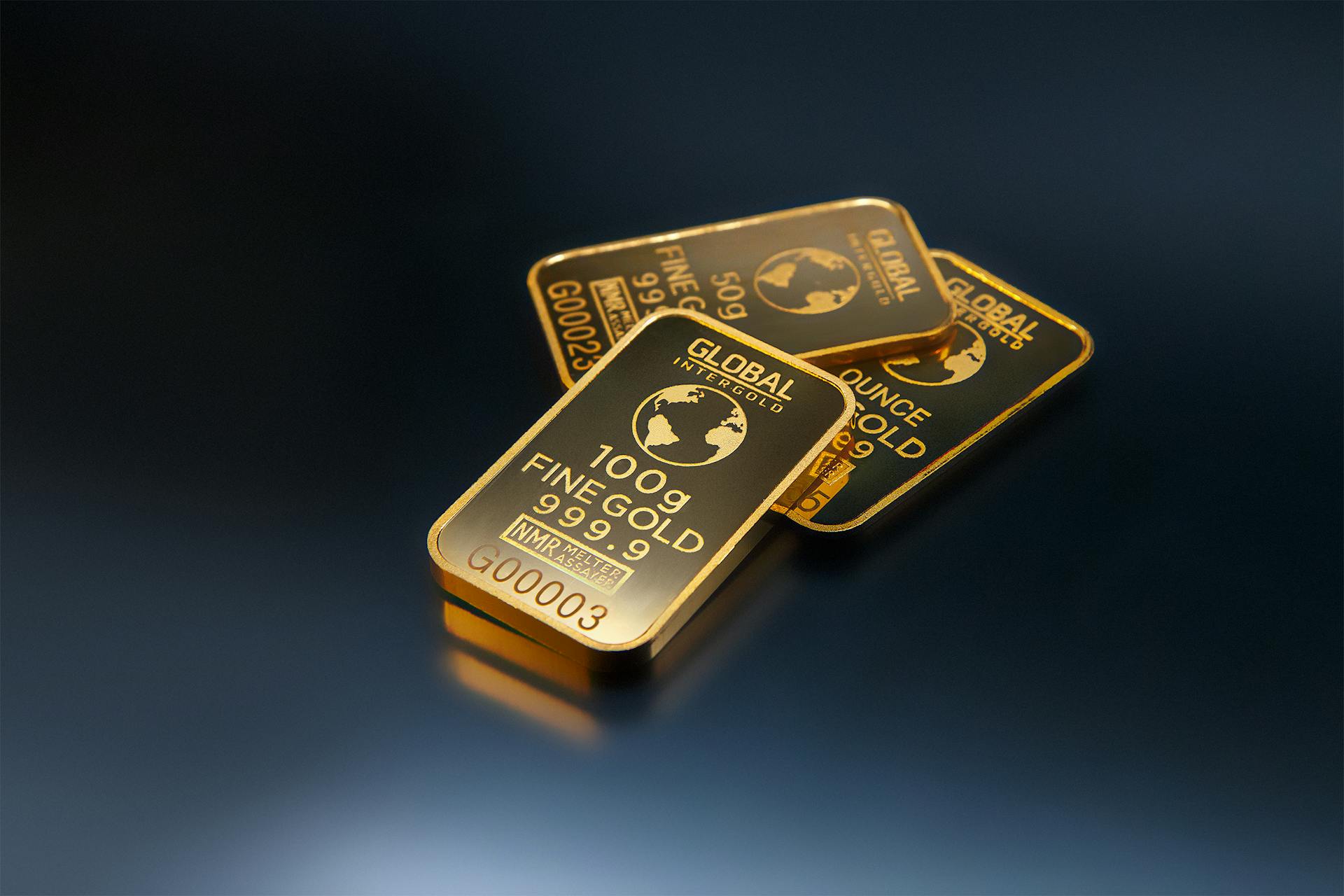
However, jewelry is considered one of the weaker drivers of gold prices, as many people buy jewelry and keep it for years, which can reduce the demand for gold in the short term.
Year-over-year demand for gold to be used in technology grew 11% in the second quarter of 2024, driven by the boom in artificial intelligence, which is another significant driver of gold prices.
Discover more: Gold Jewelry Prices Today
Safe-Haven Investment
Gold has long been considered a robust and reliable investment, often seen as a haven during times of economic uncertainty. It's a tangible asset that people can feel, touch, and actually use.
Gold's liquidity is one of its key advantages, making it easily bought or sold in various forms such as coins, bars, and jewelry. This allows investors to quickly turn their gold into cash if needed.
During times of economic uncertainty, more people begin investing in gold because of its enduring value. As seen during economic recessions, gold is often considered a safe haven for investors during turbulent times.
Check this out: What Happens to Gold Prices during a Recession
The SPDR Gold Trust ETF held roughly 863 tons of gold in September 2024, making it the largest gold ETF. This shows the high demand for gold during uncertain times.
Gold's movement is often correlated with the stock market during "risk-on" periods, but not during periods of market stress. This makes it a strategic asset in an investment portfolio due to its low correlation with other asset classes.
Gold is often referred to as a safe-haven investment because it tends to move in opposition to stocks and bonds, serving as a hedge against losses in those asset classes. This is why gold is considered a relatively safe investment.
Investors view gold as a hedge to protect against economic events like currency devaluation or inflation. It's also seen as protection during periods of political instability.
The combination of geopolitical uncertainty and inflation worries has established a robust foundation for sustained gold demand among institutional and retail investors alike.
On a similar theme: Gold Etf Launch Chart
Factors Affecting Price
Gold prices have been on the rise, and various factors contribute to this trend. The price of gold has historically been influenced by economic uncertainty, such as the global financial crisis in 2011, which led investors to seek the security of gold.
A stronger U.S. dollar tends to drive gold prices lower, while a weaker dollar leads to higher gold prices due to increased demand from investors seeking a hedge against inflation and economic uncertainty. Geopolitical tensions, like the Russia-Ukraine conflict in 2022, can also boost gold's safe-haven appeal.
Some of the key factors driving gold prices include the balance between demand and supply, inflation rates, interest rates, and cultural preferences. Here are some of the key factors affecting gold prices:
Price History
Gold's price history is a wild ride, with significant fluctuations over the past decade. In the early 2010s, gold prices reached an all-time peak of approximately $1,900 per ounce in September 2011.
This surge was driven by the aftermath of the global financial crisis, which led investors to seek the security of gold amidst economic uncertainty and fears of inflation. Investors were flocking to gold, causing prices to skyrocket.
From 2013 to 2015, prices generally trended downward, bottoming out at around $1,050 per ounce in December 2015. The recovering global economy, rising interest rates, and a stronger U.S. dollar reduced the appeal of gold as an investment.
By 2019, gold had regained much of its lost value, averaging around $1,300 to $1,500 per ounce. The onset of the COVID-19 pandemic in early 2020 further boosted gold prices as investors flocked to safe-haven assets amidst global market turmoil and unprecedented economic disruptions.
In August 2020, gold reached a new all-time high of over $2,070 per ounce, fueled by the economic impact of the pandemic, stimulus measures, and low interest rates worldwide.
Explore further: Gold Prices per Ounce
Geopolitical Factors
Geopolitical factors can have a significant impact on gold prices. Investors may turn to gold as a safe-haven asset during times of conflict or uncertainty.
The Russia-Ukraine conflict in 2022 is a prime example, with gold prices increasing by 6% in the first quarter of that year. This was also seen in the third quarter of 2023 when the Hamas-Israel conflict erupted, with gold prices rising 8.78% in just 20 days.
Investors often buy gold before a crisis occurs, hoping to profit from the increased demand. This phenomenon is known as "buy the rumor, sell the news."
Some geopolitical situations, however, can have a positive effect on global order, leading investors to stick with riskier investments like stocks. The Banana Wars in 1898 is a historical example of this, with the Dow Jones Industrial Average gaining 22.49% while gold prices remained unchanged.
Russia's invasion of Ukraine in 2022 triggered significant market volatility, prompting investors to seek refuge in gold trading.
Factors Affecting Price
Gold prices are heavily influenced by a variety of economic and geopolitical factors. Over the past decade, gold's price has experienced significant fluctuations, with the price reaching an all-time peak of $1,900 per ounce in September 2011.
A stronger U.S. dollar tends to drive gold prices lower, while a weaker dollar often leads to higher gold prices. This is because gold is often bought and sold using USD everywhere, so changes in the dollar's value affect how much gold costs.
The balance between demand and supply is a key determinant of gold's price. The supply of gold mainly depends on mining production, and an increase in demand can lead to a rise in its price due to its limited availability.
Gold prices and interest rates share an inverse relationship. Lower interest rates make gold more appealing, while higher interest rates can reduce its attractiveness and potentially cause a decline in its demand and price.
Geopolitical tensions can have a positive effect on gold pricing, as investors turn to gold as a safe-haven asset during times of conflict. The Russia-Ukraine conflict in 2022, for example, helped gold gain 6% in the first quarter of that year.
Cultural preferences and festivities can also contribute to fluctuations in demand, impacting the overall price of gold. In India, for instance, the demand for gold jewelry during festivals and wedding seasons can lead to price surges.
Related reading: Why Is the Canadian Dollar so Weak
Government policies, including buying and selling gold reserves, can influence gold prices. Large-scale purchases or sales by governments can create ripples in the gold market.
Here are some key factors that affect gold prices:
- A stronger U.S. dollar drives gold prices lower
- A weaker dollar leads to higher gold prices
- Lower interest rates make gold more appealing
- Higher interest rates reduce gold's attractiveness
- Geopolitical tensions boost gold's safe-haven appeal
- Cultural preferences and festivities impact demand
- Government policies influence gold prices
Featured Images: pexels.com