Gold ETFs are a type of investment that allows you to own gold without physically holding it.
You can buy gold ETFs through a brokerage account, just like stocks or bonds.
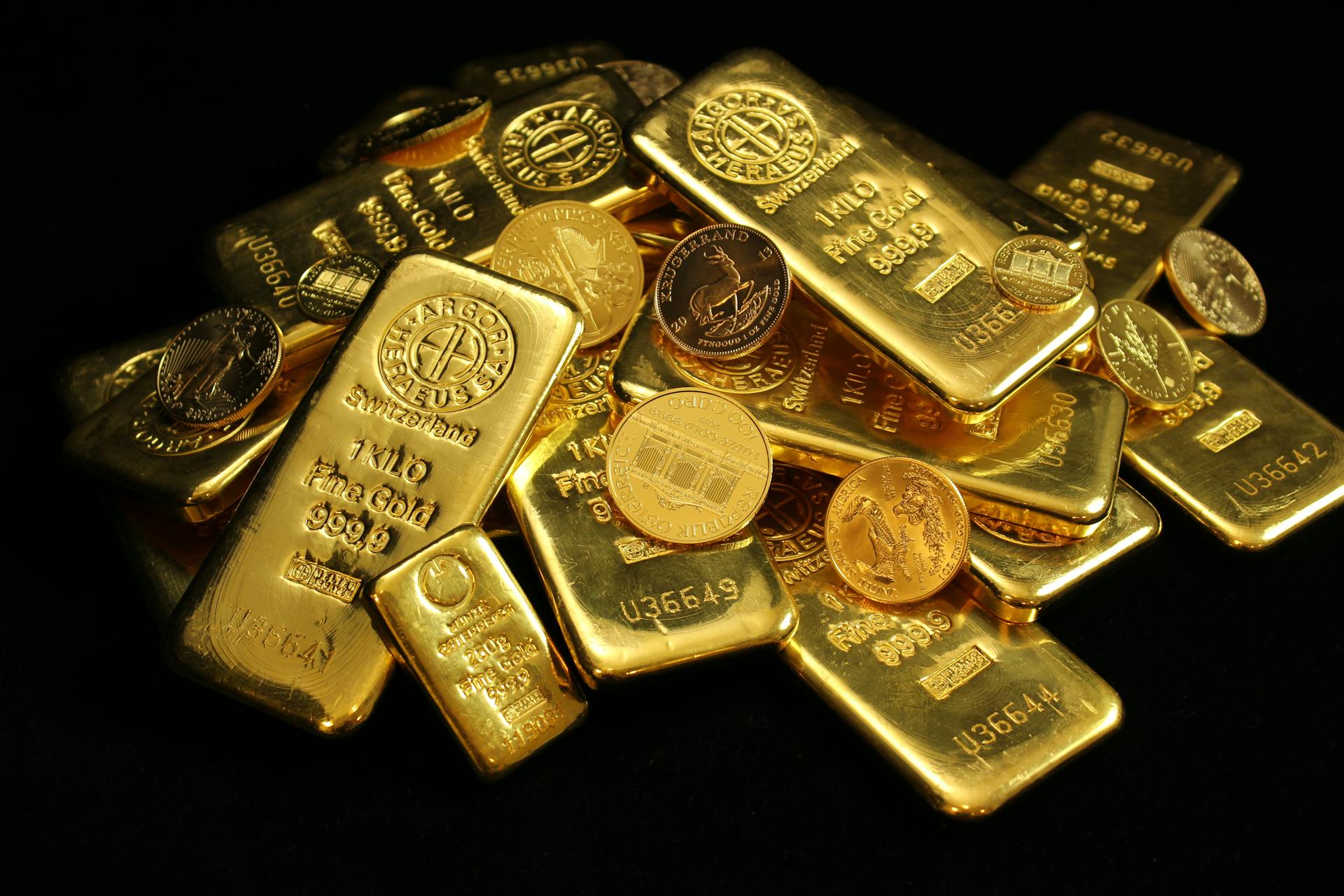
A gold ETF typically holds a portfolio of gold bars or coins, and its value is tied to the price of gold.
The cost of owning a gold ETF depends on several factors, including the management fee, trading costs, and any other expenses associated with the fund.
The management fee is usually a percentage of the ETF's net asset value, and it can range from 0.1% to 0.5% per year.
Trading costs, on the other hand, are the fees you pay to buy or sell the ETF, and they can range from $5 to $20 per trade.
In addition to these costs, some gold ETFs may also charge other expenses, such as storage fees or administrative costs.
Expand your knowledge: Currency Trading Hedge Funds
What is a Gold ETF
A Gold ETF, or Exchange-Traded Fund, is a type of investment that allows you to own a small piece of gold without actually holding the physical metal.
It's essentially a paper claim on gold, backed by a fund that holds a large amount of gold in a secure vault.
A Gold ETF can be traded on a stock exchange, like any other stock, which means you can buy and sell it quickly and easily throughout the day.
This makes it a convenient way to invest in gold, especially for those who don't have the space or resources to store physical gold.
Gold ETFs are often backed by physical gold, which is stored in a secure vault, and the value of the ETF is tied to the price of gold.
This means that the value of your investment will rise and fall with the price of gold.
Gold ETFs can be a good option for investors who want to diversify their portfolio and reduce their exposure to other assets.
They're also a popular choice for investors who want to gain exposure to gold without having to buy and store physical gold.
Here's an interesting read: Goldman Sachs Physical Gold Etf
Investment Considerations
Investing in gold ETFs can be a smart move for those looking to diversify their portfolios. Historically, gold has shown a low correlation with traditional asset classes like stocks and bonds, making it an attractive addition to a diversified portfolio.
Risk-conscious investors may find gold ETFs appealing as a hedge against inflation, currency risks, or geopolitical uncertainties. Gold's historical role as a store of value remains relevant, despite potential short-term price volatility.
For long-term investors, current prices may be attractive for building strategic positions. However, short-term traders and income-focused investors may want to exercise caution due to gold's price volatility and lack of yield.
ETC Differences
In the European market, gold is mainly available as an exchange-traded commodity (ETC) due to regulatory restrictions.
These ETCs are certificates issued by a financial institution collateralized with physical gold.
Gold ETCs are often preferred over gold ETFs in European countries due to the regulatory framework.
In contrast, Swiss regulation allows for ETFs that track single commodities like gold, making it a more viable option for investors in that region.
You might enjoy: European Long Term Investment Fund
Cost
When investing in gold, it's essential to consider the costs involved. The total expense ratio (TER) of Gold ETCs is between 0.00% p.a. and 0.59% p.a.
These costs contain insurance premium, storage costs, and additional management fees for the product. This means you'll need to factor in these expenses when deciding whether to invest in Gold ETCs.
Related reading: When Were Etfs Created
Risk
Volatility can be a significant risk for investors, especially when it comes to gold ETFs. Annualised volatility measures the degree of price fluctuations over a one-year period, with higher volatility indicating more significant price changes.
Assets with higher volatility are generally considered more risky, but it's essential to consider the historical context. For example, gold's price fluctuations have strengthened over time, making it a more volatile investment.
Return per risk is another crucial metric to evaluate investment risk. This metric puts the historical return of an asset in relation to its historical risk, giving you a retrospective indication of the degree of price fluctuation you had to bear to obtain the return.
Here's an interesting read: Pimco Total Return Fund Class a
To put this into perspective, consider the maximum drawdown, which shows the worst possible loss an investor could have suffered during a particular period. This is calculated by first buying and subsequently selling the asset at the least favourable prices.
Here's a breakdown of the risk metrics for gold ETFs:
Keep in mind that these metrics are based on historical data and may not reflect future performance. It's essential to consider multiple factors before making an investment decision.
Popular Gold ETFs
Popular Gold ETFs are a great way to invest in gold, and there are several options to choose from. The SPDR Gold Shares (GLD) is one of the most popular ETFs available, with a 0.40% expense ratio and a 29.4% YTD performance as of Dec. 13, 2024.
The iShares Gold Trust (IAU) is another popular option, with a lower expense ratio of 0.25% and a 29.6% YTD performance as of Dec. 13, 2024. It also tracks the spot price of gold by investing in gold bars held in vaults around the world.
Some Gold ETFs/ETCs have impressive 1-year fund returns, with the Invesco Physical Gold A leading the pack at 44.07% as of Dec. 31, 2024.
See what others are reading: Fidelity Index Funds Performance
Top ETFs
The top gold ETFs are a great way to invest in gold without having to physically hold it.
For example, the Invesco Physical Gold A fund has a 1-year fund return of 44.07% as of December 31, 2024.
The iShares Gold Trust (IAU) is another popular option, with a 5-year annual return of 12.5% and an expense ratio of 0.25%.
The GraniteShares Gold Trust (BAR) has an even lower expense ratio of 0.17%, making it a cost-effective choice for investors.
Here are some of the top gold ETFs ranked by fund size in EUR:
These funds are all highly liquid and have a large following among investors.
VanEck Miners ETF (GDX)
The VanEck Gold Miners ETF, also known as GDX, is a popular choice among investors. It's one of the most widely held ETFs in the global mining sector.
GDX owns shares in all the major names in the mining space, including companies that mine for gold, silver, and copper. This diversification can help reduce risk.
Related reading: Vaneck Vectors Gold Miners Etf Gdx
The fund's 2024 YTD performance is impressive, with a return of 21.4 percent. This is a significant gain for investors who've held onto their shares.
Here's a quick snapshot of GDX's performance:
- 2024 YTD performance: 21.4 percent
- Five-year annual return: 7.7 percent
- Expense ratio: 0.51 percent
Overall, GDX is a solid option for investors looking to tap into the mining sector.
Investment Options
Gold ETFs offer two primary investment options: physical gold and public companies involved in gold mining. Each has a different risk profile, so it's essential to understand your financial goals before making a decision.
To make an informed choice, research gold funds by examining their performance, expense ratios, top holdings, and assets under management. You can find this information in a fund's prospectus.
Your investment strategy should be tailored to your financial objectives, whether that's saving for a second home or your child's college education. Diversification is key, so make sure to outline your asset mix before investing.
You might enjoy: Vanguard Index Funds Returns
How to Buy
To buy gold ETFs, you need to decide whether you want exposure to physical gold or public companies involved in gold mining, as these two asset classes have different risk profiles.
Your financial goals should drive your decision-making, so take the time to determine what you're trying to achieve with your investment. For example, someone saving to buy a second home will have a different strategy than someone saving for their child's college education.
Research gold funds by paying attention to factors such as the fund's performance, expense ratios, top holdings, and assets under management. You can find this information in the fund's prospectus.
To create a well-rounded portfolio, it's essential to outline your asset mix and take charge of your finances. Consider doing an inventory of all your assets and calibrating your portfolio accordingly.
To avoid any surprises, make sure to know what you own by periodically reviewing your investments. If you're unsure about anything, don't hesitate to leverage free resources from your broker, such as meeting with a financial planner, and ask questions.
Related reading: Investment and Portfolio Analysis
Cheapest by TER
If you're looking for investment options with low fees, you're in luck. The cheapest Gold ETFs/ETCs by total expense ratio are a great place to start.
The boerse.de Gold ETC has a total expense ratio of 0.00% p.a., making it a top contender for those seeking low fees.
For those who want to explore more options, the EUWAX Gold and EUWAX Gold II also have a total expense ratio of 0.00% p.a.
Here are the cheapest Gold ETFs/ETCs by total expense ratio:
Frequently Asked Questions
Which ETF is best for gold?
The SPDR Gold Shares (GLD) is widely regarded as the top gold ETF due to its large assets and excellent tracking accuracy. It offers investors a convenient and liquid way to gain exposure to gold.
Featured Images: pexels.com