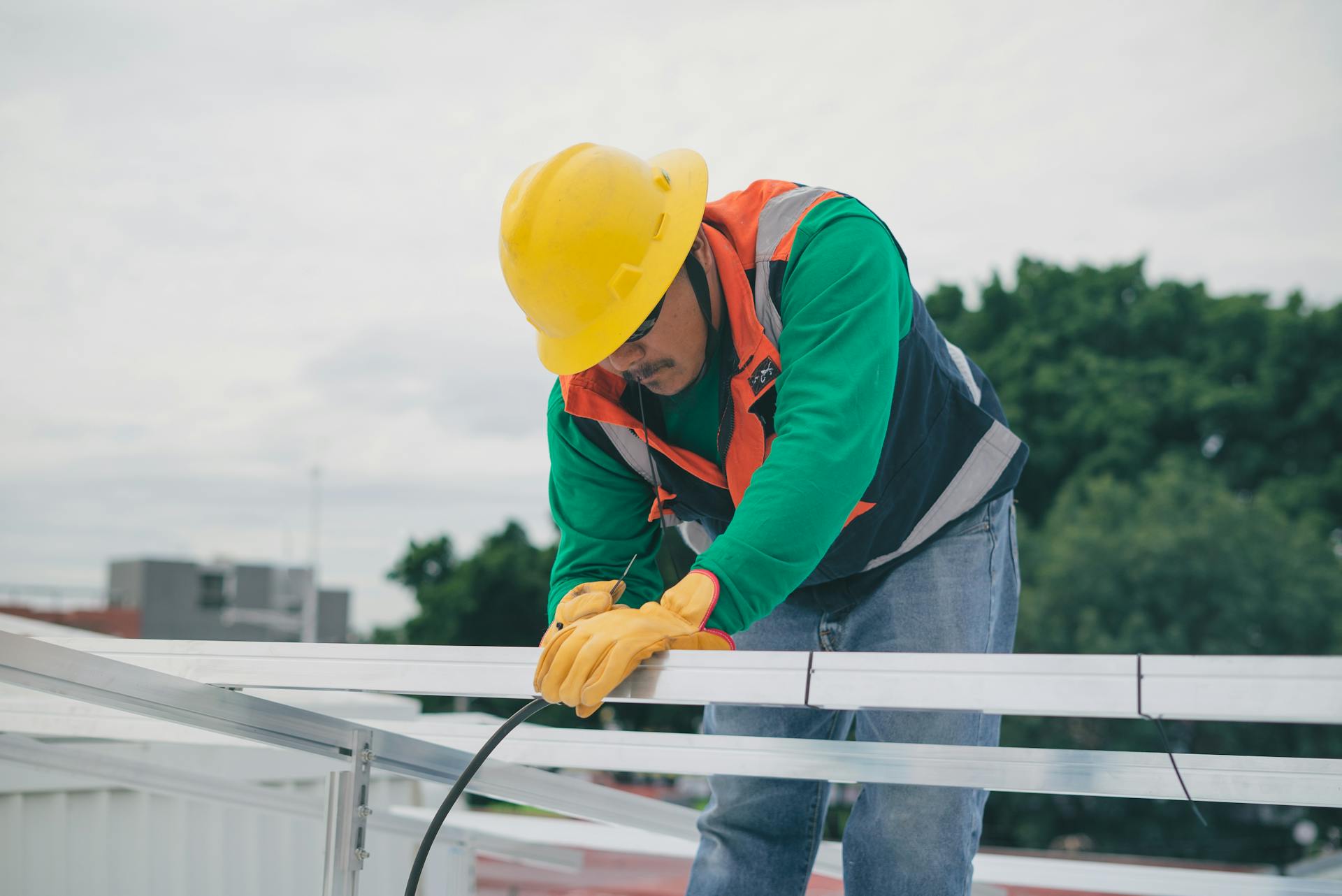
Capex, short for capital expenditures, is a crucial concept in real estate that can make or break a property's financial health.
It refers to the cost of acquiring, upgrading, or maintaining physical assets, such as buildings, equipment, or vehicles, that are used in a business or investment.
In real estate, capex can include expenses like renovating a property, installing new HVAC systems, or replacing old plumbing.
These costs are typically one-time expenses, rather than ongoing operational costs, and can have a significant impact on a property's value and cash flow.
What Is Capex?
CapEx is a critical component of real estate investing, and understanding what it entails is essential for making informed decisions. CapEx refers to the funds used by a property owner to acquire, upgrade, or maintain a property.
These expenses go beyond regular maintenance, typically involving significant improvements or replacements that enhance the property's value, extend its life, or adapt it for new uses. Major investments like replacing a roof, installing a new elevator, or adding an extension to a building qualify as capital expenditures.
Consider reading: Best Real Estate Brokerages for New Agents
The IRS provides guidelines on the useful life of asset types, impacting depreciation methods and rates. This affects the tax-deductible amounts for real estate businesses. For instance, a new roof might have a useful life of 20 years, while a new elevator might have a useful life of 30 years.
Capital expenditures are unusual in that they can't be deducted from income for tax purposes. Instead, the value gained from capital expenditures is added to the company's assets. This means that CapEx plays an integral role in a company's cash flow.
Here are some examples of capital expenditures in real estate:
- Major roof repairs or replacements
- Upgrading HVAC systems
- Building structural repairs
- Repainting or repaving parking lots
- Significant interior renovations
These expenses are often infrequent, substantial investments that serve properties over extended periods, contributing to their longevity. They also enhance rental income, building life, operating efficiency, and property values, justifying the investment cost.
Benefits and Importance
Investing in capital expenditures (CapEx) can be a game-changer for real estate investors. By upgrading older properties with modern fixtures and technologies, you can stay ahead of the curve and improve perceived value and rental rates.
Expand your knowledge: Reg B Appraisal Rules
Capital expenditures offer numerous benefits, including boosting efficiency and extending the useful life of your property. Investing in newer HVAC systems and appliances can lower utility bills and maintenance costs, ultimately improving profitability.
One of the key advantages of CapEx is its ability to enhance curb appeal, making your property more attractive to potential tenants. Improvements like resurfacing parking lots or refreshing landscaping can create a positive first impression.
Here are some of the key benefits of CapEx investments:
- Stay Ahead of the Curve: Upgrading older properties with modern fixtures and technologies keeps you responsive to rising tenant expectations.
- Boost Efficiency: Investing in newer HVAC systems and appliances can lower utility bills and maintenance costs, ultimately improving profitability.
- Extend Your Property's Useful Life: Major capital expenditures can safeguard your property's condition and structural integrity.
- Enhance Curb Appeal: Improvements like resurfacing parking lots or refreshing landscaping create positive first impressions that attract potential tenants.
- Future ROI: While capital projects require significant upfront investment, they can yield excellent returns if aligned with local rental market conditions.
By allocating funds toward CapEx, investors can preserve or even enhance the property's marketability and long-term value. This is crucial for maintaining a competitive edge in the market and attracting higher-quality tenants.
Estimating and Forecasting
Estimating CapEx requires creating a budget that accounts for big-ticket items and their lifespans.
You'll need to compile a list of these items and predict when they'll need to be replaced or upgraded.
Forecasting future financial needs becomes more accurate with a complete view of past capital expenditures and their impact.
A historical record of these expenditures helps predict when similar ones might arise again.
To estimate CapEx accurately, you need to ask questions like how many more years does that roof have left?
Is the HVAC unit nearing the end of its term?
Having a detailed CapEx schedule means you're never caught off guard financially.
It's all about smart planning, knowing when to allocate funds for big projects and when to tighten the belt.
Financial Statements and Accounting
On the balance sheet, capital expenses appear as assets, spread out over the asset's lifespan. This means you'll record a portion of the cost each year as depreciation.
Capital expenses are categorized under "Investing Cash Outflows" on the cash flow statement. Payments to contractors result in a negative investing cash flow line item.
You'll see a capital expense as a single entry on the income statement, but it's actually recorded as a series of annual expenses over several years. This is because capital expenses are amortized over the asset's lifespan.
Here's a breakdown of how capital expenses are recorded:
* Balance Sheet:
+ Capital expenses appear as assets
+ A portion is deducted annually as depreciation
* Cash Flow Statement:
+ Categorized under "Investing Cash Outflows"
+ Payments to contractors result in a negative investing cash flow line item
Take a look at this: Real Estate Asset Management Companies
Examples and Use Cases
Examples of capital expenditures in real estate are numerous, but they all share one thing in common: they're aimed at enhancing the long-term value and lifespan of a property.
A capital expenditure can be as simple as installing a new roof to protect the structure and extend its durability. In fact, a new roof is a classic example of a capital expenditure, as it's a significant investment that's expected to depreciate over time.
Routine maintenance and minor repairs are not considered capital expenditures, but rather expenses aimed at restoring a property to its original condition. Capital expenditures, on the other hand, improve a property's performance, extend its lifespan, or increase its overall value.
Some common examples of capital expenditures in real estate include:
- Roof Replacement
- HVAC System Overhaul
- New Building Automation System
- New Development Projects
These examples illustrate how capital expenditures can have a significant impact on a property's value and functionality.
In a real-world scenario, a commercial office building owner might upgrade their property's HVAC and elevators, increasing the property's value by $100,000. If the building's original value was $1,000,000, the new value would be $1,100,000, resulting in a depreciation of $50,000. This means the total capital expenditures for the year would be $150,000.
Capital expenditures can be broken down into various categories, including:
- Acquiring new assets (e.g., installing a new roof)
- Upgrading existing assets (e.g., upgrading HVAC and elevators)
- Repairing or replacing assets (e.g., fixing or replacing an HVAC unit)
These categories illustrate the different ways in which capital expenditures can be used to improve a property's value and functionality.
Management and Optimization
Effective capex management is crucial for real estate investors. It requires thorough planning, considering market trends and potential ROI.
To plan thoroughly, assess needs and objectives before undertaking projects, and evaluate how you will finance purchases—cash vs. loans—and understand their impact on cash flow. This will help you make informed decisions and avoid costly mistakes.
Use the right tools to track expenses efficiently and generate financial reports that aid decision-making. Employ budgeting and accounting tools, such as specialized software, to streamline your capex management process.
Here are some key benefits of effective capex management:
- Minimize vacancies and decrease long-term overheads
- Improve capital gains
- Stay ahead of the curve with modern fixtures and technologies
- Boost efficiency with high-efficiency equipment
- Extend your property's useful life with major capital expenditures
- Enhance curb appeal with improvements like resurfacing parking lots or refreshing landscaping
- Future ROI with well-aligned capital projects
A thorough and chronological capex schedule simplifies the process of calculating depreciation for tax purposes, ensuring you're getting every tax advantage possible. This can help you optimize tax benefits and reduce your taxable income.
Management Tips
Managing capital expenditures effectively requires strategic planning, thorough assessment of needs and objectives, and consideration of market trends and potential return on investment. Thorough planning involves evaluating the useful life of assets to determine depreciation and tax implications.
Assessing the useful life of assets is essential for determining depreciation and tax implications. The IRS provides guidelines on the useful life of various asset types, influencing depreciation methods and rates that affect tax-deductible amounts.
To effectively manage capital expenses, consider purchase options such as cash, leasing, loans, or mortgages. Evaluate the impact on cash flow, long-term commitments, and potential risks.
Use the right tools, such as budgeting and accounting software, to track expenses and generate financial reports. This will aid in making data-driven decisions and optimizing financial and tax strategies.
Here are some key considerations for managing capital expenses:
- Plan thoroughly, considering market trends and potential ROI.
- Consider purchase options, evaluating cash flow, long-term commitments, and potential risks.
- Use the right tools, such as budgeting and accounting software, to track expenses and generate financial reports.
Repairs vs
Repairs are a type of expense that's charged directly to the company in the same year they're incurred.
Unlike capital expenditures, repairs don't improve an asset's condition or extend its lifespan; they simply return it to its original state.
Repairs are considered revenue expenditures and are entirely tax-deductible in the year they occurred.
Capital expenditures, on the other hand, can't be deducted from income for tax purposes - they're added to the value of the asset and depreciated over time.
Repairs are a routine maintenance cost used to maintain an asset's condition, while capital expenditures are long-term costs designed to scale a company.
A fresh viewpoint: Quit Claim Deed Capital Gains Taxes
Comparison and Definitions
CapEx in real estate refers to long-term investments in property, such as replacing a roof or making significant property improvements. These investments have a long-term impact on property value or functionality.
CapEx is often budgeted in advance, affecting short-term cash flow, and capitalized on the balance sheet. Unlike operational expenses, which can be deducted immediately, capital expenses must be depreciated over time according to IRS rules.
Suggestion: Preferred Equity Real Estate Term Sheet
Capital expenditures can significantly impact the overall financial performance and investment returns of a real estate asset. They are typically infrequent, substantial investments with a long-term asset life of more than one year, and are meant to increase rental income and property values.
Here are some key characteristics of capital expenses:
- Infrequent: Capital spending typically involves significant property improvements that occur intermittently.
- Substantial Investment: These costs represent major outlays rather than routine maintenance expenses.
- Long-Term Asset: The asset or improvement needs to have a useful life of longer than 1 year.
- Value Add: These investments increase rental income and property values while enhancing operational efficiency.
- Accounting Treatment: Unlike operational expenses, capital expenses must be depreciated over time according to IRS rules.
In contrast, operational expenses, or OpEx, are the costs associated with the day-to-day operations of a property, including utilities, regular maintenance, management fees, and other ongoing costs that keep your property running smoothly.
Take a look at this: 1031 Exchange Closing Costs
Featured Images: pexels.com