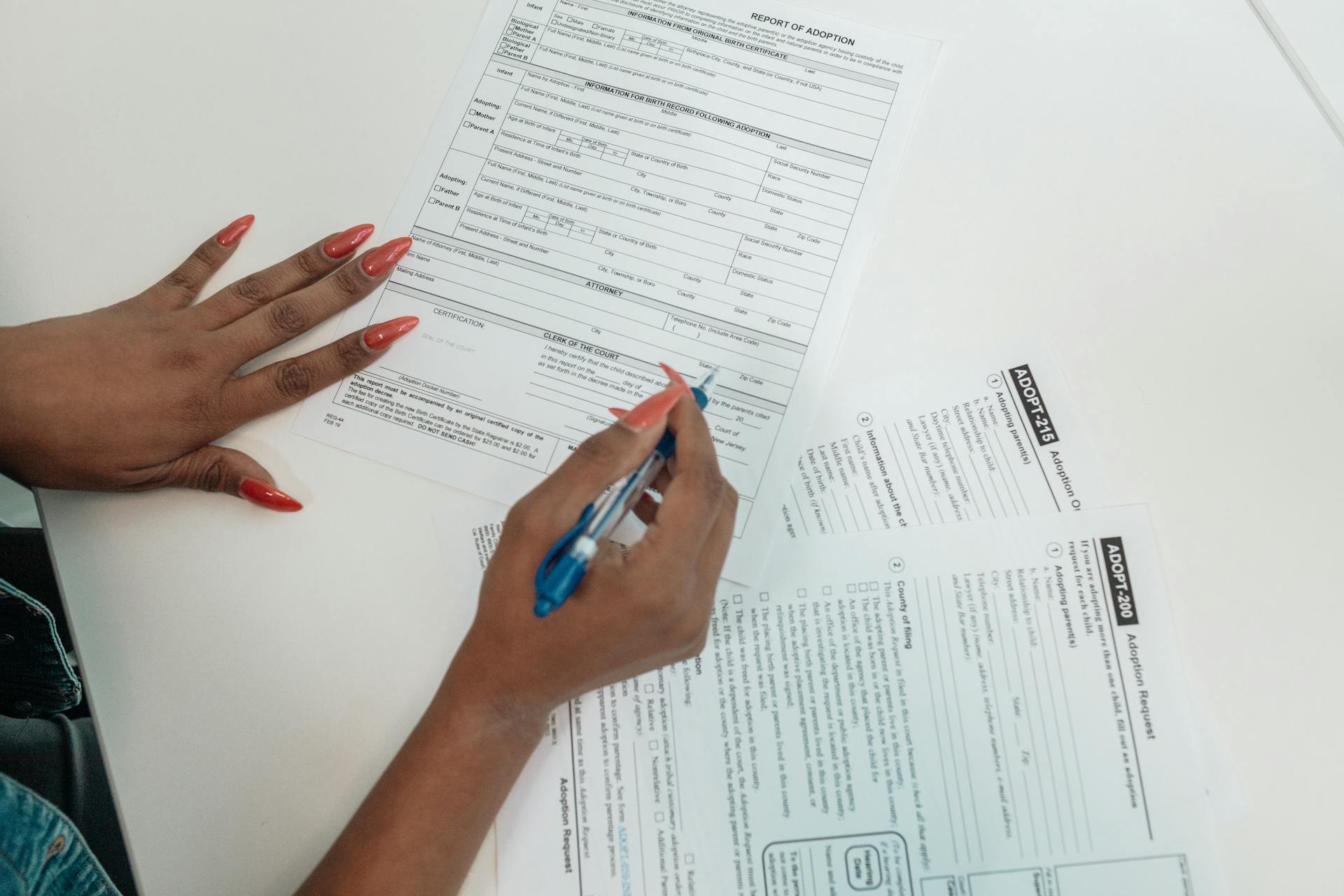
A claim is a statement that makes a promise or assertion about something. It's a declaration that something is true or that a product or service will deliver a specific result.
A claim can take many forms, such as a guarantee, a warranty, or a promise of quality. For example, a company may claim that their product is the best on the market or that their service will be completed within a certain timeframe.
In order to be considered a claim, it must be specific, measurable, and verifiable. This means that the claim should be clear and concise, and it should be possible to prove or disprove it.
Definition
A claim is a legal declaration or demand someone makes seeking compensation or alleging an owed payment for loss caused to them. This can be a formal or informal assertion of a legal right.
In most cases, a claim is based on asserting loss from a contract or negligent tort. For instance, if you're involved in a car accident and the other party is at fault, you may make a claim for compensation for damages or injuries sustained.
On a similar theme: Claim Insurance Compensation
A claim can exist without court involvement, but it may lead to litigation if it's denied or unresolved. This means that a claim starts the dispute, while litigation is the formal legal action that may follow if the claim is denied or unresolved.
Here are some examples of how a claim can be made:
- Enclosing a check in settlement of a claim
- Submitting a doctor's report in support of a claim to an insurance company
- Making a claim for compensation for a loss or injury
- Producing receipts in substantiation of a claim
Business and Insurance
In business, a claim can refer to a request to an insurance company to pay for a covered service or event under the current insurance policy. This is a common scenario in business, where companies need to file claims to receive compensation for losses or damages.
There are different types of insurance claims, including car insurance claims, life insurance claims, and more. For instance, car insurance claims may include damage to vehicles, accidents, or comprehensive incidents.
Here are some examples of insurance claims that businesses may need to file:
- Car insurance claims for damage to vehicles or accidents
- Life insurance claims for the policyholder's death
- Other types of insurance claims, depending on the policy
Filing an insurance claim typically involves checking policy details, gathering information, and submitting a claim to the insurance company. This process can be straightforward, but it's essential to follow the steps carefully to ensure a smooth claim process.
A different take: How Does a Insurance Claim Work
Business English
Business English involves using specific vocabulary and phrases related to business, such as "claim." In the context of business, a claim is a noun that refers to a request to an insurance company to pay for a covered service or event under the current insurance policy.
Understanding the basics of business English can help you communicate more effectively in a professional setting. For example, if you're working in the insurance industry, you might use phrases like "insurance provider" or "service provider" to describe the company or individual paying for a claim.
If your insurance provider approves a claim, they'll typically remit payment to you or the service provider. This can be in the form of a physical check, direct deposit, or sent directly to the service provider.
Insurance claims can be filed for various reasons, including theft, damage to property, or injuries to people. For instance, renter's insurance claims may cover incidents related to an apartment or other property you're renting.
Explore further: Property Insurance Claims Adjuster
Here are some common types of insurance claims:
- Car insurance claims
- Renter's insurance claims
- Homeowners insurance claims
When filing an insurance claim, it's essential to gather important information, such as the names and contact information of those involved, the date of the incident, and insurance policy numbers. You should also provide an incident report and photos if applicable.
Litigation vs. Claim
A claim is the initial demand or assertion of a legal right, which can be informal or formal. It's the starting point of a dispute, and it can exist without court involvement.
A claim can be made to an insurer, for example, and it's not necessarily a lawsuit. In fact, a claim can be resolved through negotiation or settlement before it ever reaches the courtroom.
The key difference between a claim and litigation is that litigation is the formal legal action that follows if a claim is denied or unresolved. This is when a lawsuit is filed in court to resolve the dispute.
Here's a quick summary of the difference:
- Claim: Initial demand or assertion of a legal right
- Litigation: Formal legal action in court to resolve a dispute
Life Insurance

Life insurance is a type of insurance that covers a very specific set of circumstances related to the policyholder's death.
In the event of the insured's death, the insurance company makes a payment to the designated beneficiary, who is the person(s) selected by the policyholder to inherit the policy's assets. This payment is typically made according to the terms of the policy.
Life insurance claims cover the policyholder's death, and the insurance company's payment is usually tax-free to the beneficiary.
A unique perspective: Claim Insurance Company
Features of a Good
A good claim in business and insurance is not just a statement, but a clear stance or position. This distinction is crucial in making effective claims.
In order to make effective claims, it's essential to understand that not all sentences are statements, meaning not all of them convey a stance or position.
A statement typically has a subject, verb, and object clause, which is also a characteristic of a sentence. However, not all sentences meet this criteria, making a statement a more specific type of sentence.
To make a good claim, it's not just about expressing an opinion, but about presenting a clear and well-supported position. This requires a thoughtful and deliberate approach to crafting your message.
Discover more: Not at Fault Insurance Claim
Claim Process
Filing a claim typically involves several key steps, including identifying the basis for your claim, gathering evidence, and notifying the other party.
To identify the basis for your claim, you need to determine the reason for your claim, such as an injury, property damage, breach of contract, or legal wrongdoing. This is the first step in the process.
Gathering evidence is a crucial part of the claim process. You'll need to collect supporting documentation, such as photos, medical records, receipts, or witness statements, to prove your claim.
To make the process easier, here are the key steps in the claim process outlined in a concise list:
- Identify the basis for your claim
- Gather evidence
- Notify the other party
- Complete necessary forms
- File the claim
- Await response or proceed legally
Remember, it's essential to file your claim within the required deadline, known as the statute of limitations, to avoid missing your chance to seek compensation.
Process to File
Filing a claim involves several key steps, and it's essential to follow them correctly to ensure a smooth process.
The first step is to identify the basis of your claim, which can be an injury, property damage, breach of contract, or legal wrongdoing.
To support your claim, you'll need to gather evidence, including photos, medical records, receipts, or witness statements.
Notify the responsible party or their insurer in writing, as this is often required before formal legal action can be taken.
You'll need to complete the necessary forms, which may be with an insurance company, court, or government agency, depending on the type of claim.
The deadline for filing your claim is usually governed by a statute of limitations, so be sure to submit your claim within the required timeframe.
Here's a summary of the key steps to file a claim:
- Identify the basis of your claim
- Gather evidence
- Notify the responsible party
- Complete necessary forms
- File the claim within the required deadline
If the other party accepts or denies your claim, you may need to proceed to mediation, arbitration, or litigation.
Verb
In the claim process, there are several verbs that play a crucial role in asserting and affirming claims. According to reports, the ceasefire is holding, and this can be seen in the way claims are made and verified.
Medical experts, as stated, emphasize the importance of correct usage for the safety of products. This highlights the need for clear and accurate claims in the process.
Some lifestyle experts maintain that there is no reason to change your diet, which shows how claims can be used to support or refute certain opinions. So-called superfoods, as claimed by some advertisers, will not make you live longer.
In the claim process, verbs like affirm, assert, and reaffirm are essential for making and supporting claims. These verbs convey a sense of confidence and conviction, which is critical in the claim process.
Here are some key verbs to keep in mind when making claims:
- affirm
- assert
- reaffirm
- reassert
These verbs can help you make and support your claims with confidence. By using the right verbs, you can effectively communicate your message and assert your rights.
Claim Types and Examples
A claim is a request to an insurance company to pay for a covered service or event under the current insurance policy. Car insurance claims, for instance, may include things like accidents or theft.

There are several types of claims a person can make, including contract claims, which arise from a breach of contract. This can involve failing to perform a contractual obligation or doing it improperly.
Tort claims, on the other hand, are allegations of civil wrongs that don't involve contractual claims. This can include negligence, intentional torts, product liability, or other types of injury.
Here are some common types of claims:
A good claim should be specific, measurable, and avoid sweeping statements. For example, claiming that traditional classroom teaching is boring is not a good claim because it lacks definition and is too general in scope.
Claim Related Terms
A claim is a specific request for compensation or reimbursement, often made in response to a loss or damage.
Claims can be categorized into different types, such as property damage claims, liability claims, and casualty claims.
A claimant is the person or entity making the claim, who must provide evidence to support their request.
The claim process typically involves submitting a claim form, providing supporting documentation, and waiting for a decision from the insurer or decision-maker.
A claim can be settled either by payment of a lump sum or by repair or replacement of the damaged item.
A unique perspective: Home Damage Claims
Featured Images: pexels.com