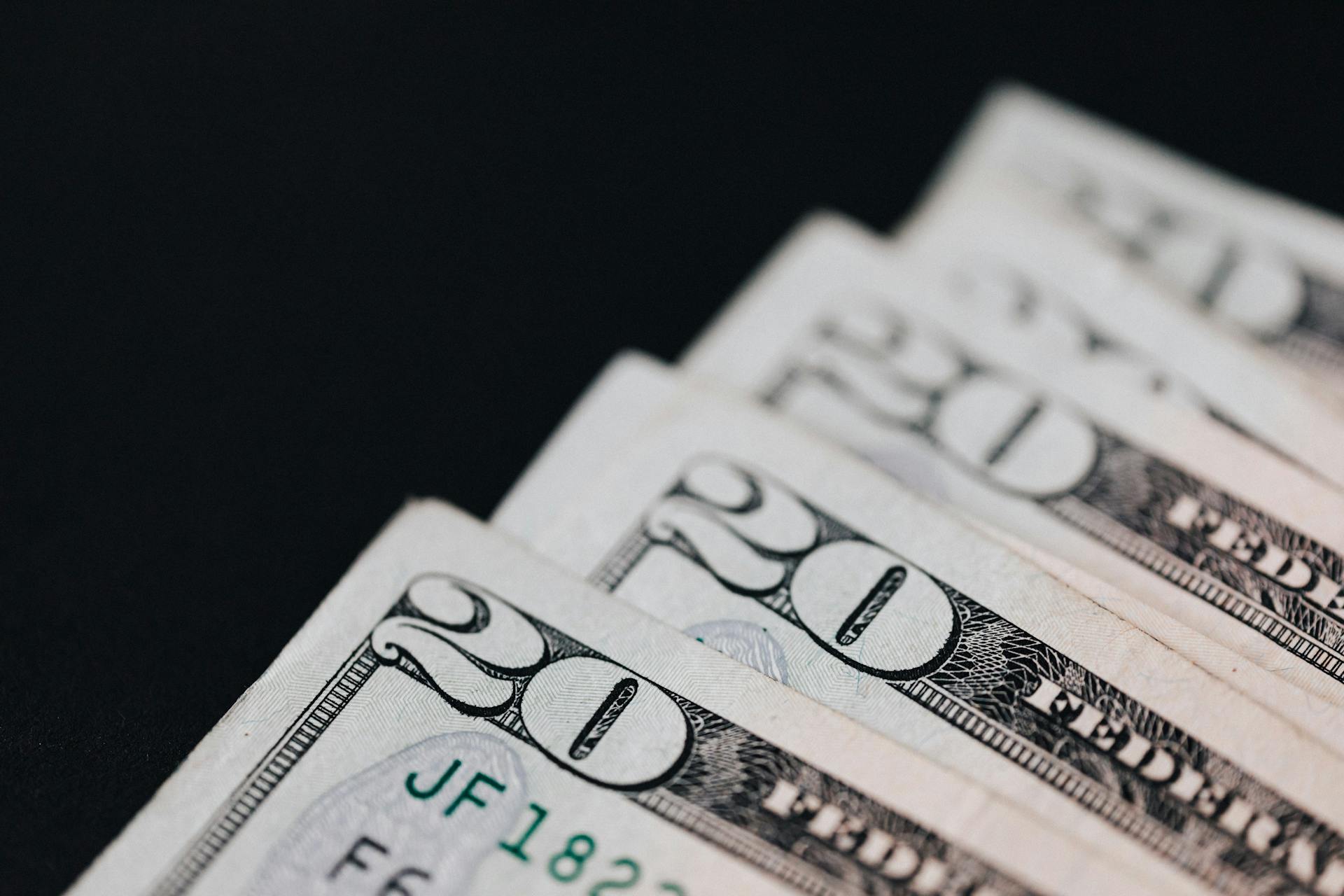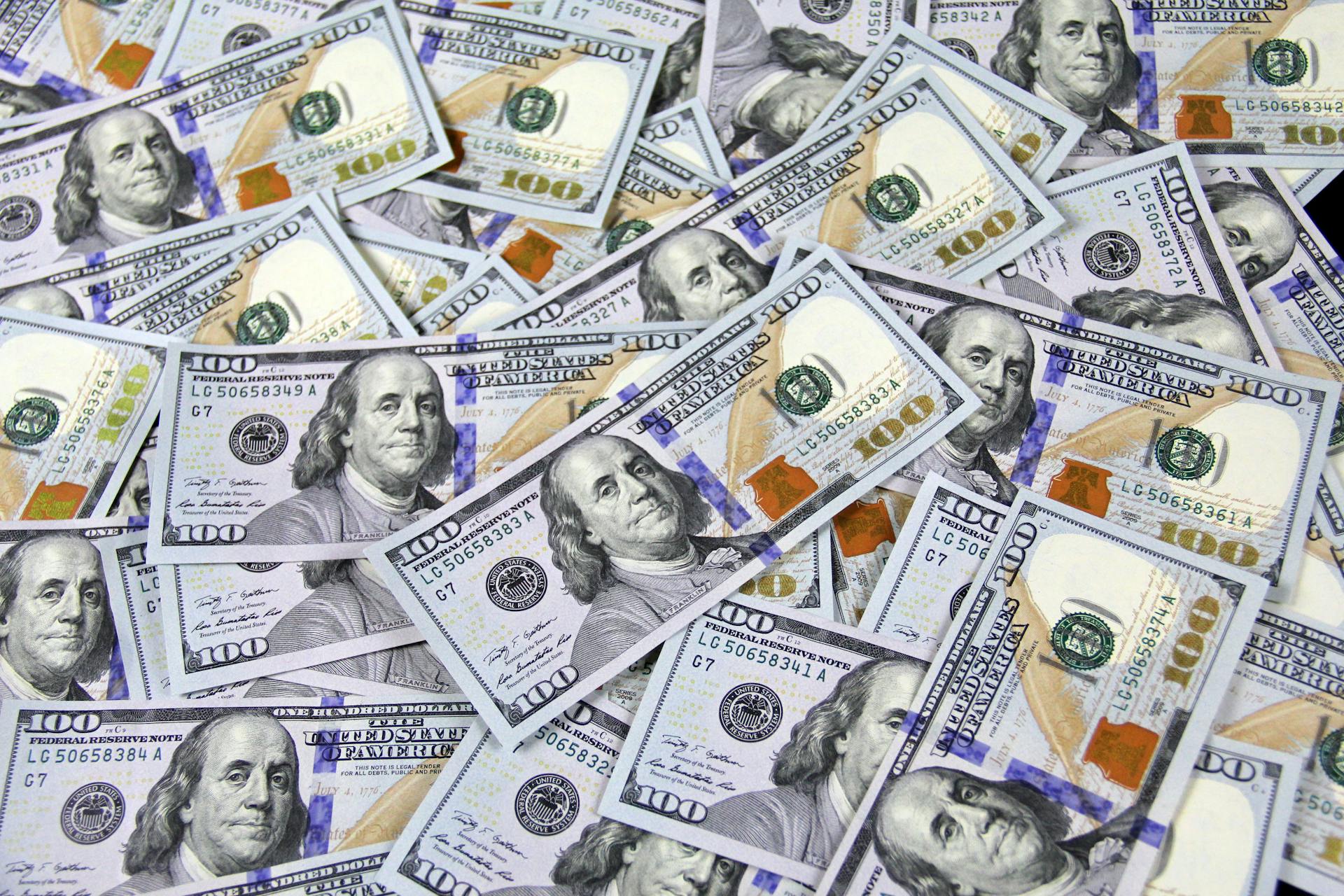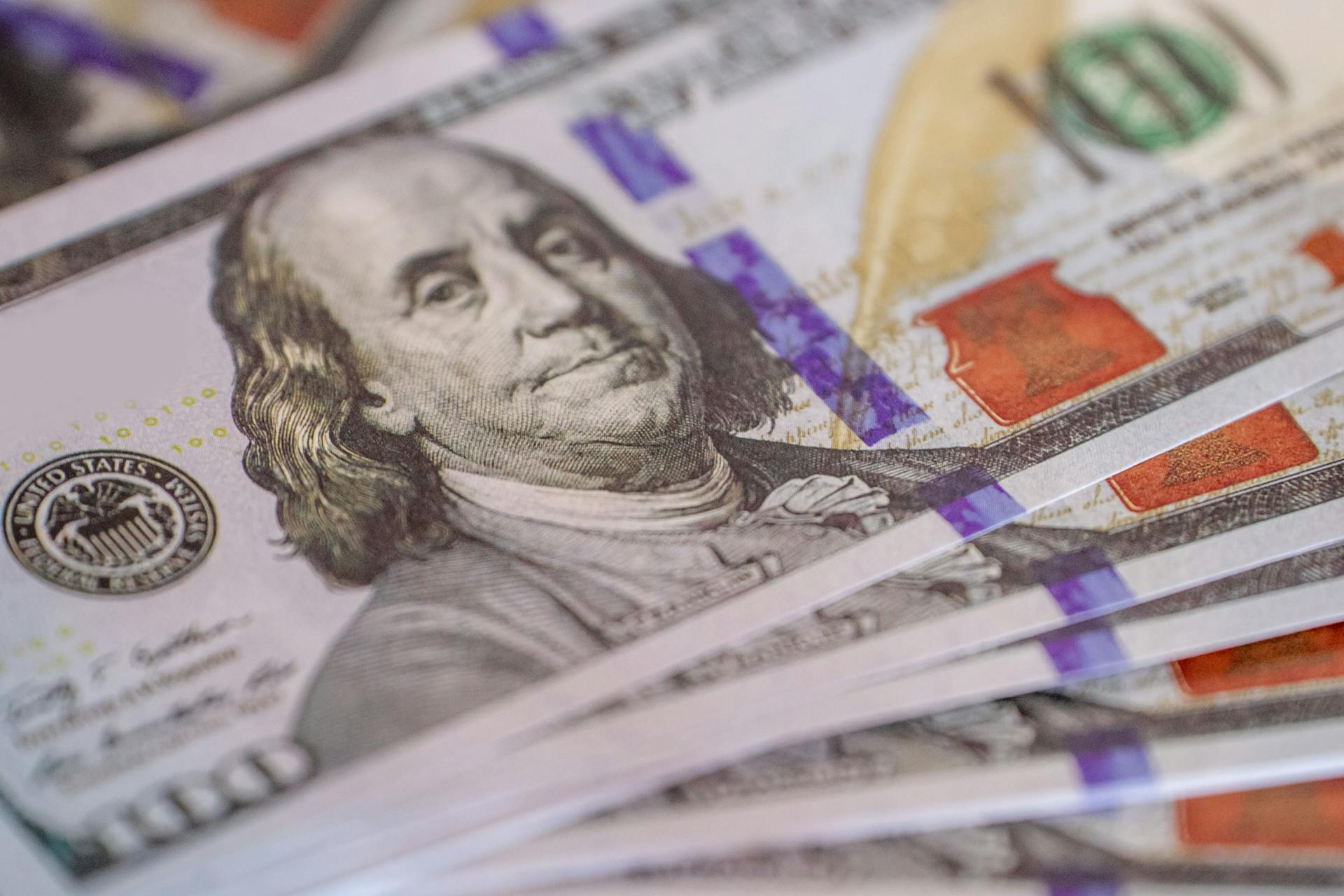
The USD currency is the lifeblood of global finance, playing a critical role in international trade and commerce. It's the most widely traded currency in the world, with over 60% of foreign exchange transactions involving the US dollar.
The USD is the official currency of the United States and is widely accepted as a reserve currency, meaning countries hold it as a store of value to back their own currencies. This gives the US significant economic influence around the world.
The USD's value is determined by supply and demand in the foreign exchange market, where it's traded against other currencies. The US dollar's value can fluctuate significantly, impacting global trade and investment decisions.
The USD's status as a global reserve currency also means it's used as a benchmark for other currencies, with many countries pegging their exchange rates to the US dollar.
Broaden your view: Foreign Currency Exchange Definition
What is USD?
The USD, or United States Dollar, is the official currency of the United States and one of the most influential currencies worldwide. It's widely used in global trade and finance.
The USD serves as the world's primary reserve currency, meaning many countries hold significant amounts of USD for international transactions and investments. This is a testament to its widespread acceptance and trustworthiness.
Its symbol is $, and it has the abbreviation USD. You'll often see this symbol used in financial transactions and everyday commerce.
The USD uses a decimal system, where 100 cents equals one dollar. This means that prices are often displayed in dollars and cents, making it easy to understand and calculate costs.
Recommended read: What Is a Currency Symbol
Historical Background
The US dollar has a rich history that spans over two centuries, dating back to the Coinage Act of 1792, which established the dollar as the official currency of the new republic.
The dollar was modeled after the Spanish milled dollar silver coins, which were widely trusted for their consistent silver content and uniform characteristics. This made them one of the first international currencies.
In the 19th century, the US currency followed a bimetallic standard, backed by both gold and silver, but debates over the gold-to-silver ratio led to instability.
You might enjoy: Us Dollar vs China Yen
The Federal Reserve System was created in 1913 to manage monetary policy and stabilize the economy, following repeated banking crises. This marked a significant shift in the management of the US economy.
The US dollar played a central role in forming the Bretton Woods Agreement after World War II, which pegged major world currencies to the US dollar and established it as the world's primary reserve currency.
The US dollar is issued in both coins and paper banknotes, with the Federal Reserve issuing paper money and the United States Mint issuing coin money.
Denominations and Usage
The US dollar is issued in various denominations, including both banknotes and coins. Common banknote denominations include $1, $5, $10, $20, $50, and $100, while coins range from pennies (1 cent) to quarters (25 cents), half dollars (50 cents), and dollar coins.
American banknotes come in seven denominations, which are listed below:
- $1
- $2
- $5
- $10
- $20
- $50
- $100
The US dollar is widely used for various financial activities, including purchasing goods and services, investing, and paying taxes.
Iso Code
The ISO code is a crucial part of international finance and trade. It's used to clearly distinguish the US dollar from other global currencies.
The US dollar is identified internationally by the ISO currency code USD. The "USD" stands for "United States Dollar" and is used in global finance, trade, banking, and foreign exchange currency markets.
In international contexts, the ISO code is especially important to avoid ambiguity. This is because the dollar sign ($) alone can be used for other dollar-based currencies.
For example, CAD refers to the Canadian dollar, and AUD refers to the Australian dollar. This highlights the importance of using the ISO code to clearly reference the US dollar.
Take a look at this: Currencies Pegged to Usd
US Dollar Denominations
The US dollar is issued in various denominations, including both banknotes and coins. Common banknote denominations include $1, $5, $10, $20, $50, and $100.
The official currency of the USA is the US dollar, and its symbol is $, with the abbreviation USD. Its decimal system is similar to many other currency systems around the world, where 100 cents equal one dollar.
For another approach, see: 100 Usd to Swaziland Currency
The cent is the official subunit of the US dollar, with 100 cents equaling one dollar. The cent is represented by the ¢ symbol, although this is now rarely used in favor of expressing cents in decimal form.
Common coin denominations include 1¢ (penny), 5¢ (nickel), 10¢ (dime), 25¢ (quarter), and 50¢ (half dollar). The most commonly used coin is the quarter, worth 25 cents.
American banknotes come in seven denominations: $1, $2, $5, $10, $20, $50, and $100. The designs of these notes feature important American figures, including past presidents like George Washington and Benjamin Franklin.
Here's a summary of US dollar denominations:
Usage in U.S. Territories and Global Acceptance
The United States dollar is widely accepted and used in several U.S. territories, including Puerto Rico, Guam, and the U.S. Virgin Islands.
In addition to these territories, several countries have adopted the USD as their official currency, such as Ecuador and El Salvador.

The USD is also used alongside local currencies in many other nations for large transactions and savings, highlighting its international acceptance and trust.
The dollar is globally recognized as a primary reserve currency, playing a crucial role in international trade and finance.
Many central banks hold it as a reserve currency to stabilize their own economies, and it's widely used for various financial activities, including purchasing goods and services, investing, and paying taxes.
Its widespread acceptance and stability make it a preferred foreign currency for cross-border transactions, international debt issuance, and safe-haven investment during times of economic uncertainty.
The dollar's prominence reflects not only the size and strength of the economy of the United States of America, but also decades of financial and geopolitical influence.
Federal Reserve and Regulation
The Federal Reserve plays a crucial role in maintaining the strength and reliability of the USD.
The establishment of the Federal Reserve in 1913 further solidified the USD's position, creating a safer, more flexible, and stable monetary and financial system.
The Federal Reserve manages the nation's money supply, a key factor in controlling inflation and stabilizing the currency.
Its actions have been pivotal in maintaining the strength and reliability of the USD over the decades, ensuring economic stability.
Global Finance
The US dollar plays a crucial role in international trade and finance, globally recognized as a primary reserve currency.
Many countries use the US dollar alongside their local currencies for large transactions and savings, highlighting its international acceptance and trust.
The US dollar is widely used for various financial activities, including purchasing goods and services, investing, and paying taxes.
Several countries, like Ecuador and El Salvador, have adopted the US dollar as their official currency, further solidifying its global influence.
As a fiat currency, the US dollar's value is driven by supply and demand in the foreign exchange market, rather than being backed by physical commodities like gold.
Central Bank and Management
The Federal Reserve System, also known as the Fed, is the central bank of the United States. Established in 1913, its main responsibilities include managing the country’s monetary policy, regulating the financial sector, and issuing and managing the U.S. Dollar.
The Fed has a significant impact on the value of the dollar and global financial markets through its decisions on interest rates and other economic measures.
Its decisions can affect the country's economy, influencing how much money is in circulation and how it's used.
The Fed's role in managing the U.S. Dollar is crucial, as it helps maintain economic stability and confidence in the currency.
The Fed's main goal is to promote maximum employment, stable prices, and moderate long-term interest rates.
Its decisions on interest rates can have a ripple effect on the global economy, impacting international trade and investments.
Overview and Details
The United States dollar (USD) is widely regarded as the most influential and widely used major currency in the world. It plays a central role in international trade, investment, and finance.
Its widespread acceptance and stability make it a preferred foreign currency for cross-border transactions, international debt issuance, and safe-haven investment during times of economic uncertainty.
The dollar is held by central banks across the globe, used as the standard for commodity pricing, particularly oil and gold, and dominates global forex markets.
Here are some key details about the USD:
The prominence of the United States dollar and its exchange rates reflects not only the size and strength of the economy of the United States of America, but also decades of financial and geopolitical influence.
Frequently Asked Questions
What does 5 USD mean?
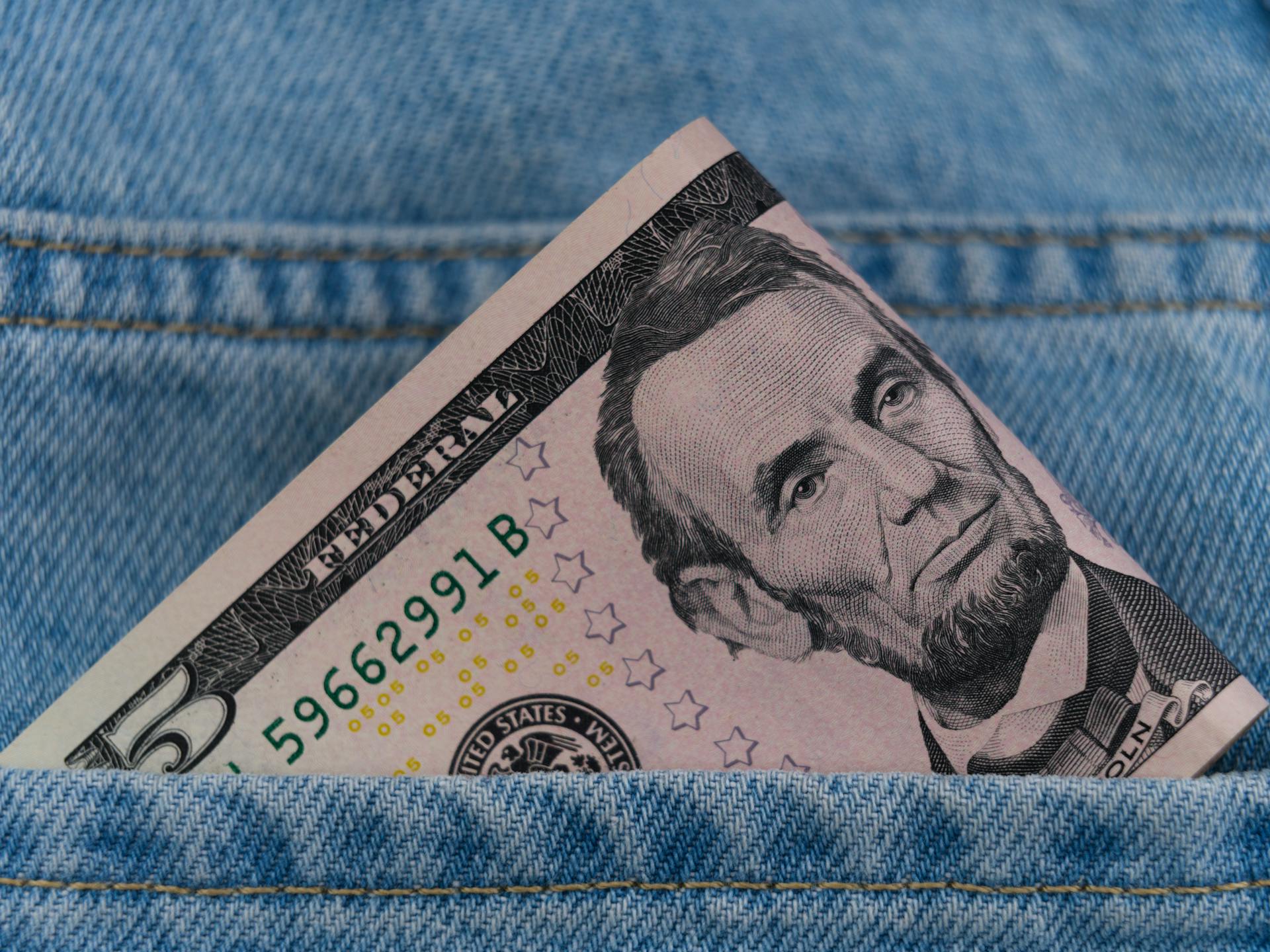
The $5 USD refers to a five-dollar bill, a denomination of United States currency. It's a widely accepted form of payment in the US, featuring Abraham Lincoln and the Lincoln Memorial.
Featured Images: pexels.com