
Flipping houses is a real estate investment strategy where you buy a property, renovate it, and sell it for a profit. This can be a lucrative venture, but it requires careful planning and execution.
To get started, you'll need a significant amount of capital for down payments, renovations, and other expenses. A typical down payment for a flipped house is around 20% of the purchase price.
The key to successful house flipping is finding undervalued properties that can be renovated at a low cost and sold for a high price. This often involves looking for distressed or abandoned homes in up-and-coming neighborhoods.
Renovations can range from minor cosmetic changes to major overhauls, and the costs can add up quickly. According to our research, the average renovation cost for a flipped house is around $30,000.
Broaden your view: Watch Flipped
What Is Flipping?
House flipping is a strategy where you buy a property, hold it for a short time, and then sell it for a higher price. The goal is to buy low and sell high, earning a profit in a relatively short amount of time.
Discover more: Is Now a Good Time to Invest in Reits
House flippers need a lot of money on hand for upfront costs, including purchasing, carrying, and renovating the home. They have to budget carefully to ensure they don't spend more than they'll earn back in resale.
Flippers often use creative financing methods to buy properties they may not be able to afford otherwise. This can be a higher-risk strategy, but it also offers potential rewards.
Investors who flip properties take a short-term view, injecting capital into the property to improve it before selling at a profit. This approach is different from rental property investments or buying a primary residence.
For your interest: Landbank Properties
Pros and Cons
Flipping houses can be a lucrative venture, but it's not without its risks. The potential for big profits is one of the main draws, with a typical gross profit of $72,375 in the first quarter of 2024, according to ATTOM.
Flipping houses can also have a positive impact on neighborhoods, helping to turn around property values in areas where neglected or derelict homes are dragging down prices. This is especially true for investors who focus on distressed properties.
Adding real estate to your investment portfolio can help diversify your holdings, and flipping properties lets you cash in those investments. This can be a good way to reduce risk and increase returns.
Here are some key benefits of house flipping:
- Potential for big profits
- Improving neighborhoods
- Diversifying your investments
Getting Started
House flipping involves buying a property, renovating it, and selling it for a profit. It's a numbers game, and finding deals requires patience, with some investors sending hundreds of letters and making offers on multiple properties before one is accepted.
To get started, set a budget that's at least five times your current budget, as recommended by experienced flippers. This will give you a safety net for unexpected expenses. You should also be preapproved for a mortgage before starting your search.
Here are the essential steps to flip a house:
- Set a budget
- Find a property
- Make an offer
- Set a timeline
- Hire a contractor
- Sell your property
Do I Need a Cash Offer to Flip a House?
You don't necessarily need a cash offer to flip a house. In fact, nationwide, 62.7% of house flips are purchased with cash, but many people do finance their house flips.
However, having a cash offer can be more attractive to sellers, which is why you may see more cash offers accepted on home-flipping shows.
It's worth noting that it's not uncommon for people to finance their house flips, and it's often a matter of the situation.
Set a Budget and Business Plan
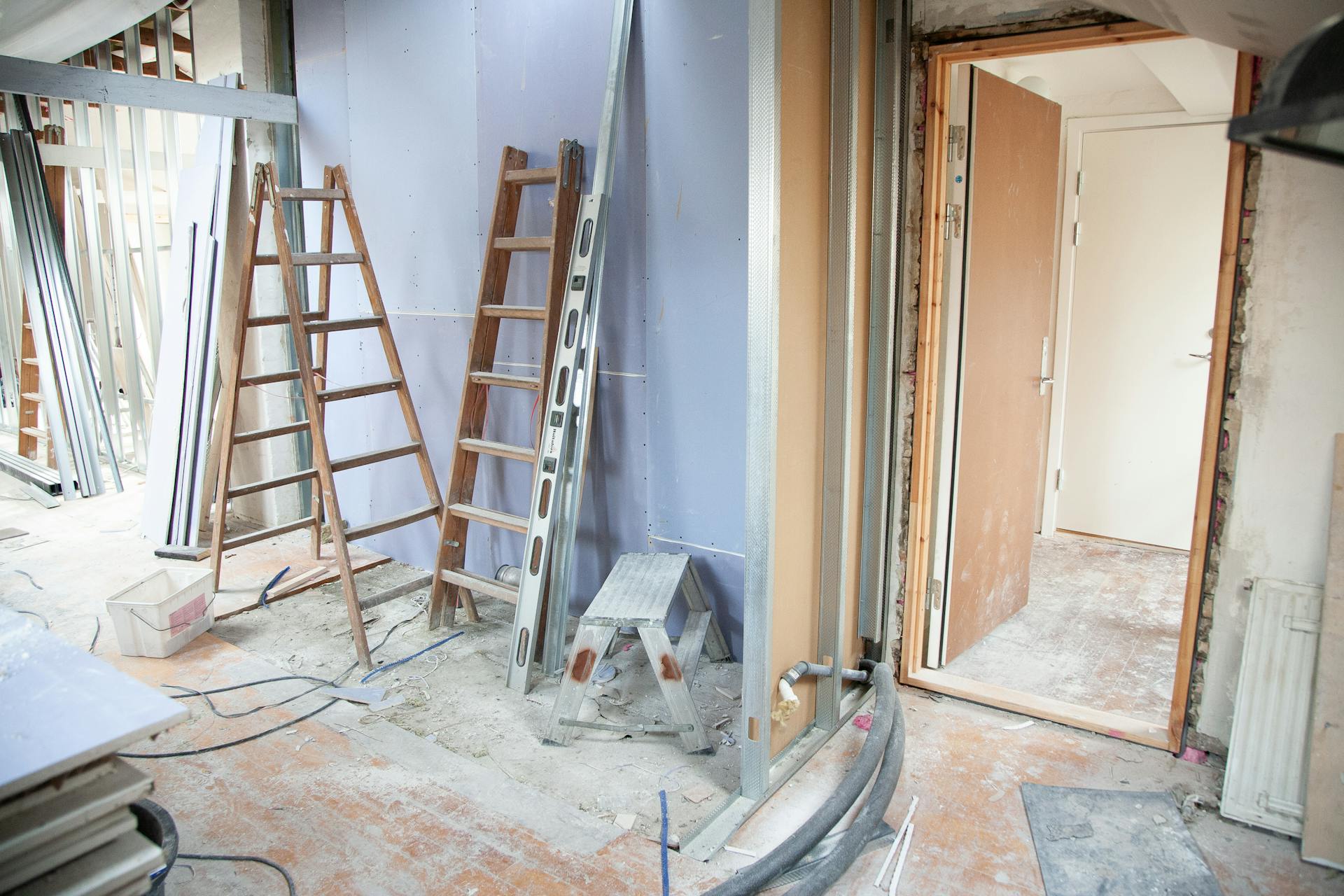
To get started with house flipping, you need to set a budget and create a business plan. A budget is essential, and it's recommended to multiply your current budget by five to ensure you have enough funds.
You should also consider your financing options and get preapproved for a mortgage before starting your search. This will give you a clear idea of how much you can afford to spend.
Having a business plan in place will help you stay organized and focused. It should include a budget, a timeline, and a project scope. You'll want to consider how much you have to invest, how much you want to hold in reserve, and whether you have enough to cover renovation draws until you're reimbursed by your lender.
A good business plan will also help you determine the scope of your project. Starting with cosmetic updates, such as kitchen and bathroom updates, new flooring, new paint, and new fixtures, can be a good way to begin. This will help you move faster, reduce risk, and lower costs.
See what others are reading: Flipping Houses Business Plan
Here are some key elements to include in your business plan:
- How much you have to invest
- How much you want to hold in reserve
- Whether you have enough to cover renovation draws
- Project scope (e.g., cosmetic updates, full renovations)
Remember, your business plan should be tailored to your specific needs and goals. Don't be afraid to seek advice from experienced house flippers or real estate professionals to help you get started.
The Process
Flipping houses involves buying a property, renovating it, and selling it for a profit. The process can be complex, but breaking it down into steps can make it more manageable.
The average length of time it takes to flip a house is about four to six months from the purchase date to the selling of the finished home. This timeframe can vary depending on the extent of the required repairs and upgrades.
To get started, you'll need to set a budget, which should be significantly higher than your initial estimate. A good rule of thumb is to multiply your current budget by five. If you'll be financing the purchase, make sure you're preapproved for a mortgage before you start looking.
The first step in the process is to find a property that fits your finances and renovation ability. You can browse through foreclosures, auctions, and short sales, or work with a local real estate agent who has experience working with flippers.
Once you've found a property, it's time to make an offer. Professional flippers often consider a home's after-repair value to help them determine how much to bid. Be prepared to bid competitively, especially in popular markets.
Here's a step-by-step guide to the process:
- Set a budget and get preapproved for a mortgage.
- Find a property that fits your finances and renovation ability.
- Make an offer on the property, considering its after-repair value.
- Hire a contractor to handle repairs and renovations.
- Sell your property after all updates have been made.
Finding a good deal on a house to flip requires patience and a solid strategy. It's a numbers game, and you may need to send multiple letters, tour several properties, and make offers before one is accepted at a price that makes sense for you.
Risks and Considerations
Flipping a house can be a lucrative venture, but it's essential to be aware of the risks involved. One of the biggest risks is not being able to sell the property for a profit.
The potential for fraud and scams is also a concern when flipping houses. It's crucial to be cautious and do your research.
Not every house is a good candidate for flipping. In fact, there are only three general categories that seem like candidates: older homes in need of repair, short sales, or properties with appreciated values due to their proximity to desirable areas.
Here are some key things to remember when flipping a house:
- Be aware of the risks involved.
- Have a realistic idea of the potential rewards.
- Be aware of local real estate market conditions.
- Have a solid plan for renovations.
Risks of Real Estate Flipping
Flipping a house can be a high-risk venture, with potential losses lurking around every corner. One of the biggest risks is not being able to sell the property for a profit.
You may end up spending more on repairs and renovations than you anticipated, which can quickly eat into your profits. In fact, only a small percentage of houses are good candidates for flipping.
There are only three general categories that seem like candidates: older homes in need of repair, short sales, or properties with appreciated values due to desirable locations. If you're not experienced in flipping houses, it's essential to be aware of the potential for fraud and scams.
Here are some key things to remember when flipping a house:
- Be aware of the risks involved.
- Have a realistic idea of the potential rewards.
- Be aware of local real estate market conditions.
- Have a solid plan for renovations.
- Consider partnering with someone who is experienced in flipping houses or real estate investing.
Not Enough Money

Not Enough Money is a significant risk in flipping a house. It's expensive to get started, and the costs can be overwhelming.
The first expense is the property acquisition cost, which can be difficult to cover without a lot of money upfront. Even if you find a low/no-money-down financing deal, it's hard to come by from a legitimate vendor.
The interest on borrowed money is tax deductible, but it's not a 100% deduction. Every dollar spent on interest adds to the amount you'll need to earn on the sale just to break even.
Consider using a mortgage calculator to compare rates from different lenders. Paying cash can eliminate interest costs, but it's still a significant holding cost and opportunity cost.
Capital gains taxes will chip away at your profit, making it even tougher to make a profit. Flippers grossed about $67,900 per property in 2022, a 3% decrease from 2021.
Renovation and other costs can cut your profit by around two-thirds. Add an unexpected structural problem, and a gross profit can become a net loss.
Understanding the Numbers
Making a profit in house-flipping is a numbers game, and it's essential to consider all the costs involved. This includes the costs of buying and selling, such as conveyancing attorney fees, transfer duty, agent commission, and certificates of compliance.
When you sell, you'll incur costs that must be considered, too, such as the agent commission. Capital gains tax (CGT) will also come into play because this is not your primary residence.
Financing costs are another factor to consider, including the costs and interest associated with raising finance through a bank. It's crucial to factor in these costs to ensure you're making a profit.
A good rule of thumb to keep in mind is the 70% rule: don't pay more for a property than 70% of its after-repair value (ARV). This will help you ensure you're not overpaying for a property.
Here are some key costs to consider when flipping houses:
- Buying and selling costs, including conveyancing attorney fees, transfer duty, agent commission, and certificates of compliance
- Financing costs, including interest and fees associated with raising finance through a bank
- Repair or renovation costs, with a clear budget and contingency
- Capital gains tax (CGT)
Featured Images: pexels.com