
Business process reengineering involves a thorough examination of an organization's current processes to identify areas for improvement. This process can be complex and time-consuming.
The goal of business process reengineering is to eliminate unnecessary steps and reduce waste, resulting in increased efficiency and productivity. According to our research, this can lead to cost savings of up to 30% and a 25% increase in customer satisfaction.
A key component of business process reengineering is the use of technology to automate and streamline processes. For example, a company may implement a new software system to manage their supply chain, reducing the need for manual data entry and increasing the speed of inventory management.
What is Business Process Reengineering?
Business Process Reengineering is a systematic approach to improving processes by simplifying, automating, and streamlining them.
It involves analyzing and redesigning business processes to make them more efficient, effective, and customer-focused. This can include eliminating unnecessary steps, reducing cycle time, and improving communication and collaboration among teams.
Business Process Reengineering aims to create a more agile and responsive organization that can adapt quickly to changing market conditions and customer needs.
The History of

Business process reengineering (BPR) has a rich history that dates back to the early 1990s. It emerged as a management approach aimed at radically redesigning business operations to achieve business transformation.
In 1993, the book Reengineering the Corporation by Michael Hammer and James Champy gained prominence, contributing to the BPR discourse. Hammer is often credited as one of the founding figures of BPR.
Thomas Davenport's book Process Innovation, also published in 1993, emphasized the importance of innovation in the process model and the systematic approach to identifying opportunities for improvement within business processes.
The Ford Motor Company was one of the early adopters of BPR, implementing reengineering initiatives in the 1990s to streamline its manufacturing processes and improve competitiveness.
Create Value
Creating value is a key aspect of Business Process Reengineering (BPR). It's not just about replacing old processes with new technology, but about understanding customer needs and developing smarter working methods.
Processes should be designed to be flexible, so they can adapt quickly to market changes or new technological advancements. This means being open to change and willing to adjust processes as needed.
Expand your knowledge: Startup Business Credit Cards for Llc

BPR should be viewed as a way to create value, not just as an IT-oriented initiative. By focusing on creating value, organizations can improve their overall performance and stay ahead of the competition.
Designing processes with flexibility in mind allows for quicker adaptation to changing market conditions. This can be especially important in today's fast-paced business environment.
Identifying the Need for Change
To successfully implement Business Process Reengineering (BPR), you need to pinpoint which processes are underperforming or misaligned with business goals. High-impact workflows that suffer from bottlenecks, excessive costs, customer complaints, or long cycle times are prime candidates for reengineering.
Leadership alignment is critical here, without top-down support, reengineering efforts may stall. This means that leadership needs to be on board with the changes and provide the necessary resources and support.
Persistent inefficiencies across workflows are a clear indication that it's time to rethink your processes. If you've already tried optimizing your workflows and still see delays, redundancies, or bottlenecks, it's time to look for smarter, outcome-driven solutions.

Business needs analysis is the most important step of a successful BPR project. A thorough assessment of current processes must be completed before any meaningful solutions are designed.
If your processes consistently result in delays, redundancies, or bottlenecks despite prior optimization efforts, it may be time to stop iterating and start rethinking.
Approach to Business Process Reengineering
Business process reengineering (BPR) involves a strategic approach to fundamentally rethinking and redesigning core business processes to achieve significant improvements in critical performance metrics such as cost, quality, service, and speed.
To approach BPR, it's essential to start by defining clear, measurable goals for the initiative, which may include reducing processing time, cutting operational costs, or improving customer satisfaction scores. These objectives should align with broader strategic goals and be communicated organization-wide.
A cross-functional team should conduct a process mapping exercise to identify key bottlenecks and define new objectives, such as reducing onboarding time to under five business days, improving client communication, and ensuring full compliance without sacrificing speed.

The key principles of BPR include organizing around outcomes, not tasks, empowering decision-making at the point of action, centralizing geographically dispersed resources, linking parallel activities and integrating their outputs, and capturing information once and at the source.
Here are the core principles of BPR in a concise format:
- Organize around outcomes, not tasks
- Empower decision-making at the point of action
- Centralize geographically dispersed resources
- Link parallel activities and integrate their outputs
- Capture information once and at the source
By following these principles and objectives, organizations can achieve dramatic improvements in performance, competitiveness, and profitability, including a competitive advantage, enhanced quality, faster time-to-market, improved customer satisfaction, increased efficiency, reduced costs, and strategic alignment.
Benefits
Business process reengineering (BPR) offers numerous benefits that can transform an organization's performance, competitiveness, and profitability. One of the key advantages of BPR is achieving a competitive advantage by driving significant improvements in efficiency, quality management, and customer satisfaction.
By focusing on delivering value to customers, BPR can enhance customer satisfaction and loyalty. This is achieved by improving the delivery of services and increasing responsiveness and quality.
BPR can also help organizations reduce costs by eliminating unnecessary steps, automating manual tasks, and improving resource allocation. This can lead to significant savings for organizations.

Here are some of the key benefits of BPR:
By achieving these benefits, organizations can improve their operational efficiency, reduce costs, and enhance customer satisfaction, ultimately leading to increased profitability and competitiveness.
Types of Methodologies
There are various methodologies used in business process reengineering (BPR), each with its own approach and focus.
Radical business process reengineering (RBPR) is a popular methodology that focuses on fundamental organizational changes, eliminating unnecessary steps and activities, and creating more streamlined processes with fewer redundancies.
Adaptive business process reengineering (ABPR) combines radical and incremental reengineering elements to adapt existing business processes for optimal performance in a constantly changing environment.
Effective change management is essential to ensure that the BPR project is successful, and it involves equipping employees with the skills they need to adjust to the changes being implemented.
BPR and change management initiatives work hand-in-hand to help employees understand the reasons behind the changes and become more willing participants.

A clean-slate approach is at the heart of reengineering business processes, which involves building modern, agile workflows from the ground up.
Several BPR methodologies have been developed to facilitate businesses in their process improvement efforts, including radical, adaptive, and incremental approaches.
Business process reengineering involves thoroughly analyzing existing processes and then redesigning them for improved effectiveness, which can involve anything from changing the way work is structured and organized to improving workflow and introducing new technologies or systems.
Here are some common types of BPR methodologies:
These methodologies provide a framework for businesses to approach BPR, and by understanding their strengths and weaknesses, organizations can choose the best approach for their specific needs.
Steps in Business Process Reengineering
Business process reengineering (BPR) involves a structured approach to transform operations. It requires identifying the need for reengineering, defining business process reengineering objectives, and mapping and analyzing existing processes.
There are typically five steps to reengineer business processes. These include identifying and defining objectives, establishing a highly-skilled team, analyzing current processes and creating corresponding key performance indicators (KPIs), redesigning the process, and implementing the reengineered process.

Here are the essential steps to follow:
- Identify the need for reengineering
- Define business process reengineering objectives
- Map and analyze existing processes
- Design the future state process
- Assess technology and resource requirements
- Implement the redesigned process
- Monitor, measure, and refine
Refactoring approaches involve closely scrutinizing existing business processes for ways to refine or tweak them for improved effectiveness. This involves looking for ways to streamline redundant actions, eliminate unnecessary steps, and introduce automation technology to reduce costs and increase efficiency.
Management, Simulation
Before diving into the nitty-gritty of business process reengineering, it's essential to map and analyze existing processes.
Use process mapping to document each step, role, and system involved in your current workflows. This will help you identify redundancies and pain points.
Handoff delays and manual inputs can significantly slow down your processes, so it's crucial to identify them and address them.
By creating a baseline for improvement, you'll be able to highlight opportunities for transformation and make data-driven decisions.
Designing a new process flow chart is a critical step in reengineering your business processes. Consider both desired outcomes and newly collected data when designing your new process.
Stakeholders must be kept informed and consulted throughout the design phase to ensure any issues are addressed before implementation begins.
On a similar theme: Identify Risk Process
Map and Analyze

Mapping and analyzing existing processes is a crucial step in business process reengineering (BPR). This involves documenting each step, role, and system involved in the process.
To do this effectively, use process mapping to identify redundancies, handoff delays, manual inputs, and other pain points. This creates a baseline for improvement and highlights opportunities for transformation.
A thorough assessment of current processes must be completed before any meaningful solutions are designed. This assessment involves mapping out existing workflows and understanding how resources are currently allocated throughout the organization.
All stakeholders involved in the project should have their input considered during the assessment so that their concerns are addressed and included when creating new processes.
Here are some key areas to focus on during the mapping and analysis phase:
- Identify processes that have the highest impact on the organization
- Identify processes that are failing, causing bottlenecks or causing the system to run inefficiently
- Create KPIs to measure the success of the new processes
By doing so, you'll be able to understand how the current processes are working and identify areas for improvement. This will help you design a new process that is more efficient, effective, and meets the needs of your organization.
Tools and Technologies for Business Process Reengineering

Business process reengineering (BPR) involves streamlining workflows and unifying processes into cohesive systems to improve transparency and minimize errors.
Technology gaps or fragmentation can hinder BPR efforts, but it can be addressed by unifying processes and systems. This creates a more efficient and seamless operation.
To implement a new process, you need to assess your existing technology and resource requirements. This includes determining necessary upgrades or integrations needed to support the redesigned process.
Adequate IT resources are essential for managing and organizing large amounts of data for effective decision-making. It's also necessary to access real-time data for forecasting trends and optimizing operations.
Automation can significantly reduce operational costs while improving the speed and accuracy of operations. This can be achieved by implementing artificial intelligence (AI) and machine learning (ML) to identify patterns in data sets or predict outcomes from algorithms.
Having the right tools and technologies in place is crucial for a successful BPR implementation. By streamlining workflows and automating processes, you can create a more efficient and scalable operation.
Example and Case Studies
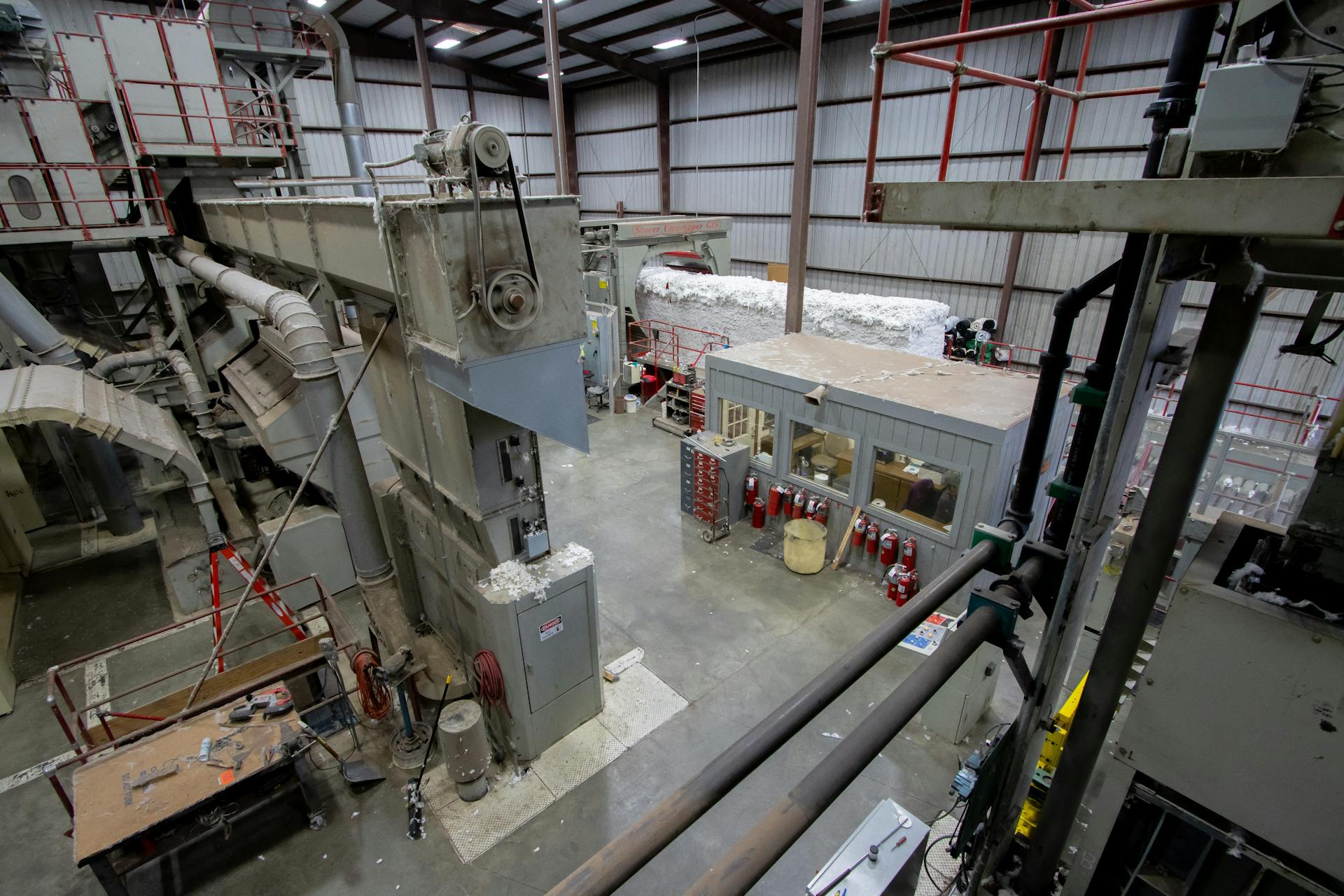
Business process reengineering involves making significant changes to an organization's processes to improve efficiency and effectiveness. This can be seen in the example of a financial services firm that struggled with delays in client onboarding due to multiple disconnected systems and manual document collection.
Business process reengineering can also involve improving collaboration between departments, such as by implementing systems for interdepartmental collaboration, which can lead to increased knowledge sharing and improved teamwork.
Automating tasks that are overly time-consuming or manual is another example of business process reengineering, such as using Configure-Price-Quote software (CPQ) to streamline the product configuration, pricing, and quotation process.
Ford, a reputable company, successfully adopted business process reengineering to reduce administrative and overhead costs by updating technology and documentation automation.
Here are some examples of business process reengineering in different areas:
- Improving supply chain management processes using artificial intelligence (AI) technology
- Streamlining billing operations by moving to an automated, accurate, efficient, and secure system
- Creating new products or services that add value for customers through data analytics or sales intelligence
Business process reengineering can be structured into three types: operational process, supporting process, and management process.
How to Implement Business Process Reengineering

Implementing business process reengineering involves deploying the new workflow in a controlled environment to ensure a smooth transition.
To achieve this, you can use pilots or phased rollouts to monitor performance and minimize disruption. This approach allows you to test the new process in a small scale before rolling it out to the entire organization.
The next step is to communicate the changes to all stakeholders, which includes providing comprehensive training for teams on the updated systems. This training is crucial to ensure that everyone is on the same page and can work efficiently with the new process.
Establishing governance frameworks is also essential to track compliance and measure progress effectively. This will help you identify areas that need improvement and make necessary adjustments.
Implementing changes within the organization's operational structure involves training staff on new systems or procedures. This can include testing new software applications or hardware solutions designed to improve workflow efficiency or effectiveness.
Recommended read: Process Involves Wind Moving Loose Sediment
Monitor, Measure, Refine

Monitoring and measuring the performance of your newly reengineered process is crucial to its success. It's essential to evaluate its performance against the initial objectives, using key performance indicators like faster turnaround times and cost reductions.
Consistently tracking and analyzing these metrics will help you identify areas for improvement. Leverage KPIs to measure success and stay prepared to adjust and optimize the process as needed.
Real-time status tracking and performance insights can be game-changers in the refinement process. Moxo provides this kind of support, enabling teams to see where processes slow down and what improvements are needed.
Proper evaluation systems must be in place to monitor and fine-tune goals over time. This allows companies to assess their current state against desired future states and collect data points for further improvement efforts.
Tracking performance metrics before beginning any BPR efforts is essential. This helps companies collect data points to inform further improvement efforts and assess their current state against desired future states.
Take a look at this: Business Insurance Companies
Frequently Asked Questions
What are the 3 R's of business process reengineering?
The 3 R's of business process reengineering are Reengineering, Redesign, and Rebuild, which are key stages in the BPR life cycle. These stages involve identifying and improving current processes to increase efficiency and effectiveness.
Featured Images: pexels.com