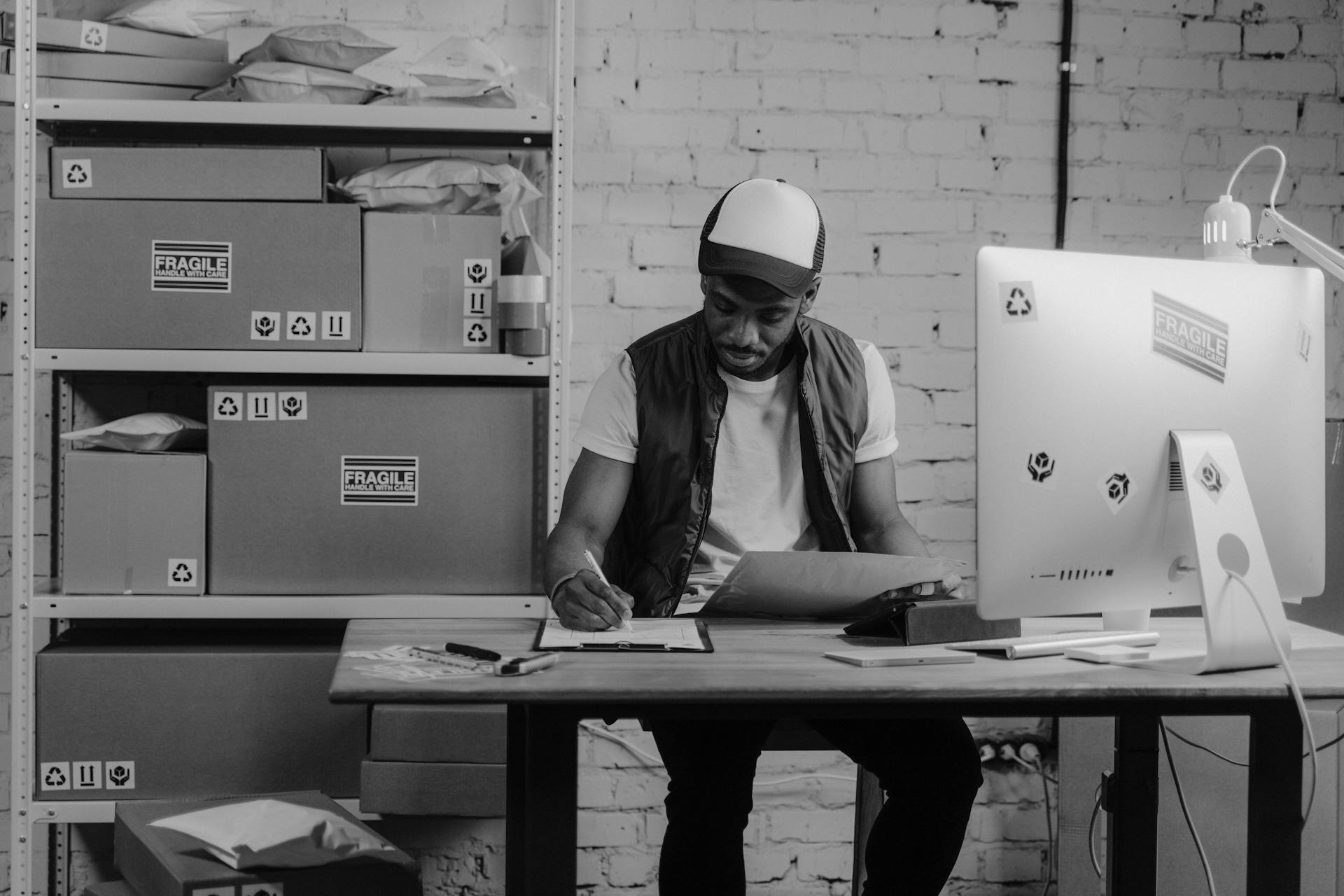
Business clerical work is a crucial aspect of any organization, responsible for managing and maintaining the day-to-day operations.
In a typical business setting, clerical workers are responsible for tasks such as scheduling appointments, managing calendars, and handling correspondence.
Effective communication is key to success in this role, as clerical workers often serve as the primary point of contact between management and clients or customers.
Their attention to detail and organizational skills are essential in maintaining accurate records and ensuring that tasks are completed efficiently.
What is Business Clerical?
Business clerical work involves providing support to employers in offices, often in law firms, hospitals, insurance companies, and educational institutions. File clerks, also known as records clerks or office assistants, are the backbone of business clerical work.
They are responsible for sorting, labeling, and storing office records, which can be a daunting task if not done properly. File clerks work in offices and may work as a full-time member of a clerical work team or as a term-of-project contractor.

A typical day in the life of a file clerk involves gathering, sorting, labeling, copying, storing, inventorying, and retrieving materials, including office correspondence, invoices, receipts, payroll, and other office records. They may use existing filing schemes or develop their own filing system.
File clerks are also responsible for culling files of outdated materials and ensuring that office records are current. They may respond to customer or employee information requests and track borrowed materials. In some cases, filing clerks may require security screening and approval to handle classified records.
In addition to filing tasks, file clerks may also be responsible for clerical tasks such as placing orders, maintaining inventory, billing patients or clients, managing payroll, and answering phones. This can be the case in small businesses like a dentist's office, where a file clerk will likely be responsible for all filing tasks and some clerical tasks.
Experienced file clerks often work in supervisory roles, overseeing filing systems or departments and training new clerical hires. In contrast, inexperienced or junior file clerks are assigned entry-level filing jobs.
Skills and Qualifications

To succeed in a business clerical role, you'll need a combination of technical and personal skills.
A proficient typing speed is essential for quickly and accurately completing tasks.
You should also be competent with office software suites like Microsoft Office or Google Workspace.
Operating standard office equipment like printers and scanners is also a must.
Strong organizational skills are crucial for managing multiple tasks and maintaining orderly records.
Attention to detail is another important trait, ensuring accuracy in data entry and correspondence.
Effective communication is key to ensuring that duties are completed dependably.
Reliability is also a vital skill for a business clerical role, as it ensures that tasks are completed on time.
Time management is another essential skill, allowing you to prioritize tasks and meet deadlines.
Explore further: What Does Accredited by Better Business B Mean
Work Environment and Advancement
As a business clerical professional, you'll spend most of your day sitting at a desk, using computers for long periods each day. This can be a comfortable and quiet work environment, but it may also require you to be on your feet to retrieve and deliver files.

Your human environment may be social or isolated, depending on your assignment and organization. You'll likely interact with colleagues, customers, and supervisors, which can be a great opportunity to build relationships and learn from others.
To perform your duties, you'll use a variety of office equipment, including computers, calculators, and photocopiers.
Work Environment
As a file clerk, you'll likely spend most of your day sitting at a desk, which can be a comfortable setup but also requires long periods of computer use. File clerks work in office environments, which can be a great perk for those who enjoy a structured workspace.
The immediate physical environment of a file clerk's job can be quite demanding, requiring frequent physical activity to retrieve and deliver files and documents. This can be a challenge for those with mobility issues or chronic pain.
Depending on the assignment and organization, a file clerk's human environment can be quite social, with interactions with colleagues, customers, and supervisors. On the other hand, some file clerks may work in isolated environments with little to no human interaction.
File clerks use a variety of office equipment to complete their work, including computers, calculators, and microfilm machines. They may also need to use word processing software, fax machines, and photocopiers to fulfill their document maintenance and filing duties.
Education and Advancement

To pursue a career as a file clerk, building good study habits in high school is key. High school students can benefit from taking typing, computer science, mathematics, communications, and bookkeeping classes.
Formal postsecondary training can provide greater opportunities for employment and advancement in the field. Students can complete vocational training in business or an associate's degree in secretarial science, bookkeeping, or general business.
Securing administrative internships or part-time clerical employment with local businesses can give you a significant advantage in future job searches.
Intriguing read: Business Startup Accounting and Bookkeeping Services
Work's Role in Organizations
In organizations, clerical work plays a vital role in ensuring everything runs smoothly. Clerks and administrative assistants are often the first point of contact for clients, suppliers, and visitors.
Proper documentation, accurate data entry, and efficient organization are the foundation of a well-functioning office. Clerical work involves a wide range of administrative tasks, including data entry, managing files, answering phone calls, handling emails, scheduling meetings, and preparing documents.
A different take: How Does Payroll Work for a Small Business

Clerical positions are crucial in many sectors, providing vital support that keeps operations running efficiently. In Pakistan, with its growing business and education sectors, clerical positions offer great job opportunities.
Organizations need skilled clerks who are detail-oriented, organized, and capable of managing various tasks simultaneously. According to the U.S. Bureau of Labor Statistics, the median salary for receptionists (a type of clerical worker) was $29,140 in 2018.
Here are some key skills required for clerical work:
- Clear communication
- Reading comprehension
- Time management
- Critical thinking
- Problem solving
- Organization
- Deductive reasoning
These skills are essential for managing multiple tasks, maintaining orderly records, and ensuring accuracy in data entry and correspondence.
Resume and Job Search
Incorporating your clerical experience into your resume is a crucial step in showcasing your skills to potential employers. To list clerical experience and skills on a resume, you can follow the tips outlined in the article.
You can start by highlighting your clerical experience in a dedicated section, such as a "Work Experience" or "Professional Experience" section. This will give you the opportunity to showcase your skills and accomplishments in a clear and concise manner.
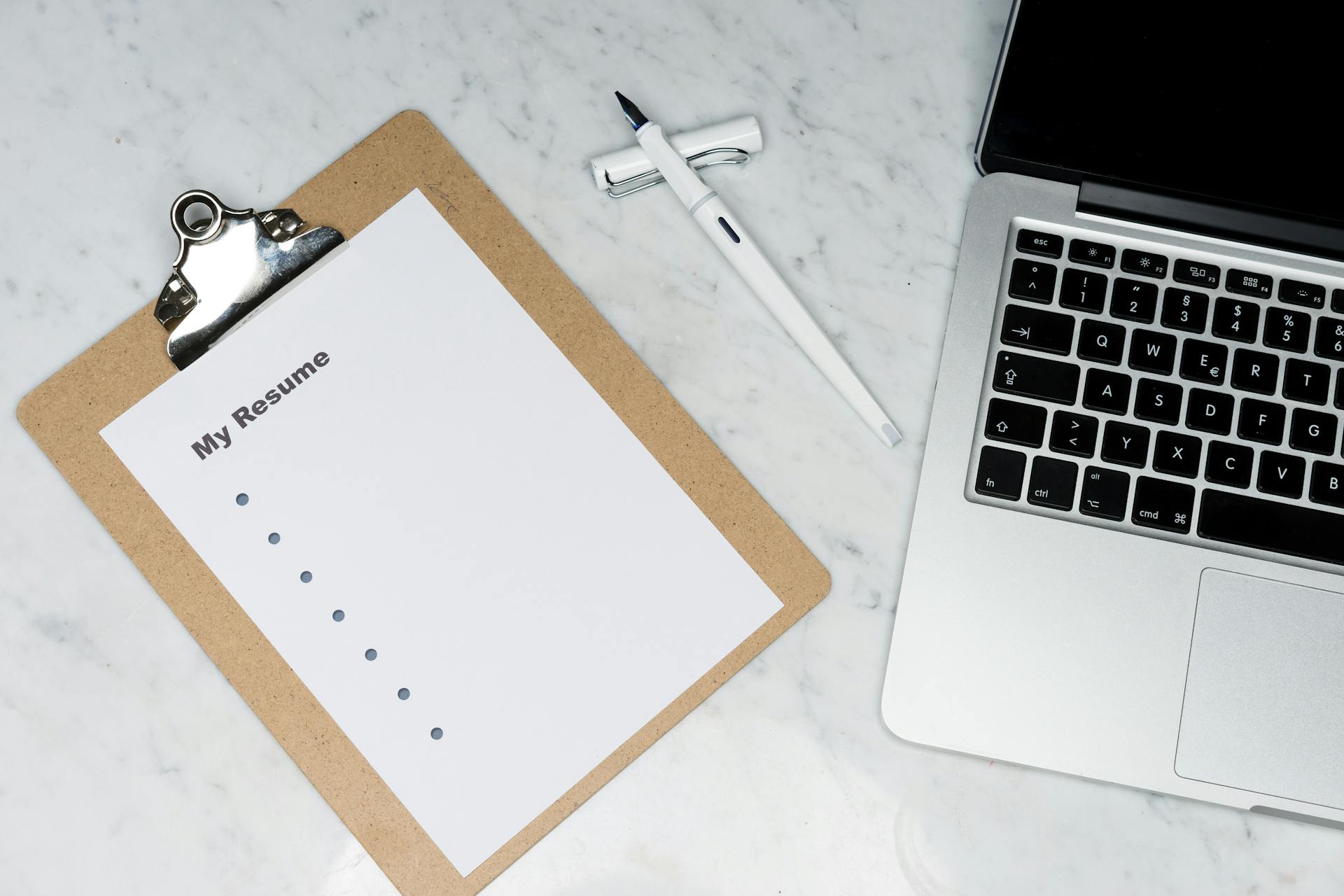
To effectively list your clerical experience, be sure to include specific job titles, company names, and dates of employment. This will help to give your resume a sense of structure and organization.
By following these tips, you can create a strong resume that showcases your clerical experience and skills, increasing your chances of landing an interview.
Technology and Duties
As a business clerical worker, you'll need to adapt to the changing landscape of technology in the office.
Clerical duties have evolved significantly with the introduction of sophisticated computer systems, which is a key part of the job.
You'll need to gain experience with office equipment like printers, copiers, and other technologies to perform your duties effectively.
Clerical training programs are available to help you build the necessary skills for this profession.
Key Responsibilities
As a user of technology, it's essential to understand the key responsibilities that come with its use.
You're responsible for staying up to date with the latest software updates to ensure your devices and programs run smoothly and securely.

In today's digital age, it's crucial to protect your personal data by using strong passwords and keeping your devices and accounts secure.
Regularly backing up your data is a must to prevent losing important files and information in case of a technical issue or hardware failure.
You should also be aware of your digital footprint and take steps to maintain your online reputation by being mindful of what you share and post online.
By being proactive and taking charge of your technology use, you can minimize the risk of cyber threats and stay safe online.
Technology and Duties
Technology has significantly impacted the duties of clerical workers. Sophisticated computer systems, printers, and copiers are now an integral part of office work.
Clerical workers need to gain experience with the equipment and software used in offices. Clerical training programs can help build the required skills for this profession.
Future of Business Clerical Roles
Clerical roles are evolving with technology, particularly automation and AI, taking over routine tasks like data entry, scheduling, and basic customer service inquiries.
Automation is handling many of the traditional tasks that defined clerical positions, freeing up employees to focus on more complex issues.
The shift is not about eliminating clerical roles, but about making them more tech-savvy and focused on managing automated workflows.
Soft skills like problem-solving and communication are becoming more valuable as employees handle more complex issues with automated systems.
Employees will need to work alongside these new systems, making tech-savvy skills a must-have for future clerical roles.
Featured Images: pexels.com