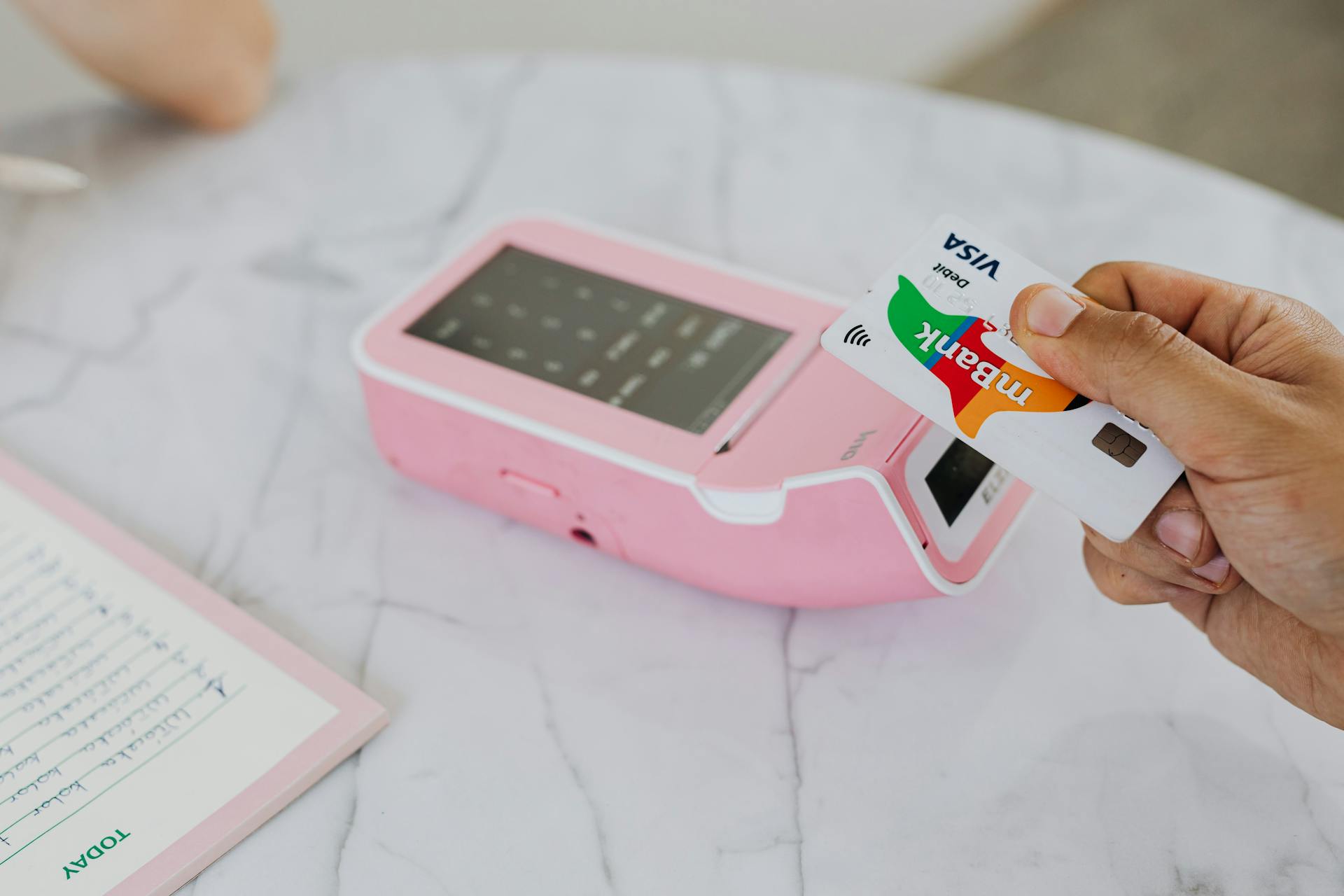
If someone gets your debit card number, they can make purchases online or over the phone, even if they're not physically present with the card.
They can also use it to withdraw cash from an ATM, which can lead to overdraft fees and damage to your credit score.
In some cases, they might even be able to access your bank account online and make unauthorized transactions.
To protect yourself, make sure to monitor your account activity regularly and report any suspicious transactions to your bank immediately.
Recommended read: Someone Stole My Credit Card Number and Used It Online
How to Protect Your Debit Card
To protect your debit card, consider using a Privacy Virtual Card, a randomly generated card number linked to your debit card or bank account that hides your real card information during online transactions. This shields your sensitive data from fraudsters.
A Privacy Virtual Card is a unique 16-digit card number with its own expiration date and security code, making it a secure way to shop online. You can use it at most vendors that accept U.S. debit or credit card payments.
Readers also liked: Debit Card Virtual
To stay informed and detect any fraudulent charges, regularly monitor your bank account for unfamiliar purchases, withdrawals from unknown locations, and unexpected payment issues. This can help you catch any suspicious activity before it's too late.
Use a browser extension, such as Privacy's autofill feature, to make online transactions faster and more seamless. This can save you time and hassle by autofilling your virtual card numbers for you at checkout.
Data Breaches
Data breaches are a serious concern, and they can happen to anyone. A data breach occurs when criminals bypass security measures to gain access to large amounts of card data held by merchants and other data holders.
The 2017-2018 Dixons Carphone breach in the UK is a notable example, affecting 14 million user records and exposing payment card information in 5.6 million instances.
To combat this, the banking industry is implementing secure data storage methods, including AI and deep learning techniques. However, cybercriminals still find ways to exploit vulnerabilities.
Handing your card to a waiter at a bar, restaurant, or retail shop can be a risk, so it's often better to use contactless payment methods or pay by cash or credit card.
Worth a look: Payment Card Number Example
Fraud Vulnerable Areas
Gas stations are a common place for card skimming, so be extra careful when using your debit card at a pump. You may be asked to swipe your card instead of inserting it or using a contactless tap, which isn't as secure.
Restaurants and bars can be risky, especially if the waitstaff walks away with your card. Consider using a credit card instead, as it offers more protection.
While traveling, be mindful of card skimming and older card readers. It's also a good idea to notify your bank that you're traveling so your cards won't be declined.
Online shopping scams are common, so only enter personal details and card numbers on trusted sites. Consider using secure payment options like PayPal.
- Be cautious when using a debit card at ATMs, as someone might be watching your PIN.
- Don't trust emails or text messages asking for your debit card information, as they might be scams.
- Be careful when using a debit card in unfamiliar places, as the risk of card skimming or other types of fraud is higher.
Some common places where fraud can occur include:
- Gas stations
- Restaurants and bars
- While traveling
- Online shopping
It's essential to be aware of these potential vulnerabilities and take steps to protect yourself, such as using secure payment options and being cautious when using your debit card in public.
Broaden your view: Can Businesses Charge for Using a Debit Card
Types of Debit Card Fraud
Debit card fraud can take many forms, and it's essential to be aware of the different types to protect yourself.
Card-not-present (CNP) fraud is a significant threat, accounting for 73% of €1.8 billion in fraudulent transactions in 2016.
Criminals often use CNP fraud to steal debit card information for unauthorized purchases or withdrawals.
Debit card scams can occur when someone gains access to your debit card details, allowing them to make fraudulent charges or money withdrawals.
You can prevent card fraud by being cautious when using your debit card in unfamiliar places.
Debit card scams can occur when someone installs a device on a payment terminal to record your card information or looks over your shoulder to steal your PIN.
Fraudsters may also send you fake emails or text messages asking for your debit card information, or pretend to be a bank employee to trick you into revealing your details.
Expand your knowledge: Internet Banking Scams
Here are some common places where fraud can occur:
To detect card-not-present fraud, regularly monitor your bank account for suspicious or unusual activity.
Look for unfamiliar purchases, withdrawals from unknown locations, or unexpected payment issues in your bank statement.
By staying informed and tracking your transactions daily, you can detect any fraudulent charges and protect yourself from debit card scams.
Preventing Debit Card Fraud
Preventing Debit Card Fraud is crucial in today's digital age. If you're not careful, a scammer can drain your account in no time.
To avoid this, always be cautious when handing your debit card to a waiter or cashier, as it can be an opportunity for thieves to steal your card information. Bars, restaurants, and retail shops can be risky, so consider using contactless payment methods or paying by cash or credit card instead.
Monitoring your bank account regularly is also a must. Look for unfamiliar purchases, withdrawals from unknown locations, and unexpected payment issues. These anomalies may indicate card fraud.
You can track your balance and review transactions daily by using a mobile or online banking app. This will help you stay informed and detect any fraudulent charges.
If you do fall victim to debit card fraud, don't worry - most banks have a zero-liability policy, which means they won't hold you responsible for the fraudulent charges. However, it's still essential to notify your card issuer as soon as you notice any suspicious activity.
Here's a quick guide to help you detect card-not-present fraud:
- Unfamiliar purchases
- Withdrawals from unknown locations
- Unexpected payment issues
By being vigilant and taking these precautions, you can significantly reduce the risk of debit card fraud.
Consequences of Debit Card Fraud
Debit card fraud can have serious consequences for your financial well-being. You could lose a significant amount of money.
In 2016, 73% of the €1.8 billion fraudulent transactions came from card-not-present payments. This highlights the severity of the issue.
Debit card scams can lead to unauthorized charges, money withdrawals, or transfers from your bank account. This can cause financial stress and damage to your credit score.
Consider reading: Financial Security Assurance
No one is safe from debit card fraud, and it's essential to be aware of the risks. By taking precautions, you can protect yourself from falling victim to these scams.
Criminals often choose frequented places to commit fraud, so it's crucial to be cautious when using your debit card in public.
How Debit Card Fraud Happens
Debit card fraud can occur in various ways, often involving the theft of your debit card information. This can happen when a person installs a device on a payment terminal to record your card information when you make a purchase.
You might also be at risk if someone looks over your shoulder at the PIN you enter at an ATM or payment terminal. This can be done in person or through a secret camera.
Common methods of debit card fraud include installing a device on a payment terminal, looking over your shoulder at the PIN you enter, sending you fraudulent emails or text messages asking for your debit card information, and pretending to be a bank employee and asking for your debit card information over the phone.
See what others are reading: Credit Card Number and Information
Here are some common scenarios where debit card fraud might occur:
It's essential to be aware of these scenarios and take necessary precautions to protect your debit card information.
How Fraud Happens
Debit card fraud can happen in a variety of ways, often without you even realizing it.
One way is through card skimming, where a device is attached to an ATM or payment terminal to capture your card information. This can happen at any location, including shops, restaurants, or entertainment venues.
Skimming devices can be separate, overlaid, or internal, with separate devices allowing the thief to hold your card briefly before swiping it through a reader. Overlay devices are placed on top of a legitimate card reader, sometimes with a hidden camera to capture your PIN. Internal devices are more advanced, intercepting data messages sent over the lines.
Criminals may also steal your debit card information by installing a device on a payment terminal that records your card information when you make a purchase. They might also look over your shoulder at the PIN you enter at an ATM or payment terminal, or send you fraudulent emails or text messages asking for your debit card information.
You might also be targeted by someone pretending to be a bank employee and asking for your debit card information over the phone. In some cases, a device is used to jam your card in an ATM, and an accomplice then suggests you try to enter your PIN a few times. When the card remains jammed, the thief later removes your card and has your PIN.
Here are some common methods used to steal debit card information:
- Installing a device on a payment terminal
- Looking over your shoulder at the PIN you enter
- Sending fraudulent emails or text messages
- Pretending to be a bank employee
- Using a device to jam your card in an ATM
- Accessing your lost or stolen mobile device
Buying Stolen Data
Buying stolen data is a serious issue in debit card fraud. Criminals can easily purchase card data on the underground market for as little as $1.
The quality of the data can vary, but it's often enough for them to make unauthorized transactions. This is a low-complexity, medium-scale attack method that's becoming increasingly common.
In the underground market, stolen card data is a hot commodity, and criminals are willing to pay for it. This makes it easier for them to commit debit card fraud without much effort.

It's estimated that in the first quarter of 2025, the Federal Trade Commission Sentinel Network received about 25,000 fraud reports where a debit card was used as a payment method. This resulted in a total loss of $54.8 million for consumers.
Criminals can use this stolen data to make unauthorized charges, money withdrawals, or transfers from your bank account. It's essential to be aware of this risk and take steps to protect yourself.
Featured Images: pexels.com