Weather derivatives are financial instruments that help companies manage climate-related risks. They allow businesses to hedge against extreme weather events, such as hurricanes or droughts.
Weather derivatives can be traded on exchanges or over-the-counter (OTC), and are typically based on temperature, precipitation, or wind speed.
Companies can use weather derivatives to protect their revenue streams from weather-related disruptions, or to capitalize on favorable weather conditions. This can help them make more informed decisions about investments and operations.
For example, a power company might use a weather derivative to lock in a price for electricity generation based on expected temperatures.
Here's an interesting read: Pressure Measurements Related
What is a derivative?
A derivative is a financial instrument used to manage risk.
It's essentially a contract between two parties where one party agrees to bear the risk of losses in return for a premium.
The seller of a derivative takes on the risk, while the buyer pays a premium for the protection.
In the case of a weather derivative, the seller agrees to bear the risk of weather-related losses.
If no damages occur before the contract expires, the seller makes a profit.
The buyer of a weather derivative claims the agreed amount in the event of unexpected or adverse weather.
Explore further: Volatility Risk Premium
Uses and Applications
Weather derivatives can be used by farmers to hedge against poor harvests caused by failing rains or excessive rain during harvesting.
Farmers can use weather derivatives to protect themselves from financial losses due to weather-related crop failures. For example, corn is greatly affected by rainfall, and if there is not enough rain, it results in drought, while excessive rain leads to floods.
Agricultural businesses can buy weather derivatives linked to rainfall to make revenue steadier and reduce the effects on crop production. This was seen in the 2012 Midwest drought, where numerous agribusinesses suffered due to lack of rainfall.
Weather derivatives can also be used by energy firms tied to temperature for handling the hazards of changes in temperature that impact energy use. In the 2014 Polar Vortex, businesses with weather derivatives that pay out because of colder-than-average winters reduced risks related to operational expenses and extra purchases of energy at peak prices.
Events companies use weather derivatives to protect against potential losses that may occur as a result of inclement weather. The flexibility of OTC weather derivatives allows for tailored contracts that directly reflect a company's specific risk needs.
Intriguing read: Renewable Energy Derivative
What Are Climate?

Climate derivatives are financial instruments used to hedge against financial losses related to adverse weather conditions, such as droughts, hurricanes, and monsoons.
These instruments work in a similar fashion to insurance, providing a monetary payment to the buyer in the event of a climate-related event.
The buyer of a climate derivative will receive a payment from the seller if a certain climate-related event occurs or if the buyer suffers financial loss due to a climate event.
Climate derivatives can help protect businesses and individuals from financial losses caused by extreme weather events, which can be unpredictable and devastating.
They work by transferring the risk of financial loss from the buyer to the seller, allowing the buyer to manage their financial exposure to climate-related events.
In essence, climate derivatives are a way to mitigate the financial impact of climate-related events, providing a safety net for those affected.
Curious to learn more? Check out: Expected Credit Loss Ifrs 9
Real-World Applications
Farmers can use weather derivatives to hedge against poor harvests caused by failing rains during the growing period. This can be especially helpful in regions with unpredictable weather patterns.
Agricultural companies like those in the Midwest can employ weather derivatives linked to rainfall to safeguard themselves against losses caused by bad weather. This can help balance out financial losses due to low rain, reducing effects on crop production.
Energy firms use weather derivatives tied to temperature to handle the hazards of changes in temperature that impact energy use. In the 2014 Polar Vortex, a very severe cold in Northeast U.S triggered greater need for energy usage in heating purposes.
Businesses having weather derivatives that pay out because of colder-than-average winters reduced risks related to operational expenses and extra purchases of energy at peak prices. The bullish growth of NextEra Energy’s (NEE) stock in early 2014 reflects the impact of increased energy demand during the harsh winter conditions.
The applications mentioned above demonstrate how weather derivatives assist businesses in handling financial dangers caused by changes in weather patterns. These tools offer payouts during unfavorable climatic situations, allowing firms to maintain their monetary stability as well as consistent service and supply.
Weather derivatives are used across various industries, including agriculture, energy, and events. For instance, events companies use them to protect against potential losses that may occur as a result of inclement weather.
The flexibility of OTC weather derivatives allows for tailored contracts that directly reflect a company's specific risk needs. This has spurred interest in trading weather derivatives, particularly in the energy and commodities sectors.
Intriguing read: Energy Derivative
How it Works
Weather derivatives work as a contract between a buyer and a seller. The seller of a weather derivative receives a premium from a buyer with the understanding that the seller will provide a monetary amount in case the buyer suffers an economic loss due to adverse weather or if any adverse weather occurs.
The premium paid to the seller is the key to making a profit if no adverse weather event occurs. This is because the seller gets to keep the premium as profit.
A weather derivative contract is essentially a bet between the buyer and the seller. If the buyer loses due to adverse weather, the seller pays out the agreed-upon amount.
Take a look at this: Notional Amount
Types and Varieties
Weather derivatives are financial instruments that help businesses manage weather-related risks. They're based on indexes that measure specific weather aspects, like rainfall or temperature.
One type of weather derivative is linked to heating degree days (HDD), which measures the amount of time the temperature falls below a certain point. This is crucial for energy companies, as it helps them predict energy demand and protect themselves from price fluctuations.
There are three main types of weather derivatives: temperature-based, rainfall-based, and snowfall-based. Temperature-based derivatives are the most common, with HDD and cooling degree days (CDD) being the most widely used measures.
Here's a breakdown of the main types of weather derivatives:
These derivatives are designed to match the risk exposure of the buyer, helping businesses balance their financial performance against weather-related uncertainties. By choosing the right derivative, companies can protect themselves from financial losses caused by extreme weather events.
See what others are reading: Financial Market Infrastructure Act
Valuation
Valuation is a unique challenge when it comes to weather derivatives.
There is no standard model for valuing weather derivatives like the Black-Scholes formula for equity options.
The underlying asset of a weather derivative is non-tradeable, which violates key assumptions of the Black-Scholes Model.
This makes it difficult to apply traditional pricing methods to weather derivatives.
Typically, weather derivatives are priced in a number of ways.
You might enjoy: Heston Model
Comparison and Differences
Weather derivatives and insurance have distinct differences in how they handle financial risks. Traditional insurance requires a lengthy claims process to compensate for actual losses incurred.
Insurance primarily covers low-probability, catastrophic weather events like hurricanes and earthquakes. Weather derivatives, on the other hand, cover higher-probability events such as a dryer-than-expected summer.
Insurance doesn't protect against the reduction of demand due to slightly wetter-than-average summers, whereas weather derivatives can cover this type of scenario. This highlights the importance of understanding the specific risks you're trying to mitigate.
Weather derivatives provide payouts based on predefined weather conditions, offering quicker and more predictable financial settlements. This can be particularly advantageous for businesses needing immediate liquidity to manage cash flows.
A company might have an interest in purchasing both weather derivatives and insurance, as they cover two different possibilities. Since weather derivatives are index-based, buyers don't need to demonstrate a loss to collect a payout.
Worth a look: Does Flight Insurance Cover Weather
Market Growth
The growth of the weather derivatives market has been nothing short of remarkable, with substantial growth over the past decade.
Climate-related risk has become more pronounced, creating a paradigm shift in the way people view and model their weather risk, which has surged demand for these instruments.
The market was initially a niche market with limited participants and liquidity, but it has more recently been driven by the impacts of climate change.
The demand for weather derivatives has improved the depth of liquidity as the cycle of expansion has organically moved through phases of growth.
Most trades are still executed on an over the counter (OTC) basis, but the listed market is an area of particular interest as traditional financial players look to increase the diversification of their portfolios.
Traditional financial players such as investment banks, hedge funds, and commodity trade houses are looking to trade new types of derivatives like weather, which are not correlated to traditional asset classes like stocks or bonds.
The CME group's temperature contracts are the only cleared offering, and trading volumes have increased substantially.
In 2021 and 2022, the monthly average was around 11,500 contracts, which jumped to 42,052 in 2023, before reverting to 20,660 last year.
The 2023 spike was a result of six new contracts being launched in the U.S. along with several hedging programs coming to market.
Two major exchanges are expected to start trading weather derivatives in 2025.
Here's an interesting read: Contract for Difference Cfd
Investing and Risk Management
Investing in weather derivatives requires a clear comprehension of the particular weather dangers that may influence financial results. This involves studying past weather information related to the derivative's base index, such as average temperatures or amounts of rainfall/snowfall.
To make informed decisions, investors need to examine closely at previous weather forms and how they affected business operations. For example, an energy company might utilize heating degree day (HDD) derivatives as a safeguard against milder winters that could lessen demand for heating.
The liquidity of the weather derivatives market is another crucial aspect to consider. These derivatives are not as well-known or widely used like other typical financial tools, which can result in less trading activity and a wider bid-ask spread.
Investors also need to evaluate the financial strength and trustworthiness of counterparties, as weather derivatives usually have customized contracts made to suit particular requirements. This can impact the price setting and how easy it is to enter or leave positions in the market.
Regulatory changes can also impact the weather derivatives market, making it essential for investors to stay compliant with changing laws and regulations. This can help prevent potential legal issues and ensure the correct use of weather derivatives.
Mechanics and Accounting
Weather derivatives are a type of financial tool that helps protect against money loss from changing weather. They rely on certain weather measures like temperature, rainfall, snow levels, or wind speeds.
Trusted meteorological sources provide the data for these weather derivatives. This data is used to determine whether a payment should be made based on how much the weather changes from a set standard.
Weather derivatives come in two types: swaps and options. In a swap, one side pays a set amount depending on predicted weather conditions and gets variable payments based on actual weather results. Options give holders the right, but no obligation, to get payouts if some conditions are met.
The accounting for weather derivatives falls under specialized rules, most notably the Financial Accounting Standards Board's (FASB) Statement of Financial Accounting Standards #133 (SFAS #133). Any party considering the transaction of a weather derivative should seek the advice of both an accountant familiar with SFAS #133 and a tax attorney.
Here's an interesting read: Options Arbitrage
Mechanics of
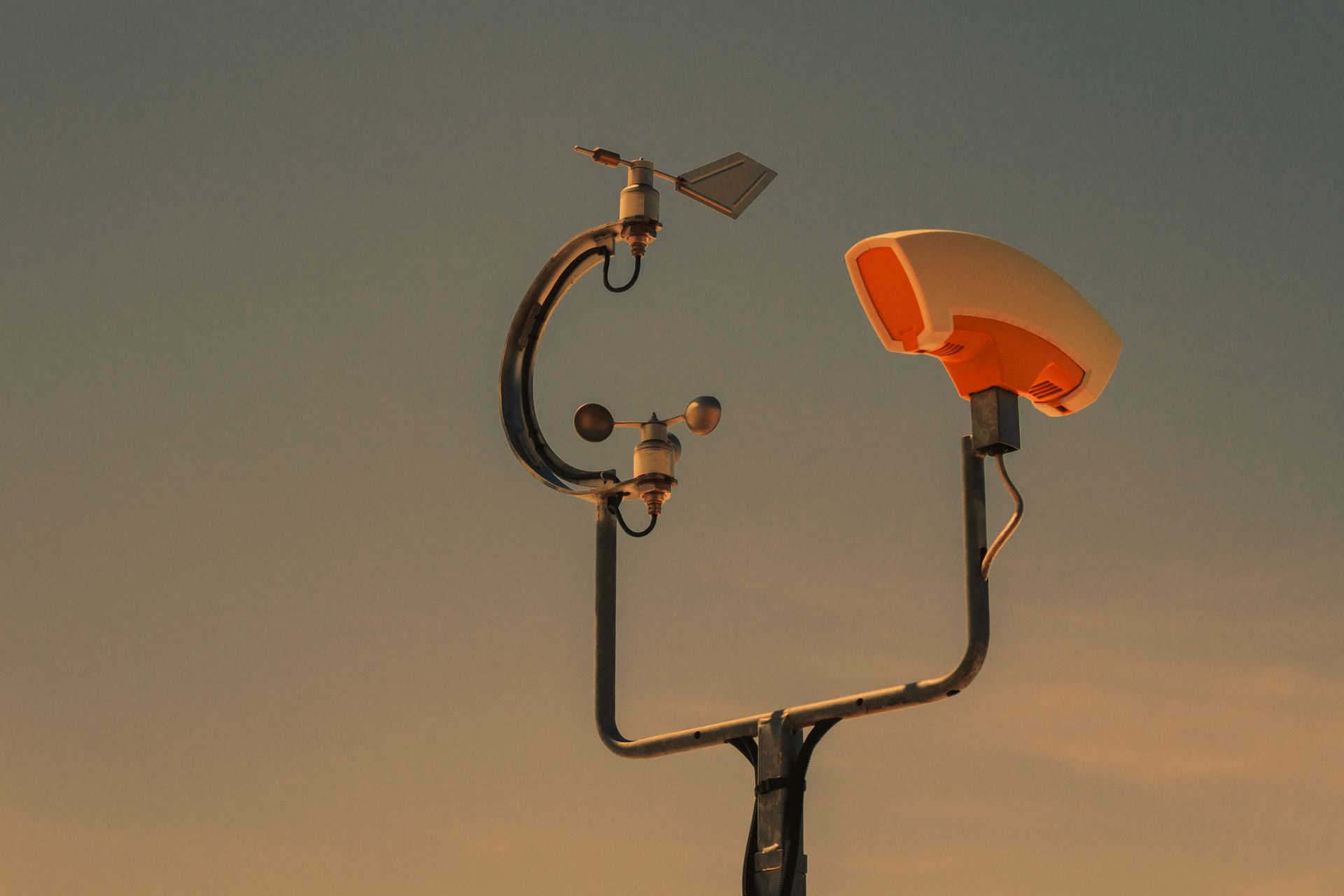
Weather derivatives are a type of financial tool made to protect against money loss from changing weather. They rely on certain weather measures like temperature, rain, snow levels, or wind speeds, which are provided by trusted meteorological sources.
These measures can be used to calculate heating degree days (HDD) or cooling degree days (CDD), which are used to determine payouts in temperature-based derivatives. If the actual HDD or CDD is different from what was agreed, the derivative gives a payment.
Weather derivatives come in two types: swaps and options. In a swap, one side pays a set amount depending on predicted weather conditions and gets variable payments based on actual weather results.
Options give holders the right, but no obligation, to get payouts if certain conditions are met. This offers insurance against bad weather without needing to do transactions if conditions do not happen.
Unlike usual insurance, weather derivatives give money based on how much the weather changes from a set standard instead of giving money for real damages. This makes them a useful way to manage financial risk and protect against changes in income due to unexpected weather.
Weather derivatives don't require proof of physical damage or loss; they focus only on the financial results.
Explore further: 50 60 Degree Weather
Accounting Treatment

The accounting treatment for weather derivatives is quite different from other types of insurance policies. It's governed by specialized rules, most notably the Financial Accounting Standards Board's (FASB) Statement of Financial Accounting Standards #133 (SFAS #133).
This rigorous accounting treatment is the reason why anyone considering a weather derivative transaction should seek advice from both an accountant familiar with SFAS #133 and a tax attorney. They can help ensure that all necessary documentation is in order.
Any party entering into a weather derivative transaction should be aware of the unique accounting requirements that come with it. This includes the need to follow SFAS #133 and obtain the necessary documentation.
Explore further: Hedge Accounting
Index and Commodity
Weather derivatives are closely linked to commodity markets, and understanding this connection is crucial for traders and producers who want to control risk and take advantage of market changes.
Weather conditions have a direct influence on commodities like crops, energy sources, and raw materials, with sudden changes like droughts or excessive rain impacting harvest amounts and causing prices to fluctuate.
A farmer anxious about insufficient rain may obtain a weather derivative that provides cash if rainfall falls below expectations, helping to cover financial losses due to reduced crop production.
By studying past weather trends and current predictions, traders can foresee possible changes in the market and trade weather derivatives based on their forecasts, giving them opportunities to make money by guessing how commodity prices will change due to expected weather conditions.
Burn Analysis
Burn analysis is a method used to compute the historical payout of a derivative to find the expectation. It's a quick and simple approach, but it doesn't produce reliable estimates and should be used only as a rough guideline.
This method doesn't incorporate various statistical and physical features characteristic of the weather system, which can lead to inaccuracies in the results.
Index Modelling
Index modelling is a crucial step in understanding how an underlying index behaves. This approach requires building a model of the index, which is the foundation upon which the derivative value is determined.
A simple way to model the index is to assume a normal distribution, which is often warranted for monthly cooling and heating degree days. This is because the outcomes of these indices tend to follow a predictable pattern.
However, a more effective approach is to model the index generating process on a finer scale, such as by building a model of the daily average temperature time series. This can be done using statistical time series models like ARMA or Fourier transform in the frequency domain.
Incorporating physical intuition and relationships into the model can also improve its accuracy, especially when considering spatial and temporal correlations between weather events around the world. For example, the effects of El Niño on temperatures and rainfall can be taken into account.
Consider reading: SABR Volatility Model
Commodity
Commodity derivatives are very connected to weather because weather can greatly affect the prices of commodities. This is especially true for commodities like crops, energy sources, and raw materials.
For example, sudden weather changes like droughts or too much rain can greatly impact the amount of harvest, affecting supply and prices. In the same way, winters colder than expected or summers hotter can increase the need for heating and cooling energy, changing demand and energy prices.
Traders use weather derivatives to guess how the weather will affect commodity markets by studying past weather trends and current predictions. This helps them foresee possible changes in the market and trade weather derivatives based on their forecasts.
Weather derivatives give a specific way to handle money issues caused by changes in the weather, helping keep commodity prices stable and making sure the market works smoothly.
Featured Images: pexels.com