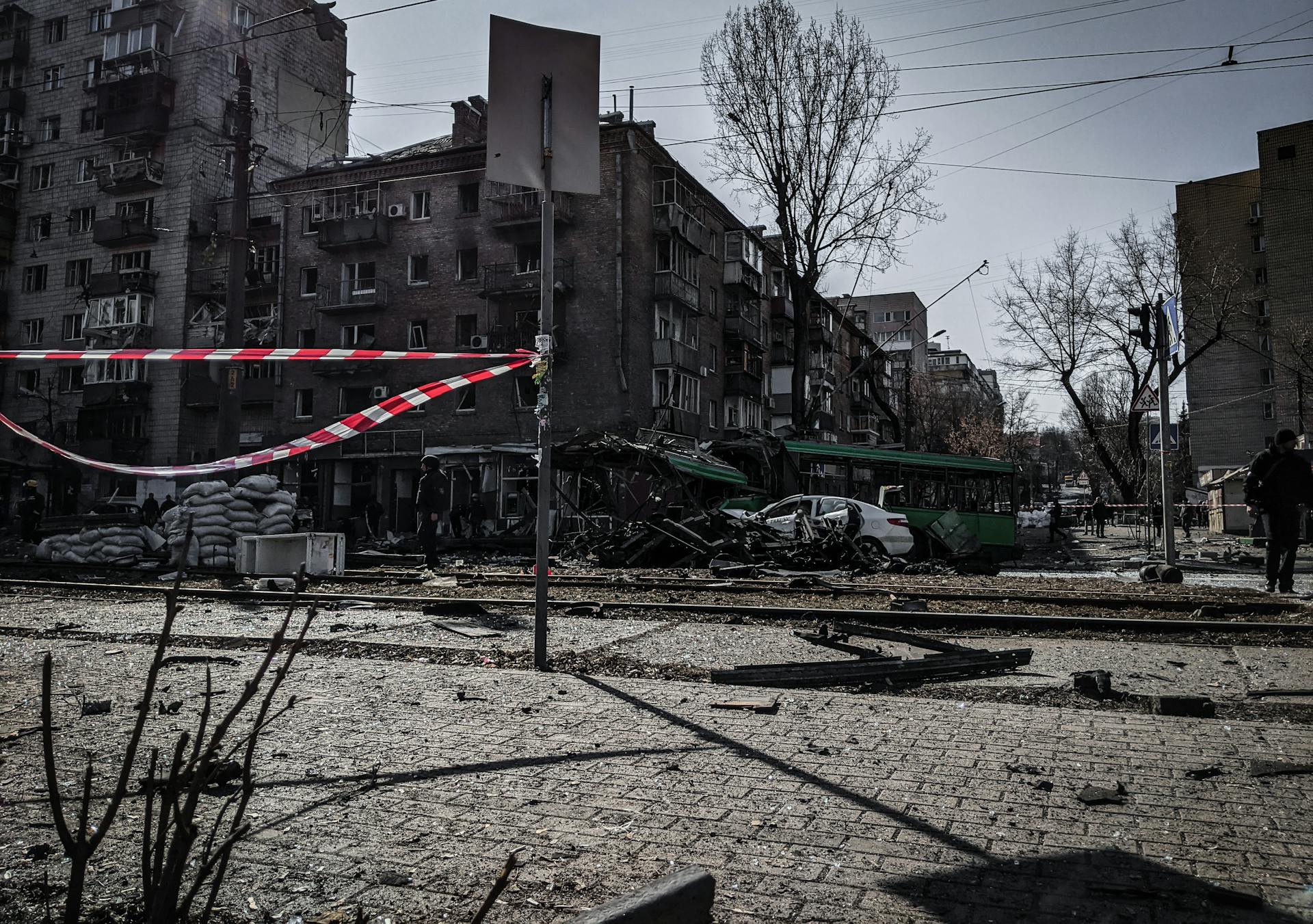
War risk insurance is a specialized type of insurance that protects businesses and individuals from losses resulting from war and related events. This type of insurance is particularly important for companies operating in high-risk areas.
War risk insurance can cover a wide range of losses, including damage to property, equipment, and inventory, as well as loss of revenue due to business interruption. For example, a shipping company operating in a war-torn region may purchase war risk insurance to protect against damage to its vessels and cargo.
Businesses that operate in high-risk areas, such as conflict zones or regions with a history of piracy, may be required to purchase war risk insurance as a condition of doing business. This is because the risks associated with operating in these areas are too great for the business to bear on its own.
War risk insurance can provide financial protection against losses that would otherwise be catastrophic for a business.
You might enjoy: High Risk Motorcycle Insurance
What Is War Risk Insurance?
War risk insurance is a specialized policy that protects against losses from events like invasions, insurrections, and terrorism.
Standard insurance policies often exclude war-related events, so businesses and individuals in high-risk areas or industries may need to purchase separate coverage.
This type of insurance is particularly important for shipping and aviation industries, where the risk of war-related losses is higher.
War risk insurance provides financial protection to policyholders against losses from war-related events, which can be unpredictable and challenging to set premiums for.
Businesses and individuals in high-risk areas or industries may purchase separate war risk insurance riders to protect themselves against losses.
Here's an interesting read: How to File Insurance Claim against Other Driver without Insurance
Key Concepts and Definitions
War risk insurance covers losses from war-related events like invasions, terrorism, and military coups.
This type of insurance is often excluded from standard policies due to the high risk and unpredictability associated with war.
Companies in politically unstable regions, such as those in areas prone to invasions or military coups, are prime candidates for war risk insurance.
War risk insurance is also essential for companies in high-risk industries like aviation and maritime.
The U.S. government expanded its support for aviation war risk insurance after 9/11 in response to terrorism threats.
Setting premiums for war risk insurance is challenging due to the unpredictable nature of war-related damages.
Here's a breakdown of the types of events that war risk insurance covers:
- Invasions
- Terrorism
- Military coups
Protection and Coverage
War risk insurance provides protection against losses caused by war, including damage to vessels and cargo. This type of insurance is commonly used in the shipping and aviation industries.
The premium for war risk insurance varies based on the expected stability of the countries to which the vessel will travel. This means that vessels traveling to areas with higher risks of war will pay a higher premium.
War risk insurance policies can cover a range of perils, including kidnappings and ransom, sabotage, emergency evacuation, worker injury, and loss or damage of property and cargo. Some policies may also cover event cancellations due to war.
The Maritime Administrator will provide marine insurance against loss or damage by the risks of war under approved clauses on shipments of cargoes coming within certain categories.
Check this out: Insurance to Cover Loss of Income
Protection
War risk insurance is a type of insurance that covers damage due to acts of war, including invasion, insurrection, rebellion, and hijacking. This type of insurance is most commonly used in the shipping and aviation industries.
Some war risk insurance policies also cover damage due to weapons of mass destruction. The premium for these policies varies based on the expected stability of the countries to which the vessel will travel.
War risk insurance generally has two components: war risk liability, which covers people and items inside the craft, and war risk hull, which covers the craft itself.
Private war risk insurance policies for aircraft were temporarily cancelled following the September 11, 2001 attacks and later reinstated with substantially lower indemnities.
Entities at risk of sudden political upheavals are good candidates for war risk insurance. This includes companies in politically unstable areas that face higher risks of loss from war.
Some war risk insurance policies may cover perils such as kidnappings and ransom, sabotage, emergency evacuation, worker injury, long-term disability, and loss or damage of property and cargo.
Discover more: Life Insurance That Covers an Insured's Whole Life

War risk insurance may also compensate a ship's owner for the full cost of a vessel in cases where a government seizes the ship.
In the U.S., businesses must also think about risks from civil unrest, which can be covered by war and terrorism solutions.
Our war and terrorism coverage is available from Liberty Specialty Markets and Liberty Mutual, providing business interruption coverage should an event disrupt operations.
For more insights, see: Liberty Bonds Definition Us History
Insured Amount
An applicant for war risk hull insurance must state the amount of insurance desired.
The amount of insurance can be as high as $750 per gross ton of the vessel, as stated in the application. This is according to § 308.200 Insured amount—application.
Disbursements insurance is optional and is insurance additional to the war risk hull insurance provided under this subpart. Disbursements insurance shall be limited to consumable and subsistence stores, slop chests, bar stock and bunker fuel.
The amount insured during the prelaunching period will be the cost of material destined for inclusion as a part of the vessel at risk at the shipyard of the builder, plus the cost of labor, other direct charges, overhead, and profit not exceeding 10 percent.

An applicant for war risk hull insurance may obtain disbursements insurance, but any claim for loss of disbursements as a consequence of the actual or constructive total loss of the vessel insured shall be made as provided in § 308.103(c).
The amount insured shall be the amount stated in the application, but not in excess of $750 per gross ton of the vessel, as stated in § 308.203 Amount insured under interim binder.
The amount of any claim for damage to or the total or constructive total loss of the vessel adjusted, compromised, settled, adjudged or paid shall not exceed the amount insured.
Worth a look: Progressive Total Loss Coverage vs Actual Cash Value
Policy and Underwriting
Standard forms are used in war risk insurance underwriting agency agreements. The Maritime Administrator uses Standard Form MA-355 to appoint domestic insurance companies as Underwriting Agents.
Domestic insurance companies can apply for appointment as Cargo Underwriting Agents by submitting a letter and Form MA-399 to the Maritime Administrator. This form may be obtained from MARAD's underwriting agent or MARAD.
The standard form of War Risk Facultative Cargo Policy is Form MA-316, which can be obtained from MARAD's underwriting agent or MARAD. This form is used to issue war risk cargo policies in accordance with the provisions of the agreement and this subpart.
A fresh viewpoint: National Insurance Insurance Agent Salary
Underwriting Agency Agreement
The Underwriting Agency Agreement is a crucial document that outlines the terms and conditions of a partnership between the Maritime Administrator and domestic insurance companies. This agreement is standard form MA-355, which must be executed by both parties.
The agreement appoints the domestic insurance company as an Underwriting Agent to issue binders and policies covering hull, protection and indemnity, and Second Seamen's war risk insurance. It also contains provisions for the appointment of the agent, duties of the agent, books and records, compensation, standard of performance, indemnification, effective date, amendment, and termination.
The agreement must include provisions for nondiscrimination, ensuring that all parties involved are treated fairly and without bias. This is a critical aspect of any business partnership, and it's essential to have it clearly outlined in the agreement.
Domestic insurance companies can apply for appointment as a Cargo Underwriting Agent by submitting a letter and Form MA-399 to the Maritime Administrator. This form can be obtained from MARAD's underwriting agent or MARAD.
For another approach, see: Insurance Agent
Facultative Binder MA-315
The Facultative Binder MA-315 is a crucial part of the War Risk Facultative Cargo Insurance process.
To obtain a Facultative Binder MA-315, you'll need to submit a completed form to an Underwriting Agent, in duplicate. The form must be obtained from MARAD's underwriting agent or MARAD.
The binder fee for American vessels is $25 per application for vessels under 500 gross tons, $100 per application for vessels 500 gross tons or over, and $100 per barge application.
The Facultative Binder MA-315 is the first step in securing facultative war risk cargo insurance, and it's essential to get it right to avoid any delays or issues.
The binder fee for foreign-flag vessels is $50 per application for vessels under 500 gross tons, $200 per application for vessels 500 tons or over, and $200 per barge application. All fees are payable in U.S. funds by check to order of "Maritime Administration, Department of Transportation."
Explore further: Insurance Agent Definition
Claims and Payment
Casualties must be reported promptly to MARAD, with all claims documents filed at the address specified in § 308.2(d).
The assured must file claims for losses with the Underwriting Agent who issued the policy, providing the customary documents required for war risk insurance claims. These documents include declarations as required by Clause 9 and any additional data requested by the Maritime Administrator.
Premiums and Payment
Premiums for war risk policies must be paid within ten days after receipt of notice of the amount thereof by the assured.
For the prelaunching period, premiums are charged on the average value at risk during each calendar month or the daily pro rata part thereof for periods of less than one calendar month.
If premiums are not paid within thirty days after receipt by the Assured of notice of the amount thereof, the insurance becomes null and void and of no effect from the beginning of the period for which the premium charge is made.
A fresh viewpoint: Can You Deduct Life Insurance Premiums as a Business Expense
Payment of premiums for war risk policies should be made to MARAD at the address in § 308.2(d), by check payable to the order of “Maritime Administration, Department of Transportation.”
In the event that it is subsequently determined that insurance under interim binders did not attach, premiums paid will be refunded by the Maritime Administrator.
If no rate is published for a voyage on which war risk facultative cargo insurance is available, the Maritime Administrator will name a rate through an Underwriting Agent upon application.
Payment of premiums for war risk facultative cargo insurance should be made to the Underwriting Agent that issued the binders by check payable to the order of “Maritime Administration, Department of Transportation.”
You might enjoy: Loan Payment Protection Insurance
Loss Payment
Prompt reporting of casualties is crucial, as you must report them to MARAD and file claims documents within a timely manner.
Casualties must be reported to MARAD, Attention: Chief, Division of Marine Insurance, at the address specified in § 308.2(d).
To initiate payment in the event of a loss, you must file a claim with the Underwriting Agent who issued your policy, accompanied by the customary documents required for war risk insurance claims.
These documents should include the required declarations as specified in Clause 9, as well as any additional data the Maritime Administrator may need.
The Bottom Line
War risk insurance provides essential protection against losses from political and military events, which standard policies often exclude.
Insurers struggle to price these policies due to the unpredictable scale of war-related damage, as seen after events like Sept. 11.
Individuals and businesses in high-risk regions or industries, such as aviation and maritime, need war risk insurance to cover unique perils like ransom or sabotage.
Insurers often require government support to adjust market rates after major events, highlighting the challenges of pricing war risk insurance.
See what others are reading: Vehicle Insurance Policies
Applications and Agreements
You can obtain the standard form of application for a War Risk Open Cargo Policy from MARAD's underwriting agent or MARAD, using Form MA-301.
To apply for appointment as a Cargo Underwriting Agent, you'll need to submit a letter and Form MA-399, which can also be obtained from MARAD's underwriting agent or MARAD.
The standard form of underwriting agency agreement for cargo is Form MA-318, and it's the one you'll need to use if you're a domestic insurance company authorized to do a marine insurance business in any State of the United States.
Applications; Supporting Documents; Payment of Fees
To get started, you'll need to fill out the standard form of application for a War Risk Open Cargo Policy, which can be obtained from MARAD's underwriting agent or MARAD.
The application form, known as Form MA-301, is the first step in the process. You can request it from MARAD's underwriting agent or directly from MARAD.
Once you've submitted your application, you'll need to file claims for losses with the Underwriting Agent who issued the policy. This must be done in a timely manner to ensure you receive the necessary support.

Claims for losses must be supported by the customary documents required in connection with war risk insurance claims. This typically includes detailed information about the loss, such as the circumstances and the extent of the damage.
You'll also need to provide declarations as required by Clause 9, and any additional data requested by the Maritime Administrator.
Clearing Agency Agreement MA-321
The Clearing Agency Agreement MA-321 is a standard form used by the Maritime Administrator and domestic insurance companies. This agreement is used to appoint domestic insurance companies or groups of companies as clearing agents for cargo.
To obtain the standard form of clearing agency agreement, Form MA-321, you can get it from MARAD's underwriting agent or MARAD.
Intriguing read: Insurance Cover on Business - Merchant Services
Featured Images: pexels.com