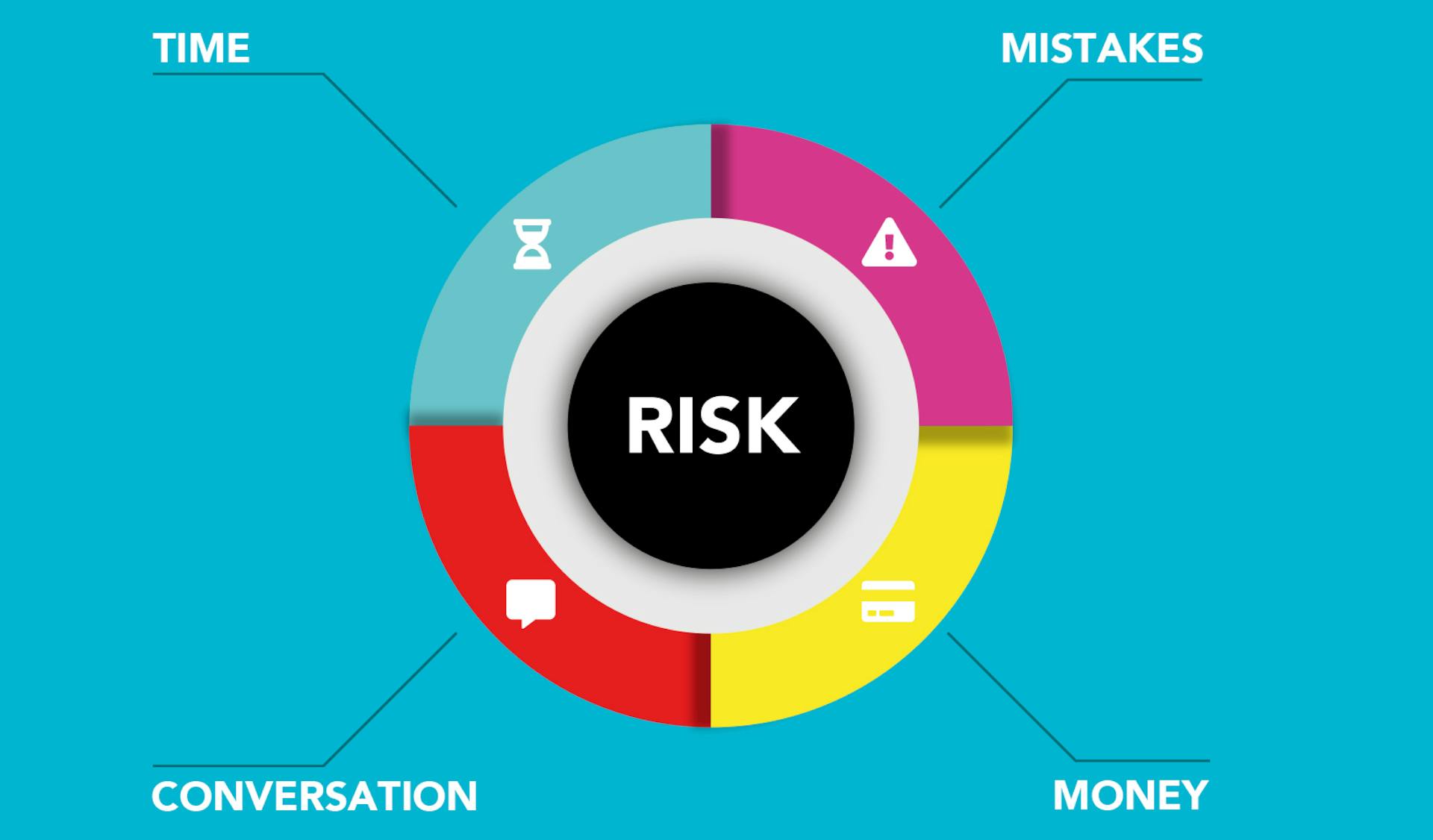
Volatility risk can be a major concern for investors, but understanding it is key to managing it effectively. Volatility risk is the potential for significant and unpredictable price movements in financial markets.
This risk can be particularly high in emerging markets, where economic and political instability can lead to rapid price swings. Volatility risk can also be influenced by market sentiment, which can shift quickly in response to news and events.
To effectively manage volatility risk, it's essential to have a clear understanding of the underlying factors that drive it. This includes knowing how to identify and assess the potential risks in your investment portfolio.
For your interest: True Potential
What is Volatility Risk
Volatility risk is the risk of an adverse change of price due to changes in the volatility of a factor affecting that price.
This type of risk usually applies to derivative instruments and their portfolios, where the volatility of the underlying asset is a major influencer of option prices.
Derivatives like options and futures are particularly susceptible to volatility risk because their prices are highly dependent on changes in volatility.
To manage volatility risk, option traders often use hedging strategies with financial instruments that are sensitive to the same source of volatility as the asset being protected.
These instruments include volatility swaps, variance swaps, and VIX futures, which can help offset changes in volatility and reduce risk.
The key to successful hedging is to understand the concept of vega, which measures the rate of change of an option's value with respect to the volatility of the underlying asset.
By establishing a "vega neutral" position, traders can negate the impact of implied volatility and gain exposure to specific opportunities without concern for changing volatility.
Here are some key terms related to volatility risk:
- Financial risk management: managing risk to protect financial assets
- Implied volatility: the market's expected volatility of an underlying asset
- Market risk: the risk of losses due to changes in market conditions
- Model risk: uncertainty about the accuracy of volatility models
- Value at risk: the potential loss of a portfolio over a specific time horizon
- Volatility beta: a measure of an asset's sensitivity to changes in volatility
- Volatility risk premium: the additional return required to compensate for volatility risk
Understanding the Premium
The premium is the price you pay for insurance, and it's directly related to the level of risk you're taking on.
In general, the higher the premium, the higher the level of risk you're insuring against. This is because the insurance company is charging more to account for the increased likelihood of a claim.
Think of it like buying a car - if you opt for a basic model, the cost is lower, but you're also taking on more risk. On the other hand, if you choose a high-end model with advanced safety features, the cost is higher, but you're also better protected.
The premium is usually determined by a combination of factors, including the type of policy, the level of coverage, and your individual circumstances.
For example, if you're insuring a high-value item, such as a yacht, the premium will likely be higher due to the increased risk of loss or damage.
In some cases, you may be able to reduce the premium by taking on more risk, such as by increasing your deductible or reducing your coverage limits. However, this can also mean that you're not fully protected in the event of a claim.
Additional reading: Pennsylvania Higher Education Assistance Agency
Our Approach
We assess volatility risk by considering the potential for extreme price movements, which can be driven by various factors such as market sentiment and economic conditions.
Extreme price movements can have a significant impact on investment returns, with some studies suggesting that up to 90% of stock price fluctuations can be attributed to volatility.
To mitigate this risk, we focus on diversification strategies that can help reduce exposure to individual assets and sectors.
By spreading investments across different asset classes and sectors, investors can potentially reduce their overall volatility risk.
In fact, a study found that a diversified portfolio with a mix of stocks, bonds, and other assets can reduce volatility by as much as 70%.
We also consider the use of options and other derivatives to manage volatility risk, particularly in situations where investors are concerned about potential losses.
Options can provide a level of protection against extreme price movements, but they also come with their own set of risks and complexities.
Ultimately, our approach to volatility risk is centered on providing investors with a clear understanding of the potential risks and rewards associated with their investments.
You might enjoy: Nvidia Growth Potential
V Lab
The V-Lab is a powerful tool for measuring and forecasting financial volatility. It provides real-time measurement of financial volatility for a wide range of assets.
The V-Lab's modeling capabilities allow it to forecast correlations between different assets, giving investors a better understanding of potential risks. This can be especially useful for those who are new to investing and want to minimize their exposure to volatility.
In addition to its modeling and forecasting capabilities, the V-Lab also provides real-time measurement of financial volatility. This allows investors to stay on top of market trends and make informed decisions.
Discover more: Money Measurements Concept
Managing Volatility
Managing volatility risk is crucial for traders and investors, especially when dealing with derivative instruments. It can be done by hedging with appropriate financial instruments.
Hedging involves using financial instruments that are sensitive to the same source of volatility as the asset being protected. This means that a change in the value of the protected asset is offset by a change in the value of the hedge instrument.
You might like: Fuel Hedging
The number of hedge instruments purchased will be a function of the relative sensitivity to volatility of the two assets. This is measured by vega, the rate of change of the value of the option or option portfolio with respect to the volatility of the underlying asset.
Traders often seek to create "vega neutral" positions, which means that the total vega of the position is (near) zero, negating the impact of implied volatility. This allows traders to gain exposure to the specific opportunity without concern for changing volatility.
Here are some common financial instruments used to manage volatility risk:
- Volatility swaps
- Variance swaps
- Conditional variance swaps
- Variance options
- VIX futures for equities
- Caps, floors, and swaptions for interest rates
These instruments can be used to manage volatility risk in various types of portfolios, including those of basic assets and foreign currency trading.
Featured Images: pexels.com