Vendor-managed inventory is a supply chain management technique that allows suppliers to manage and maintain inventory levels on behalf of their customers.
This approach can help reduce inventory costs and improve inventory turnover rates. Suppliers can also use data and analytics to optimize inventory levels and minimize stockouts.
In a vendor-managed inventory system, suppliers typically have access to the customer's inventory levels and can adjust their shipments accordingly. This can help ensure that the customer always has the right products in stock.
By outsourcing inventory management to suppliers, businesses can free up resources to focus on other areas of their operations.
If this caught your attention, see: Vendor Risk Management Process
What Is?
Vendor-managed inventory, or VMI, is a strategic alliance where the vendor controls the customer's inventory levels. This means the vendor is responsible for tracking sales or production data and deciding when to restock.
The vendor uses electronic data interchange (EDI) to communicate seamlessly with the customer, receiving their current inventory data and sales records. The vendor then plans future production, inventory levels, and more based on this information.
Check this out: Economic Production Quantity
VMI relies on the vendor's expertise in lead times, manufacturing schedules, and shipment delays to ensure accurate stock replenishment planning. This expertise helps prevent stockouts and overstocking.
The vendor maintains the inventory, even after it's in the retailer's warehouse, and takes all inventory-related decisions. They use inventory management software to set stock thresholds, monitor inventory levels, and maintain these levels at a targeted level.
Retailers and vendors set the terms and conditions (T&C) that govern the VMI partnership, including payment terms, such as whether the retailer pays for the stock when they acquire it or sell it.
Worth a look: Stock Transfer Order in Sap
How it Works
Vendor-managed inventory (VMI) is a collaborative strategy that relies on the synchronization of data and communication to ensure inventory levels are always aligned with current market demands. By sharing inventory data with vendors, retailers offload tasks such as determining order times, sizes, and frequency to the vendor.
The vendor uses this data, along with information about expected lead times, production levels, and estimated shipping delays, to replenish stock as needed and ensure optimal inventory levels. This process is made possible by a communication link, typically electronic data interchange (EDI) or the Internet.
Formal agreements between the retailer and vendor are essential, outlining roles, responsibilities, and expectations. Both parties must agree on operational details such as delivery schedules, inventory levels, return policies, and min/max replenishment levels. This ensures a smooth and transparent process.
A key component of VMI is the use of shared technology platforms, which enable the willing exchange of real-time information. This includes sales data, inventory levels, and other relevant details. By leveraging sophisticated data management and AI-powered analytics, suppliers can achieve greater precision and accuracy in their inventory management and replenishment process.
Vendor-managed inventory is a data-driven initiative that helps reduce both shortages and surpluses. By shifting inventory management responsibilities, supply chains can run leaner and more efficiently, reducing overheads and improving supply chain responsiveness and agility.
Benefits and Advantages
Vendor-managed inventory can bring numerous benefits to your business, and it's worth exploring them in more detail.
By transferring inventory management to your suppliers, you can simplify operations and reduce time spent on managing inventory.
VMI optimizes stock levels to meet demand, minimizing storage costs and freeing up cash flow. This can be a significant advantage for businesses with limited storage space or high inventory costs.
With VMI, suppliers gain better data-driven visibility into demand trends, allowing for more accurate production planning and reduced waste.
Automated replenishment ensures just-in-time restocking, helping to prevent shortages and surpluses.
Here are some of the key benefits of VMI:
- Streamlined inventory management
- Reduced inventory carrying costs
- Precise production scheduling
- Timely replenishment
- Better, more collaborative working relationships
- Optimized inventory levels
- Resilience and risk reduction
- Supplier perks
VMI can also help reduce stockout risks, making it less likely that you'll lose achievable revenues from being unable to meet customer demand.
By streamlining your supply chain management operations, VMI can reduce overhead and management burden for tasks such as creating purchase orders.
VMI promotes long-term relationships between retailers and vendors, due to the costs of switching suppliers.
Risks and Drawbacks
Vendor-managed inventory (VMI) can be a complex and delicate process, and it's essential to consider the potential risks and drawbacks before implementing it.
One of the main concerns is the lack of control and dependency on the supplier, which can lead to inventory discrepancies and inefficiencies. Establishing clear contracts and SLAs with performance metrics and real-time inventory management systems can help mitigate this issue.
Communication failures can also lead to inventory discrepancies and inefficiencies, making it crucial to continually encourage and support a collaborative culture with all teams and stakeholders. A collaborative business network is essential, but it's equally important to ensure that all parties are on the same page.
Data security concerns are another significant risk, as sharing sensitive data increases the risk of breaches. Implementing advanced cybersecurity measures and encryption protocols can help protect data integrity and confidentiality.
Inflexibility to market changes can also be a challenge, as predefined algorithms may hinder swift responses to market shifts. Using flexible AI-driven analytics tools can help adjust forecasts and inventory strategies based on real-time data.
VMI can also present challenges in communication, cultural resistance, and setting clear lines of responsibility. A lack of current inventory data can create problems like stockouts and overstocks.
Here are some of the key risks and drawbacks of VMI:
- Lack of control/dependency on supplier
- Ill-suited systems and messy data
- Communication failures
- Data security concerns
- Inflexibility to market changes
- Demand changes
- VMI programs and admin costs are costly
- Dependence on one supplier that uses VMI can be costly if performance degrades
- Lack of current inventory data can create problems like stockouts and overstocks
Management and Strategy
To achieve a successful vendor-managed inventory (VMI) strategy, it's essential to establish clear goals and metrics for success. Choose a few main indicators to evaluate success, like inventory turnover rates, stockout frequency, or cost savings.
To measure and track these essential moving pieces in your VMI environment, agree on clear KPIs (key performance indicators) with all relevant team leaders and stakeholders involved in the process. This will ensure everyone is on the same page and working towards the same objectives.
Open communication and honesty are crucial in a VMI program. Regularly inform the vendor about any variations in demand, seasonality, or other elements influencing inventory levels. This will help prevent interruptions and ensure the program continues to operate smoothly.
Here are some best practices to keep in mind:
- Agree on clear roles, responsibilities, boundaries, and fees to prevent misunderstandings and ensure accountability.
- Define and communicate clear KPIs to measure and track essential moving pieces in your VMI environment.
- Maintain open and transparent communication channels with key team members and stakeholders involved in the VMI process.
- Provide training and support to ensure a smooth transition and to prevent digital transformation projects from failing.
Management vs. Other Management
Traditional inventory management can be a burden, leading to larger safety stocks and higher holding costs. This is because the business is solely responsible for ordering and managing their own inventory.

Just-in-time (JIT) inventory is another model that reduces inventory costs by receiving goods only as needed. However, it lacks the flexibility and continuous replenishment of vendor-managed inventory (VMI).
Consignment inventory, on the other hand, has the supplier own the inventory at the retailer's premises, reducing the retailer's capital in stock. But without active management by the supplier, it's not as effective as VMI.
Drop shipping is a model where the business doesn't keep the products it sells in stock, but instead transfers customer orders and shipment details to a third party. This can be beneficial, but it's not the same as VMI.
Cross-docking minimizes inventory storage through the direct transfer of materials between inbound and outbound transportation. However, VMI uses data to optimize stored inventory management.
Here's a comparison of these inventory management models:
VMI is a strategic alliance that's best used by retailers that sell many types of products from many different vendors.
Who Uses?
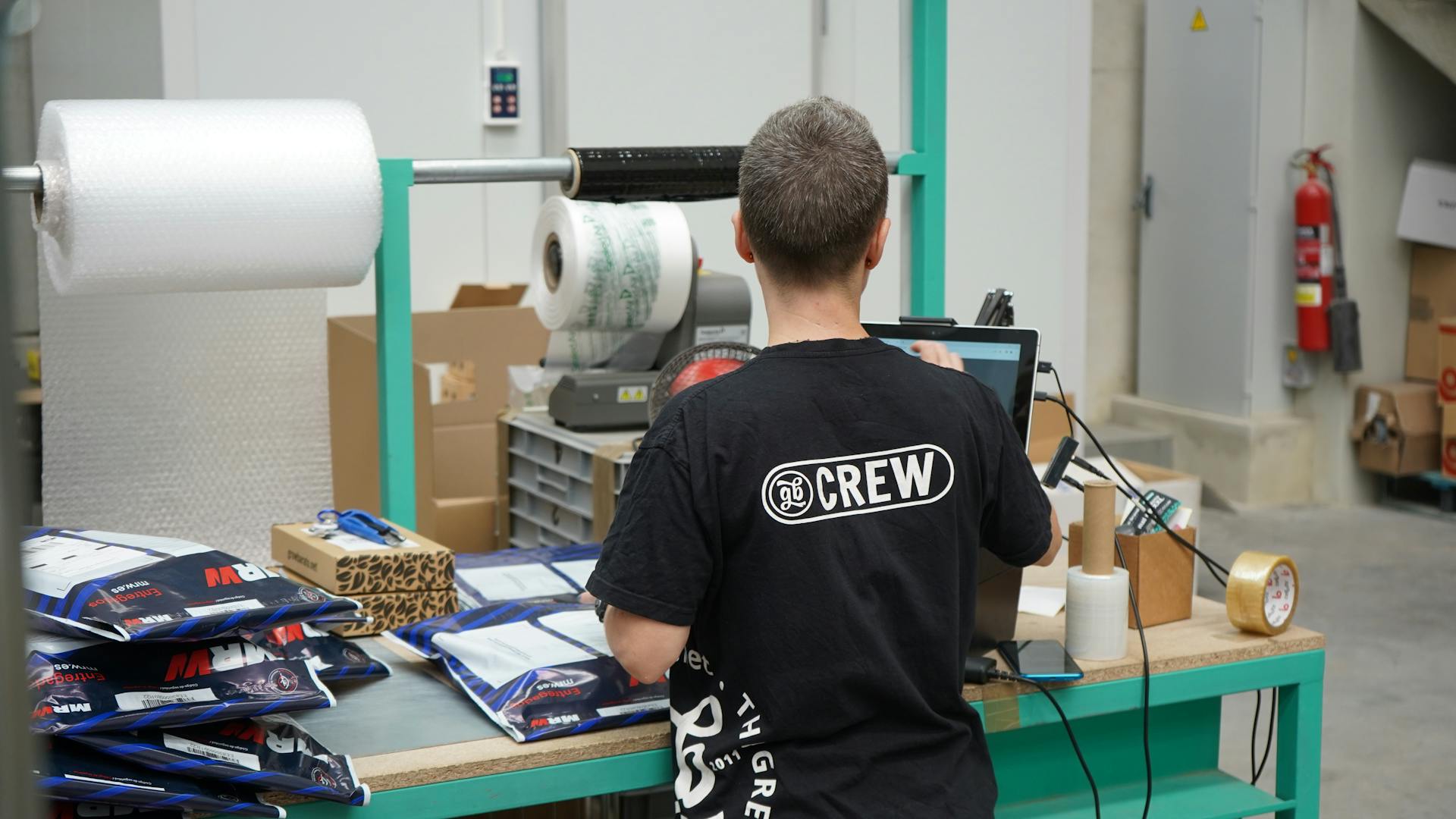
Many companies use vendor-managed inventory (VMI) to streamline their inventory management processes. Retailers like Walmart and Home Depot are examples of companies that have found VMI to be effective.
Amazon is another e-commerce firm that has successfully implemented VMI. They use it to manage the inventory of products sold by third-party sellers.
Walmart and Home Depot are among the many retailers that use VMI. They find it reduces the burden of managing incoming inventory from multiple vendors.
Other companies that use VMI include Bosch and Procter & Gamble. They have found it helps them proactively and quickly replenish stock, driving their own continuous sales and revenues.
Here are some examples of companies that use VMI:
Identify Priorities and Create a List
Identify your goals for entering a VMI agreement, whether that's lowering carrying costs or raising inventory turnover, and create a list of the goods you need.
Approaching potential vendors with clear information about what you want from the engagement makes for stronger communication right off the bat. This helps you both decide if the relationship is the right fit.
Your business may use multiple vendors for different items, so customize VMI to the vendors and products that demand optimization.
Specify your goals clearly, as this will help you create a focused list of the goods you need to optimize with VMI.
Data Organization
Organizing your data is crucial for effective inventory management. You should share current inventory levels, sales records, and other pertinent data with your vendors.
This will help them control inventory replenishment more accurately. The more precise and timely the data, the better they can manage their inventory.
Make sure data-sharing procedures incorporate confidentiality agreements and remain secure. This will protect sensitive information and prevent potential issues.
An inventory management solution like Fishbowl can make tracking and sharing information much easier. With Fishbowl, you can export inventory data in one click, generating vendor-ready reports and spreadsheets in seconds.
Establish Goals and Metrics
Establishing clear goals and metrics for your Vendor-Managed Inventory (VMI) program is crucial for its success. A well-defined set of objectives helps you and your vendor work together effectively to achieve them.
To set specific goals, consider choosing a few main indicators to evaluate success, such as inventory turnover rates, stockout frequency, or cost savings. These metrics will help you measure the program's performance and make data-driven decisions.
Some common inventory management KPIs typically part of a VMI agreement include:
By defining clear goals and metrics, you can ensure a successful VMI program that benefits both you and your vendor.
Maintain Open Communication
Open communication is key to a successful VMI strategy. It's not just about implementing a business network platform, but also about maintaining a commitment to clear and consistent communication channels with every key team member and stakeholder involved in the VMI process.
Regular updates are essential to keep the vendor in line with your organization's requirements. If real-time data sharing isn't possible, plan periodic updates to avoid interruptions and ensure the VMI program operates smoothly.
A consistent and standardized set of data management guidelines can help demonstrate fair and equitable application of necessary regulations. This can help prevent data "squirrels" from being reluctant to integrate certain data sets into a centralized platform.
You should regularly inform the vendor about any variations in demand, seasonality, or other elements influencing inventory levels. This will help them make informed decisions about inventory replenishment.
Here's a summary of the importance of open communication in VMI:
By following these best practices, you can maintain open communication with your vendors and ensure the success of your VMI strategy.
Implementation and Best Practices
Implementing a vendor-managed inventory system requires careful planning and cooperation. This process involves setting a precise beginning date for the VMI program.
Careful planning is crucial for a VMI system's success. The system calls for cooperation between the vendor and the customer.
To start the process, you need to specify a precise beginning date for the VMI program. This will help you track progress and make necessary modifications.
Tracking important indicators is essential to reach objectives. After launch, you should monitor key performance metrics to ensure the system is working as intended.
Modifying the system as necessary is a key part of the VMI process. This may involve adjusting inventory levels, shipping schedules, or other logistics to meet changing needs.
A unique perspective: Planning and Risk Management
Optimization and Evaluation
To optimize a vendor-managed inventory process, it's essential to establish clear goals and metrics for success, such as inventory turnover rates, stockout frequency, or cost savings.
You can evaluate success by tracking key performance indicators (KPIs) like inventory turnover rate, stock to sales ratio, sell-through rate, backorder rate, and supplier quality index (SQI).
These metrics help you and the vendor make informed decisions about the stock and ensure a mutually beneficial relationship.
Optimize with Fishbowl
Fishbowl's advanced inventory management software gives you the tools you need to monitor stock levels and share data with vendors.
Its reports seamlessly break down information so you can keep everyone in the loop about everything from inventory valuation to gross sales.
Fishbowl's QuickBooks integration ensures accurate tracking, efficient ordering, and streamlined operations.
Fishbowl's inventory management software helps you monitor stock levels and share data with vendors.
Worth a look: Knowledge Management Software
Key System Evaluation Criteria
When evaluating a vendor-managed inventory (VMI) system, it's essential to consider the features that will deliver the greatest impact on both immediate and long-term needs.
Inventory visibility and collaboration are crucial, as they provide a real-time view of replenishment orders, scheduling agreements, and inventory levels. This visibility enables all trading partners to make informed decisions.
Seamless integration with your ERP system and other supply chain platforms is also vital, as it allows for accurate transaction data sharing in real-time and supports push-based replenishment based on min/max inventory policies.
To ensure success, you should also look for a system that provides shared forecasting, giving all trading partners visibility into forecasts, including demand and production line capacity.
Real-time data updates on inventory and sales data are also essential for quick responses to potential disruptions. Cloud platforms offer flexibility, scalability, and remote access to inventory data.
Integrated analytics for deep insights into inventory performance and machine learning for precise inventory optimization are also valuable features to consider.
Here are the key system evaluation criteria to consider:
By considering these key system evaluation criteria, you can ensure that your VMI system is optimized for success and meets your business needs.
Examples and Companies
Vendor-managed inventory is used across various industries, including manufacturing for the automotive industry, distribution of pharmaceutical medications, and component supply in the consumer electronics industry. These sectors have their own unique challenges, but VMI helps to streamline inventory management and prevent production delays.
In the manufacturing sector, VMI is used to manage the supply of critical components like electronics and fasteners directly at assembly sites. Suppliers are responsible for maintaining inventory levels in sync with the manufacturers' production schedules.
The aerospace sector also employs VMI systems to regulate the inventory of high-value components and maintenance supplies. Suppliers can directly control and replenish stocks of critical materials like aluminum sheets and engine parts.
Some notable companies that use vendor-managed inventory include Amazon, Walmart, Home Depot, Bosch, and Procter & Gamble. These companies have seen the benefits of VMI, such as reduced inventory carrying costs and improved availability for their customers.
Here are some examples of industries and scenarios where VMI is employed:
- Manufacturing for the automotive industry
- Distribution of pharmaceutical medications
- Component supply in the consumer electronics industry
- Aircraft assembly and maintenance in the aerospace sector
- Retail/consumer packaged goods (CPG)
These industries have seen significant improvements in inventory management and supply chain efficiency by implementing VMI systems.
Frequently Asked Questions
What is the difference between VMI and CMI?
VMI (Vendor-Managed Inventory) and CMI (Customer-Managed Inventory) differ in who's in control: VMI puts vendors in charge, while CMI gives customers the power to manage their inventory
Featured Images: pexels.com