
The value date is the date when a payment is due to be made, and it's a crucial concept in the world of finance. It's often used in transactions involving foreign exchange and international trade.
The value date is typically two business days after the payment instruction is sent, but this can vary depending on the specific agreement between the parties involved. This allows for the payment to be processed and cleared through the banking system.
In a typical transaction, the value date is used to determine when the payment is made and when the funds are available to the recipient. This helps to prevent delays and ensures that payments are made in a timely and efficient manner.
What Is Value Date?
The value date is the date when a bank or financial institution settles a payment, such as a wire transfer or a direct deposit. This date is usually a business day.
It's typically two days after the payment order is issued, as banks need time to process and verify the transaction.
Types of Value Dates
Value dates can be either present or future dates, depending on the type of transaction and the bank's policies.
For present value dates, the bank uses the current date as the value date. This is typically the case for same-day transactions.
The value date for future transactions is determined by the bank's cut-off times, which can vary depending on the day of the week and the type of transaction.
In some cases, the value date for a future transaction may be delayed if the bank's system is not updated in time.
For example, if a transaction is initiated on a Friday evening, the value date may be the following Monday if the bank's system is not updated over the weekend.
A fresh viewpoint: Post the Transactions to T Accounts
Value Date in Banking
The value date in banking is the date on which funds become available to the recipient and are considered cleared. This date is crucial in banking transactions, especially when dealing with checks and wire transfers.
For checks, the value date is the day the bank receives the funds from the payor's bank, which can take days. The bank estimates this date and holds the funds until it receives the money.
In the case of wire transfers, the value date is the date the incoming wire becomes available to the receiving bank and its customer.
The value date is also important for calculating interest and avoiding overdraft charges. If you withdraw funds before the value date, you may be charged interest.
Transaction dates and value dates are not the same. Transaction dates are the dates on which transactions are carried out by customers, while value dates are the dates on which transactions are recorded by a bank.
Processing dates, which are the dates on which transactions are recorded in a customer's bank account, excluding interest, can coincide with transaction dates or be different. Value dates take into account the calculation of debit or credit interest.
For example, if a customer makes an online payout on a Sunday or public holiday, the bank will not process the transaction until the following day, making the processing date and transaction date different.
On a similar theme: What Do the Different Spfs Mean
Value Date in Trading
In the world of trading, the value date is a crucial concept that helps settle transactions between counterparties. It's the delivery date when counterparties agree to settle their obligations by making payments and transferring ownership.
The value date is usually set two days after the transaction date for spot trades in foreign currencies. This means the value date is the day the currencies are traded, not the date on which the traders agree to the exchange rate.
In the bond market, the value date is used to calculate accrued interest on a bond. This calculation takes into account three key dates: trade date, settlement date, and value date. The value date is usually, but not always, the settlement date.
The value date can fall on any day, as seen when calculating accrued interest, which takes into account every day of a given month. This is important for investors, as it removes any uncertainty for their calculations of interest payments.
Here are the key dates to remember:
- Trade date: the date when a transaction is executed
- Settlement date: the date when a transaction is completed
- Value date: usually the settlement date, but can fall on any day
Trades

In trading, the value date is used to settle discrepancies in asset valuation timing. This date is crucial for counterparties to agree on payments and ownership transfer.
For spot trades in foreign currencies, the value date is usually set two days after the transaction date due to time zone differences and bank processing delays. This means the value date is the day the currencies are traded, not the date the traders agree to the exchange rate.
The value date is also used in the bond market to calculate accrued interest on a bond. This involves three key dates: the trade date, settlement date, and value date. The trade date is when the transaction is executed, the settlement date is when the transaction is completed, and the value date is usually, but not always, the settlement date.
In the bond market, the settlement date can only fall on a business day. If a bond was traded on Friday, the transaction will be deemed complete on Monday, not Saturday. The value date can fall on any day, as seen when calculating accrued interest, which takes into account every day of a given month.
For another approach, see: Currencies Replaced by Euro
For most security transactions, a two-day settlement date applies, commonly referred to as T+2. This means that if you make a trade, the value date represents the time at which ownership of your shares would be transferred, which is two business days after the transaction date.
Here's a breakdown of the key dates:
It's essential to note that settlement occurs only during working days, so a value date on a weekend or holiday is not possible.
Difference Between Transaction and Date Dates
The value date is a crucial concept in trading, and understanding its relationship with transaction dates is essential. A transaction date is the date when a transaction is executed, but this doesn't necessarily mean it's the date the transaction is recorded by the bank.
The bank may not record the transaction on the same day, especially if it's a weekend or a holiday. The value date, on the other hand, is the date when the transaction is recorded by the bank.

To illustrate the difference, let's consider a spot trade in a foreign currency. The value date for such a trade is usually set for two days after the transaction date due to differences in time zones and bank processing delays.
Here's a key difference between transaction dates and value dates:
The value date is also used in the bond market to calculate accrued interest on a bond, which takes into account three key dates: the trade date, settlement date, and value date. The settlement date is the date when a transaction is completed, and it can only fall on a business day.
How Value Date Works
A value date is the date at which a transaction occurs and settles. In some cases, the value date is the same as the date the transaction is initiated.
The value date can come after the date a transaction is processed. This can happen in various financial transactions.
Certain bank to bank transfers have a value date that matches the date the transaction is initiated. This is not always the case, however.
In trading, stock trades settle one business day after the trade is initiated. This is referred to as the value date.
Key Concepts

In the world of finance, a value date is a crucial concept that determines when funds become available for use. It's the point in time when the value of an account, transaction, or asset becomes effective.
The value date can vary depending on the context. In banking, it's the day when funds are posted to an account and available for immediate use.
For traders, the value date is a key milestone, marking the time when a transaction is fully cleared and settled.
Here are the different scenarios where the value date applies:
- Banking: When funds are posted to an account.
- Trading: When a transaction is fully cleared and settled.
Importance of Value Date
The value date is a crucial concept in financial transactions. It's the date when a transaction settles and the funds are transferred between parties.
Understanding the value date is essential for businesses, especially when it comes to accounts receivable. Accounts receivable aging is a process that helps businesses track how long their customers owe them money, and it's influenced by the value date.
A fresh viewpoint: Do Businesses Prefer Cash or Credit
The value date can be the same as the day a transaction is initiated, but it's often on a future date, especially in the trading world. As an investor, knowing how the value date applies to your transactions can help you avoid financial errors.
In some cases, the value date can be used to set spending limits for customized bank cards, such as those offered by Stripe through their Issuing service. This can help businesses keep their bank charges under control.
Here are some key points to consider when it comes to the value date:
- Accounts receivable aging is influenced by the value date.
- The value date can be the same as the day a transaction is initiated or on a future date.
- Knowing how the value date applies to your transactions can help you avoid financial errors.
Value Date in Specific Contexts
In the context of financial transactions, a value date is crucial in determining the price of an instrument. A value date is the date on which the quoted price would be paid.
Transaction dates are often confused with value dates, but they are not the same thing. Transaction dates are the dates on which transactions are carried out by customers, while value dates are the dates on which transactions are recorded by a bank.
Explore further: Fair and Accurate Credit Transactions Act
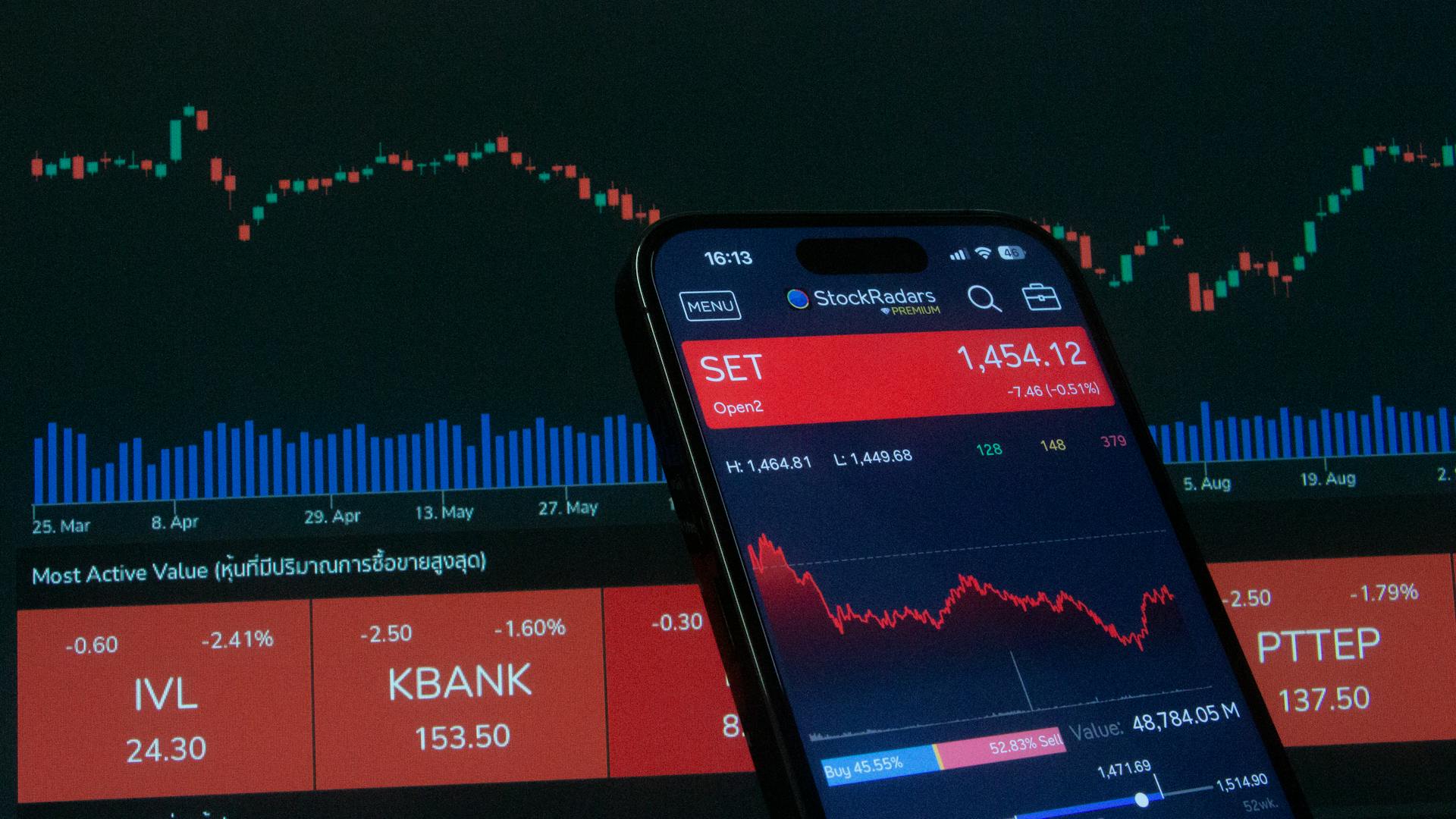
In the case of a stock sale, the value date is the date on which the sale is recorded by the bank, not the date on which the payment is made. For example, if you sell 100 shares of a stock at USD 56, the value date is the date on which the bank records the sale, not the date on which you receive the payment.
There are different approaches to valuation, including cash valuation and n-day valuation. Cash valuation requires that spot prices be discounted back to the current date, while n-day valuation allows for a value date that occurs a certain number of trading days after the time a price is quoted.
Here's a summary of the two approaches:
In practice, n-day valuation can be convenient, especially when dealing with spot contracts that settle in a certain number of trading days. For example, if you hold 100 shares of a stock that is trading at USD 56, and the sale will not settle for 3 trading days, you would use 3-day valuation to value the position.
Consider reading: Days Payable Outstanding
Value Date Basics

Value dates are the dates on which transactions are recorded by a bank. This is distinct from the transaction date, which is the date on which a customer carries out a transaction.
The bank is informed of a transaction on the same day, but the value date may be different. For example, if a customer initiates a transaction on a Monday, the bank may record it on the following Tuesday.
The difference between transaction dates and value dates is often overlooked, but it's essential for understanding how transactions are processed.
Readers also liked: Online Transactions
Savings Accounts
Savings accounts have a special way of handling interest and deposits. Interest is calculated fortnightly, from the 1st to the 15th of the month and from the 16th to the 30th (or 28th, 29th, or 31st).
The value date in a savings account is the day you receive interest on your deposits. This day is usually the first day of the following fortnight.
A deposit made between the 1st and 15th of the month will have a value date of the 16th of the same month. Similarly, a deposit made between the 16th and 30th (or 28th, 29th, or 31st) of the month will also have a value date of the 16th of the same month.
The value date of a withdrawal is usually set to the last day of the previous fortnight. For example, a withdrawal made on the 16th of the month will have a value date of the 15th of the same month.
France Basics
In France, value dates are used by banks, and it's essential to understand their purpose. Value dates are used by platforms and marketplaces like Shopify and DoorDash, which use Stripe Connect to embed payments into their products.
Value dates differ from transaction dates, which is a date that reflects the date of a transaction. The transaction date is not the same as the value date.

Processing dates and value dates also differ, although the article doesn't explicitly state what processing dates are. However, it implies that processing dates are related to the processing of transactions.
There are different types of value dates, but the article doesn't provide a clear explanation of what they are. It does mention that the article will cover this topic, but it's not specified in the provided text.
Value dates are important because they help businesses understand when payments will be made or received. This is crucial for managing cash flow and making financial decisions.
Fast Facts and Examples
Banks produce bank statements based on value dates, not transaction dates, which can be the same for certain transactions.
In some cases, the value date may be different from the transaction date due to factors like held checks and wire payments.
A deposit into a savings account may have a value date that's two business days after the transaction date.

For example, depositing a check on Monday, the value date would be Wednesday.
International transactions like wire transfers can also have a value date that's different from the transaction date.
Due to international processing time and currency conversion, the value date for a wire transfer may be set for a later date.
In the case of a wire transfer, the value date helps clarify when the agreed-upon exchange rate is applied.
The value date is essential for understanding when funds are actually available and transactions are finally settled.
For a U.S.-based importer, the value date helps know when their U.S. bank account will be debited.
For the supplier, the value date helps know when to expect the funds in their Japanese bank account.
The value date is crucial for businesses operating in multiple currencies.
Take a look at this: U. S. Steel Košice, S.r.o.
Featured Images: pexels.com