The US Inflation Reduction Act has significant effects on the economy and environment. The Act aims to reduce inflation by increasing taxes on large corporations and high-income individuals, generating an estimated $739 billion in revenue over the next decade.
This revenue will be used to fund various initiatives, including tax credits for clean energy production and energy-efficient homes. The Act also introduces a minimum corporate tax rate of 15%, ensuring that large corporations pay their fair share.
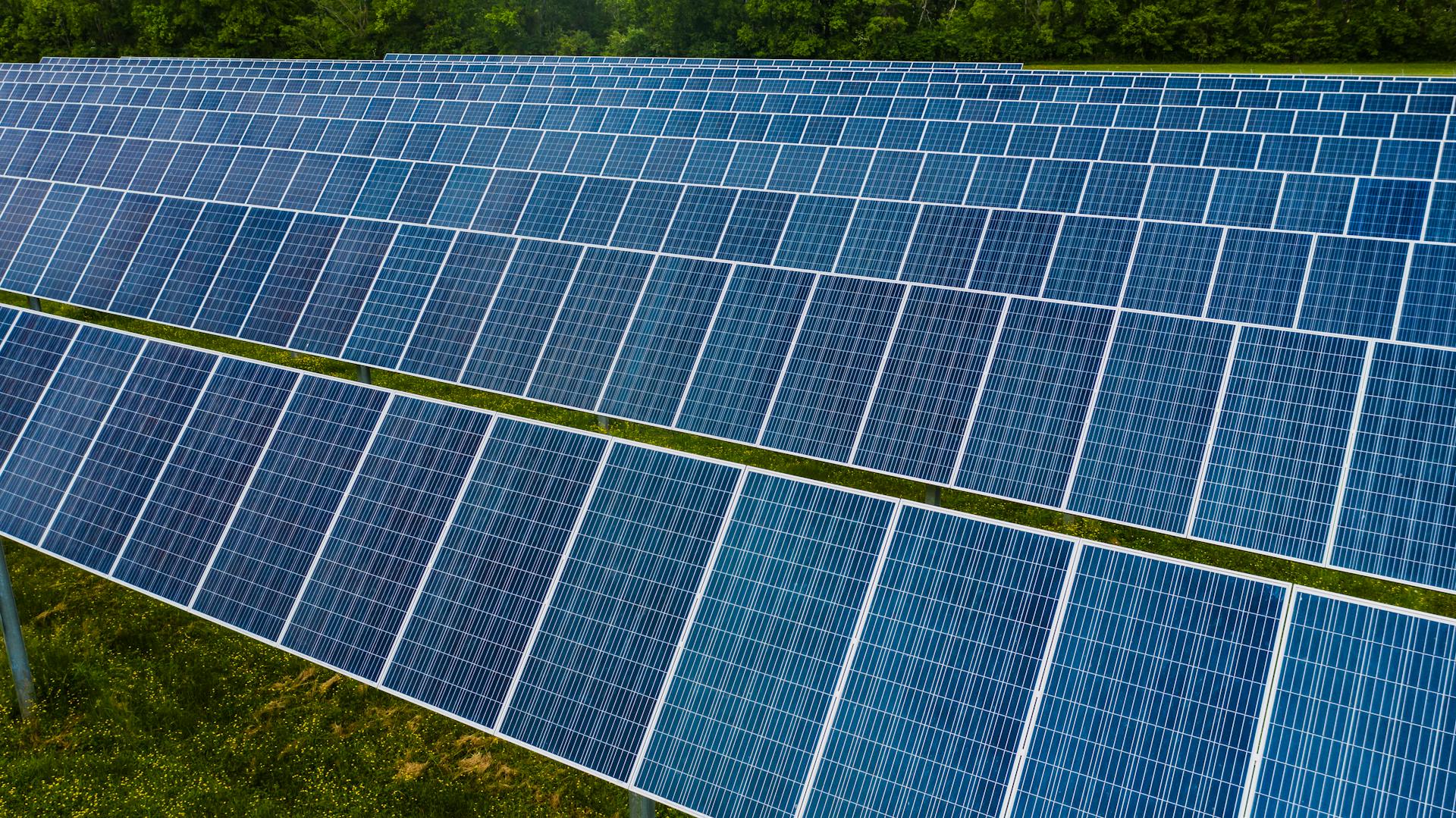
The Act's focus on clean energy production is a major step towards reducing greenhouse gas emissions. It provides tax credits for the production of clean energy, such as solar and wind power, and aims to deploy 30 gigawatts of offshore wind energy by 2030.
By investing in clean energy, the Act can help reduce our reliance on fossil fuels and mitigate the effects of climate change. The Act's initiatives are expected to reduce carbon emissions by 1 billion metric tons by 2030.
Recommended read: Us Tax Shield
Economic Impact
The US Inflation Reduction Act has had a significant economic impact, particularly in the tax credit market. The law has enlarged the tax credit market, which is expected to reach $80 billion per year.
Companies making environmentally-friendly products are benefiting from the law's tax credits, but small companies are missing out because they don't pay enough taxes. The law allows these companies to sell their tax credits to larger companies.
The tax credits for grid energy storage have the highest market value, and the IRS has received registrations for over 45,500 projects attached to direct pay or possible small business sales of the IRA's energy tax credits.
The Neighborhood Equity and Access program has awarded $3.33 billion in grants to 132 projects, aiming to remove highways and railroads built through poorer neighborhoods.
On a similar theme: Debt Reduction Tax
Environmental Impact
The Inflation Reduction Act has made a significant impact on the environment. According to the Rhodium Group and the World Economic Forum, in the first year of implementation, the Act had a significant impact on the environment, with GHG emissions reductions by the year 2030, relative to the level of 2005, moving from 17–30% to 29–42%, and to a 32–51% decline by the year 2035.
More than 170,000 green jobs were created, and the sales of heat pumps exceeded the sales of gas boilers for the first time in history, with 15% of households now using a heat pump as a primary source of heating. The United States Environmental Protection Agency used dozens of millions of dollars to improve air quality and hundreds of millions for environmental justice and local climate plans.
The Act also includes several grant programs to reduce emissions across a range of sectors, including a $3 billion competitive grant program to reduce air pollution at ports and a $7 billion competitive grant program to provide financial assistance to low-income and disadvantaged communities to deploy or benefit from zero-emission technologies.
Environmental Justice Concerns
Environmental justice concerns have been a major point of discussion surrounding the Inflation Reduction Act's impact on the environment. Climate activists Miriam Nielsen, Raya Salter, and Heather Tanana raised questions about whether the Act would provide tax credits and grants equitably.
The Act's home energy upgrade grants and the Biden administration's Justice40 initiative for racial justice are intended to address environmental justice concerns, but some groups are skeptical about their effectiveness. The Climate Justice Alliance has gone so far as to oppose the bill, arguing that its harms currently outweigh its benefits.
The Act provides $4 billion in Western drought resilience grants, but accessing these funds may be difficult for some communities. The Climate Justice Alliance's Ozawa Bineshi Albert notes that the funding is often competitive and may not reach the most impacted communities.
The Act's funding for environmental justice efforts is a step in the right direction, but more investment is needed to address the root causes of climate change and environmental injustices. The Sunrise Movement, for example, advocates for additional policy drafted within the framework of the Green New Deal.
A breakdown of the Act's environmental justice provisions is as follows:
Sustainable Aviation Fuel
The Sustainable Aviation Fuel rules have been a topic of discussion in the environmental impact of the Act. The Section 40B tax credit guidance was released in April 2024, welcoming the guidance from biofuel producers, trade groups, and major airlines like United and American Airlines. However, farmers and lower-level ethanol producers felt the guidance was too prescriptive, and environmentalists felt it didn't go far enough to account for all lifecycle emissions from ethanol fuel.
The guidance aims to promote the use of sustainable aviation fuels, which can significantly reduce greenhouse gas emissions from air travel. However, the implementation of these rules has been met with some resistance. In April 2025, a federal judge ruled that some of the Act's funding had to be unfrozen nationwide, paving the way for the continued development of sustainable aviation fuels.
The Act includes provisions to support the production of sustainable aviation fuels, which can help reduce the environmental impact of air travel. The rules are still evolving, but the goal is to make air travel more sustainable and environmentally friendly.
Intriguing read: Where Should I Travel in the Us Quiz?
Industry Impact
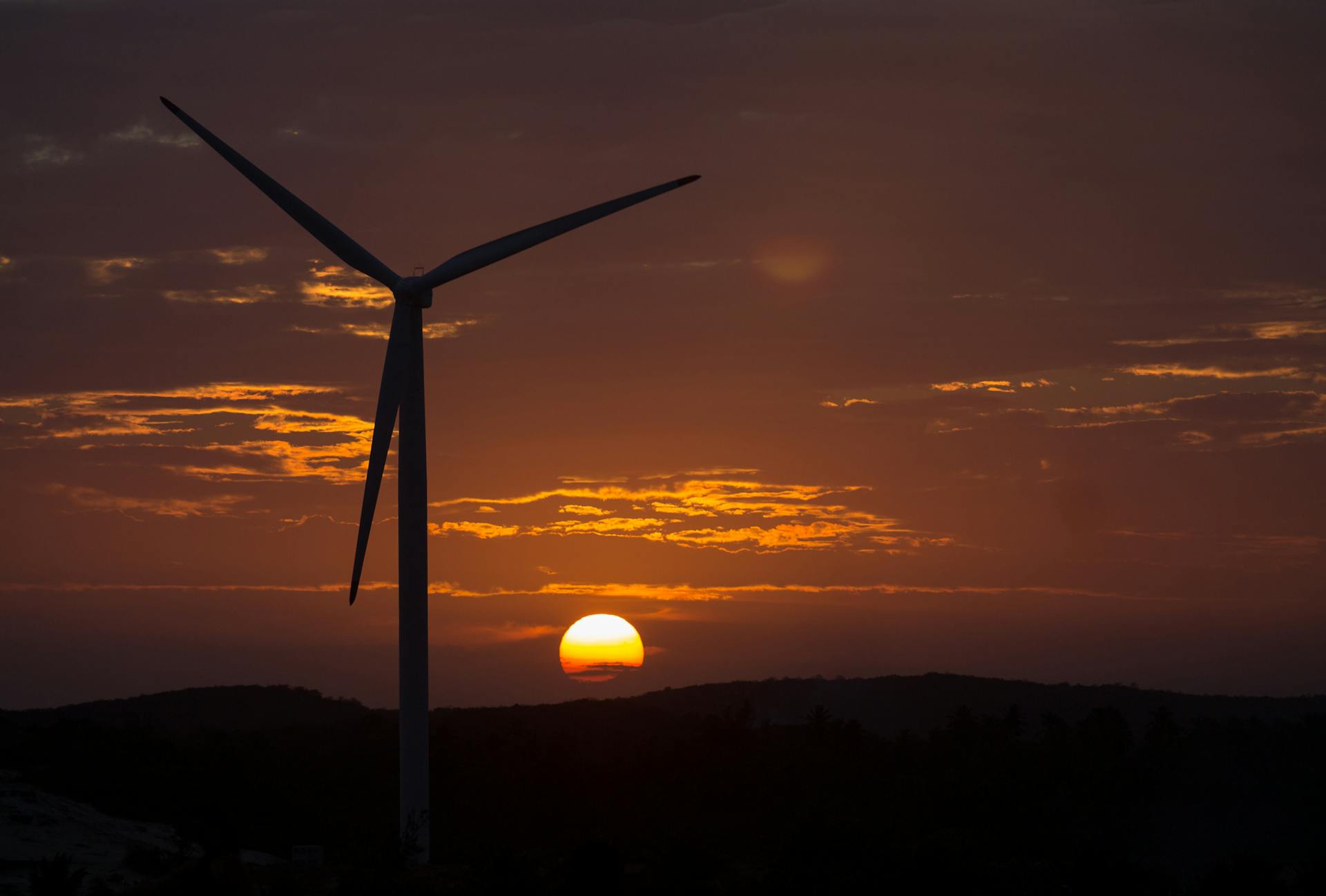
The US Inflation Reduction Act has a significant impact on various industries, particularly the energy sector. The bill locks in tax credits for solar and wind energy for the next decade, helping spur new jobs and economic development within clean energy sectors.
This move is expected to boost domestic production of clean energy, which has national security implications. The package includes over $60 billion to support on-shore clean energy manufacturing in the US.
Here are some key funding measures:
- Production tax credits to help US manufacturers accelerate production of solar panels, wind turbines, batteries, and process key minerals
- $10 billion investment tax credit for new manufacturing facilities that make clean tech like EVs, wind turbines, and solar panels
- $500 million to use the Defense Production Act to speed manufacturing of things like heat pumps, as well as processing critical minerals
- $2 billion in grants to help automaker facilities transition to clean vehicle production
- Up to $20 billion in loans to construct new manufacturing facilities for clean vehicles
Jobs Estimates
A University of Massachusetts study projects that the law will generate 912,000 jobs per year.
The Energy Innovation group estimated that the law would lead to the creation of 1.4 million to 1.5 million additional jobs and increase the GDP 0.84–0.88% by 2030.
The Rocky Mountain Institute estimated that Texas would see investments of $131 billion creating 116,000 jobs.
California would see $117 billion creating 140,000 jobs, Florida $62 billion creating 85,000 jobs, and Illinois $38 billion creating 42,000 jobs.
The states seeing the four largest per capita investments from the Act, ranging between roughly $7,000 and $12,000, would be Wyoming, North Dakota, West Virginia, and Louisiana.
E2 projects 74,181 jobs and an estimated $86,320,800,000 in investments, which will entail 210 projects in 38 states.
Industry
The energy industry is in for a significant boost with the new bill. The provisions will lock in tax credits for solar and wind energy for the next decade, helping to spur new jobs and economic development in these sectors.
This is a game-changer for the clean energy industry, which is tied to sectors like solar panel and battery manufacturing. The bill includes provisions for domestic mining of materials needed to make these products.
A key part of the bill is the funding for on-shore clean energy manufacturing in the U.S. This includes over $60 billion to support domestic production of clean energy, with the goal of easing inflation and making future price shocks less likely.
Here are some specific funding measures included in the bill:
- Production tax credits to help U.S. manufacturers accelerate production of solar panels, wind turbines, batteries, and process key minerals
- $10 billion investment tax credit for new manufacturing facilities that make clean tech like EVs, wind turbines and solar panels
- $500 million to use the Defense Production Act to speed manufacturing of things like heat pumps, as well as processing critical minerals
- $2 billion in grants to help automaker facilities transition to clean vehicle production
- Up to $20 billion in loans to construct new manufacturing facilities for clean vehicles
The U.S. has historically been a major emitter of greenhouse gases, but this bill offers a chance to become a global leader in the fight against climate change.
Spending by Area Assessments
The Inflation Reduction Act is a significant piece of legislation that addresses climate change, investing $783 billion in provisions related to energy security and climate change.
The Act includes $663 billion in tax incentives, which is a substantial investment in promoting sustainable energy practices.
A report by Credit Suisse projects that the total climate spending in the Act would be $800 billion, highlighting the potential scope of the legislation.
The Act also allocates $27 billion for a green bank created by amending the Clean Air Act, a move aimed at supporting clean energy projects.
Goldman Sachs predicts a total of $1.2 trillion in climate spending, a figure that underscores the Act's ambitious goals.
The Penn Wharton Budget Model predicts $1.045 trillion in climate spending, a number that suggests the Act's impact will be felt across various sectors.
An analysis by the Brookings Institution finds a central case of $902 billion in climate spending, providing a more conservative estimate of the Act's fiscal impact.
Consumer Benefits
The Inflation Reduction Act has some amazing benefits for consumers. One of the key ways it helps is by making clean energy options more affordable.
The bill includes tax credits and financial incentives to make heat pumps and other home infrastructure that revolves around electric power more accessible to consumers, especially those who are lower- to middle-income.
These benefits will help individual Americans be part of a trend driving a catalytic change in major emissions reductions. No more shouldering the weight of expensive solar panels and electric vehicles alone.
Some of the funding aimed at consumers includes:
- $9 billion in home energy rebate programs to help people electrify their home appliances and for energy-efficient retrofits, with a focus on low-income consumers
- 10 years of consumer tax credits to make heat pumps, rooftop solar, electric HVAC and water heaters more affordable, which make homes more energy efficient
- $4,000 in consumer tax credits for lower- and middle-income individuals who buy used electric vehicles, and up to $7,500 tax credits for new EVs
- $1 billion grant program to make affordable housing more energy efficient
As an added bonus, the bill also aims to reduce fossil fuel generation by targeting the demand side of the energy equation.
Implementation and Criticisms
The Inflation Reduction Act has its drawbacks, and one of them is the requirement that renewable energy projects must be tied to fossil fuel leases. This means that for solar and wind projects to access new acreage, oil and gas projects must also be given the green light.
In other words, oil and gas companies will have the opportunity to bid on and lease federal lands and waters, even if they don't necessarily plan to develop them. Experts say that just because a company acquires acres through a lease doesn't mean they'll actually follow through with development.
The Inflation Reduction Act is just the starting gun for a longer-term effort to decarbonize the country.
Key Takeaways
The Inflation Reduction Act (IRA) has been making waves in the US, and it's essential to understand its key takeaways. The IRA is expected to reduce federal deficits by $102 billion between 2022 and 2031.
One of the law's primary goals is to reduce carbon emissions by 40 percent below 2005 levels by 2030. This ambitious target is aimed to be achieved through significant investments in climate and environment programs.
The IRA includes tax incentives to boost the development and deployment of clean energy, which will drive demand for electric vehicles, low-carbon materials, and clean technologies. This will create opportunities for companies to deliver on sustainability and carbon reduction commitments.
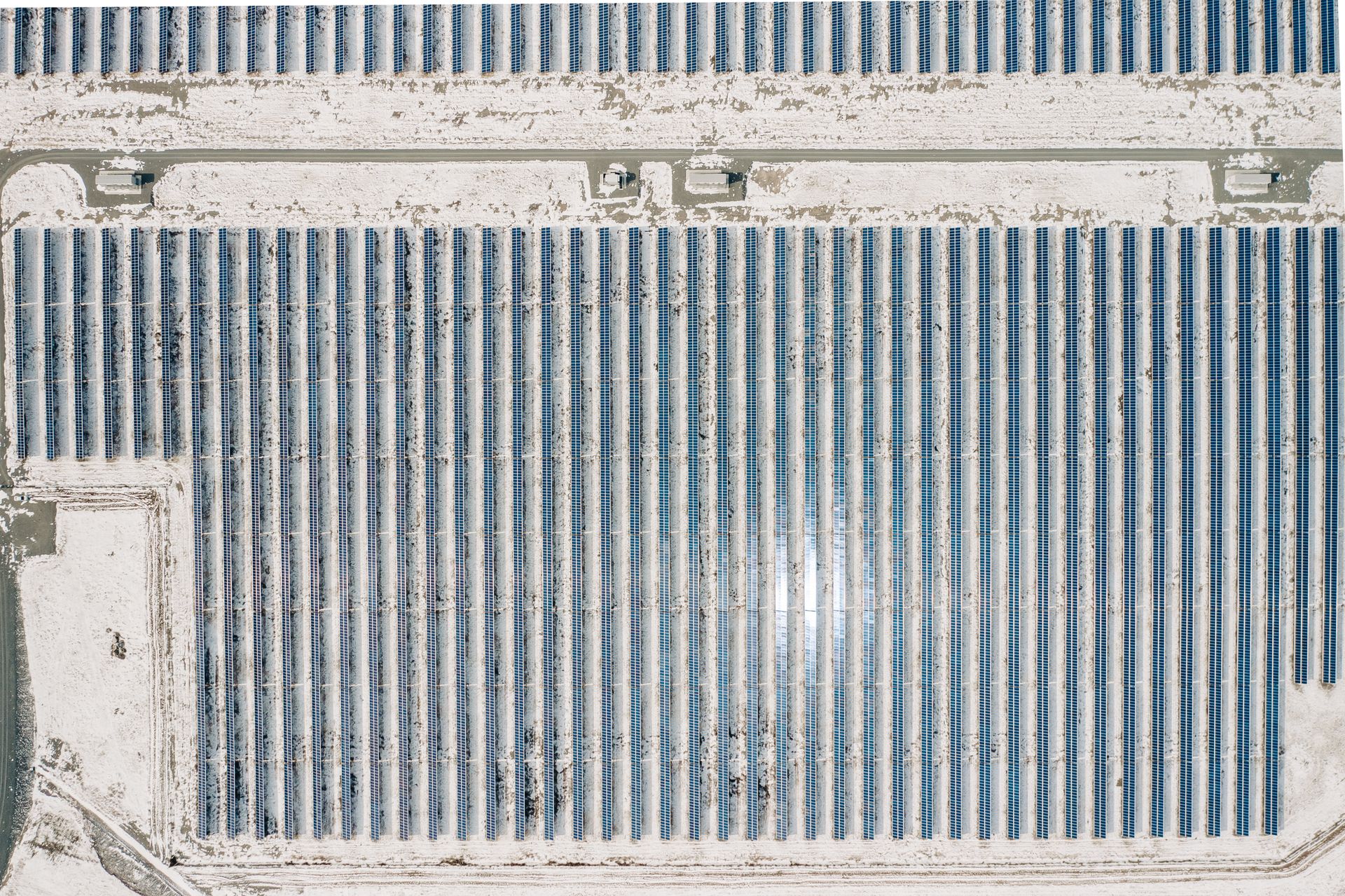
Key provisions for counties include direct funding opportunities for counties to respond to climate change and reduce national emissions levels. These funds will be used for utility-scale renewable energy projects, grid modernization, and storage and energy assurance strategies.
The law also addresses healthcare, including capping out-of-pocket costs of prescription drugs for Medicare beneficiaries each year at $2,000. This is a significant step towards making healthcare more affordable for millions of Americans.
Here are some of the key provisions of the IRA:
Implementation Criticisms, Concerns
The Inflation Reduction Act has been met with both praise and criticism. One major concern is the bill's allowance for leasing federal lands and waters for fossil fuel projects, which seems counterintuitive to its climate-focused goals.
Many environmental advocacy groups view this as a significant drawback, feeling that it undermines the bill's overall purpose. The Sunrise Movement, for example, strongly advocated for the bill's passage but emphasized that it doesn't go far enough.
Worth a look: Bill of Exchange Act 1882
The fact that oil and gas companies can acquire leases for new acreage, even if they don't necessarily plan to develop them, is another point of contention. This means that even if a company acquires acres through a lease, it doesn't necessarily mean they'll follow through with development.
Democrats should focus on passing the bill as a starting point for a long-term decarbonization effort, rather than celebrating it as a victory. The bill's critics, like the Climate Justice Alliance, argue that its harms currently outweigh its benefits and that more emphasis should be placed on meaningful collaboration with front-line communities.
The bill's funding for climate and environmental justice efforts is a welcome aspect, but it's not enough to offset the direct expenditures to oil and gas infrastructure.
Finance and Taxation
The Inflation Reduction Act has some significant provisions related to finance and taxation. The Act strengthens the Internal Revenue Service's (IRS) tax enforcement and compliance abilities by providing $80 billion for IRS taxpayer services, enforcement efforts, operations support, and business systems modernization.
For your interest: No Surprises Act Enforcement Act
This funding will help the IRS to better enforce tax laws and reduce the tax gap, which is the difference between the amount of taxes owed and the amount of taxes actually paid. The IRS will be able to modernize its systems and improve its ability to detect and prevent tax evasion.
The Act also includes a 15% alternative minimum tax (AMT) for corporations with profits of more than $1 billion. This provision will become effective in the 2023 taxable year and includes an exemption for businesses owned by private equity.
Here are some key statistics on the tax provisions in the Inflation Reduction Act:
However, the Tax Policy Center estimates that the bottom 80% of tax filers by income will receive a net benefit, if ACA premium tax credits (subsidies) are included.
Health and Labor
The Inflation Reduction Act has made significant strides in improving healthcare and labor conditions. The law caps out-of-pocket prescription drug costs for Medicare beneficiaries at $2,000 per year, which can lead to better health outcomes and reduced hospital admissions.
Counties that administer vaccinations have received federal support for the cost of administering COVID-19 vaccines and other essential vaccinations, decreasing the cost burden on counties of uncompensated medical care. This support has increased communal protection from infectious diseases.
The Act has also extended Affordable Care Act premium subsidies to 2025, capping how much an individual pays out of pocket for insurance based on their income level. This has reduced the number of uninsured and medically indigent individuals seeking care in county health facilities.
The law has had a positive impact on labor conditions, particularly in the clean energy sector. Unionization in clean energy grew faster than in the overall energy sector, and unionized firms have an easier time hiring job applicants than non-unionized firms.
Home Assistance
The Inflation Reduction Act aims to decrease residential energy costs by focusing on improvements to home energy efficiency. This includes $9 billion in home energy rebate programs.
Homeowners can benefit from a 30% tax credit, which translates to $1,200 to $2,000 per year. This can be a significant help for those looking to upgrade their homes' energy efficiency.
The Act also includes rebates, which can reach up to $14,000 for certain upgrades. In some cases, all upgrade expenses will be returned.
Commercial buildings must update their efficiency by 25% to qualify for tax credits. This can be achieved through a tier-based system, with tax credits ranging from $0.50 to $5.00 per square foot.
Single and multi-family housing can also qualify for tax credits, requiring 50% less annual energy consumption compared to similar units.
These policies aim to reduce energy costs and demand on the power grid. By making energy-efficient upgrades more affordable, homeowners can save money on their energy bills and contribute to a more sustainable future.
Here's a breakdown of the tax credits and rebates available:
Health Provisions
The IRA includes several provisions related to healthcare that would impact counties. These provisions aim to improve health outcomes and reduce costs for Medicare beneficiaries.
Caps on out-of-pocket costs for prescription drugs would be set at $2,000 per year. This would help seniors and individuals with disabilities who rely on Medicare for their healthcare.
Counties, as providers of local public health services, would benefit from free vaccines for Medicare beneficiaries. This includes COVID-19 vaccines, shingles, and other necessary vaccines.
The Affordable Care Act (ACA) premium subsidies would be extended to 2025 under the IRA. This would help low-income individuals obtain affordable health insurance on the ACA marketplace.
Here's a breakdown of the health provisions included in the IRA:
- Caps out-of-pocket cost of prescription drugs for Medicare beneficiaries at $2,000 per year.
- Provides free vaccines for Medicare beneficiaries, including COVID-19 vaccines and other necessary vaccines.
- Extends Affordable Care Act (ACA) premium subsidies to 2025, capping out-of-pocket costs for low-income individuals.
Labor Impact
The Inflation Reduction Act has had a significant impact on labor, particularly in the construction and energy sectors. In October 2023, three unions in solar power construction agreed to a nationwide deal to divide work on future projects.
The Act has also led to an increase in construction union membership in areas with mostly non-union labor markets, especially in solar power. This is evident in the growth of unionized firms in the clean energy sector.
The law has set up a new dynamic where energy developers are negotiating with unions early in their project planning, and a new tax credit compliance industry is emerging. However, wide disparities remain between union and non-union apprenticeships and wages.
According to an August 29 Energy Department report, unionization in clean energy grew faster than in the overall energy sector, and unionized firms have an easier time hiring job applicants than non-unionized firms. This suggests that the Act is having a positive impact on labor in the energy sector.
Despite this progress, the energy workforce continues to suffer from a lack of diversity, particularly of gender.
Here's an interesting read: New Us Note Currency
Government and Policy
The US Inflation Reduction Act has significant implications for government and policy. The law aims to reduce inflation by increasing taxes on large corporations and high-income individuals.
The act imposes a minimum corporate tax rate of 15% on corporations with profits over $1 billion. This tax will help fund initiatives aimed at reducing inflation.
Additionally, the law creates a new corporate minimum tax, which will apply to companies with profits over $1 billion. This tax is designed to ensure that large corporations contribute their fair share to the government's revenue.
A fresh viewpoint: What Is Us Government Securities
Public Organizations
Many mainstream environmental organizations supported the Inflation Reduction Act, such as the Nature Conservancy and the National Wildlife Federation. They praised the legislation as "historic" and "transformative", citing the infusion of spending as a major step forward.
The Natural Resources Defense Council argued that despite continued acceptance of fossil fuels in the IRA, its climate mitigation policies would outweigh their impact ten times over. This suggests that the bill's focus on reducing greenhouse gas emissions is a significant step towards addressing climate change.
However, not all environmental groups expressed unqualified support. Some environmentalists noted that the bill contained more "carrots", or incentives for positive behavior, than "sticks", or new regulations. This criticism suggests that the bill may not go far enough in holding polluters accountable.
The Climate Justice Alliance criticized the IRA, saying that "the strengths of the IRA are outweighed by the bill's weaknesses and threats posed by the expansion of fossil fuels and unproven technologies such as carbon capture and hydrogen generation." This criticism highlights the ongoing debate about the role of fossil fuels in the transition to a low-carbon economy.

Cycling organizations criticized the IRA for removing the incentives for electric bicycles in the original Build Back Better Act, having a better energy-per-incentive ratio and reaching a wider demographic, than for electric cars remaining in the IRA. This change may have a significant impact on the cycling community, which had been counting on the incentives to encourage the adoption of electric bicycles.
Legislative History
The Inflation Reduction Act of 2022 has a fascinating legislative history. The Senate used the Build Back Better Act as its legislative vehicle, which had previously passed the House on September 27, 2021.
A key development occurred on August 6, 2022, when Senate Majority Leader Chuck Schumer proposed an amendment to replace the text of the Build Back Better Act with the Inflation Reduction Act of 2022. This substitute amendment was later adopted.
Senator Joe Manchin's office made a surprise phone call to Schumer's lead staffer, Gerry Petrella, which helped break the logjam in negotiations. Manchin and several other key senators, including Ron Wyden and Mark Warner, played crucial roles in shaping the bill's provisions.
A team of experts, lobbyists, and organizers worked tirelessly to refine the bill's provisions, including Leah C. Stokes and Topher Spiro. The Senate passed the bill on August 7, 2022, after a 16-hour marathon voting session, known as a "vote-a-rama." The final vote was 51-50, with Vice President Kamala Harris breaking the tie.
The House passed the bill on August 12, 2022, with a 220-207 vote. President Joe Biden signed the bill into law on August 16, 2022.
Featured Images: pexels.com