Deception can manifest in various ways, including false advertising. Companies may exaggerate the benefits or features of a product to attract more customers.
Misrepresentation can also occur through bait-and-switch tactics. This happens when a company advertises a product at a certain price or with certain features, only to change the terms once the customer has already made a purchase.
False labeling is another form of deception. Companies may misrepresent the origin, quality, or composition of a product to make it more attractive to consumers. This can have serious financial impacts, especially if the product is recalled or causes harm to the consumer.
In some cases, companies may engage in deceptive practices to conceal the true cost of a product. This can include hidden fees, misleading pricing, or failure to disclose necessary information.
Take a look at this: Product Liability Attorney
International Perspectives
The EU has taken a strong stance against unfair business practices, requiring each member state to regulate them under the Unfair Commercial Practices Directive 2005 (amended 2017).
This directive aims to boost consumer confidence and make it easier for businesses, especially small and medium-sized enterprises, to trade across borders.
In Germany, a court stopped Apple from advertising the Apple Watch as a "CO2-neutral product" in August 2025, deeming the claim misleading to consumers.
Curious to learn more? Check out: Apple Business Structure
European Union
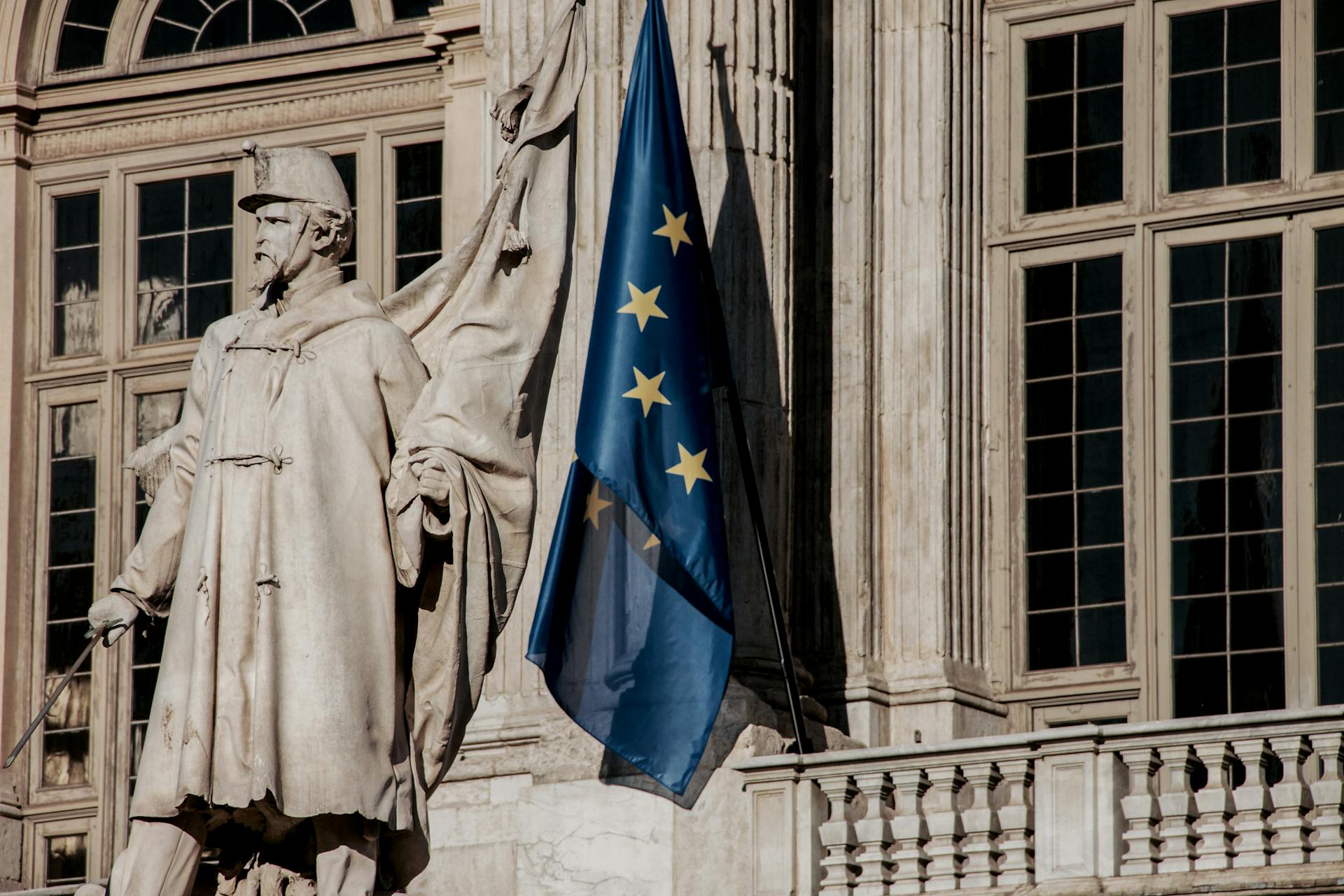
In the European Union, unfair business practices are regulated by the Unfair Commercial Practices Directive 2005, which was amended in 2017. Each member state is required to implement this regulation.
The EU's objective is to boost consumer confidence and make it easier for businesses, especially small and medium-sized enterprises, to trade across borders. This regulation aims to cover all aspects of business-to-consumer transactions.
The regulation requires member states to prohibit conduct that is misleading or deceptive, or likely to mislead or deceive consumers. For instance, in 2025, a German court stopped Apple from advertising their Apple Watch as a "CO2-neutral product" because the claim was deemed misleading to consumers.
To give you a better idea of the scope of this regulation, here are some examples of prohibited practices:
- Making false claims
- Representing goods as new or unused when they're not
- Using exaggeration, innuendo, or ambiguity when representing material facts
These practices are not only prohibited in the EU but also in other countries, such as Canada and Australia, where similar regulations exist to protect consumers from unfair business practices.
A different take: Unfair Commercial Practices Directive 2005
United Kingdom

In the United Kingdom, unfair business practices are regulated by the Unfair Contract Terms Act 1977, Consumer Rights Act 2015, and Consumer Protection from Unfair Trading Regulations.
These laws aim to protect consumers from unfair terms and conditions in contracts, as well as from misleading or deceptive business practices.
The UK laws are enforced by various government agencies, including the Competition and Markets Authority (CMA).
Consumers in the UK have the right to complain about unfair business practices to the CMA or to seek redress through the courts.
The UK laws also provide for penalties and fines for businesses that engage in unfair practices, which can include fines of up to 10% of a company's turnover.
In the UK, businesses are required to provide clear and transparent information to consumers, and to avoid making false or misleading claims.
The UK laws also cover online businesses, and require them to comply with the same standards as offline businesses.
Here are some examples of unfair business practices that are prohibited in the UK:
- Misleading or deceptive advertising
- Unfair contract terms
- Misleading or deceptive labeling
- Failure to provide clear and transparent information
- Making false or misleading claims
It's worth noting that the UK laws are subject to change, and new regulations may be introduced to further protect consumers.
What is Unfair Business Practice?
An unfair business practice is a deceptive or unethical method used to gain business, often violating consumer protection laws. It's essential to understand what constitutes an unfair business practice to avoid falling victim to it.
An unfair act or practice causes or is likely to cause substantial injury to consumers, which can be physical, financial, or emotional. This is a key factor in determining whether a business practice is unfair.
Unfair trade practices can include misrepresentation, false advertising, and deceptive pricing. These practices can be misleading and harm consumers in the long run.
To be considered an unfair trade practice, the act or practice must be able to cause substantial injury to consumers and cannot be reasonably avoided by consumers. This means that consumers should not be expected to be experts in a particular field to avoid being deceived.
Worth a look: Bruce Wasserstein Cause of Death

Here are the key characteristics of an unfair trade practice:
- Causes or is likely to cause substantial injury to consumers
- Cannot be reasonably avoided by consumers
- Is not outweighed by countervailing benefits to consumers or competition
A deceptive trade practice, on the other hand, misrepresents, omits, or misleads or is likely to mislead the consumer. This can be in the form of false or misleading information, hidden fees, or bait-and-switch tactics.
How Impact Consumers
Unfair trade practices can have a significant impact on consumers. Most states enacted unfair trade practice laws in the 1960s and 1970s to prevent such practices.
These laws are used to protect consumers from unfair trade practices, which can occur in various areas such as goods and services, tenancy, insurance claims, and debt collection. Consumers who have been victimized should examine the unfair trade practice statute in their state to determine whether they have a cause of action.
To determine if a practice is unfair, consider the following criteria: it must cause or be likely to cause substantial injury to consumers, it cannot be reasonably avoided by consumers, and it must not be outweighed by countervailing benefits to consumers or to the competition.
Here are the specific criteria for determining an unfair practice:
- It causes or is likely to cause substantial injury to consumers.
- It cannot be reasonably avoided by consumers.
- It is not outweighed by countervailing benefits to consumers or to the competition.
Types of Unfair Business Practices

Unfair business practices can take many forms, but some common types include bait-and-switch advertising, where a company advertises a product at an attractive price to lure customers in, but then tries to sell them a more expensive alternative. This tactic can be particularly deceitful, as it relies on customers not reading the fine print or being unaware of the true terms of the sale.
Bait-and-switch advertising is just one example of an unfair business practice. Others include hidden fees and charges, where a company adds unexpected costs to a customer's bill after they've committed to a purchase. This can happen in various industries, from telecom providers to hotels.
Some businesses also engage in predatory lending practices, which involve charging excessively high interest rates or fees, pushing borrowers into loans they can't afford, or using high-pressure sales tactics to get consumers to sign up for loans. These practices often target vulnerable populations, such as low-income individuals or those with poor credit.
Here are some common examples of unfair business practices:
- Bait-and-switch advertising
- Hidden fees and charges
- Predatory lending practices
- Unauthorized billing or charges
Bait-and-Switch Advertising
Bait-and-Switch Advertising is a classic example of an unfair business practice. It involves advertising a product or service at an attractive price to lure customers in, but then trying to sell them a more expensive alternative once they're in the store or committed to the purchase.
This tactic is often used to deceive consumers, leaving them feeling frustrated and misled. A car dealership might advertise a great deal on a specific model, only to tell customers that the advertised car is "no longer available" when they arrive, pushing them towards a pricier option instead.
Hidden Fees
Hidden fees are a sneaky way for businesses to make extra money from unsuspecting consumers. They can be hidden in the fine print of contracts, tucked away in the details of a product or service, or even added on after the fact.
These fees can be deceiving, making it difficult for consumers to make informed decisions about their purchases. For example, telecom providers might add unexpected "administrative fees" to your monthly bill, or hotels might tack on resort fees that weren't disclosed during booking.
Some common hidden fees include:
- Administrative fees
- Resort fees
- Setup fees
- Activation fees
- Early termination fees
These fees can add up quickly, making it seem like you're getting a good deal when in reality you're being charged extra for something you didn't ask for. It's essential to carefully review contracts and agreements before signing, and to ask questions if you're unsure about what you're being charged.
As mentioned in Example 3, hotels might tacking on resort fees that weren't disclosed during booking. This is a classic example of a hidden fee, and it's not just hotels that do it - many businesses use this tactic to make extra money from consumers.
Curious to learn more? Check out: Example of Undertaking Letter
Material
A material issue is one that affects a consumer's ability to make and understand a decision. This can be a claim made by the business, or an omission that is important to the consumer.
If a business makes a claim that is known to be false, it is presumed to be material. This can be the case even if the business didn't explicitly say it was false, as long as they should have known it was important to the consumer.
For example, the diesel cheating scandal involved car companies advertising their products as "clean", knowing they didn't meet environmental laws. This was a material issue because it affected consumers' decisions to purchase the cars.
Not all cases are cut and dry, and it's often best to consult with an experienced lawyer to determine if an issue is material. But in general, if a business makes a claim that is likely to mislead a consumer, it's material.
Some information is considered material by law, and can include implied claims as well as omissions. It's worth noting that every case is unique, so it's always a good idea to seek professional advice.
A fresh viewpoint: Can I Lease My Car to My S Corp
Elements of a Claim
To build a strong case against unfair business practices, you need to prove three distinct elements.
First, you must show that there was an unfair or deceptive trade practice. This could be as simple as a company advertising a product with false claims, like saying a watch has a unique movement when it doesn't.
To qualify as an unfair or deceptive trade practice, the act in question must be able to deceive or create the likelihood of deception.
It's essential to demonstrate that the unfair or deceptive trade practice affected commerce. For example, if you bought a product based on false claims, you may have chosen it over a competing product that was actually better.
You can prove that an unfair or deceptive trade practice affected commerce by showing that you would have made a different choice if the truth were known.
The final element you need to prove is that the unfair or deceptive trade practice was the proximate cause of actual injury to you or your business.
Actual injury can include monetary losses, the loss of use of a specific and unique property, and losing the appreciated value of property.
Here are some examples of actual injury:
- Monetary losses
- Loss of use of a specific and unique property
- Losing the appreciated value of property
Deception and Misrepresentation
Deception and Misrepresentation are key aspects of unfair business practices. A deceptive act or practice misrepresents, omits, or misleads a consumer, and it's not necessary for the consumer to suffer harm for this to be considered deceptive.
Fine print in ads may not be enough to offset a deceptive claim or headline, regardless of how many truthful disclosures follow it. Misleading cost or price claims, offering a product or service that is not available, using bait-and-switch techniques, and omitting material limitations or conditions from an offer are all examples of deceptive practices.
The prominence, presentation, placement, and proximity of information are crucial factors in determining whether a statement is deceptive. If a statement is not prominent enough for consumers to notice, or if the information is not presented in a clear and easy-to-understand way, it may be considered deceptive.
Some examples of deceptive practices include claiming a product is something it is not or performs a task it does not, systematically overcharging for a product or service, and altering or falsifying measuring devices. Businesses may also misrepresent the benefits, characteristics, ingredients, or uses of a product or service, or claim that a product is new when it is used, altered, or damaged.
Here are some key factors to consider when determining whether a business practice is deceptive:
- Prominence: Is the statement prominent enough for consumers to notice?
- Presentation: Is the information easy to understand and presented in a way that doesn’t contradict other information?
- Placement: Is the information placed where consumers can reasonably see or hear it?
- Proximity: Is the information close to the claim it qualifies?
In some cases, a business practice may be considered deceptive even if the majority of consumers don't interpret it as such. If a seller's representation conveys more than one meaning, and one of those meanings is false, the seller may be liable for the misleading interpretation.
Recommended read: Capital One Spark Miles for Business
Financial Implications
Unfair business practices can have serious financial implications for consumers. Misrepresentation and false advertising can lead to consumers making poor financial decisions.
The Federal Trade Commission Act prohibits such acts, safeguarding consumers from substantial injury that cannot be reasonably avoided. This means consumers are protected from financial harm caused by unfair business practices.
In the insurance industry, misleading policy terms or financial conditions can result in consumers paying more than they bargained for or not receiving the coverage they thought they had.
Recommended read: Financial Times Deutschland
Pricing
Pricing can be a real minefield, and it's essential to know what to look out for. Deceptive pricing practices, like perpetual "sales" where items are always discounted from an inflated "original" price, are designed to mislead consumers.
Some businesses use tactics like drip pricing, where mandatory fees are added throughout the checkout process, making it difficult to get an accurate total. I've seen this happen online, where a product seems cheap at first but then gets more expensive as you add it to your cart.
For your interest: Cleaning Business Pricing Structure
False "going out of business" sales are another trick used to create a false sense of urgency. This can be misleading and pressure consumers into making purchases they might not have made otherwise.
Here are some common deceptive pricing practices to watch out for:
- Perpetual "sales" with inflated original prices
- Drip pricing with mandatory fees added throughout the checkout process
- False "going out of business" sales
Hidden fees and charges are another issue, often added to bills or invoices after the fact. This can include unexpected "administrative fees" or resort fees that weren't disclosed during booking. These hidden charges can add up quickly and make it difficult to budget.
Attorney Fees
Attorney fees can be a significant concern when considering legal action, but in Unfair and Deceptive Trade Practices cases, the law allows the judge to award attorney's fees in addition to damages.
In these complex and time-consuming cases, hourly fees are often charged.
A guilty defendant may be obligated to pay these fees instead of the victim, making it less about the cost and more about who you want to represent you.
Attorneys may charge fees in various ways, but in high-probability litigation cases, hourly fees are common.
8 Debt Collection
Debt collection can be a stressful experience, but it's essential to know your rights as a consumer. The Fair Debt Collection Practices Act (FDCPA) is a federal law that protects consumers from unfair debt collection practices.
Some collectors may use tactics that are considered unfair business practices, such as harassing consumers with excessive calls or threats. This can be extremely stressful and disrupt daily life.
The FDCPA specifically prohibits many of these practices, providing important protections for consumers dealing with debt collectors. This means that collectors are not allowed to misrepresent the amount of debt owed.
Consumers have the right to request that collectors stop contacting them at unreasonable hours or at their workplace. This can be an effective way to reduce stress and protect personal time.
If a collector is attempting to collect a debt that isn't actually owed, it's essential to dispute the debt in writing. This can help prevent further collection efforts and protect credit scores.
If this caught your attention, see: Essential Liquidations
Other Considerations
It's essential to be aware of the tactics businesses use to take advantage of consumers. For example, a seller modifying the price of a product or withholding the price until after the consumer commits to the purchase can be considered an unfair act.
If a business coerces you into making an unwanted purchase, such as a timeshare, you may have grounds to file a complaint. This can include any transaction that occurs without your knowledge or consent.
To protect yourself, keep records of all transactions and communications with businesses. This can be as simple as saving emails or receipts, but it can be invaluable in case you need to dispute a charge or report a suspected unfair practice.
For your interest: Creative Financing for Business Purchase
Protecting Yourself
Reading contracts and terms of service carefully is crucial before signing or agreeing to anything. This will help you understand the terms and conditions of the agreement.
Researching companies and products before making purchases is essential to making informed decisions. This can help you avoid dealing with businesses that have a history of unfair practices.
For another approach, see: Payment Terms and Conditions Sample Text

Be wary of deals that seem too good to be true, as they often are. This is a common tactic used by businesses to lure in consumers with false promises.
Keeping records of all transactions and communications with businesses is vital in case you need to report any unfair practices. This can include emails, receipts, and any other documentation related to the transaction.
If you believe you've been a victim of unfair business practices, don't hesitate to seek help. You can report suspected unfair practices to your state's consumer protection office or the Federal Trade Commission.
Employee Mobility and Confidentiality
Employee mobility is a significant concern for businesses, particularly when it comes to protecting confidential information. Employee Mobility & Trade Secrets is a key area to focus on.
Computer fraud can occur when employees leave a company and take confidential information with them. This can lead to serious consequences for the business.
If this caught your attention, see: When Are Quarterly Business Taxes Due
Non-compete, non-solicitation, and restrictive covenants are common tools used to prevent employees from taking confidential information to a competitor. These agreements can be enforced in court.
Unfair competition and unlawful business practices can arise when employees use confidential information to gain an advantage over their former employer. This can be a serious issue for businesses.
Here are some key points to consider:
- Non-compete agreements typically restrict an employee from working for a competitor for a specified period.
- Non-solicitation agreements prevent employees from soliciting customers or employees from their former employer.
- Restrictive covenants can include confidentiality agreements and non-disclosure agreements.
Key Takeaways
Unfair business practices are a significant concern for consumers. They involve using fraudulent or unethical methods to gain business advantages.
Many industries are affected by unfair trade practices, including consumer goods, insurance, and debt collection. These industries have a history of exploiting consumers for profit.
To determine if an act is unfair, consider whether it causes significant harm to consumers that cannot be avoided or justified. This harm can be financial, emotional, or physical.
Deceptive practices are a type of unfair trade practice that involve misleading consumers with false information or representations. This can lead to financial losses, damaged credit, or even physical harm.
Here are some key characteristics of unfair trade practices:
- Unfair trade practices involve using fraudulent or unethical methods to gain business advantages.
- An act is deemed unfair if it causes significant harm to consumers that cannot be avoided or justified.
- Deceptive practices involve misleading consumers with false information or representations.
Featured Images: pexels.com