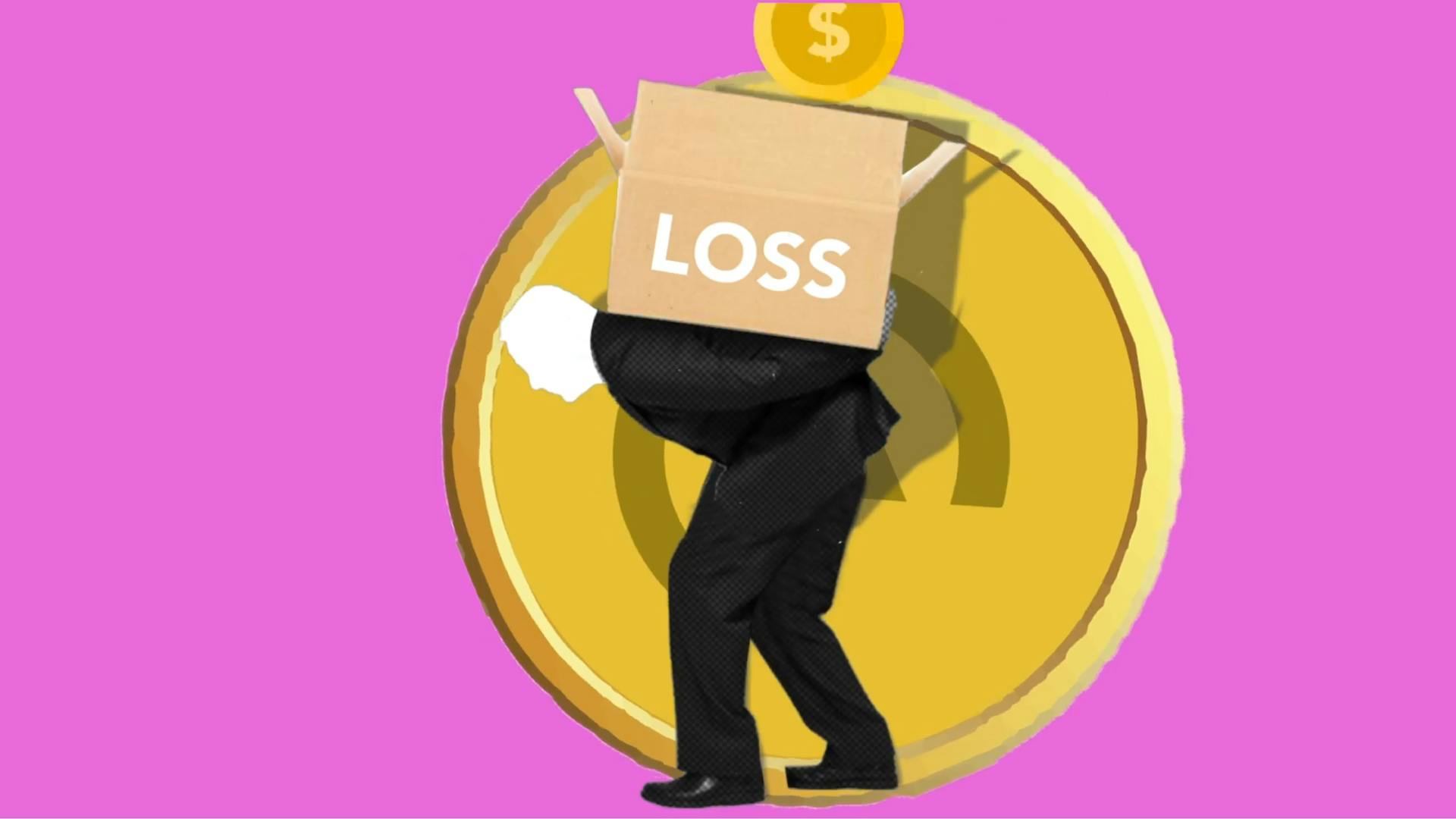
Trading while insolvent can have severe consequences for directors. A company can be considered insolvent if it is unable to pay its debts as they fall due.
Directors who allow their company to trade while insolvent can face personal liability for the company's debts. This is because they have a duty to act in the best interests of the company and its creditors.
Trading while insolvent can also lead to a breach of the Insolvency Act 1986, which prohibits companies from continuing to trade when they are unable to pay their debts.
Readers also liked: Review of the Role and Effectiveness of Non-executive Directors
UK Law and Regulations
Trading while insolvent in the UK can have serious consequences for directors.
Under UK insolvency law, trading once a company is legally insolvent can trigger several provisions of the Insolvency Act 1986, including wrongful trading – Section 214.
Directors who continue to trade while insolvent may face disqualification under the Company Directors Disqualification Act 1986. This can happen if the liquidator reports their conduct to the Disqualification Unit of the Department for Business, Innovation and Skills.
Recommended read: Company Directors Disqualification Act 1986
If the liquidator has come across any conduct that makes the director unfit to be involved in the management of a company in the future, the Department for Business, Innovation and Skills will apply to the Court for an order disqualifying the director or directors from acting as a company director for a certain period of time.
Directors are exposed in respect of transaction at an undervalue, preferences, and extortionate credit transactions if the transaction occurred while the company was insolvent and within 2 years before the onset of liquidation if the transaction was with a connected person, and 6 months if the transaction was with an unconnected person.
Here are the key provisions of the Insolvency Act 1986 that can be triggered by trading while insolvent:
- Wrongful trading – Section 214
- Transaction at an undervalue – Section 238
- Preferences – Section 239
- Extortionate credit transactions – Section 244
Wrongful Trading
Wrongful trading is a civil offence under Section 214 of the Insolvency Act 1986. It occurs when Directors continue trading when they knew — or ought to have known — that there was no reasonable prospect of avoiding insolvency.

A failure to act appropriately, even through inaction or delay, can be enough to trigger liability. Wrongful trading doesn't require dishonest intent, making it a serious concern for Directors.
The legal framework for wrongful trading combines both objective and subjective assessments. Objectively, it considers what a reasonably diligent person with the director's general knowledge and experience would have concluded.
Directors with financial acumen may be held to a higher standard than those without such backgrounds. This means Directors must take proactive steps to minimise potential losses to creditors.
If the company eventually goes into liquidation, the liquidator may bring a claim against the Directors. If the court agrees, Directors can be held personally liable for some or all of the losses suffered by creditors from the point insolvency should have been recognised.
Here are the key differences between wrongful and fraudulent trading:
Director Liability and Disqualification
As a director, it's essential to understand the risks of trading while insolvent. Directors become personally liable for wrongful trading when they continue trading despite knowing there is no reasonable prospect of avoiding insolvent liquidation.
See what others are reading: Insolvent Debtors (England) Act 1813
Directors may face personal contribution orders, requiring them to pay into the insolvent estate, if found liable. This can be a significant financial burden, sometimes tens of thousands of pounds or more.
The legal threshold for wrongful trading is based on what directors should know about their company's financial situation, involving both an objective and subjective assessment of the director's knowledge, skill, and experience.
Directors can protect themselves by meticulously documenting decision-making processes and seeking professional advice early. This documentation can prove that they acted responsibly and took necessary steps to mitigate losses, potentially shielding them from personal liability.
Disqualification from managing corporations can also occur if a director has been involved with two or more companies that have gone into liquidation within the last seven years and paid their creditors less than 50 cents in the dollar.
Here are the possible disqualification periods for directors:
In extreme cases, directors may face disqualification from managing corporations for up to 20 years if their actions contributed to the company's failure.
Directors' Personal Liability
Directors can become personally liable for wrongful trading if they continue to trade despite knowing there is no reasonable prospect of avoiding insolvent liquidation.
This liability arises under section 214 of the Insolvency Act 1986, which holds directors accountable for failing to take every step a reasonably diligent person would have taken to minimize potential losses to creditors.
Directors may face personal contribution orders, requiring them to pay into the insolvent estate, if found liable.
A director's personal liability is based on what they should know about their company's financial situation, involving both an objective and subjective assessment of their knowledge, skill, and experience.
A director with a financial background may be expected to foresee insolvency risks earlier than someone without such expertise.
Directors should meticulously document decision-making processes and seek professional advice early to protect themselves from personal liability.
If a company becomes insolvent, directors must act in the best interests of creditors to avoid personal liability and legal consequences.
Take a look at this: Limited Liability Act 1855
Continuing to trade when a company is insolvent can result in directors being held personally liable for the company's debts, which can be tens of thousands of pounds or more.
Taking early, responsible action is the best way to protect directors from the risks of trading while insolvent and show that they have acted in the best interests of creditors.
Suggestion: Best Macbook for Trading Stocks
Disqualification from Directorship
Disqualification from Directorship can be a serious consequence for directors who fail to meet their responsibilities. A disqualification from directorship can last up to 15 years, significantly impacting your ability to run a business or hold certain leadership roles.
Directors who have been involved with multiple companies that have gone into liquidation within the last seven years and paid their creditors less than 50 cents in the dollar may be disqualified from managing corporations for up to five years. This is according to ASIC, which maintains a banned and disqualified persons register.
Disqualification periods vary depending on the severity of the case. For less severe cases, disqualification periods are typically 2 to 5 years, while more serious breaches can result in 6 to 10 year disqualifications. The most egregious cases, often involving fraudulent activities or repeated misconduct, can lead to 11 to 15 year disqualifications.
Here are some common disqualification periods:
If you're facing disqualification from directorship, it's essential to seek professional advice to understand your options and potential consequences.
Recognising and Managing Insolvency
Recognising the early signs of insolvency is crucial to avoid wrongful trading claims. Consistent late payments, mounting debts, and final demands from suppliers are common warning signs.
Ignoring these signs increases the risk of wrongful trading claims, where directors could be held personally liable for continuing to trade while insolvent. Acting swiftly when these signs appear is essential.
Here are some common warning signs of insolvency:
- Consistent late payments: Struggling to meet payment deadlines regularly.
- Mounting debts: A noticeable increase in outstanding liabilities.
- Final demands: Receiving frequent final notices from suppliers or service providers.
- Creditor pressure: Facing persistent demands or threats of legal action from creditors.
If your company is insolvent, do not allow it to incur further debt. Unless it is possible to restructure, refinance or obtain equity funding to recapitalise the company, your options are to appoint a restructuring practitioner, a voluntary administrator, or a liquidator.
Recognising Signs
Ignoring the early signs of insolvency can lead to severe consequences for directors, including wrongful trading claims. Recognising these signs early is crucial.
Consistent late payments are a common warning sign of insolvency. If your company is regularly struggling to meet payment deadlines, it may be a sign that something is amiss.
Mounting debts can also indicate insolvency. A noticeable increase in outstanding liabilities can put your company at risk. If debts are piling up and you're not sure how to pay them, it's time to take action.
Receiving frequent final notices from suppliers or service providers is another warning sign. This indicates that your company is having trouble paying its bills on time.
Creditor pressure is a serious sign of insolvency. If you're facing persistent demands or threats of legal action from creditors, it's essential to take immediate action.
Here are some common warning signs of insolvency:
- Missed payments to suppliers, staff, or HMRC
- Relying on short-term borrowing to cover basic costs
- Receiving County Court Judgments (CCJs)
- Pressure or legal threats from creditors
- Rising debt with no repayment plan
- Liabilities exceeding assets
- HMRC arrears
- Delays in paying rent or utilities
Action Steps for Financial Trouble
Recognising the signs of insolvency is crucial for directors to avoid wrongful trading claims. If a company cannot pay bills on time, has mounting debts or faces increasing pressure from creditors, it may be trading insolvently.
Ignoring the warning signs increases the risk of wrongful trading claims, where directors could be held personally liable for continuing to trade while insolvent. These indicators suggest that immediate action is necessary to prevent severe consequences.
Here are some common warning signs of insolvency:
- Consistent late payments: Struggling to meet payment deadlines regularly.
- Mounting debts: A noticeable increase in outstanding liabilities.
- Final demands: Receiving frequent final notices from suppliers or service providers.
- Creditor pressure: Facing persistent demands or threats of legal action from creditors.
Acting swiftly when these signs appear is essential. If you suspect your company is in financial difficulty, get professional accounting and/or legal advice as early as possible.
Some warning signs of insolvency include ongoing losses, poor cash flow, absence of a business plan, and increasing debt. A registered liquidator or other suitably qualified adviser can conduct a solvency review of your company and outline available options.
If you're worried about potential wrongful trading, our licensed insolvency practitioners and business rescue specialists can explain your duties as a director and outline the steps you should take.
Time to Pay Arrangement
A Time to Pay Arrangement with HMRC can be a lifesaver if you're struggling with tax arrears.
This arrangement allows you to spread repayments over a set period, which can ease pressure and avoid more serious enforcement action.
If your business is otherwise viable, a Time to Pay Arrangement can be a valuable option.
It's not a formal insolvency procedure, but it can still provide relief.
HMRC Time to Pay Arrangements can be a good choice if your financial pressures are largely due to tax arrears.
You'll need to ensure your business is otherwise viable to qualify.
By spreading repayments over a set period, you can avoid more serious enforcement action and get back on track.
This can be a much-needed breather for your business.
For more insights, see: Best Time to Trade Spx500
Consequences and Penalties
Trading while insolvent can have serious repercussions for company directors. These risks can affect not just your current company but your personal finances and future career.
The most common penalty for directors who fail to act responsibly when their company faces insolvency is a contribution order, requiring them to personally pay funds into the insolvent estate to compensate creditors for losses incurred due to continued trading beyond the point of no return.
Directors may also face disqualification from holding directorships, a measure intended to protect the public and business community from individuals deemed unfit to manage a company.
Disqualification periods vary based on the severity of misconduct. A director may find it difficult to rely on statutory defences if they have not taken steps to stay informed about the company’s financial position.
Contravening the insolvent trading provisions of the Corporations Act can result in civil penalties against directors. The maximum monetary penalty for individuals is the greater of 5,000 penalty units, or three times the benefit obtained and detriment avoided.
Trading while insolvent can lead to criminal charges if dishonesty is found to be a factor. A director may be subject to a fine of up to 2,000 penalty units or imprisonment for up to five years, or both.
Here are the possible consequences of insolvent trading:
- Civil penalties against directors
- Contribution orders requiring directors to personally pay funds into the insolvent estate
- Disqualification from holding directorships
- Criminal charges, including fines and imprisonment
External Administration and Insolvency
If your company is struggling financially, there are several options available to you. You can appoint a restructuring practitioner if your company meets the eligibility criteria.
A director can also put their company into voluntary administration, which is designed to resolve the company's future direction quickly. This involves an independent registered liquidator taking full control of the company to try to work out a way to save it or the company's business.
In some cases, a company can have a receiver or receiver and manager appointed over its property, but this option is not normally available to a director. A secured creditor or court typically needs to make this appointment.
There are different types of external administration, including liquidation, voluntary administration, and receivership. Each has its own consequences for directors, such as the possibility of insolvent trading action.
If your company is insolvent, it's essential to stop incurring further debt. You may need to appoint a restructuring practitioner, voluntary administrator, or liquidator to help resolve the situation.
Here's a summary of the most common forms of external administration available to directors:
- Liquidation
- Voluntary administration, which may lead to a deed of a company arrangement (DOCA) or liquidation
A company can also appoint a restructuring practitioner, but only if it meets the eligibility criteria for small business restructuring.
Director Responsibilities and Obligations
Directors of a company have a duty to act in the best interests of creditors when the company is insolvent. This duty includes providing the company's books and records to the external administrator or receiver, advising them of the location of the company's property, and delivering any property in the director's possession to the external administrator or receiver.
Directors must also provide a report on company activities and property (ROCAP) within a certain timeframe of the external administrator or receiver's appointment. The timeframe varies depending on the type of insolvency process, but it's typically around 5-10 business days.
Directors who continue to trade while insolvent can face personal liability and legal consequences. This is known as wrongful trading, and it can result in personal contribution orders, requiring directors to pay into the insolvent estate.
Directors have a duty to prevent creditor-defeating dispositions, which are transactions that prevent, hinder, or significantly delay the property from becoming available to benefit creditors in a winding up. This can include disposing of property for less than its market value.
Suggestion: Personal Vehicle Leasing
Directors must also prevent their company from trading and incurring debts if it is insolvent. A company is insolvent if it is unable to pay its debts when they fall due.
Here are some key director responsibilities and obligations:
Directors who fail to meet these obligations can face serious consequences, including personal liability and legal action. It's essential for directors to take immediate action and seek professional advice if they suspect their company is insolvent.
Consult a licensed professional
Seeking professional advice is crucial when you suspect insolvency. Acting on professional advice not only improves outcomes but also demonstrates that you've taken your responsibilities seriously.
A licensed Insolvency Practitioner can assess your company's position and help you understand your duties and options. They will guide you through the process and provide expert advice.
It's essential to consult a licensed professional as soon as you suspect insolvency, as they can help you take control of the situation and make informed decisions.
Featured Images: pexels.com