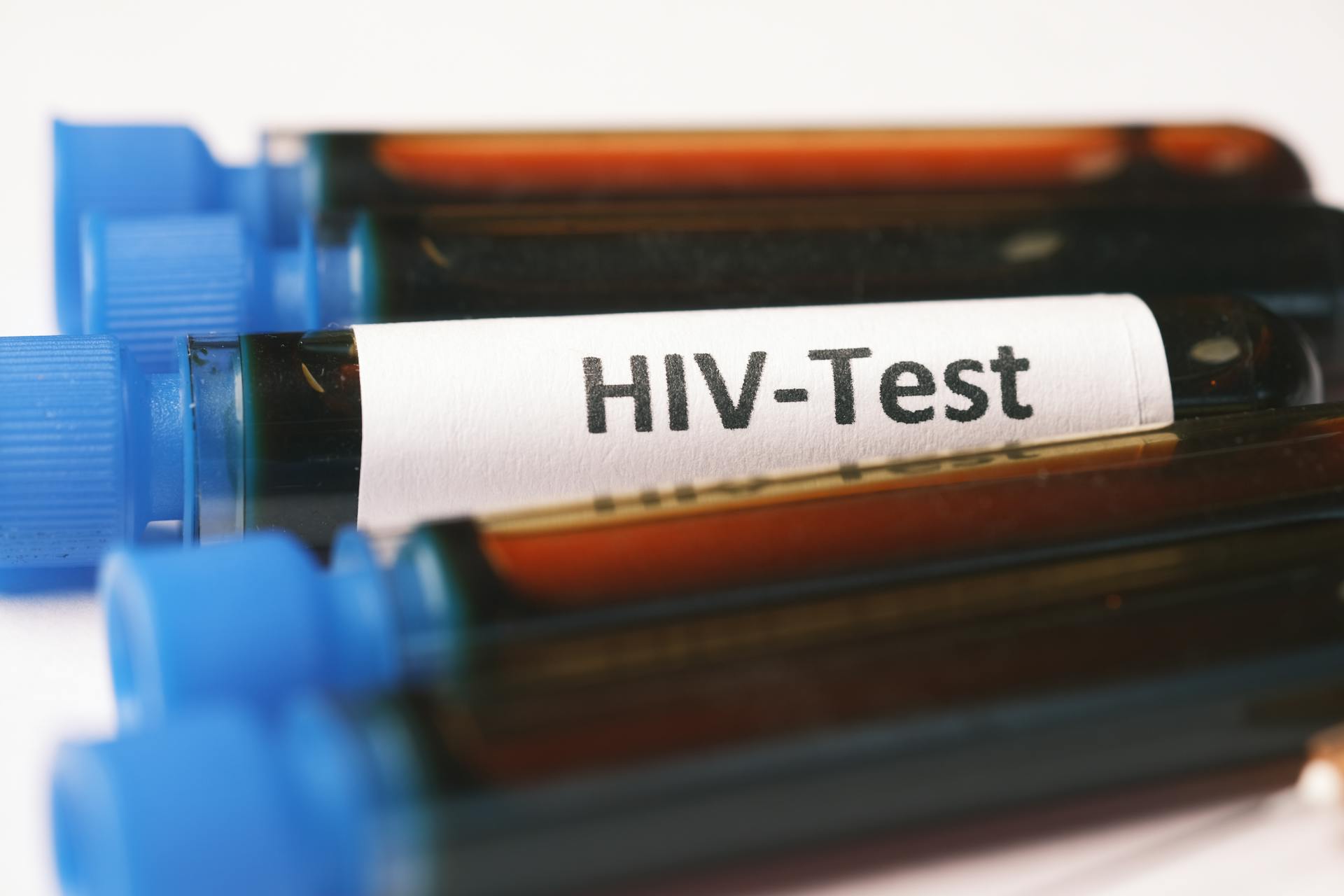
For those living with HIV, securing term life insurance can be a challenge. Many HIV-positive individuals face higher premiums or even denial of coverage due to their health status.
Term life insurance can be obtained by HIV-positive individuals, but it's essential to understand the premiums and underwriting process involved.
In some cases, HIV-positive individuals may be required to disclose their health status to the insurance company, which can impact their premium rates.
Insurance companies use various factors to determine premium rates, including the individual's viral load, CD4 count, and overall health.
Here's an interesting read: Can You Claim Life Insurance Premiums on Your Taxes Canada
What You Need to Know
For individuals living with HIV, it's essential to understand what to expect when applying for term life insurance. Approximately 1.2 million individuals in the U.S. are living with HIV, and with proper management, it's considered a chronic disease like diabetes and coronary artery disease.
The good news is that some life insurance companies, like Guardian, offer coverage to those who qualify. However, each case is individually underwritten, and not everyone will qualify. A medical assessment, called underwriting, determines whether one would qualify for coverage and the type, amount, and price of insurance coverage offered.
If this caught your attention, see: Living Life Insurance Policy
To be considered for a policy with Guardian, you must meet certain criteria. This includes identifying as a healthy individual living with HIV, being between 20-65 years old, and having been on highly active anti-retroviral therapy for at least two years with favorable lab results.
Here are the specific guidelines to help you pre-qualify:
- Must identify as a healthy individual living with HIV
- Ages between 20-65
- Have been on highly active anti-retroviral therapy for at least two years and demonstrate favorable lab results
- No history of IV drug abuse (within the last 7 years)
- No history of Hepatitis B or any AIDS-defining illness
- Must be Hepatitis C Ab negative or cured
- HIV viral load is undetectable
- CD4 count must be above 350
Keep in mind that some riders and benefits may not be available, and policy benefits are reduced by any outstanding loan or loan interest and/or withdrawals.
See what others are reading: Life Insurance Housing Loan
Cost and Premiums
Most people with HIV qualify for standard or substandard rates, depending on their individual situation.
If you're in remission or your chronic condition is well managed, coverage may not be as expensive as you think.
Applicants who have tested positive for HIV will typically be rated Substandard.
Life insurance rates will be predicated on underwriting guidelines, which are used to determine which rate class an applicant qualifies for.
Explore further: B Owns a Whole Life Policy
Most insurance companies offer several rate classes, with the preferred plus having the lowest rates and standard smoker being one of the highest.
The cost of the policy is higher for people with serious health conditions, including HIV, because the risk of insuring them is higher.
Medical advances have improved outcomes for many patients with serious health issues, including HIV, and have led to better rates.
A different take: Life and Health Insurance Broker
Options
If you're HIV positive and looking for term life insurance, there are options available. Guardian Life offers a whole life insurance product for people with HIV, which means you can get coverage for your entire life, not just a set term.
You might be surprised to learn that insurers may quote a higher premium, but coverage is still accessible. In fact, applicants 70 and younger may qualify for standard rates with certain pre-existing conditions, such as anxiety, depression, Type 2 diabetes, cancer, coronary artery disease, hypertension, and obesity.
Some companies are specifically designed to help people living with HIV. For example, John Hancock's Aspire with Vitality policy is specifically designed for people living with Type 1 or Type 2 diabetes, but it's worth noting that it's not explicitly mentioned in the article section that it's for HIV positive individuals.
Here are some companies that offer coverage for people with HIV or specific medical conditions:
It's worth noting that Prudential offers coverage to HIV-positive applicants on a case-by-case basis, which means they'll review your application individually.
Recommended read: Insurance to Pay off Home Loan in Case of Death
Buying and Applying
You can shop around for life insurance quotes, just like you would for any other insurance policy. Compare quotes from multiple insurers to find the best coverage at the best price.
Working with an independent broker can help you get quotes from multiple insurers and compare options. This is especially helpful if you're living with a health condition like HIV.
The application process for life insurance can take longer if you disclose your HIV-positive status. This is because the insurance company will require additional information, such as medical records and physician statements.
See what others are reading: American Council of Life Insurers
If you're applying for a guaranteed issue policy, you won't need to provide as many health details, and the application process will be faster.
You'll typically need to fill out an application with a licensed agent, and they'll ask you questions about your health history and treatment plan. You may also need to provide specific details about your HIV history, depending on the insurer.
Most people applying for traditional life insurance will need to take a medical exam, which is paid for by the insurance company. If you're applying for a guaranteed issue policy, you won't need to take an exam.
The insurance company will review your application and may request additional information during underwriting. This can take five to six weeks on average for a traditional life policy, but it's much quicker for guaranteed issue policies.
Here's a rough estimate of the time it may take for the application process:
- Traditional life policy: 5-6 weeks
- Guaranteed issue policy: a few days
Eligibility and Underwriting
Life insurance companies evaluate applicants with HIV cautiously due to the virus's impact on the immune system and increased risk of other health conditions.
To get approved, HIV-positive applicants typically need to wait at least one year after their initial diagnosis and show six months of stable health and treatment.
The underwriting process involves inquiring about the applicant's HIV diagnosis, including how long it's been since the first diagnosis, if they're following antiretroviral therapy (ART), and what their viral load is.
Insurance companies may also want to see the applicant's CD4 cell count, with some requiring a count of 499 or higher for traditional life insurance coverage.
Applicants with a history of stable health and treatment may be offered coverage at an affordable rate, and maintaining a healthy lifestyle can also help improve approval odds.
Here are some common underwriting factors for HIV-positive people:
- How long it's been since the first diagnosis.
- ART treatment and duration.
- Viral load and undetectability status.
- CD4 cell count.
- Additional chronic conditions and medications.
Affecting Eligibility
Insurance companies are cautious about insuring people with HIV because of the virus's impact on the body's immune system, which can increase the risk of other health conditions like heart disease, kidney disease, or diabetes.
Suggestion: S Is Covered by a Whole Life Policy
Applicants with HIV may face longer waiting periods before being approved for a policy, typically at least one year after diagnosis, and may need to provide additional paperwork with details of their treatment.
Insurance companies will want to know more about the applicant's condition, including how long it's been since the first diagnosis, if they're following antiretroviral therapy, and their viral load and CD4 cell count.
A pre-existing condition is a medical issue diagnosed or treated before applying for life insurance, and HIV/AIDS is considered one of these conditions.
Insurance companies may deny coverage unless the applicant can show five years of stable health history and meet additional health and testing criteria.
Here are some pre-existing conditions that may raise a red flag:
- Anxiety
- Asthma
- Cancer
- COVID-19
- Depression
- Diabetes
- Epilepsy
- High blood pressure
- High cholesterol
- HIV/AIDS
- Heart disease
- Obesity
If a policyholder is diagnosed with HIV after taking out a policy, the insurance carrier will honor the terms and conditions of the policy, but the insurer may still investigate the underwriting process and answers provided on the application during the 2-year contestability period.
The Applicant's Age
Insurance companies have varying underwriting guidelines, but one common requirement is that the applicant be no older than 50 years old. This is especially true for carriers that consider HIV-positive applicants.
Companies and Comparison
If you're looking for term life insurance as an HIV-positive individual, there are several reputable companies to consider. Pacific Life and Lincoln Financial both stand out with high ratings of 4.8/5 stars, making them great options for term life insurance.
Their strong ratings are backed by a high credit rating from AM Best, with Pacific Life earning an A+ rating and Lincoln Financial earning an A rating. These companies are well-established and financially stable, giving you peace of mind.
Here are some top companies to consider for term life insurance as an HIV-positive individual:
Comparing Companies
Pacific Life, Lincoln Financial, and Mutual of Omaha are among the top-rated life insurance companies for people with HIV. Pacific Life stands out for its extremely affordable term life insurance rates across age brackets.
You might enjoy: Pacific Life Term Insurance
Pacific Life offers a no-medical-exam option and has favorable underwriting for many health conditions, including HIV. Lincoln Financial also offers a no-medical-exam option and has a high Policygenius rating of 4.8/5 stars.
Mutual of Omaha is a good option for those looking for guaranteed issue life insurance. It has a Policygenius rating of 4.5/5 stars and an AM Best rating of A+. Prudential is another option, but its Policygenius rating is lower at 4.1/5 stars.
Here's a comparison of the top-rated companies:
Prudential
Prudential offers competitive coverage options for seniors, as well as people with common medical conditions like asthma, depression, and fibromyalgia.
They have nearly four million policyholders and have been around for 150 years, which is a testament to their stability and reliability.
Prudential is good for people over 60, and they have more flexible income requirements than some other insurers.
Here are some key features of Prudential's term life insurance:
- Considered for people with HIV, although premiums may be higher
- Available for people between age 30 and 60
- 10-year or 15-year term life insurance policies available
United States

In the United States, a staggering 1.2 million people are living with HIV, with approximately 14% unaware of their infection. This is a significant concern, especially considering the 36,000 new infections that occurred in 2018.
The impact of HIV is felt more severely in certain communities, particularly among racial minorities and gay and bisexual men. In fact, new diagnoses are being discovered at an alarming rate in the southern states.
One of the most concerning statistics is that over 15,000 people died with HIV in the U.S. in 2018. This highlights the need for increased awareness and access to testing and treatment.
Here's a breakdown of the number of new HIV diagnoses in the U.S. by year:
As you can see, there was a 7% decrease in new diagnoses between 2014 and 2018, which is a positive trend. However, there is still much work to be done to address the ongoing HIV epidemic in the United States.
Frequently Asked Questions
How many years can an HIV person live?
People living with HIV can expect to live as long as their peers without HIV, with a similar life expectancy, if they receive timely diagnosis, quality medical care, and adhere to treatment. With proper care, HIV is no longer a life-limiting condition.
Featured Images: pexels.com