Temporary buydown mortgages can be a game-changer for homebuyers and sellers alike.
One of the biggest benefits for homebuyers is that temporary buydown mortgages can lower their monthly mortgage payments for a set period of time, typically 1-3 years. This can make homeownership more affordable and help them qualify for a larger home.
By reducing the monthly mortgage payment, homebuyers can enjoy lower housing costs and more disposable income. Homebuyers can also use this extra money to tackle other financial goals, such as paying off debt or building up their emergency fund.
For more insights, see: 2/1 Temporary Buydown
What is a Temporary Buydown Mortgage
A temporary buydown mortgage is a type of mortgage that reduces the home buyer's monthly payments in the first year or sometimes in the first two or three years. This is accomplished by subsidizing the interest rate that the borrower pays.
The home buyer will make discounted payments for a year or more, instead of making the mortgage's full monthly payments from the get-go. For example, a buyer might get a mortgage at a 7% interest rate, with a one-year buydown, resulting in monthly payments based on a 6% interest rate before rising to 7% thereafter.
On a similar theme: Commercial Mortgage Interest Rates

Traditionally, most temporary buydowns are paid for by home builders and home sellers as a closing cost equal to the buyer's interest savings. This means the seller deposits the buyer's interest savings into a custodial account at closing.
Some lenders are now offering temporary buydowns as a means of competing for business when there are fewer mortgages to write. This is a feature worth watching for when comparing lenders.
In a seller-paid buydown, the home's seller funds the buydown, while in a buyer-paid buydown, you buy down your rate. In a lender-paid buydown, the lender funds the buydown.
See what others are reading: How Soon Can I Refinance after Buying a Home
Benefits and Advantages
Temporary buydown mortgages offer several benefits and advantages, making them an attractive option for homebuyers. They can provide immediate relief from high monthly payments, especially for first-time homebuyers who may be struggling to make ends meet.
A temporary buydown can also give you the effect of a lower interest rate mortgage for the first year, or two, or three, which can lower your monthly payments and ease you into homeownership expenses. This can be especially helpful when you're on a tight budget or expect your income to increase in the near future.
You might like: First Direct Remortgage Rates

Some borrowers use a temporary rate buydown in addition to the benefits of other affordable home loan options, such as FHA or VA home loans. This can provide an extra layer of savings and flexibility in your mortgage payments.
- Immediate impact: Temporary buydowns can provide immediate relief from high monthly payments.
- Ease into homeownership: Lower monthly payments can ease you into homeownership expenses.
- Rate protected: If interest rates rise, you're protected from higher rates for the duration of the buydown period.
- Refi later: If interest rates drop, you can refinance to a lower rate.
Advantages
A mortgage buydown can be a game-changer for first-time homebuyers, easing them into homeownership expenses.
Immediate impact is one of the advantages of a mortgage buydown, allowing you to feel the benefits of lower monthly payments right away.
You can also refinance later if interest rates drop, giving you flexibility in the long run.
Lower monthly payments can be especially helpful for those on a tight budget, allowing you to use the saved funds for home improvements or other expenses.
Here are some key advantages of a temporary rate buydown:
- Get the effect of a lower interest rate mortgage for the first year (or two or three)
- Lower monthly payments ease you into homeownership expenses
- Use the funds you’re saving each month for home improvements, etc.
Benefits to the Seller
Temporary buydowns can be a win-win for sellers, allowing them to get the price they want without dropping the price.
A seller can offer a buydown instead of lowering the price, which can be beneficial for their reputation. By doing so, the seller gets to brag about getting the desired price while the buyer saves money.
For example, a seller may offer a 2-1 buydown on the buyer's mortgage, saving the buyer $6,992 over the first two years of the loan. That's a significant amount of money that comes out of the seller's proceeds at closing.
This way, the seller gets to keep their desired price, and the buyer gets a better deal. It's a clever negotiating tactic that can resolve impasses and get deals done.
Here are some benefits to the seller:
- The seller gets to brag about getting the desired price.
- The buyer pays the price the two sides are stuck at, which can be beneficial for the seller.
- The seller pays for a buydown on the buyer's mortgage, which can be a significant cost savings for the buyer.
How to Negotiate and Structure
Negotiating a temporary buydown can be a smart move for both buyers and sellers. Either side can suggest a buydown, and the seller can offer one proactively as a competitive tactic.
The government-sponsored mortgage companies Fannie Mae and Freddie Mac impose limits on seller concessions, including temporary buydowns. Limits vary depending on down payment size.
For your interest: Temporary Account
To soften payment shock, the effective interest rate can only increase by one percentage point each year. This means the borrower's effective rate can't jump from 5% to 7%, for example, but would have to go from 5% to 6% first.
There are various structures for buydown terms, including a 3-2-1 buydown, 2-1 buydown, 1-1 buydown, and 1-0 buydown.
Related reading: Rocket Mortgage 1 Buydown
Negotiating
Negotiating is a crucial part of the home buying process, and it's essential to know the rules and limitations.
Either side can suggest a buydown, but the seller can offer it proactively as a competitive tactic or the buyer can request it as a seller's concession.
Government-sponsored mortgage companies Fannie Mae and Freddie Mac impose limits on seller concessions, including temporary buydowns, which vary depending on down payment size.
The maximum length of a temporary buydown is three years, and the effective interest rate can only increase by one percentage point each year to soften payment shock.
Take a look at this: Temporary Rate Buydown

The ARM is a type of loan that can get you into your home with the lowest possible payment at a given time, but it's not eligible as a seller concession.
In a seller's market, the fact that a seller can't offer an ARM as a concession is often irrelevant, as sellers have little incentive to offer concessions anyway.
Structures
Structures are key to a successful mortgage buydown. There are various structures for buydown terms.
The 3-2-1 buydown is a common structure, where the interest rate is reduced by 3% for the first year, 2% for the second year, and 1% for the third year.
A 2-1 buydown structure reduces the interest rate by 2% for the first year and 1% for the second year.
The 1-1 buydown structure reduces the interest rate by 1% for the first two years.
A 1-0 buydown structure reduces the interest rate by 1% for the first year, with no further reductions.
Discover more: 2-1 Buydown Mortgage
3-2-1
The 3-2-1 buydown is a popular temporary buydown structure. It reduces the buyer's interest rate by 3% for the first year, 2% for the second year, and 1% for the third year.
In a 3-2-1 buydown, the buyer's interest rate is reduced by 3% for the first year, resulting in a lower monthly payment. This can be a great option for buyers who want to reduce their initial payment shock.
Here's an example of how a 3-2-1 buydown works:
This structure can provide significant savings for the buyer, especially in the first year. According to Example 5, in a 3-2-1 buydown, the buyer's payment will be based on a 5% interest rate in the first year, resulting in a lower payment.
Explore further: 1st Mortgage vs 2nd Mortgage
Types of Temporary Buydown Mortgages
Temporary buydown mortgages offer flexibility and savings for homebuyers. A temporary buydown reduces the home buyer's monthly payments in the first year, or sometimes in the first two or three years.

This type of mortgage is accomplished by subsidizing the interest rate that the borrower pays. For example, a buyer might get a mortgage at a 7% interest rate, with a one-year buydown.
A one-year buydown can save the borrower about $197 a month in interest in the first year, for a total of $2,367. The buyer's principal-and-interest payments in the first year would be $1,799 a month, before rising to $1,996 a month in years two through 30.
Temporary buydowns can be paid for by home builders and home sellers as a closing cost equal to the buyer's interest savings. In the example above, the buyer saves $2,367, and the seller deposits that amount into a custodial account at closing.
Some lenders are now offering temporary buydowns as a means of competing for business when there are fewer mortgages to write. This is a feature worth watching for when comparing lenders.
Here are some temporary buydown options:
Funding Costs

Funding costs for a temporary buydown mortgage can be a bit tricky to understand, but don't worry, I've got the lowdown.
The party responsible for paying for the buydown pays the amount as a closing cost when the loan is funded.
This amount is equal to the buyer's interest savings, meaning the difference between the final note rate and the agreed lower interest rate during the first years of the loan.
The funds are deposited into a custodial escrow account at closing.
The loan servicer then draws from the account every month to make up the difference between the full loan payment and the discounted bill the homeowner is paying.
Here's a key difference between temporary and permanent buydowns: Temporary buydowns offer a more significant initial reduction (up to 3%) compared to permanent buydowns (typically 0.125% – 0.5%).
Explore further: Permanent Buydown
When to Use?
Temporary buydowns are a great option for first-time home buyers who are struggling with rising mortgage rates. They allow borrowers to temporarily reduce their mortgage payments, giving them time to replenish their savings or spend money on home upgrades.
Related reading: Time Home Buyer Loans Work

The most favorable time to take advantage of a buydown is when the seller or builder is offering to contribute cash towards closing, which can happen as an incentive to get a buyer to purchase their home or to encourage the purchase of a home in a newly built community.
If that's not an option, buyers can still pay down the rate themselves. This can be a good choice for those who want more control over their mortgage payments.
Reducing Monthly Costs
A temporary buydown can significantly lower your monthly mortgage payment, especially in the first year. This can be a huge relief for new homeowners.
By reducing the interest rate, you'll pay less each month, freeing up cash for other expenses or savings. For example, a temporary buydown can save you around $197 a month in interest in the first year.
The amount of the reduction varies, but temporary buydowns typically offer a more significant initial reduction (up to 3%) compared to permanent buydowns (typically 0.125% – 0.5%).
For more insights, see: Interest Only Lifetime Mortgage
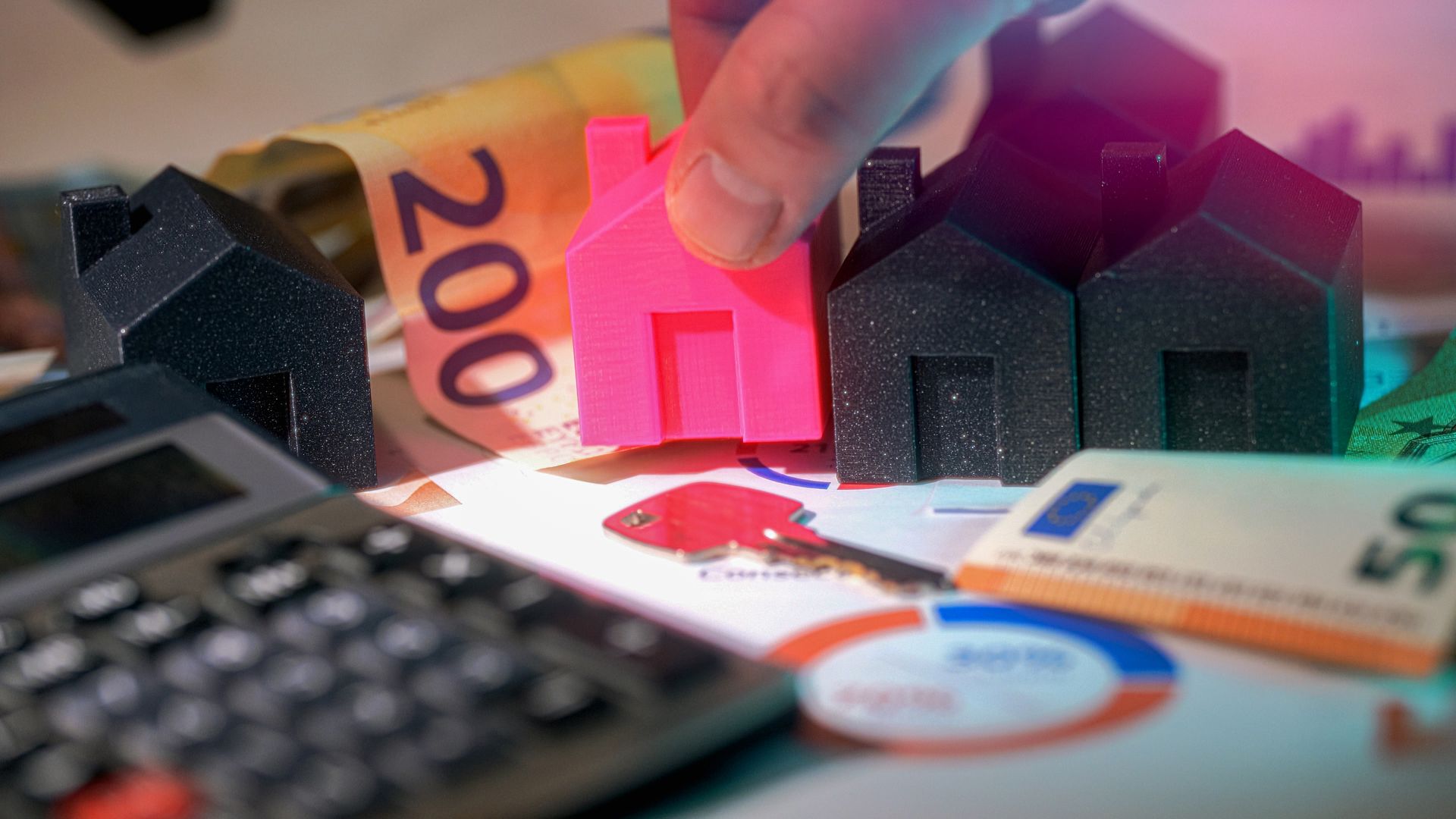
To give you a better idea, here are some key differences between temporary and permanent buydowns:
This can be a game-changer for many homebuyers, allowing them to afford a home they might not have been able to otherwise.
Understanding Temporary Buydown Mortgages
A temporary buydown mortgage can be a great option for homebuyers, especially in a high-interest rate environment. It allows you to temporarily reduce the interest rate on your new loan, giving you some breathing room and helping ease into the full mortgage payment.
Temporary buydowns can be paid for by home builders and home sellers as a closing cost, which is equal to the buyer's interest savings. This can be a win-win for both parties involved.
The most common types of temporary buydowns are 1-year, 2-year, and 3-year buydowns. Each option offers a specific reduction in interest rate for a set period. For example, a 1-year buydown reduces the interest rate by 1% for the first year, while a 3-year buydown reduces the interest rate by 3% for the first year, 2% for the second year, and 1% for the third year.

Here's a breakdown of the different types of temporary buydowns:
As you can see, each option offers a different level of interest rate reduction, which can impact your monthly payments and overall savings. For example, a 1-year buydown can save you around $197 a month in interest in the first year, while a 3-year buydown can save you around $597 a month in interest in the first year.
It's worth noting that temporary buydowns are not always available, and some lenders may only offer them as a seller or lender-paid option. Additionally, borrower eligibility and loan terms may apply, so it's essential to consult with a lender or financial advisor to determine if a temporary buydown is right for you.
Frequently Asked Questions
What are the cons of a buydown?
Buydowns come with two main drawbacks: higher upfront costs and potential negative equity if the property's value doesn't appreciate as expected. Understanding these risks is crucial before considering a buydown for your home purchase.
How much does a 2:1 temporary buydown cost?
A 2:1 temporary buydown typically costs 4.4% of the loan amount, which is twice the cost of a standard 2% buydown. This can significantly reduce your monthly payments, but the total cost is spread over the loan term.
Does FHA allow temporary buydowns?
FHA no longer permits underwriting at the bought down rate, so borrowers must qualify at the full note rate. Temporary interest rate buydowns are allowed for fixed rate mortgages, but with specific restrictions.
Can a lender pay for a temporary buydown?
Yes, a lender can contribute to a temporary buydown, either alone or in combination with other parties
What is the 3 2 1 buydown rule?
A 3-2-1 buydown mortgage reduces the interest rate by 3% in the first year, 2% in the second year, and 1% in the third year, offering lower payments for the initial three years of the loan. This unique mortgage option can significantly lower monthly payments, making homeownership more affordable.
Featured Images: pexels.com