Taking card payments online and in-store can be a game-changer for businesses. With the right tools and infrastructure, you can accept payments from customers and grow your sales.
You can take card payments online through e-commerce platforms, which allow you to set up an online store and sell products to customers from anywhere in the world. This can be done through a website or mobile app.
In-store card payments can be facilitated through point-of-sale (POS) systems, which enable businesses to process transactions quickly and efficiently. These systems can be integrated with online platforms to provide a seamless customer experience.
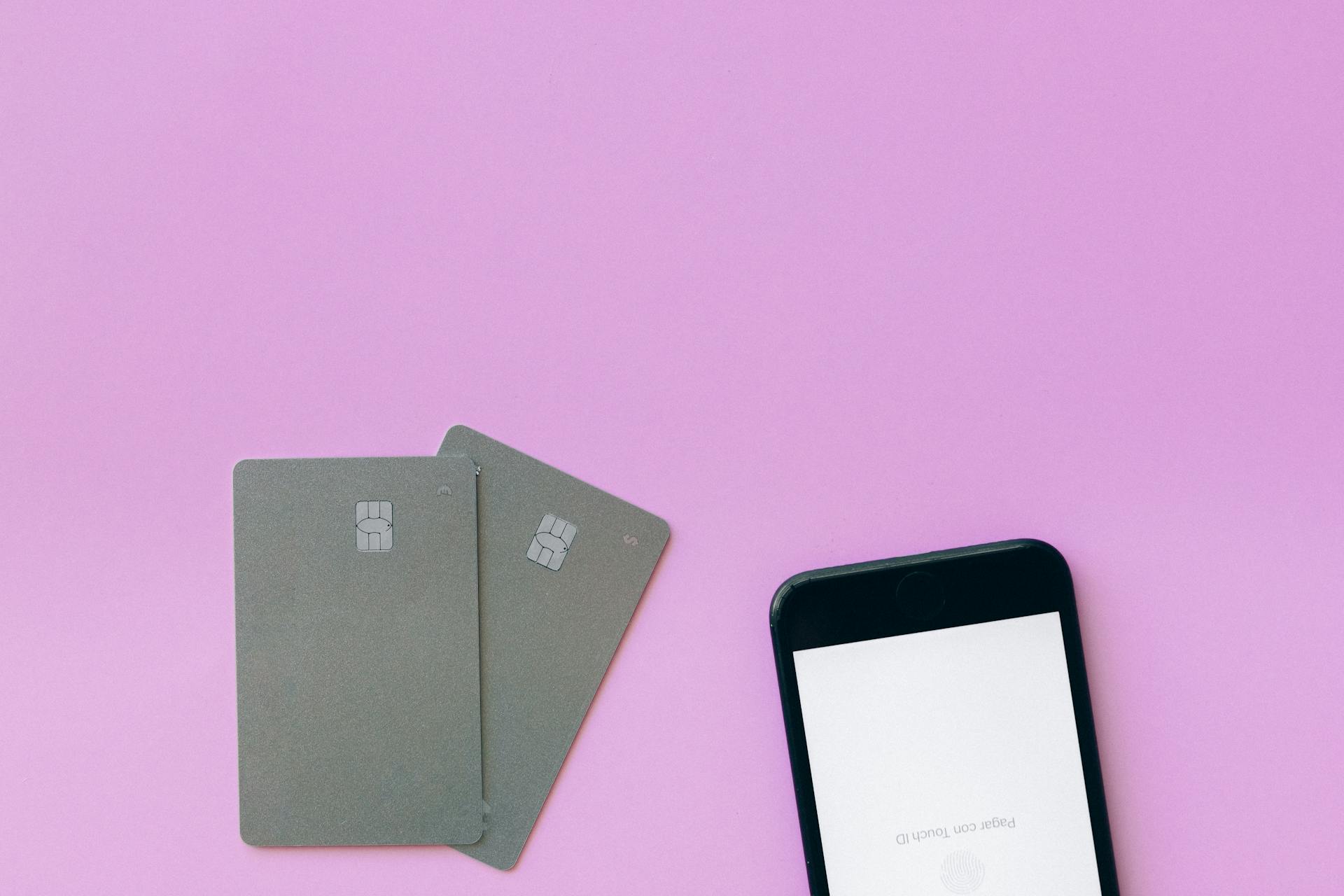
Many businesses are now adopting contactless payment methods, which allow customers to make transactions by tapping their card or mobile device on a reader. This can speed up the payment process and reduce the risk of fraud.
Additional reading: What Store Gives the Most Cash Back on Debit Card
Benefits
Accepting credit card payments is a no-brainer, especially with 47% of retailers already on board. It's a convenient option for customers who prefer contactless payments, which 48% of customers do.
Having a mobile payment option expands where you can do business and streamlines the checkout process. This is especially important for mobile businesses like food trucks or home services companies.
Providing customer convenience is key, and accepting credit cards with your mobile phone makes it easy for customers to buy from you. In fact, few people carry cash anymore, so it's a must-have for mobile businesses.
By accepting credit card payments, you can increase sales revenue and make it easier for customers to do business with you.
Broaden your view: Invoice Factoring for Small Businesses
How To
To accept credit card payments, you'll need to partner with a payment processor like Helcim, Stripe, or ProMerchant, as they provide the necessary infrastructure to connect to the customers' bank and credit card networks.
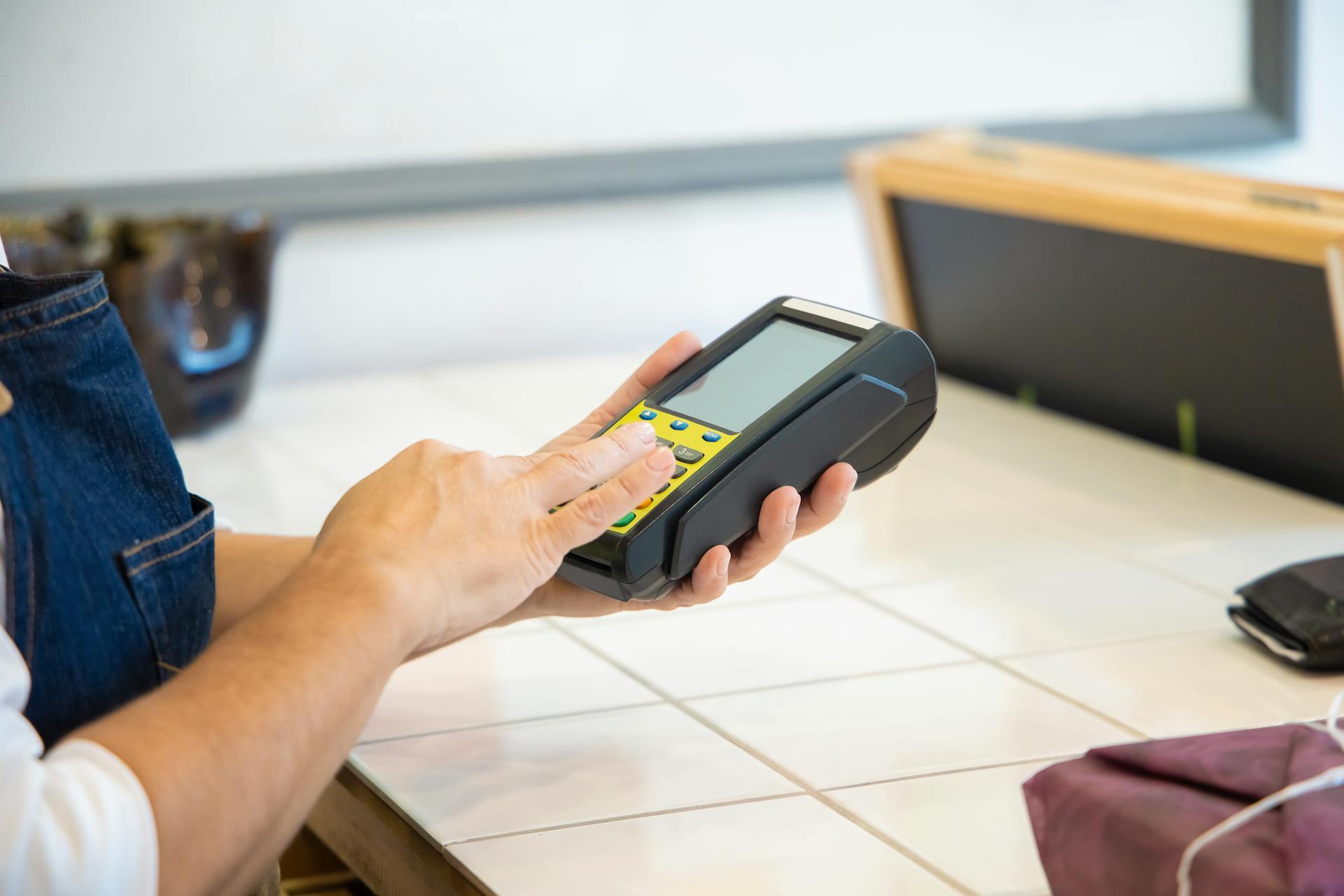
You can accept card payments in a restaurant, retail store, or food truck using a stand-alone credit card machine or a POS with an integrated payment terminal. For portability, you can opt for hand-held terminals with built-in receipt printers from providers like Helcim, Stax, and Merchant One.
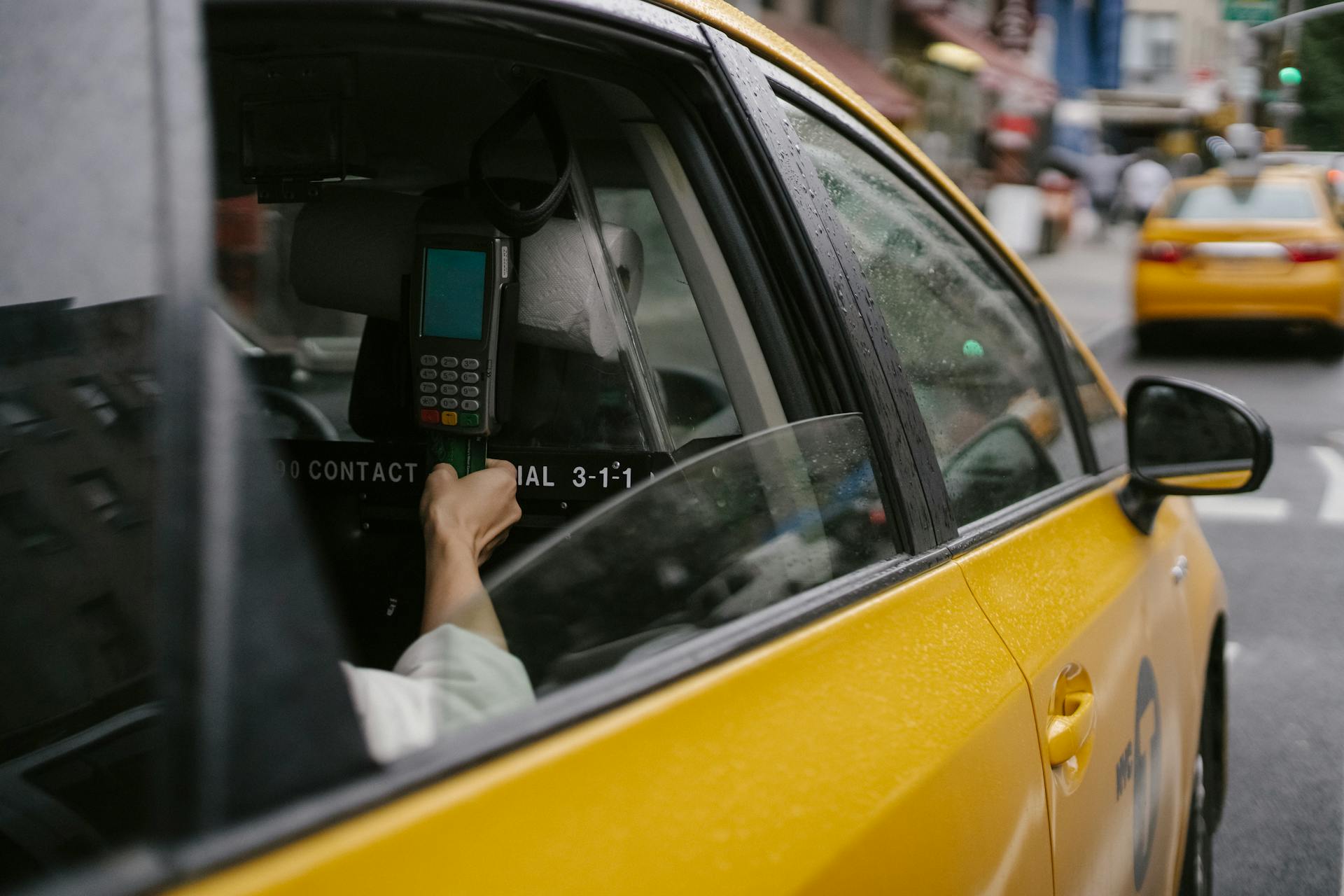
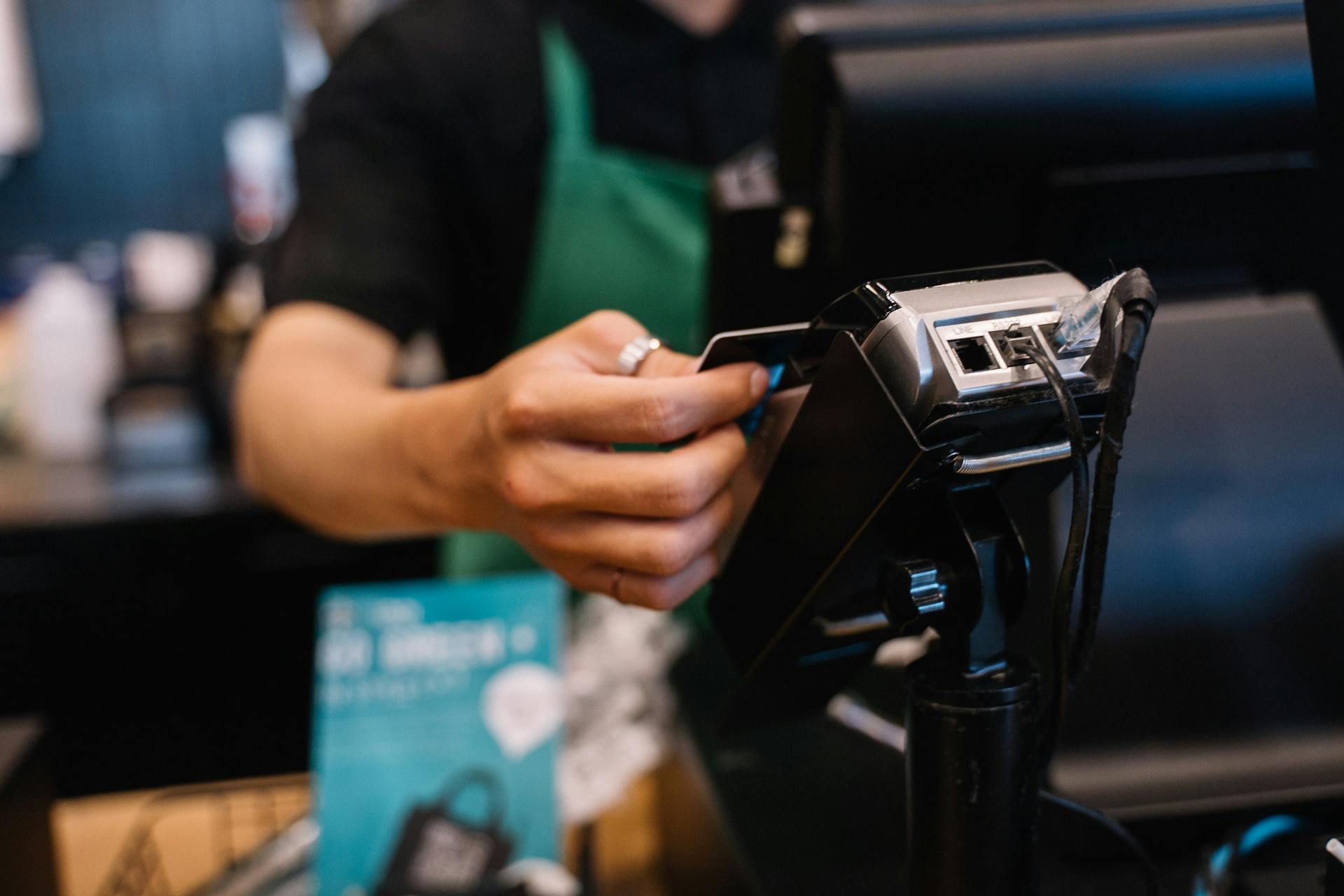
To process in-person payments, follow these steps: calculate the sales total and select the payment method, ask the customer to insert, swipe, or tap their credit card, and have them finalize the transaction by signing a paper receipt or on-screen display.
Enter the Order
To enter the order, you need to calculate the sales total and select the payment method. This can be done using a virtual terminal or a card reader.
You'll want to enter the order into the virtual terminal or process the customer's card with the card reader, as shown in step 6 of the process. This will help you finalize the transaction.
Here's a quick rundown of the steps to enter the order:
- Enter the order into the virtual terminal or process the customer's card with the card reader.
- Calculate the sales total and select the payment method.
By following these steps, you'll be able to efficiently process payments and complete the sale.
Steps to Business
To accept credit card payments for your business, you need to sign up with a credit card processor. This is the minimum requirement to receive card payments, and you may need to take additional steps depending on your situation.
You'll need to find a merchant account with a top credit card processor or an account with a credit card facilitator like PayPal or Square. Make sure the processor provides mobile card readers and supports mobile payments.
Intriguing read: Card Issuer Processor
Before processing credit cards over the phone or online, you must find a processing provider, establish an account, and set up your services. Many options exist, offering affordable processing fees and various payment terminals.
To get started, you'll need to partner with a third-party payment processor like Helcim, Stripe, or ProMerchant. These providers facilitate transactions between your business and the customers' bank and credit card networks.
Here are the key steps to follow:
- Sign up with a credit card processor.
- Find a merchant account or account with a credit card facilitator.
- Set up your services with a processing provider.
Understanding how your business processes transactions and the volume can help you compare vendors and find the best rates. This will inform your decision-making process and ensure you're getting the most out of your payment processing.
Software and Hardware
To take card payments, you'll need both software and hardware. Point-of-sale (POS) software can help you track your inventory and sales history, and some systems even include a card reader or option to manually enter credit card information.
A virtual terminal, on the other hand, is a computer POS that allows you to turn your laptop or desktop into a POS without needing additional equipment. This is great for remote billing or taking payments over the phone.
Intriguing read: Pos Preauth
For hardware, you'll need an EMV reader if you're new to accepting credit cards or want to upgrade to contactless or chip readers. This is especially important since the liability shift in 2015 means businesses that aren't set up to accept chip cards could be responsible for certain types of fraudulent transactions.
You can also consider a mobile credit card terminal if you work on the go, such as in a restaurant or salon. This allows you to take payments tableside or at the client's chair for easy checkout. Alternatively, a countertop POS can handle everything in one place if you prefer to have payments taken at a single location.
Here's a quick rundown of some hardware options:
- EMV reader: Protects you and your customers from fraudulent transactions
- Mobile credit card terminal: Allows you to take payments tableside or on the go
- Countertop POS: Handles everything in one place
Software
When it comes to managing your business, having the right software can make all the difference. Point-of-sale (POS) software is a great place to start, as it allows you to track your inventory and sales history.
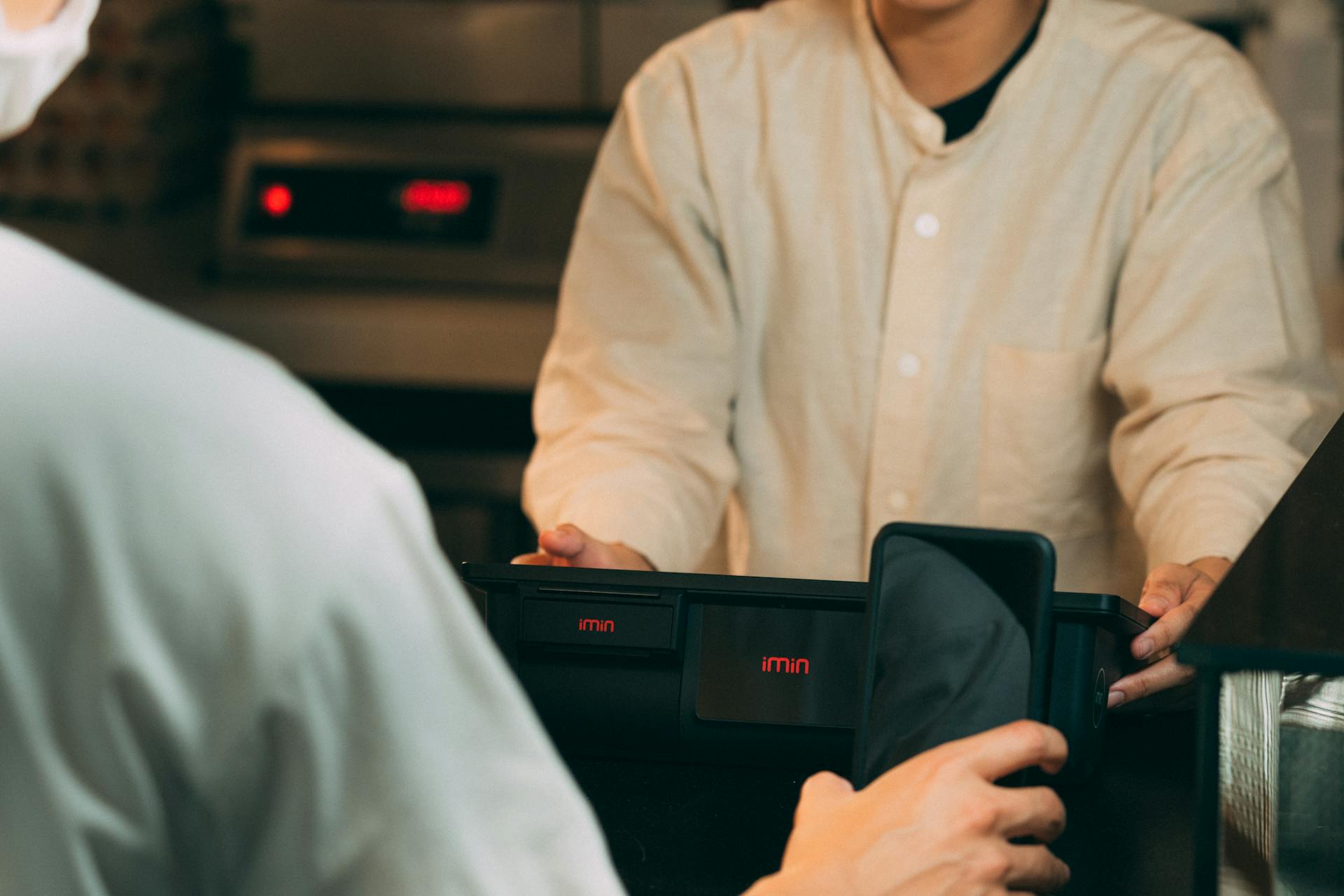
A POS system can also include a card reader or the option to manually enter credit card information. This makes it easy to accept payments from customers.
One type of POS software is a virtual terminal, which allows you to turn your laptop or desktop into a POS easily without the need to purchase any further equipment. This is a great solution for remote billing, taking payments over the phone, or when most of your day-to-day work is done at your computer or at a reception desk.
A virtual terminal can turn any computer into a credit card terminal, which means you can accept payments from anywhere at any time.
If this caught your attention, see: Cash Advance until Payday
Hardware
To set up your business for secure credit card transactions, you'll need the right hardware. Protect yourself and your customers with an EMV reader, which is a must-have since the liability shift in 2015.
An EMV reader is a crucial investment to avoid being responsible for fraudulent transactions. If you're a restaurant or salon owner, or you work on the go, a mobile credit card terminal is a great option. This allows you to take payments tableside or at the client's chair directly for easy checkout.
Additional reading: Emv Technology Credit Cards
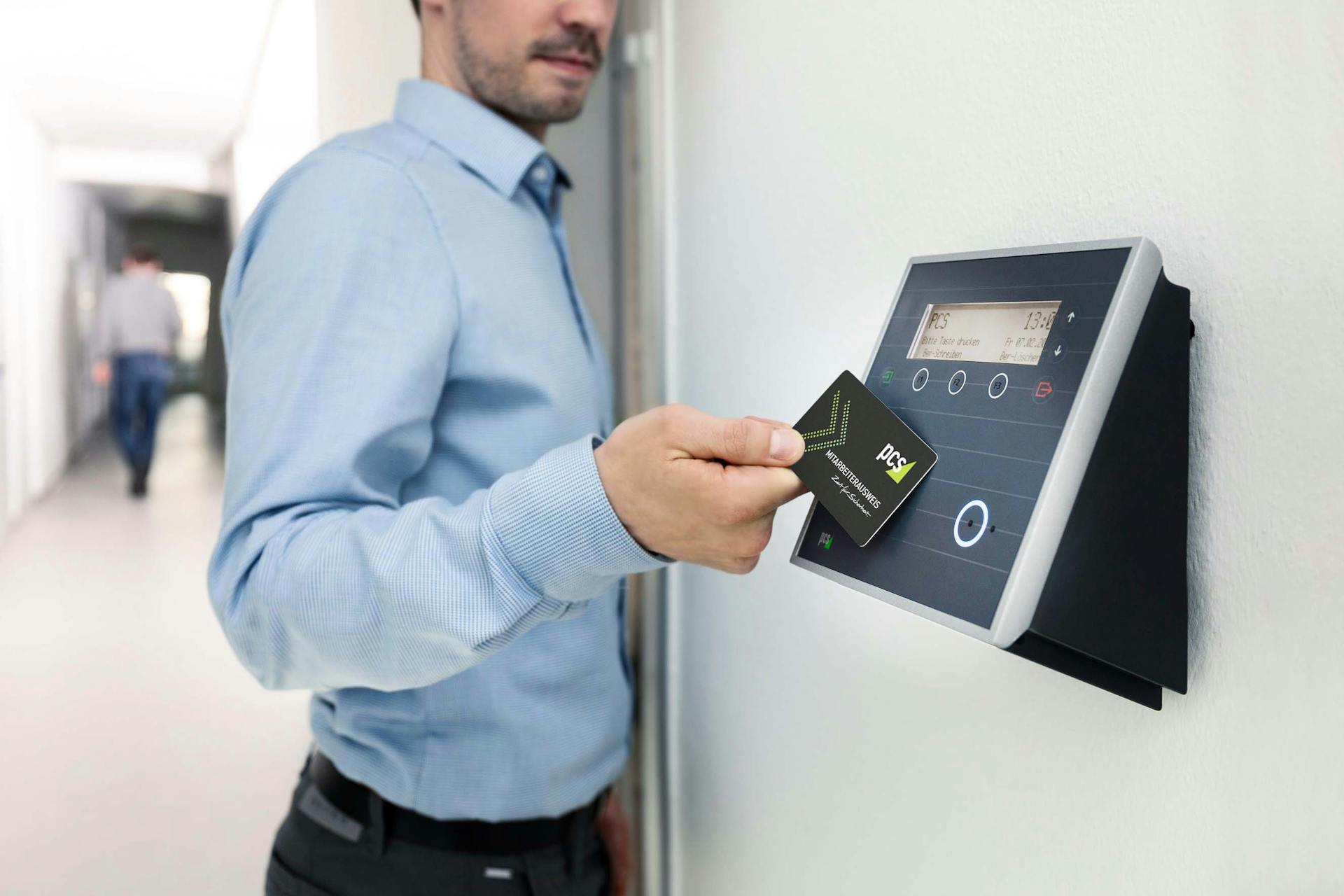
A mobile credit card terminal also ensures that every sale is securely encrypted. Alternatively, if you prefer to have payments taken at one permanent location within your business, you'll want to invest in a countertop solution.
Here are some hardware options to consider:
- EMV reader: For accepting chip cards and protecting against fraudulent transactions
- Mobile credit card terminal: For taking payments on the go, tableside, or at the client's chair
- Countertop POS: For handling payments at a single, permanent location
iPhone vs Android
When choosing between iPhone and Android for credit card processing, there are some key differences to consider. The best mobile credit card processors offer apps that work across all devices, and on both iOS and Android operating systems.
Some processors work exclusively with one platform, but most companies have mobile apps for both iOS and Android. Apple's iOS tends to be more popular, so some processors give the iOS-based mobile applications frequent updates.
If you're an iPhone user, you'll want to know that some apps offer different functionality based on their operating system. This means you might have access to features that Android users don't.
Here are the key differences to consider:
Most companies, however, offer mobile apps for both iOS and Android, making it easier to choose the platform that works best for you.
Payment Processing
To accept credit card payments, you need to get a merchant account with a top credit card processor or a credit card facilitator like PayPal or Square. This will allow you to process transactions and accept mobile payments.
Assessing your credit card processing requirements is crucial to finding the best rates. Consider your transaction volume, average dollar amount, and payment methods to compare vendors. Ask yourself questions like: Where do you process the most transactions (in-person, online, or over the phone)? What is the average dollar amount of your transactions?
To compare payment processors and pricing, create a mock-up of your sales and calculate your fees for each provider. Understand that costs are only one part of the picture, and research online reviews to get an idea of what to expect. Schedule a consultation with the vendor and have a list of questions ready to get a quote and learn about payment processing times.
Recommended read: Echeck Payment Gateway
To set up your payment processing systems, configure your account and any hardware. Providers like ProMerchant may offer free, preconfigured EMV and near-field communication terminals. For small businesses using a smartphone to take payments, download the payment app and complete the signup process.
Here are some factors to consider when choosing a payment processor:
Popular Solutions
If you're looking for popular solutions to take card payments, you have several options to consider.
Square is a well-known provider that offers a range of features, including competitive pricing and expert reviews.
PayPal is another popular choice, known for its ease of use and flexibility.
Stripe is a good option for businesses that need advanced features, such as recurring payments and subscription management.
Compare features, pricing, and expert reviews for your business software needs - all in one place, to find the best merchant services for your business.
On a similar theme: Online Banking Features
In-Store and Mobile Payments
To take card payments in-store, you can use a stand-alone credit card machine or a POS with an integrated payment terminal. This allows for a seamless payment experience for your customers.
For portability, hand-held terminals with built-in receipt printers are available from companies like Helcim, Stax, and Merchant One. These terminals make it easy to process payments on the go.
To accept card payments in a restaurant, retail store, or food truck, cashiers typically follow these steps: calculate the sales total and select the payment method, ask the customer to insert, swipe, or tap their credit card, and customers may finalize the transaction by signing a paper receipt or on-screen display.
You can also use a mobile device to process credit card payments. To do this, you'll need to partner with a payment processor that offers top mobile credit card processing solutions, such as Square or PayPal. These companies offer mobile credit card readers and pay-as-you-go terms specifically for mobile credit card processing.
Some popular mobile credit card readers include those from Square, SumUp, and PayPal. These readers are easy to set up and use, and can be a cost-effective way to accept card payments.
Here are some benefits of using mobile credit card payments:
- Lower barrier to entry for new businesses
- Increased sales and customer satisfaction for established businesses
- Cost-effective way to accept card payments
- Ability to accept payments at events or throughout your establishment
- Easy setup and use with mobile credit card readers
Note: This list is not exhaustive, but highlights some of the key benefits of using mobile credit card payments.
Online Payments
Taking online payments is a must for small businesses, especially those operating eCommerce shops or digital service providers. This allows customers to complete transactions without in-person interaction.
You can create a payment link for a specific product or service, which can be shared via email newsletters, text message marketing, or social media. This is called a customizable payment link.
Payment links can be sent directly to customers via a virtual terminal, making it easy to collect payment. Some payment gateways also integrate with social media platforms like Instagram, Facebook, and TikTok, allowing you to create shoppable posts and shopping pages on your business profiles.
If you have multiple products or services, setting up an online store is a great option. Square Online enables you to publish an eCommerce site with no coding required, making it easy to drive more customers to your business.
You can also connect your Square account to an existing website to start accepting payments. Alternatively, you can use digital invoicing software to send invoices and accept automatic payments.
Here are the fees associated with online transactions:
Keep in mind that payment gateways are required to transmit card data to credit card processors, and most PSPs offer online payment services.
Payment Processors
To take card payments, you'll need to choose a payment processor. A payment processor is a company that allows you to accept credit card payments. You can sign up with a top credit card processor like PayPal or Square.
To compare payment processors and pricing, create a mock-up of your sales and calculate your fees for each provider. Costs are only one part of the picture, so find information from the processor's website and check out online reviews. Schedule a consultation with the vendor and have a list of questions ready to get a quote and learn about payment processing times.
For example, Stripe offers competitive pricing: 2.7% plus 5 cents for in-person transactions, 2.9% plus 30 cents for online transactions, 3.4% plus 30 cents for manually keyed transactions, and 4.4% plus 30 cents for international card transactions.
Compare Payment Processors
Comparing payment processors can be a daunting task, but it's essential to find the best fit for your small business. You need to consider the fees, pricing models, and features that each processor offers. Many credit card processors have similar rates, especially those that charge flat fees, but even slight differences can affect your business.
Suggestion: Pci Compliant Payment Processor
To compare credit card processors, create a mock-up of your sales and calculate your fees for each provider. This will give you a clear idea of which processor is the most cost-effective for your business. You can also check out online reviews and schedule a consultation with the vendor to get a quote and learn about payment processing times.
When choosing a payment processor, consider your business's unique needs. For example, if you have a high transaction volume but most sales are less than $25, you may want to look for a processor with a lower cents per transaction fee. On the other hand, if your average ticket is over $100 but you have fewer total transactions, a processor with a lower percentage rate may be a better fit.
Here are some key factors to consider when comparing payment processors:
Keep in mind that these fees are subject to change, and you should always check with the processor for the most up-to-date information. By carefully considering your options and doing your research, you can find the best payment processor for your small business.
Cost of
The cost of using a payment processor can vary greatly depending on the type of fees and pricing structures they offer. For example, some payment processors charge a flat rate, which includes a percentage of the transaction total plus a fixed amount, such as 2.9% plus 15 cents.
Interchange fees, which are charged by the cardholder's bank, can also impact your costs. These fees will vary greatly depending on the type of card being used by your customer. Your payment processor is required to give a percentage of the funds collected to the card issuer.
The total cost of accepting credit card payments can range from 1.5% to over 3.5% plus 10 to 40 cents per transaction. This can add up quickly, so it's essential to understand the fees and pricing structures offered by your payment processor.
Some payment processors, like Square, offer flat fees that you're aware of upfront, which can help you budget and predict your costs. This can be a great option for small business owners who want to avoid surprise fees.
Additional reading: Account Funding Transaction
Here's a breakdown of the costs associated with different payment processors:
It's essential to review the terms of service and understand common terminology before signing any contracts with a payment processor. This can help you avoid hidden charges and ensure you're getting the best deal for your business.
Guidelines and Setup
To accept credit card payments, you'll need to partner with a payment processor, also known as a merchant account provider. This is the minimum requirement for receiving card payments.
It's not feasible for small businesses to build and maintain the technologies necessary to accept credit cards, so you'll need to partner with a third-party payment processor like Helcim, Stripe, or ProMerchant.
Before processing credit cards over the phone or online, you'll need to find a processing provider, establish an account, and set up your services. Many options exist, offering affordable processing fees and various payment terminals.
To begin accepting credit card payments online, over the phone, or in person, you'll need to configure your account and any hardware. Providers like ProMerchant may offer free, preconfigured EMV and near-field communication terminals.
Broaden your view: Echeck Payment Processing Time
To take payments online, in person, or over the phone, you'll need to understand how credit card processing works and how vendors differ. This will help you compare vendors and find the best rates.
Here are some key steps to follow:
- Find a payment processor and establish an account.
- Set up your services, including any necessary hardware.
- Configure your account and any additional hardware for online, in-person, or phone payments.
- Compare vendors and find the best rates based on your business's needs.
By following these steps and guidelines, you'll be well on your way to accepting credit card payments for your business.
Payment Methods
Payment Methods are a huge part of taking card payments, and most customers are familiar with them.
A 2023 Federal Reserve study showed that 60% of all payments were made by debit and credit cards.
Credit cards account for 31% of all payments, making them a popular choice for customers.
Debit cards are also widely used, accounting for 29% of all payments.
Most customers are comfortable using these checkout methods, making it easy for you to get paid.
For another approach, see: Shop Pay Payment Methods
Cons and Pros
Taking card payments can be a double-edged sword. You'll need to weigh the pros against the cons to decide if it's right for your business.
One con is the processing fees, which can eat into your profit margins. These fees typically range from 1.5% to 3.5% of the transaction amount.
Another con is the risk of chargebacks, which can occur when a customer disputes a transaction. This can lead to a loss of revenue and a damaged reputation.
However, taking card payments also has some significant advantages. For example, it can increase sales and revenue by making it easier for customers to pay.
Related reading: Amazon Transaction Pay
Improves Bill Collection
Accepting payment at the time of service can save you time and money, and help you avoid write-offs for bad debt.
Having customers pay on the spot can reduce the need for chasing down overdue bills, which can be a significant time-saver.
This approach can also help you avoid waiting for customers to mail you a check, which can delay the payment process.
By collecting payment immediately, you can ensure that you receive payment for your services, reducing the risk of bad debt.
Pros and Cons
The pros and cons of credit card processing fees are a crucial consideration for any business. One of the main advantages is the flexibility to choose between flat-rate and interchange-plus pricing structures.
Flat-rate pricing is relatively simple to understand, with a consistent rate for in-person, online, and manually keyed transactions. For example, some vendors charge 2.9% plus 30 cents for online transactions.
Interchange-plus pricing, on the other hand, includes an interchange rate that varies by credit card network, plus a set markup. This can make it challenging to predict your payment processing costs.
However, with interchange-plus pricing, your business saves when customers pay with cards that have lower interchange rates. This can add up to significant savings over time.
The cheapest way to take credit card payments is to use an EMV card reader and manually enter the card details. This can help minimize fees and maximize profits.
Here's a breakdown of common credit card processing fees:
- 2.6% plus 10 cents for in-person transactions
- 2.9% plus 30 cents for online transactions
- 3.5% plus 15 cents for manually keyed transactions
- 3.3% plus 30 cents for invoices
Ultimately, it's essential to review the terms of service and understand common terminology before signing any contracts. This will help you catch any hidden charges and make informed decisions about your credit card processing fees.
Featured Images: pexels.com