
If you're considering installing a swimming pool, you're likely thinking about the significant upfront cost. A new in-ground pool can cost anywhere from $30,000 to $100,000 or more, depending on the size and features.
To put that into perspective, a typical in-ground pool is around 15x30 feet, which can cost upwards of $50,000. This can be a daunting expense, but there are financing options available to make it more manageable.
It's worth noting that maintenance and upkeep costs can add up over time, with annual expenses ranging from $1,000 to $3,000. This is something to consider when deciding on a financing plan.
Calculating Costs
A pool loan calculator helps evaluate budget and financing options. It's a crucial tool in the decision-making process, just like selecting materials and design elements.
The monthly payment is a key factor to consider, as it's similar to a house or car payment. You need to determine how much of your household budget you can reasonably afford each month.
A $59,749 loan for 20 years at an 8.99% interest rate would result in a monthly payment of $537.19. This is a good example of how to run the numbers and project your monthly pool loan payment.
The loan calculator also allows you to try out different loan scenarios. You can change the pool price/loan amount, the number of payments, the interest rate, or a combination of all three.
A $30,000 loan over 84 months could cost anywhere between $400-$500 per month. This is a significant consideration when deciding how much to finance.
You can also lower your monthly payment by extending your loan term beyond the standard 84 months. However, this means you'll likely pay more interest on the loan over time.
A 180-month loan term can result in an average monthly payment that's $200-$300 less than the standard term. For example, a $50,000 loan would cost around $515 per month.
Putting a down payment can also help lower your monthly payment by reducing the amount of money you're ultimately financing.
Curious to learn more? Check out: Convertible Debt Interest Rate
Financing Options
Financing a pool can be a daunting task, but understanding your options is key. There are three main categories of pool financing to consider: in-house pool loans, financing that leverages the equity in your home (like home equity loans or HELOCs), and personal loans.
In-house pool loans and personal loans offer flexibility, but may come with higher interest rates. On the other hand, financing through your home's equity can provide lower rates, but requires you to have sufficient equity in your home.
You can also consider financing your pool through the dealer you purchase it from, but be aware that this option often comes with higher rates. Alternatively, you can try to factor your pool loan into a new mortgage or refinance your existing mortgage and cash out some of the equity to pay for your new pool.
Here are some average interest rates to keep in mind:
- Average pool loan interest rates fall in the 7.5–11% range.
- Mortgage interest rates almost always run less than those for home improvement financing.
The length of your loan term can also impact your monthly payments. A 5- to 7-year loan term is a popular choice, as it helps spread the cost of the pool over time, keeping monthly payments relatively low. However, longer loan terms can result in paying more in interest over time.
Related reading: Car Loans for First Time Buyers with No Credit
Better Interest Rates

Financing your pool can be a complex process, but one thing is clear: it's often more cost-effective to merge your pool cost into your mortgage. This is because mortgage interest rates are generally lower than those for home improvement financing, saving you money on interest over the life of the loan.
For example, mortgage interest rates almost always run less than those for home improvement financing, as mentioned in Example 1. This means that by combining your pool loan into your mortgage, you can enjoy savings on interest.
The average interest rate on a pool loan can vary depending on your credit profile, loan amount, and income. According to Example 2, average pool loan interest rates fall in the 7.5-11% range, but this can also depend on your creditworthiness.
If you're looking for a lower interest rate, you may want to consider refinancing your mortgage and cashing out some of the equity in your home to pay for your new pool. This can be a good option if you already own a home and have a mortgage, as mentioned in Example 5.
For another approach, see: Do Grad plus Loans Accrue Interest While in School

Here are some key facts to keep in mind when considering financing your pool:
Some lenders, like KeyBank, offer affordable loan solutions with rates as low as 5.49% (Example 4). This can make a big difference in the cost of your pool over the life of the loan.
Options
There are several options to consider when financing a pool. Typically, there are three main categories of pool financing: in-house pool loans, financing that leverages the equity in your home, and personal loans.
You can finance a pool for anywhere from 1-30 years, depending on your needs and how much you need to finance. The length of your loan can significantly impact your monthly payments, with shorter loans resulting in higher payments but less interest paid overall.
If you choose a longer loan term, your monthly payments will be lower, but you'll pay more in interest. Five- to seven-year loans are a popular choice because they help spread the cost of the pool over enough time that your monthly payments are relatively low.
Discover more: Live Oak Bank Sba Interest
You can also finance your pool through the dealer you purchase it from, but be aware that this option often comes with higher rates. This may be a viable option if you're unable to qualify for a personal loan or financing using your home's equity.
Here are some options to consider when financing a pool:
- In-house pool loans
- Financing that leverages the equity in your home (such as home equity loans or HELOCs)
- Personal loans
- Financing through the dealer you purchase the pool from
- Owner financing (which is not discussed in this article)
It's worth noting that you can also finance a pool into a mortgage, but this will depend on your mortgage lender and specific financing terms. This can help you get a better interest rate and streamline the application and payment process.
Lower Monthly Payments
Lower Monthly Payments can be a reality with the right financing options. You can lower your monthly payment by extending your loan term beyond the standard 84 months, making a pool more attainable for many. This can result in a lower monthly payment, but you will likely pay more interest on the loan over time.
Readers also liked: Monthly Payment Furniture No Credit Check

For example, if you choose a 180-month loan term, your average monthly payment could be approximately $200-$300 less. If you finance $50,000, your payments might be around $515 per month. A $30,000 pool would cost roughly $310 per month.
You can also lower your monthly payment by putting a down payment to reduce the amount of money you're ultimately financing. This can make a big difference in your monthly payment.
Here are some examples of how different loan terms and amounts can affect your monthly payment:
By understanding how loan terms and amounts affect your monthly payment, you can make an informed decision about your financing options and find the best solution for your needs.
Mortgage
Financing a pool through a mortgage can be a great option, and here's why: Mortgage interest rates are almost always lower than those for home improvement financing. This means you'll enjoy savings on interest over the length of the loan.
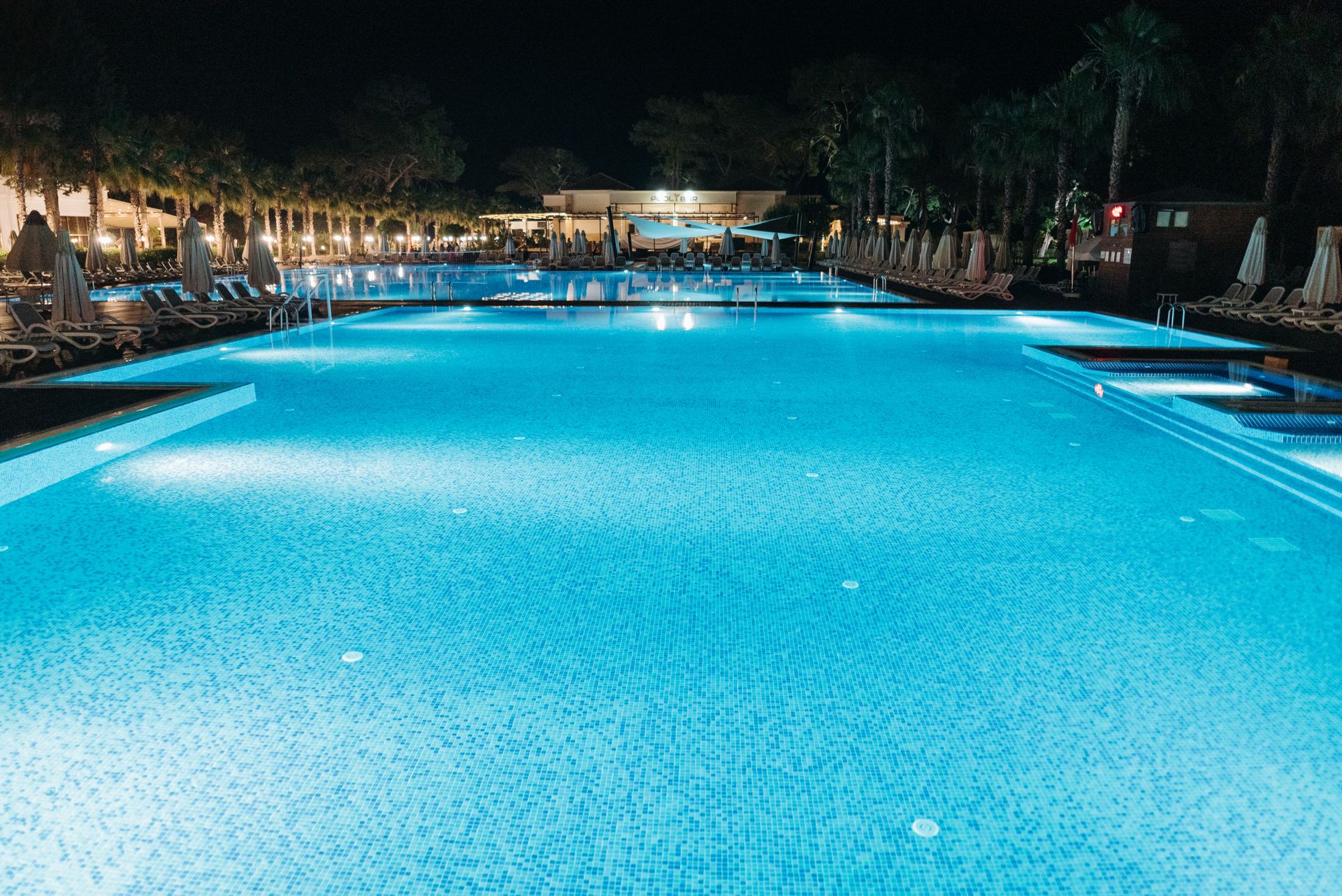
Merging your pool cost into your mortgage will also result in a more affordable monthly payment. This is because the pool costs are spread over a longer term, typically 30 years, compared to 15 to 20 years for a home improvement loan.
One of the benefits of combining your pool loan into a mortgage is that it can help you take advantage of lower rates in the future. If you refinance your mortgage, the pool loan part will automatically enjoy lower rates, which is not available with standard home improvement loans.
If you're buying a new home and want to add a pool, you might be able to consolidate the cost of your new pool directly into your new mortgage. However, not all lenders will allow this, so it's best to ask.
See what others are reading: Hotel Mortgage Rates
Money-Saving Tips
One way to save money on your swimming pool is to consider a financing option that allows you to spread the cost over several years.
You can save up to 50% of the total cost by making a down payment, according to our research on financing options for pool installation.
A personal loan can be a good option for financing your pool, with interest rates as low as 6.99% APR for a 5-year loan.
However, be aware that a personal loan may have higher interest rates compared to other financing options, such as a home equity loan or credit card.
Some pool financing options offer flexible payment plans, allowing you to make monthly payments that fit your budget.
For example, a financing plan with a 10-year repayment term can result in lower monthly payments, but more interest paid over the life of the loan.
Discover more: Mcu Heloc Rates
Pool Financing Details
Pool financing options can be complex, but understanding the basics can help you make an informed decision. The average length of a pool loan can range from 1-30 years, depending on your needs and how much you need to finance.
You can finance a pool for as little as five to seven years, which helps spread the cost over time, keeping your monthly payments relatively low. However, this will result in paying more in interest overall.
The length of your pool loan can significantly impact your monthly payments. A shorter loan term means higher monthly payments, but you'll ultimately pay less in interest. A longer term means lower monthly payments, but you'll pay more in interest.
Here are some key features of pool loans from KeyBank:
- Rates as low as 5.49%
- Terms up to 20 years
- Loans up to $125K
- Scores as low as 650
Keep in mind that in-house pool loans may offer convenience, but may not always provide the best rate or term. It's always a good idea to shop around to find the lowest rate and terms that work for you.
You might like: Guaranteed Rate Affinity Mortgage Rates
In House
In-house pool loans can be a convenient option for homeowners, as they often streamline the process and increase chances of getting approved.
Your pool dealer can help with paperwork and answer questions, making the process faster and more efficient.
In-house pool loans may not always offer the best rate or term, so it's worth shopping around to find the lowest rate and terms that suit you.
Latham has partnered with Lyon Financial and LightStream to provide pool loans directly to customers, offering a more personalized experience.
Take a look at this: Tiny House Mortgage Loans
Typical Terms
Typical terms for pool loans can vary, but generally, most loans have a term length of 1-30 years.
A 5- to 7-year loan is a popular choice because it spreads the cost of the pool over a manageable time frame, keeping monthly payments relatively low.
Typical interest rates for pool loans range from 7.5% to 11%.
If you choose a shorter loan term, your monthly payments will be higher, but you'll pay less in interest overall.
Ultimately, the length of your pool loan should fit your needs and budget.
For another approach, see: Can I Lease a Car after Chapter 7
KeyBank Offers Affordable Project Financing
KeyBank offers a great option for financing your pool project. They have a program specifically designed for pool financing, which can help you make your dream a reality.
Their rates are very competitive, with options starting as low as 5.49%. This can save you a significant amount of money in interest payments over the life of the loan.
You can choose from loan terms that range up to 20 years, giving you flexibility in how you structure your payments. This can help make the loan more manageable and fit into your budget.
KeyBank also offers loans up to $125,000, which can cover the cost of a large pool project. This can give you the freedom to design and build the pool of your dreams.
Here are the details of KeyBank's pool financing program at a glance:
- Rates as low as 5.49%
- Terms up to 20 years
- Loans up to $125K
- Scores as low as 650
Cost Breakdown
When deciding on a swimming pool finance option, it's essential to consider the total cost. The average cost of a swimming pool is between $30,000 to $50,000.
A loan can be a viable option, with interest rates ranging from 4.5% to 7.5% APR. This can lead to monthly payments of $150 to $300.
Some pool owners opt for a 10-year loan, which can make the monthly payments more manageable. However, this can also result in paying more in interest over the life of the loan.
A different take: Inground Swimming Pool
Yearly Maintenance Cost:
Yearly maintenance cost can vary significantly, but here's a general idea of what to expect. The national average cost for yearly pool maintenance is $120.
On a similar theme: Auto Loan Protection Insurance Cost
This cost can range from a minimum of $50 to a maximum of $650, depending on various factors. You should also consider the average range of $80-$150.
To give you a better idea, here's a breakdown of the yearly maintenance cost ranges:
Cost by Material
In-ground pool costs can vary greatly depending on the material you choose. Fiberglass pools are generally the most affordable option, with prices ranging from $30,000 to $60,000 for a standard size pool.
Concrete pools are a more popular choice, but they're also more expensive, with prices ranging from $40,000 to $100,000 or more. The cost of a concrete pool can add up quickly, especially if you factor in the cost of maintenance and upkeep.
Vinyl liner pools are another option, and they're often priced between $30,000 to $50,000 for a standard size pool. Vinyl liner pools are a good choice if you want a pool that's easy to install and maintain.
Cost by Size:
As you consider the cost of a new water heater, it's essential to factor in the cost by size. A standard tank-style water heater typically ranges from 30 to 80 gallons in capacity.
The larger the tank, the more expensive the water heater will be. For example, a 50-gallon tank can cost anywhere from $300 to $800, depending on the brand and features.
A smaller tank, on the other hand, can be a more budget-friendly option. A 30-gallon tank can cost between $200 and $500.
It's worth noting that tankless water heaters, which don't require a large tank, can also vary in cost based on size. A compact tankless water heater can cost between $200 and $600.
Ultimately, the cost of a water heater will depend on its size and type, as well as other factors like energy efficiency and brand.
Here's an interesting read: Will Insurance Cover Solar Panels
Financing Programs
If you're looking for financing options for your swimming pool, you're in luck. There are several programs available that can help make your dream a reality.
Consider reading: Pool Re
Blue Haven Pools Financing Program offers access to a national network of lenders, providing pool loans with terms up to 15 years and household income programs.
KeyBank's Pool Program offers rates as low as 5.49% and terms up to 20 years, making it an attractive option for those looking to finance a new pool or pool project.
Some lenders in the Blue Haven network provide signature loans up to $100,000 or more, while others offer loans up to $125K through KeyBank.
You can qualify for these loans with a FICO score as low as 650, depending on overall credit and other lending criteria.
Here are some key financing options to consider:
These financing options can give you the flexibility you need to make your swimming pool dreams a reality.
Understanding Pool Financing
You can finance a pool for as little as 1 year or as long as 30 years, depending on your needs and how much you need to finance.
The length of your pool loan can significantly impact your monthly payments. If you choose a shorter loan term, your monthly payments will be higher, but you'll ultimately pay less in interest.
Five- to seven-year loans are a popular choice because they help spread the cost of the pool over enough time that your monthly payments are relatively low.
There are three main ways to finance a pool: home equity loans, secured or unsecured personal loans, and home equity lines of credit (HELOCs).
A pool loan typically requires you to have certain documents and information ready, such as your social security number, driver's license number, proof of employment, and proof of income.
Here are the typical documents and information you'll need to have ready:
- Social security number (SSN)
- Driver’s license number
- Proof of employment
- Proof of income
- List of assets
- List of liabilities
Pool financing can be obtained through a lender that specializes in pool loans, or you can work directly with a pool dealer who offers financing options.
Bringing Your Dream to Life
Our financing experts are here to walk you through the process and answer your questions. They'll help you find the best way to turn your backyard into a sanctuary.
The application process is simple and only takes about 10 minutes to fill out on our website.
We use the 2-3 week loan process to get the ball rolling and secure permits, so no time is wasted in bringing your backyard vision to life.
Intriguing read: Usda Home Loan Process
Featured Images: pexels.com