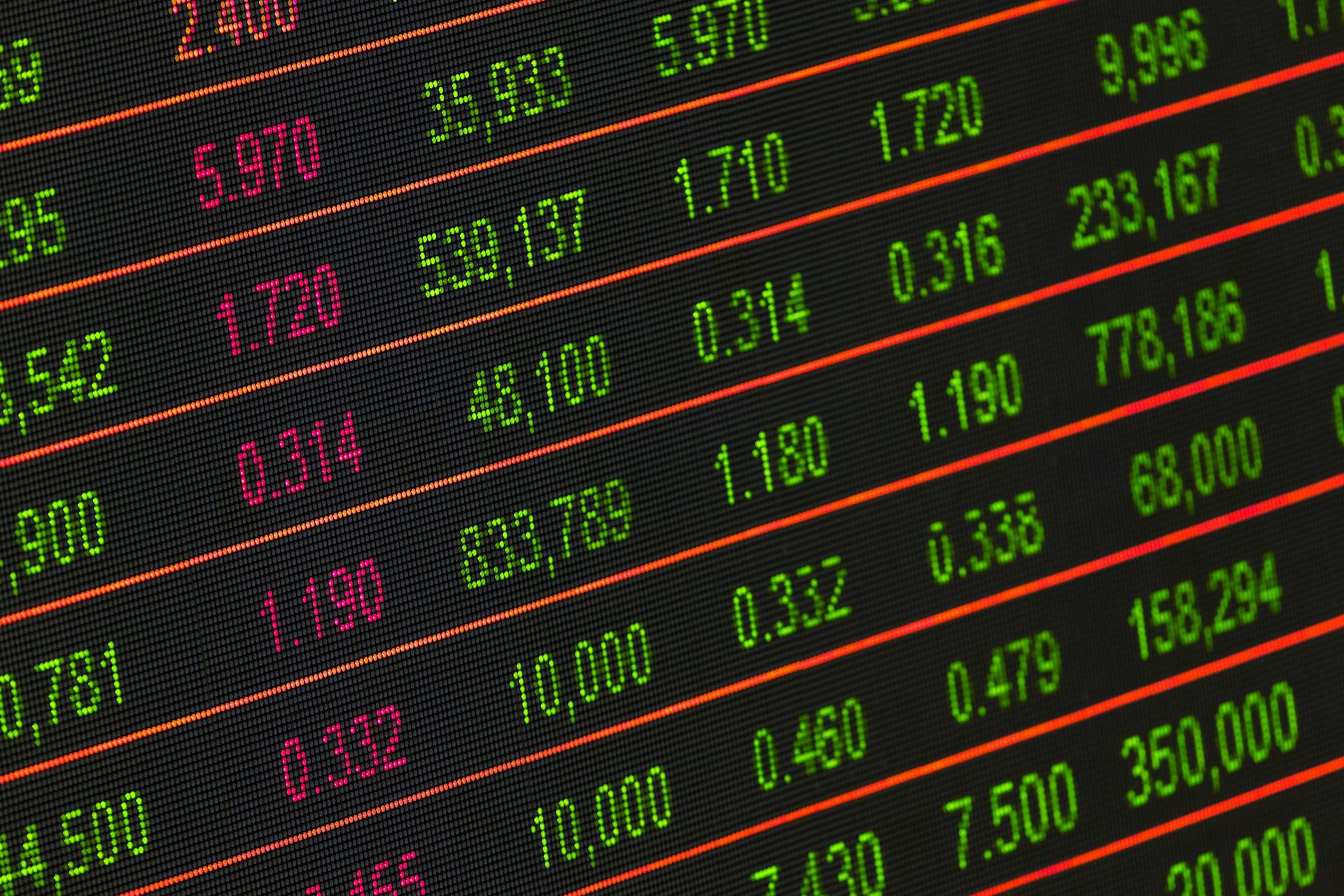
The spot market is a fascinating place where commodities and currencies are traded in real-time. It's a high-stakes environment where prices can fluctuate rapidly.
A key characteristic of the spot market is its immediacy, where trades are settled on the same day or within a short period. This is in contrast to futures markets, where contracts are agreed upon for future delivery.
The spot market is driven by supply and demand, with prices influenced by factors like production levels, weather conditions, and global events.
What Is a Spot Market
Spot markets are all about trading commodities or other assets for immediate delivery, with the trade and receipt of the asset being made on the spot. This can be as soon as the next day or even the same day.
The term "spot" refers to the immediate nature of the trade, where the buyer and seller agree on the terms and make the exchange right away. This is in contrast to futures markets, where contracts are made for delivery at a later date.
Spot markets are used for a wide range of assets, including commodities like oil, gold, and agricultural products. The immediacy of spot markets makes them ideal for situations where the buyer needs the asset right away.
Take a look at this: Buyer Brokerage
How Spot Market Works
The spot market is a fascinating place where physical securities are exchanged for cash, and trades happen immediately. This is why it's also known as a physical market or cash market.
In the spot market, buyers and sellers agree to transfer funds immediately, even though transactions settle on different schedules, such as T+1 basis. This means that the business day after the transaction date.
Securities traded on the spot market include equities, fixed-income, foreign exchange, and commodities. These include stocks, exchange-traded products, equity futures, bonds, T-bills, fixed-income futures, currencies, currency futures, metals, energy, livestock, agricultural products, and commodity futures.
The current price of a financial instrument is called the spot price, which is the price at which an instrument can be sold or bought immediately. This price is determined by buyers and sellers posting their buy and sell orders.
Here's a breakdown of the types of securities traded on the spot market:
In the spot market, prices can change rapidly, often within milliseconds, as orders get filled and new ones enter the marketplace. This is why it's essential to stay informed and adapt quickly to changing market conditions.
Advantages and Disadvantages
Spot markets offer several benefits, but they also come with some drawbacks to consider.
Spot markets are incredibly liquid and active, making it easy for commodity producers and consumers to engage in trading.
One of the main advantages of spot markets is that they facilitate trading in a transparent environment, where transactions occur at prevailing prices that are public information and known to all parties.
Trades in spot markets can hold and find a better deal if they are not satisfied with current prices and terms, giving them more flexibility.
Trades are done and completed on the spot, eliminating the need for settlement and delivery at a future date.
There may be no minimum capital requirements in spot market transactions, making it more accessible to a wider range of investors.
However, trading on the spot market can present significant risks, especially for volatile assets, as investors can buy at inflated prices before assets find their true price.
Check this out: Warren Buffet Trades
If a party notices some irregularities in the trade after the spot market transaction is concluded, there may be no recourse, leaving them vulnerable to losses.
Here are some key disadvantages of spot markets:
- Trading on the spot market can present significant risks, especially for volatile assets.
- There may be no recourse if a party notices some irregularities in the trade after the spot market transaction is concluded.
- The spot market is not flexible in terms of timing, as parties will have to handle physical delivery on the spot.
- The interest rate spot market is affected by counterparty default risk.
- Currency trading in spot markets is prone to counterparty risk due to the solvency of the market maker.
Spot Market Trading
Spot market trading offers several benefits, including continuous, real-time pricing and access to some of the lowest spreads in the UK – starting at 0.3 points.
You can trade on the spot with continuous, real-time pricing, which makes it ideal for short-term trading. Spot prices reflect the underlying market, giving you a clear picture of the current market conditions.
Spot markets are available for thousands of financial markets, including Forex, commodities, shares, indices, and ETFs. Some of the most popular assets traded on spot markets include equity, fixed-income instruments, and foreign exchange.
Here are some of the assets traded on spot markets:
- Equity
- Fixed-income instruments (bonds and treasury bills)
- Foreign exchange
- Commodities (energy, metals, agriculture, and livestock)
Developing a trading strategy is crucial for success in spot market trading. This involves determining your entry and exit points on specific assets before opening a position.
Trading
Trading in the spot market is all about making quick decisions and acting on them. You can trade on the spot with continuous, real-time pricing, which is helpful for short-term trading.
The spot price is determined by buyers and sellers through an economic process of supply and demand. This means that the price is largely a product of how much people are willing to buy and sell a particular asset.
You can trade using leverage, opening positions using margin, which can amplify profits but also magnify losses. This is why it's essential to adopt a trading strategy before entering the market.
To develop a trading strategy, you need to determine your entry and exit points on specific assets before opening a position. You can use price limits and price floors to help you make decisions.
Some useful strategies include using limit orders to close your position once the price breaches a certain level, and trailing stops to follow a positive price movement and close if the price begins to move against the target position.
Expand your knowledge: ATM Burglaries Using Explosives
Here are some trading strategies you can use:
The foreign exchange market, one of the largest spot markets worldwide, has a daily turnover in excess of $6 trillion, making it the world's most actively traded asset. This highlights the importance of being prepared and having a solid trading strategy in place.
OTC
The world of over-the-counter (OTC) trading is fascinating. Over-the-counter trades occur directly between a buyer and seller, without a centralized exchange facilitating the transaction.
The foreign exchange market, also known as the forex market, is the world's largest OTC market, with an average daily turnover of $7.5 trillion as of April 2022.
In an OTC transaction, the price can be based on a spot or future price/date, giving the buyer and seller flexibility in their negotiations. The terms of the trade are not standardized, so the buyer and seller must agree on all the details.
The spot price is the current quote for immediate purchase, payment, and delivery of a particular commodity, making it an incredibly important value in the market.
You might like: Does Etsy Have Buyer Protection
Spot Market Examples
Foreign exchange is a great example of a spot market, where you can buy and sell currencies like euros for immediate delivery. The EUR/USD exchange rate can fluctuate, but you can execute a transaction at the spot price to buy euros for a specific amount of dollars.
In the foreign exchange market, delivery usually occurs within two days after execution, as it generally takes two days to transfer funds between bank accounts. This is known as the settlement date of T+2.
Many commodities have active spot markets, where physical spot commodities are bought and sold in real-time for cash. Examples include oil, gold, and silver.
See what others are reading: Reg B 30 Days
Examples of Spot Market
Spot markets are all around us, and they're not just limited to one type of market. You can find spot markets in commodities, foreign exchange, and even stock markets.
The spot market for foreign exchange is a great example of how it works. Danielle, a traveler, needs to buy euros for immediate delivery, and she executes a foreign exchange transaction at the spot price to buy the equivalent of $10,000 in euros. This results in her receiving €8,902.34.
Spot markets can be found in many commodities, including oil, gold, and silver. These markets allow for the physical exchange of commodities in real-time for cash.
Delivery in spot markets usually occurs within two days after execution, as it generally takes two days to transfer funds between bank accounts. This is the case for foreign exchange transactions, which have a settlement date of T+2.
You can choose from thousands of financial markets to trade in, including major currency pairs, commodities, shares, and indices. Some popular markets include the FTSE 100, Germany 40, and US 500.
Spot markets are often referred to as 'spot' or 'cash' on trading platforms, and they offer a variety of options for traders, including major currency pairs such as GBP/USD and EUR/USD.
Readers also liked: Retained Cash Flow / Net Debt
Electricity vs Gas
Electricity and natural gas are two energy commodities that trade differently. Both are essential for our daily lives, but their markets operate in distinct ways.
Spot and forward markets for electricity and natural gas exist, but they have different characteristics. In the electricity market, spot and forward markets are used to trade energy commodities, whereas in the natural gas market, they trade very differently.
The main difference between electricity and natural gas markets lies in their trading mechanisms. Electricity is traded in spot and forward markets, while natural gas markets trade very differently.
In the electricity market, spot prices are influenced by supply and demand, just like in any other market. This means that when demand is high, prices tend to increase, and when demand is low, prices decrease.
Natural gas markets, on the other hand, trade in a unique way, different from electricity markets.
Explore further: No Credit Check Electric
Spot Market Basics
A spot market is where you can trade thousands of financial markets, including Forex, Commodities, Shares, Indices, and ETFs. You can choose from major pairs like GBP/USD and EUR/USD, or invest in commodities like oil, gold, and silver.
Explore further: Patricia Lopez / Bloomberg Opinion
To trade in a spot market, you'll need to understand the basics of the market, including the demand and supply function, price discovery mechanism, and trading terms. This will help you navigate the market and make informed decisions.
You can start by choosing a spot market to trade, such as Forex, Commodities, or Shares. For example, you could trade in the FTSE 100, Germany 40, or US 500 indices.
Types of Exchanges
Types of Exchanges can be broadly classified into Organized Market Exchanges, where buyers and sellers meet to trade financial instruments and commodities. This can be done on either an electronic trading platform or a trading floor.
Trading on these platforms is made more efficient with electronic trading, where prices are determined instantly due to the large number of trades. Assets traded on exchanges are standardized, as per the exchange standard.
Exchanges like the New York Stock Exchange (NYSE) trade mostly in stocks, while others like the Chicago Mercantile Exchange Group trade mostly in commodities and offer trading in options and futures.
Trading is usually completed through brokers of the exchange who act as the market makers, and assets traded on exchanges have minimum contract prices for specific quantities and values.
Broaden your view: List of Asian Stock Exchanges
Futures Basics
Futures are derivatives contracts that use the spot market as the underlying asset. They give the owner control of the underlying at some point in the future, for a price agreed upon today.
Forwards and futures are essentially the same, except that forwards are customizable and trade over the counter. Futures, on the other hand, are standardized and traded on exchanges.
Only when futures contracts expire would physical delivery of the commodity or other asset take place. This is often avoided by traders who roll over or close out their contracts.
Futures contracts are used to gain exposure to price movements in the underlying asset, without actually owning the asset itself.
Understanding Spot Market
Spot markets are where delivery and cash payment happen immediately, but in most organized markets, settlement takes 2 working days. This is often referred to as T+2.
The contract between the buyer and seller in a spot market is performed on the spot at the prevailing price and existing quantity. For example, if an investor wants to buy 1,000 IBM shares on the New York Stock Exchange (NYSE), they'll contact their broker to buy the shares at the prevailing market price, and the transfer of funds is completed immediately.
A different take: What Bank Makes Check Deposits Available Immediately
To understand the spot market, traders and investors need to know the demand and supply function, price discovery mechanism, trading terms, and jargon of the market. This helps them make informed decisions and navigate the market with confidence.
In OTC spot markets, participants should evaluate the counterparty to reduce counterparty default risk. By understanding the mechanics of the market, it's easier to mitigate spot risks that may emerge.
See what others are reading: Counterparty (platform)
Managing Spot Market
Managing Spot Market can be a complex task, but understanding the key aspects can make it more manageable. The spot market is a decentralized market where commodities are traded for immediate delivery.
To effectively manage the spot market, it's essential to have a good grasp of market fundamentals. This includes understanding the supply and demand dynamics, which can be influenced by factors such as weather, politics, and global events.
A key challenge in spot market management is navigating price volatility. Prices can fluctuate rapidly due to changes in market conditions, making it crucial to stay informed and adapt quickly.
Intriguing read: What Does Mou Stand for in Business
Spot market participants must also be aware of the risks associated with market fluctuations. This includes the risk of price manipulation, which can occur when market participants use their influence to control prices.
Effective risk management strategies can help mitigate these risks. This can include diversifying your portfolio, setting clear price targets, and regularly reviewing market conditions.
By staying informed and adaptable, spot market participants can make informed decisions and navigate the market with confidence.
For another approach, see: What Risks Does Economic Growth Require
Spot Market vs Forward
The spot market is where energy is traded for immediate delivery, with prices driven by current supply and demand. This is also known as the "cash" or "physical" market.
Spot prices can move rapidly due to weather, operational issues or spikes in demand. During extreme weather events or unexpected outages, spot prices can skyrocket because of lack of supply and increased demand.
In contrast, the forward market is where transactions are for future delivery at a price agreed today. These contracts include both custom agreements between parties and standardized futures contracts that are traded on a financial exchange.
Forward contracts and futures markets are designed to stabilize future energy costs for buyers and sellers and provide a hedge against spot market volatility. They allow entities to forecast and manage costs by fixing a forward rate even as spot rates are unpredictable.
You might enjoy: Cyber Insurance Demand
Featured Images: pexels.com