
Shein Company has established itself as a major player in the fast-fashion industry, with a market position that is hard to ignore. Shein's online presence is massive, with over 300 million active users worldwide.
Shein's business model is built around speed and affordability, with new designs and products being added to their platform every day. This approach has allowed them to stay competitive in a crowded market.
Shein's market position is largely driven by their ability to offer trendy clothing at unbeatable prices, often at a fraction of the cost of similar items from traditional fashion brands. This has made them a go-to destination for fashion-conscious consumers on a budget.
Shein's online platform is also incredibly user-friendly, making it easy for customers to navigate and find what they're looking for.
Business Model
Shein's business model is built around speed and flexibility, allowing them to quickly produce and distribute trendy clothing at affordable prices. This ultra-fast fashion approach leverages a responsive supply chain to get new styles to customers before other brands.
Shein's ecommerce marketplace offers a less operationally intensive platform where third-party sellers can list their products, but the company's core fashion offering is where they really shine. They sell low-margin products at an average price of close to $8, sourced and shipped through a vertically integrated network of factories and distribution centers.
Their net margin on fashion products is reportedly 3.5% in 2022, but they're making up for it with a massive inventory of products and styles that are frequently updated to keep pace with the latest trends.
Omnichannel Shopping
SHEIN's business model is expanding to include omnichannel shopping experiences. Consumers are returning to in-store shopping, and competitors like H&M and Zara have effectively used brick-and-mortar stores to engage customers and increase sales.
SHEIN is exploring this opportunity, hosting pop-up stores across the US as part of its marketplace rollout. This move allows the company to connect with customers in a more personal way.
In 2023, SHEIN's partnership with Forever 21 will enable it to open physical spaces within Forever 21 stores. As of August 2023, SHEIN insisted it would remain digital-first and had no plans to open permanent physical locations.
Vast Product Range
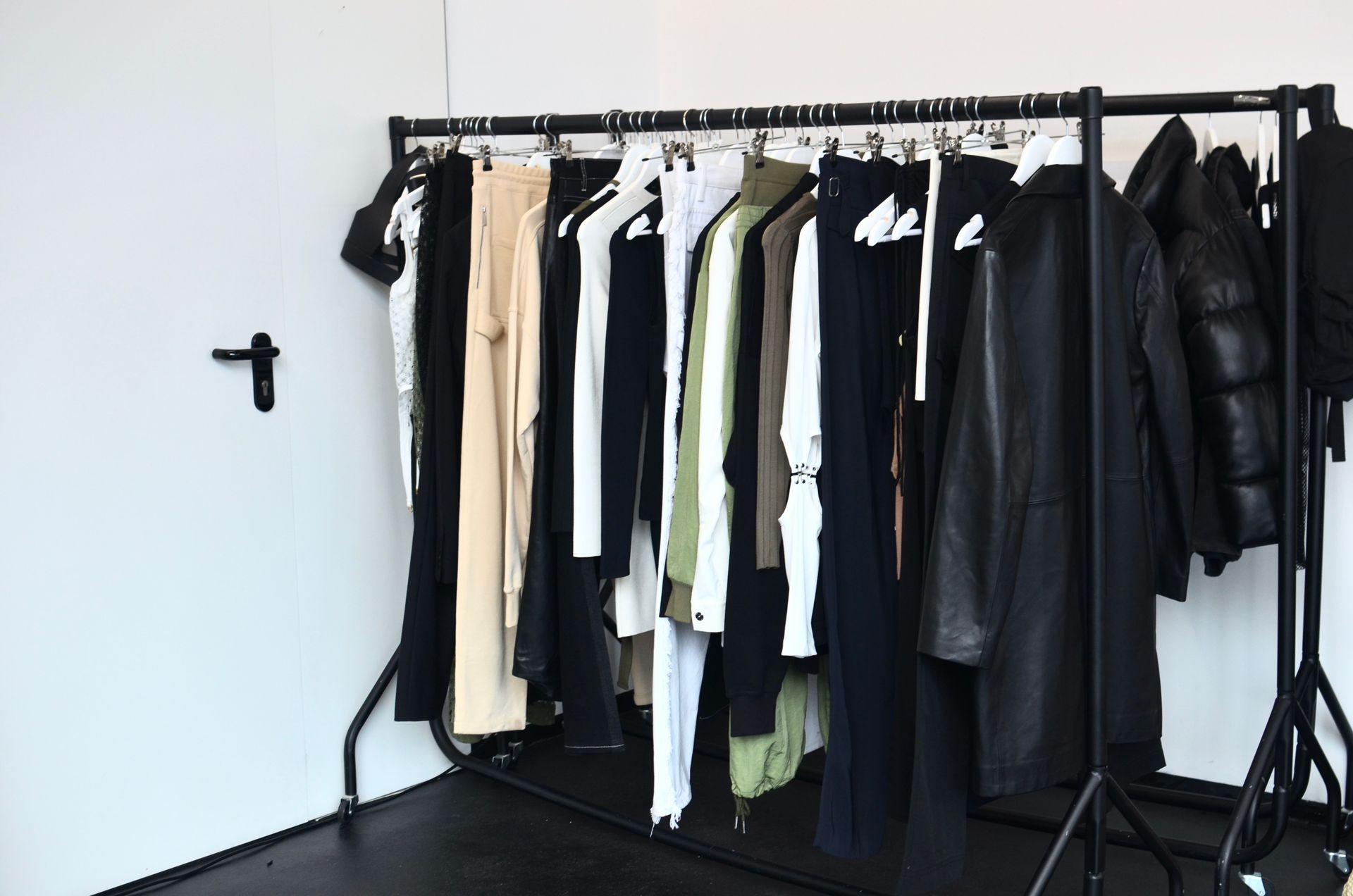
Shein's vast product range is a major draw for customers looking for affordable prices on a wide variety of items. They offer everything from women's, men's, and kids' clothing to shoes, accessories, and beauty products.
Their inventory includes home goods, sports gear, electronics, and even pet supplies - all at prices significantly lower than those of competitors like H&M. In fact, prices on Shein are estimated to be 39-60% cheaper than those of H&M.
Shein's ability to offer such a vast range of products is made possible by its network of small and medium-sized manufacturing partners, largely located in China. This allows them to iterate through production cycles in a matter of days, rapidly reacting to shifting trends.
Shein's platform features a frequently updated selection of nearly 600K items, with up to 10K individual items and styles added every day. This ensures that customers have access to a constantly changing selection of products to choose from.
Market and Competition
Shein operates in a competitive market, with a number of notable competitors vying for attention.
Shein's main competitors include H&M, a Swedish fast fashion brand worth around $27 billion, and Temu, a rising competitor owned by Chinese e-commerce giant Pinduoduo, valued at over $180 billion.
According to the top fashion online stores worldwide in 2024, by net sales, Shein is not alone in the fast fashion world.
Here are some of the top fashion online stores worldwide in 2024, by net sales (in million U.S. dollars):
- H&M
- Temu
- Other major players in the fast fashion market
Shein's growth in app-based shopping mirrors Temu's rapid rise, making them a key competitor in the online retail space.
Third Party Marketplace
SHEIN's Third-Party Marketplace offers a wider selection of products, including name brands like New Balance, to consumers.
By launching its integrated marketplace in June 2023, SHEIN expanded its inventory and created revenue opportunities without requiring significant investment.
For third-party sellers, SHEIN's marketplace provides real-time data analytics, product fulfillment tools, marketing exposure, and training and incentives programs.
The company's marketplace allows third-party brands to sell their products to SHEIN's user base, creating a win-win situation for both parties.
As of November 2023, SHEIN offers an extensive range of product verticals on its website, including fashion, home and living, and electronics.
The products listed on SHEIN's website can be divided into three broad categories: fashion, home and living, and electronics.
SHEIN's push into becoming a broader ecommerce marketplace has brought it into direct competition with Amazon, which accounted for nearly 33% of the online apparel and accessories market in the US.
Amazon's third-party marketplace is its primary growth engine, with the company selling private label products through its Amazon Basics brand.
SHEIN's marketplace creates opportunities for the company to grow without requiring significant investment, unlike its first-party sales.
The company has quickly established a foothold in the home goods space, selling a wide range of decor, furniture, lighting, tools, and other household items through its marketplace.
Competitors
Shein isn't alone in the fast fashion world - it's up against some big names. H&M, a Swedish fast fashion brand worth around $27 billion, is known for its trendy, affordable clothing, much like Shein.
Temu, a rising competitor, especially in Asia, is owned by Chinese e-commerce giant Pinduoduo, which is valued at over $180 billion. Temu and Shein have rapidly gained popularity by offering a wide range of products at low prices.
In the United States, Shein faces competition from other online fashion stores. According to recent data, the top fashion online stores in the U.S. in 2024 include Leading online stores in the fashion segment in the United States in 2024, by e-commerce net sales (in billion U.S. dollars), which is a significant market share.
Shein is also competing with Amazon, which was estimated to account for nearly 33% of the online apparel and accessories market in the US and close to $70 billion in annual sales in 2023.
Here are some key competitors in the fast fashion market:
Online Traffic & Downloads

Online traffic to Shein.com in 2025 reached a significant milestone, with millions of visits from May to July alone. Monthly web traffic to shein.com in 2025 is a staggering number, with millions of people accessing the site every month.
The demographics of Shein's website visitors are also worth noting. In September 2025, 65% of global visitors to shein.com were between the ages of 18 and 24, while 55% were female.
Shein's mobile app has also been a huge success, with the top downloaded shopping apps worldwide in 2024 including Shein. In the US, Shein was the 7th most downloaded shopping app in 2024, with over 10 million downloads.
The countries with the most Shein app downloads in 2024 were China, the US, and India, with China accounting for over 40% of all downloads. This is not surprising, given the large and growing e-commerce market in China.
Here's a breakdown of the top downloaded shopping apps in the US, UK, and worldwide in 2024:
The Shein app has also seen significant growth in the US, with monthly downloads increasing by 50% between 2017 and 2025.
Evolu or Greenwashing
Shein's attempt to improve its image with evoluSHEIN is a prime example of greenwashing, where a company claims to be eco-friendly without making real changes.
Many people believe Shein's move is a publicity stunt to boost its reputation, rather than a genuine effort to reduce its environmental impact.
Shein's evoluSHEIN line is seen as just another marketing ploy to make consumers feel better about buying from the brand.
Greenwashing can be a clever way for companies to distract from their actual environmental record, but it's not fooling everyone.
Customer and Consumer
SHEIN's primary target market is Gen Z and millennial consumers in regions including the US, Europe, the Middle East, Latin America, and Australia who regularly shop online.
The average SHEIN customer is female, earns $65K in annual income, and reported spending $100 per month on women's clothing. This demographic is likely to prioritize access to a wide selection of highly fashionable goods.
SHEIN is expanding its selection of products to cater to men, children, and older women, and is targeting a wide range of merchants from smaller sellers to global giants.
Product
SHEIN offers a vast product range, including women's, men's, and kids' clothing, as well as shoes, accessories, beauty products, home goods, sports gear, electronics, and pet supplies.
The company's focus is on low-priced fashion under private labels like Romwe, but it has expanded into other categories as well.
With nearly 600,000 items available for purchase, users can browse and buy at low prices through SHEIN's website and mobile app.
SHEIN's inventory turnover is remarkably fast, sitting at just 47 days, thanks to its large-scale automated test and reorder system.
This system identifies trendy designs, commissions small orders from partnered factories, and then ramps up quantity if the style proves popular.
Prices on SHEIN are estimated to be 39-60% cheaper than those of competitor H&M, according to a 2022 estimate.
The company's ability to rapidly react to shifting trends is made possible by its network of small and medium-sized manufacturing partners, largely located in China.
SHEIN can iterate through production cycles in just a few days, shipping items directly from its suppliers.
This fast turnaround time is made possible by the company's investments in distribution centers globally and partnerships with last-mile services like UniUni.
If this caught your attention, see: Fast Growth Company
Customer
SHEIN's typical customers are women in their twenties, but the company is increasingly catering to men, children, and older women as it expands its selection of products.
The average SHEIN customer is female, earns $65K in annual income, and reported spending $100 per month on women's clothing.
SHEIN's primary target market is Gen Z and millennial consumers in regions including the US, Europe, the Middle East, Latin America, and Australia who regularly shop online.
Gen Z customers will continue to drive much of the company's momentum, but SHEIN is diversifying its core customer base via its expanded range of merchandise.
Here's a breakdown of SHEIN's customer demographics:
Risk and Concerns
SHEIN is a company facing significant risks and concerns. Its highly automated business model exposes it to substantial legal risk, with designers and brands suing the company for copyright infringement.
SHEIN's supply chain has come under fire, with critics accusing the company of creating exclusive and manipulative contracts with manufacturers. This has led to lawsuits and further complicated the company's already opaque corporate structure.
The company's climate footprint is a major concern, with an estimated 6.3 million tons of carbon dioxide emitted each year. This has sparked intense backlash from environmental advocates and customers who are increasingly conscious of the impact of their purchasing decisions.
Labor Issues
Shein's factories have faced criticism for poor working conditions.
Multiple investigations have found that the company's factory conditions are unsafe and fail to meet global labor standards.
Critics have raised concerns about forced labor in some cases.
U.S. regulators are now investigating these allegations.
Over 70% of customers are willing to pay more for sustainably produced goods, indicating a growing demand for change.
SHEIN's treatment of workers has been a major point of contention.
Political Risk
SHEIN's headquarters moved to Singapore in 2021, but the company is still caught in the middle of rising tensions between China and the rest of the world.
India banned SHEIN in 2020, reportedly in retaliation for an unrelated border dispute between India and China. This ban was later rolled back two years later.
SHEIN has become a favorite target in the US, with some lawmakers calling the company a tool of the Chinese Communist Party. Others have asked the SEC to block any potential SHEIN public offering.
SHEIN has hired a team of lobbyists to help reshape its image on Capitol Hill. Despite this effort, the company remains trapped in an unenviable position between China and the West.
Legal Risk
SHEIN's highly automated business model exposes the company to significant legal risk. Its private labels have drawn the attention of major brands like H&M, which have sued SHEIN for copyright infringement, alleging that SHEIN's processes produced copies of their designs.
SHEIN's supply chain has come under fire, with Temu suing the company for creating exclusive, manipulative contracts with manufacturers. This has further complicated the legal uncertainty surrounding SHEIN.
SHEIN's opaque corporate structure allows the company to avoid liability and avoid disclosing basic information, according to critics. This lack of transparency only adds to the concerns surrounding SHEIN's business practices.
SHEIN has been accused of copying designs from smaller brands and independent designers, selling them at lower prices and hurting their businesses.
History and Statistics
SHEIN has a fascinating history that dates back to 2008 when Chris Xu, the founder and CEO, discovered the global demand for Chinese products with commercial appeal.
Chris Xu initially worked at Nanjing Aodao Information Technology Co. but decided to leave to pursue his own venture, an online retail outlet specializing in affordable fashion clothing.
The company started by selling wedding dresses, which were highly in demand worldwide, and later expanded to include women's clothing and other products.
By 2013, SheInside, as it was known at the time, had around 100 employees and underwent a significant overhaul of its marketing approaches.
The company rebranded itself as "Shein" in 2015 to enhance name recognition and by 2016, the team had grown to 800 members.
Shein is now a leading global fast-fashion brand with a supply network in Guangzhou involving over 3,000 suppliers.
In 2022, Shein earned a staggering $22.7 billion, marking a 44% rise from the $15.7 billion it earned in 2021.
Here are some key statistics about Shein:
- Earned $22.7 billion in 2022
- 44% rise in earnings from 2021 to 2022
- 74.7 million active customers
- 13.7 million customers in the United States
- 200 million app installations in 2022
- Estimated worth of $68 billion in 2022
Ownership and Valuation
Shein's valuation has taken a hit, with its worth decreasing by a third since April 2022, when it was valued at $100 billion.
The company currently stands at a valuation of $66 billion, which is still one of the highest valuations for a private company in the world.
Shein's cap table includes investors like Sequoia Capital China, General Atlantic, and Tiger Global, who have contributed to its total funding of $4.1 billion.
Shein's internally projected 2023 revenue of approximately $33 billion would put the company at a 2x revenue multiple for that year, similar to comparable public stocks Inditex and H&M.
Sky Xu, also known as Chris Xu in English media, is the owner of Shein, a billionaire who founded the company in 2015 with Molly Miao, who now serves as the company's COO.
Valuation
Shein's valuation has seen a significant decrease, from $100 billion in April 2022 to $66 billion in May 2023. This reduction is largely due to a decrease in venture funding, which also affected its competitor Pinduoduo.
Shein raised $2 billion at a $66 billion valuation in May 2023, bringing its total funding to $4.1 billion. The company's cap table includes investors like Sequoia Capital China, General Atlantic, and Tiger Global.
As of May 2023, Shein's valuation is still one of the world's most valuable private company valuations, but it has seen a significant reduction of a third since its previous raise. This decrease is not unique to Shein, as the ecommerce space as a whole saw a decline in funding, from $12.6 billion in 2021 to $8.8 billion in 2022.
Shein's valuation of $66 billion in May 2023 would put the company at a 2x revenue multiple for that year, assuming its internally projected 2023 revenue of approximately $33 billion. For comparison, comparable public stocks Inditex and H&M trade at similar multiples of 1.3-3x.
Who Owns?
Shein is owned by Sky Xu, also known as Chris Xu in English media, who became a billionaire after founding the company in 2015.
Sky Xu founded Shein with Molly Miao, who now serves as the company's COO.
Expansion and Growth
SHEIN is rapidly expanding into new geographies, with investments in warehouses and factories in the US, Canada, Poland, and other markets. The company has also announced a $150 million investment in Latin America, establishing Brazil as its manufacturing and distribution hub for the region.
In addition to geographic expansion, SHEIN is also diversifying its product verticals. The company is prioritizing appliances and home goods, but electronics, food, and groceries are also potential channels for growth.
SHEIN has already achieved significant success in fashion retailing and ecommerce, surpassing $4 billion in annual sales by 2019. The COVID-19 pandemic accelerated the company's growth, with sales jumping nearly 250% YoY to $10 billion in 2020.
The company has maintained momentum since then, recording $16 billion and $22.7 billion in revenue in 2021 and 2022, respectively. SHEIN has also achieved profitability, earning a reported $800 million in net income in 2022.
SHEIN's leadership expects revenue to reach $58.5 billion in 2025, indicating a strong growth trajectory. The company's large user base also creates a significant cross-selling opportunity, which could drive further growth in its new product verticals.
Frequently Asked Questions
Is Shein a legitimate company?
Shein is a registered and legitimate business that has been operating since 2008. With millions of satisfied customers worldwide, Shein has established a strong online presence.
Featured Images: pexels.com