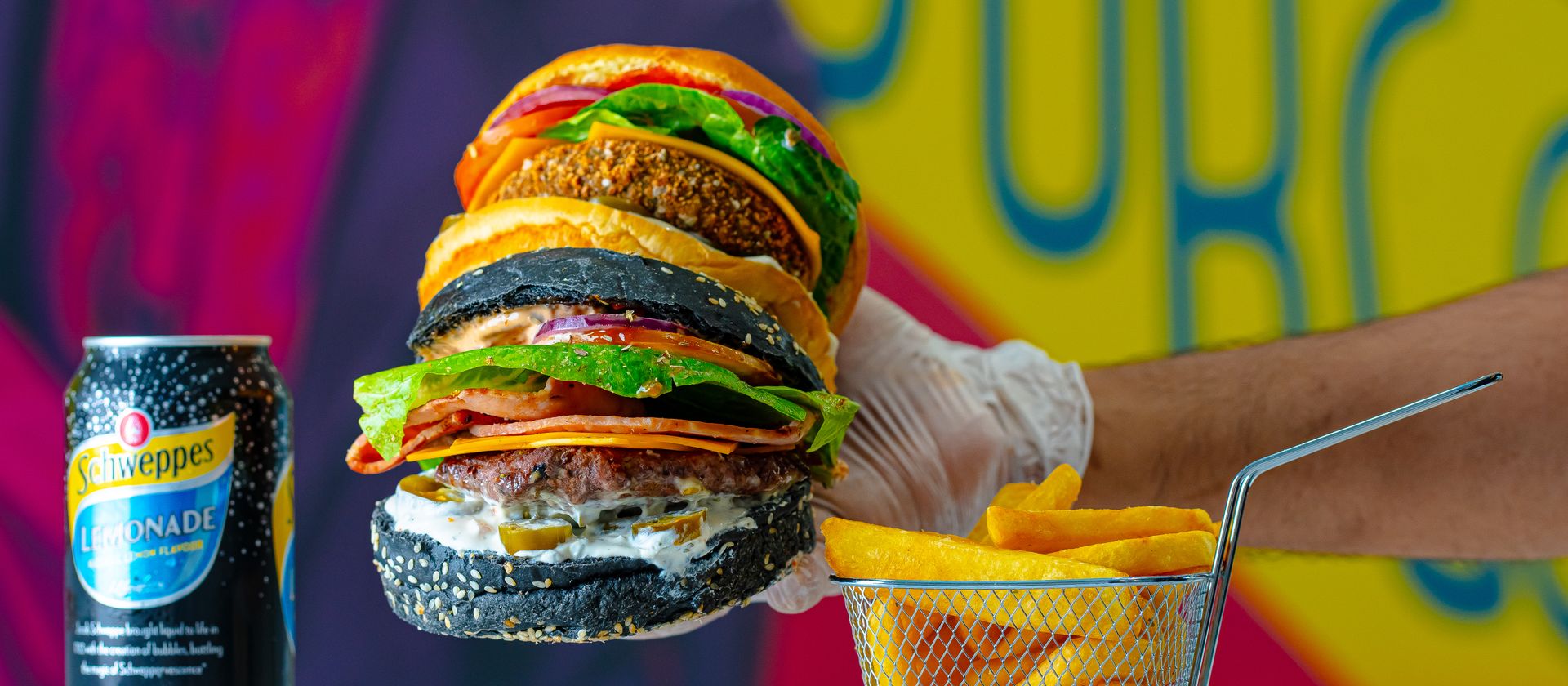
Schweppes is a British company that has been around since 1783, making it one of the oldest beverage companies in the world.
The company was founded by Johann Jacob Schweppe, a Swiss watchmaker who invented a method for mass-producing carbonated water. He started the company in Geneva, Switzerland.
Schweppes is perhaps best known for its tonic water, which was invented in the late 18th century. The company's tonic water was originally marketed as a health tonic, with a claimed ability to cure a range of ailments.
Company history
Jacob Schweppe founded his company in 1783 in Geneva, where he invented a way to make bottled fizzy mineral water based on discoveries by Joseph Priestley.
In 1783, Schweppe started his company in Geneva, Switzerland.
By 1792, he moved to London to expand his business, and by 1820, he was selling fizzy water from Hotwells in Bristol.
Schweppes continued to grow, with regional factories being opened in strategic locations, starting with Bristol in 1803.
The company's products were moved across the country by canal boats, coastal vessels, and horse-drawn waggons, with railways arriving thirty years later.
By the 1820s, Schweppes had developed an export trade.
In 1834, two new owners, John Kemp-Welch and William Evill, took over the business and were recognized with a Royal Warrant as manufacturers of soda water.
Schweppes has since been honored with a Royal Warrant of Appointment by every successive British monarch, with the exception of King Edward VIII.
The company's products were a hit, and they were contracted as the sole supplier of refreshments at the 1851 Great Exhibition in Hyde Park.
Schweppes paid £5,500 for the privilege, a hefty sum at the time, and one of the first examples of brand sponsorship.
Marketing
Marketing has played a significant role in Schweppes' success. The company's early advertising efforts date back to the 1920s and 1930s, when artist William Barribal created a range of posters for the brand.
Schweppes' advertising agency, S.T.Garland Advertising Service Ltd., London, coined the word "Schweppervescence" in 1946. This word was used to describe the bubbly, fizzy quality of the drinks and was featured in banners advertising the brand during the Victory Day Parade in London.
The company sold the copyright of "Schweppervescence" to Schweppes for £150 in 1951. This marked a significant milestone in the company's advertising history.
Schweppes has had many memorable advertisements over the years. In the 1950s and 1960s, a real British naval officer named Commander Whitehead appeared in ads, describing the product's bubbly flavour as "Schweppervescence".
The company also featured comedian Benny Hill in a series of Schweppes TV commercials in the 1960s. This campaign helped to further establish the brand's playful and lighthearted image.
Here are some notable Schweppes ad campaigns:
Schweppes' advertising efforts have been instrumental in shaping the brand's identity and resonating with its target audience.
Products and Range
Schweppes range of mixers is quite impressive, with a history dating back to 1835 when they introduced their first carbonated drink, Schweppes Aerated Lemonade.
Their innovation didn't stop there, as they went on to launch Tonic Water and Ginger Ale in the 1870s, with the latter available in both dry and sweet versions.
Tonic Water remained a British favorite for nearly a century, but it's interesting to note that it didn't become popular in America until 1953, when Schweppes started bottling there.
The company's product line expanded further in the 1920s and 30s with the introduction of Schweppes sparkling fruit juices, including Orange, Grapefruit, and Lemon.
Bitter Orange and Bitter Lemon followed in 1957, made possible by advances in fruit processing.
J. & Company
J. & Company started with Jacob Schweppe selling three-quarters of his company to three men from Jersey in 1798.
He retained one-eighth share for himself and another eighth for his daughter, Colette.
Jacob Schweppe completed his retirement by relinquishing half of his and his daughter's shares to Stephen DeMole in 1799.
DeMole took on the responsibility of looking after the business on behalf of Jacob and his daughter.
The new owners established a network of agents across the country and opened strategically located regional factories, with the first being in Bristol in 1803.
Products were moved across the country by canal boats, coastal vessels, and horse-drawn waggons, with railways coming thirty years later.
By the 1820s, an export trade was also being developed.
Frequently Asked Questions
Is Schweppes Israeli?
No, Schweppes is not typically associated with Israel globally. However, the international brand is owned by Jafori-Tabori in Israel, making it a unique exception.
Does the royal family own Schweppes?
No, the royal family does not own Schweppes, but they have granted the company a Royal Warrant for its soft drinks. This unique distinction is likely due to the royal family's preference for Schweppes' mixers.
Featured Images: pexels.com