Protection and indemnity (P&I) insurance is a type of insurance that protects shipowners and charterers from potential losses due to third-party liabilities.
P&I insurance provides financial protection against a wide range of risks, including damage to other vessels, cargo, and port facilities.
The main benefit of P&I insurance is that it helps to prevent financial ruin in the event of an accident or incident.
By transferring the risk to the insurance company, shipowners and charterers can avoid significant financial losses and maintain their business operations.
P&I insurance policies typically cover claims for damage to third-party property, including vessels, cargo, and port facilities.
Suggestion: UK P&I Club
What Is P&I Insurance?
P&I insurance originated in the early 1800s as a result of changes in hull policies, which limited marine underwriters' losses by collision to three-fourths of the shipowner's liability.
These limitations led to the formation of shipowners associations, known as Protection & Indemnity (P&I) clubs, to mutually insure their exposure. P&I clubs have grown to represent approximately 95 percent of the world's maritime P&I insurance.
Intriguing read: P Is Looking to Purchase a Life Insurance Policy
In the USA, however, most P&I is purchased from insurance companies. Modern P&I policies provide financial protection for shipowners, covering losses due to injury, illness, and loss of life, as well as other expenses such as hospital and medical bills, repatriation, and wreckage removal.
P&I insurance also extends benefits for damage to other vessels, property, and cargo, as well as fines and penalties, and expenses related to the prosecution of mutiny or misconduct. Crew cover is an extension of P&I to cover the liability of a vessel owner/operator to the crew.
You might enjoy: A P P O R T I O N
Purposes and Benefits
The International Group of P&I Clubs serves several core functions, including operating claims sharing and reinsurance arrangements, providing a forum for collecting and exchanging views between clubs and shipowner members, and offering a collective industry voice for engaging with external stakeholders.
The group's primary purpose is to facilitate the sharing of risks and costs among member clubs. This is achieved through collective reinsurance arrangements, which help to stabilize the financial position of member clubs.
Shipowners who become members of a P&I club can reap several benefits, including access to liability insurance and a collective industry voice for engaging with external stakeholders.
Curious to learn more? Check out: External Risk
Purposes of the International Group of Clubs
The International Group of P&I Clubs has three main purposes. The group operates claims sharing or pooling arrangements and collective reinsurance of these arrangements.
These arrangements are crucial for managing large losses. The group also serves as a forum for collecting and exchanging views between clubs and their shipowner members on matters related to shipowners' liabilities and insurance of such liabilities.
This collective voice is essential for engaging with external stakeholders, including intergovernmental maritime organizations, national governments, and marine authorities around the world. The group provides a unified industry voice for these interactions.
Here are the core functions of the International Group of P&I Clubs:
- The operation of claims sharing or pooling arrangements and the collective reinsurance of these arrangements.
- To operate as a forum for collecting and exchanging views between the clubs and their shipowner members on matters relating to shipowners’ liabilities and insurance of such liabilities.
- To provide a collective industry voice for the purposes of engaging with external stakeholders including intergovernmental maritime organizations, national governments, marine authorities around the world and the shipping and marine insurance/reinsurance industries.
The International Group of P&I Clubs is made up of 13 major P&I clubs, which together provide P&I insurance for approximately 90% of the world's ocean-going tonnage. Each member club remains an independent, not-for-profit mutual insurance association.
Additional reading: Insurance Cover on Business - Merchant Services
The Benefits
Shipowners who become members of a P&I club can reap several benefits in terms of liability insurance.

P&I insurance offers customized coverage, tailored to fit the insured's specific coverage needs. This bespoke coverage ensures that ship owners pay only for the coverage that suits their unique operational profile.
P&I clubs can adapt policies as needed and adjust in case there are changes in operational or regulatory requirements, making it a flexible and responsive form of insurance.
Understanding the differences in P&I club defence cover is vital, as it can impact your business in significant ways.
See what others are reading: NorthStandard P&I Association
What's Covered?
P&I insurance provides cover for a wide range of risks, including cargo loss, collision, and damage to property on board the insured vessel.
Liabilities such as fines and penalties are also covered, as well as loss of life, injury, and illness of crew, passengers, and other persons. The costs of crew repatriation and substitution are also covered.
Here are some of the key risks covered by P&I insurance:
- cargo loss, shortage or damage
- collision
- crew repatriation and substitution
- damage to property on board the insured vessel
- damage to docks, buoys and other fixed and floating objects
- fines and penalties
- loss of life, injury and illness of crew, passengers and other persons
- mutiny and misconduct by the crew
- pollution
- quarantine due to infectious disease or similar epidemic event
- unrecoverable general average contributions
- vessel diversion expenses
- vessel's proportion of General Average
- wreck removal
P&I insurance also covers claims related to cargo, including damage to or loss of cargo while in transit. This is essential for protecting the interests of both shipowners and cargo owners.
What's Covered?
P&I insurance provides cover for a wide range of risks, including cargo loss, shortage or damage, and collision.
Liabilities, expenses, and costs incurred due to crew repatriation and substitution, damage to property on board the insured vessel, and damage to docks, buoys and other fixed and floating objects are also covered.
P&I insurance covers fines and penalties, loss of life, injury and illness of crew, passengers and other persons, mutiny and misconduct by the crew, and quarantine due to infectious disease or similar epidemic event.
Pollution is a significant aspect of P&I insurance, including oil spills and other forms of marine pollution that can cause significant environmental damage.
The costs associated with a compulsory order to remove a wreck, including cleanup costs and fines or penalties, are also covered by P&I insurance.
Cargo claims, including damage to or loss of cargo while in transit, are protected by P&I insurance, which is essential for protecting the interests of both shipowners and cargo owners.
A fresh viewpoint: Copay Due at Time of Service Sign
Here's a breakdown of the main risks covered by P&I insurance:
- cargo loss, shortage or damage
- collision
- crew repatriation and substitution
- damage to property on board the insured vessel
- damage to docks, buoys and other fixed and floating objects
- fines and penalties
- loss of life, injury and illness of crew, passengers and other persons
- mutiny and misconduct by the crew
- pollution
- quarantine due to infectious disease or similar epidemic event
- unrecoverable general average contributions
- vessel diversion expenses
- vessel's proportion of General Average
- wreck removal
Personal Injury
Personal Injury is a critical aspect of P&I insurance.
Coverage extends to personal injury or loss of life of crew members, passengers, and others who might be injured in connection with the ship's operations. This includes the example of the Able Seaman who fell 16 meters down into the cargo hold and tragically passed away.
A P&I claim can be made for compensation in such cases, including medical expenses and potential legal costs. The ship owner, co-workers, equipment manufacturers, and regulatory bodies can be held liable if an investigation finds fault, negligence, or a violation of maritime laws on their part.
In the case of the Able Seaman, multiple P&I claims can be made, including compensation for his loss of life and medical expenses.
Risks and Exclusions
P&I insurance doesn't cover unforeseeable events, including damages or claims that should have been covered by other marine insurance.
There are two types of claims that fall under this category: hull and machinery insurance, and war risks insurance. Claims arising from acts of war or terrorism are typically excluded from P&I coverage.
P&I insurance also doesn't cover liabilities arising from fraudulent non-delivery of cargo or situations where the insured didn't take the necessary steps to limit their liability.
Claims arising from acts of willful misconduct by the insured are excluded from P&I insurance coverage. These include losses that are intended or where the insured ignored likely outcomes.
Non-compliance with flag state requirements related to marine safety and environmental protection can also affect liability coverage under the P&I policy.
Here are some examples of excluded claims:
- Hull and machinery insurance: collision liabilities and damages to the vessel itself.
- War risks insurance: acts of war or terrorism.
- Moral hazards: fraudulent non-delivery of cargo or failure to limit liability.
- Willful misconduct: intended losses or ignored likely outcomes.
- Operational non-compliance: non-compliance with flag state requirements.
Exclusions
P&I insurance doesn't cover unforeseeable events that are not related to the insured's operations.
Damages or claims that should have been covered by other marine insurance are excluded from P&I coverage.
Hull and machinery insurance typically covers collision liabilities and damages to the vessel itself.
Discover more: California Insurance Bad Faith Punitive Damages
War risks insurance excludes claims arising from acts of war or terrorism.
Moral hazards, such as fraudulent non-delivery of cargo, are not covered by P&I insurance.
Willful misconduct, including losses intended or ignored by the insured, are excluded from P&I coverage.
Operational non-compliance with flag state requirements related to marine safety and environmental protection can affect liability coverage.
Here are some examples of exclusions:
- Hull and machinery insurance
- War risks insurance
- Moral hazards
- Willful misconduct
- Operational non-compliance
These exclusions are important to understand, as they can help you avoid potential issues with your P&I insurance claim.
Third-Party Liabilities
P&I insurance primarily covers liabilities to third parties, including injuries to crew members and other third parties such as passengers.
This can also extend to damage to other ships or structures, as seen in the example of a bulk carrier where an Able Seaman fell 16 meters down into the cargo hold, resulting in multiple P&I claims.
The financial protection offered by P&I insurance is crucial in covering significant claims, ensuring the financial stability of ship owners. This is especially important in cases where the ship owner, co-workers, equipment manufacturers, and regulatory bodies can be held liable.
P&I insurance provides coverage for third-party liabilities, including:
- Injuries to crew members
- Injuries to passengers
- Damage to other ships
- Damage to structures
This coverage is essential for ship owners who want to operate in international waters, as P&I insurance is often a requirement for obtaining a license to operate.
How Clubs Function
P&I clubs are run as non-profit cooperatives, meaning they don't aim to make a profit from their members. They're essentially a group of ship owners working together to share the risks and costs of insurance.
Members contribute to the club's common risk pool according to their Pooling Agreement's rules, which usually covers the most damaging risks or claims. Thankfully, claims and damages have been moderate in the past year, so no further calls are needed.
The risk pool can incur a surplus if claims are lower than expected, allowing the club to ask for a lower call the following year or refund the excess to members.
A unique perspective: Bike Club Insurance
World Clubs
P&I clubs are a global phenomenon, with a presence in many major shipping jurisdictions around the world. The concept of P&I clubs originated in London, but it has since spread to other parts of the globe.
Some of the countries where you can find thriving P&I clubs include Bermuda, China, Japan, Norway, Singapore, Sweden, the United Arab Emirates, the USA, and South Korea. These clubs offer a vital service to shipowners, providing them with protection against potential losses.
The International Group of P&I Clubs is a significant player in the industry, comprising 13 major P&I clubs that provide insurance for approximately 90% of the world's ocean-going tonnage. This collective effort ensures that shipowners have a strong safety net in place.
The International Group of P&I Clubs has three core functions. Firstly, it operates claims sharing or pooling arrangements, as well as collective reinsurance of these arrangements. This helps to mitigate the financial risks associated with shipping.
The group also serves as a forum for collecting and exchanging views between clubs and shipowner members on matters related to shipowners' liabilities and insurance of such liabilities. This facilitates knowledge sharing and best practices within the industry.
Lastly, the International Group of P&I Clubs provides a collective industry voice for engaging with external stakeholders, including intergovernmental maritime organizations, national governments, marine authorities, and the shipping and marine insurance/reinsurance industries. This helps to promote the interests of the industry as a whole.
Here's a list of some of the countries where you can find thriving P&I clubs:
- Bermuda
- China
- Japan
- Norway
- Singapore
- Sweden
- United Arab Emirates
- USA
- South Korea
How Clubs Function
A P&I club is a non-profit cooperative, meaning it's not driven by profits like traditional insurance companies. This unique setup allows members to contribute to a common risk pool, which is usually enough to cover most claims.
Club members contribute to the risk pool according to their Pooling Agreement's rules, which helps to distribute the financial burden fairly.
Members only pay a premium if the risk pool can't cover current claims, at which point they'll be asked to pay a further call. Thankfully, claims and damages have been moderate in the past year, so no further calls are needed.
If the risk pool incurs a surplus, the club can either ask for a lower call the following year or refund the excess to members.
Take a look at this: Norwegian Hull Club
Claims and Liability
P&I insurance covers liabilities to third parties, including injuries to crew members and other third parties such as passengers, as well as damage to other ships or structures.
Claims arising from acts of war or terrorism are typically excluded from P&I coverage. Hull and machinery insurance does not cover liabilities that can be specifically covered by it, such as collision liabilities and damages to the vessel itself.
Multiple P&I claims can be made in a single incident, including compensation for the loss of life, medical expenses, and potential legal costs. Ship owners must take the necessary precautions and adhere to all safety regulations to avoid preventable damage or losses.
P&I insurance also covers claims related to cargo, including damage to or loss of cargo while in transit. This is essential for protecting the interests of both shipowners and cargo owners.
Here are some examples of P&I claims:
- Compensation for the loss of life
- Medical expenses
- Potential legal costs
- Damage to other ships or structures
- Loss or damage to cargo
- Wreck removals
- Pollution or environmental damage
Example of a Claim
An example of a P&I claim is a tragic scenario where an Able Seaman fell 16 meters down into a cargo hold while washing the hatch coaming gutter with a fire hose. The crew was spraying water, and the AB's safety harness became tangled with the hose, causing him to lose his balance.
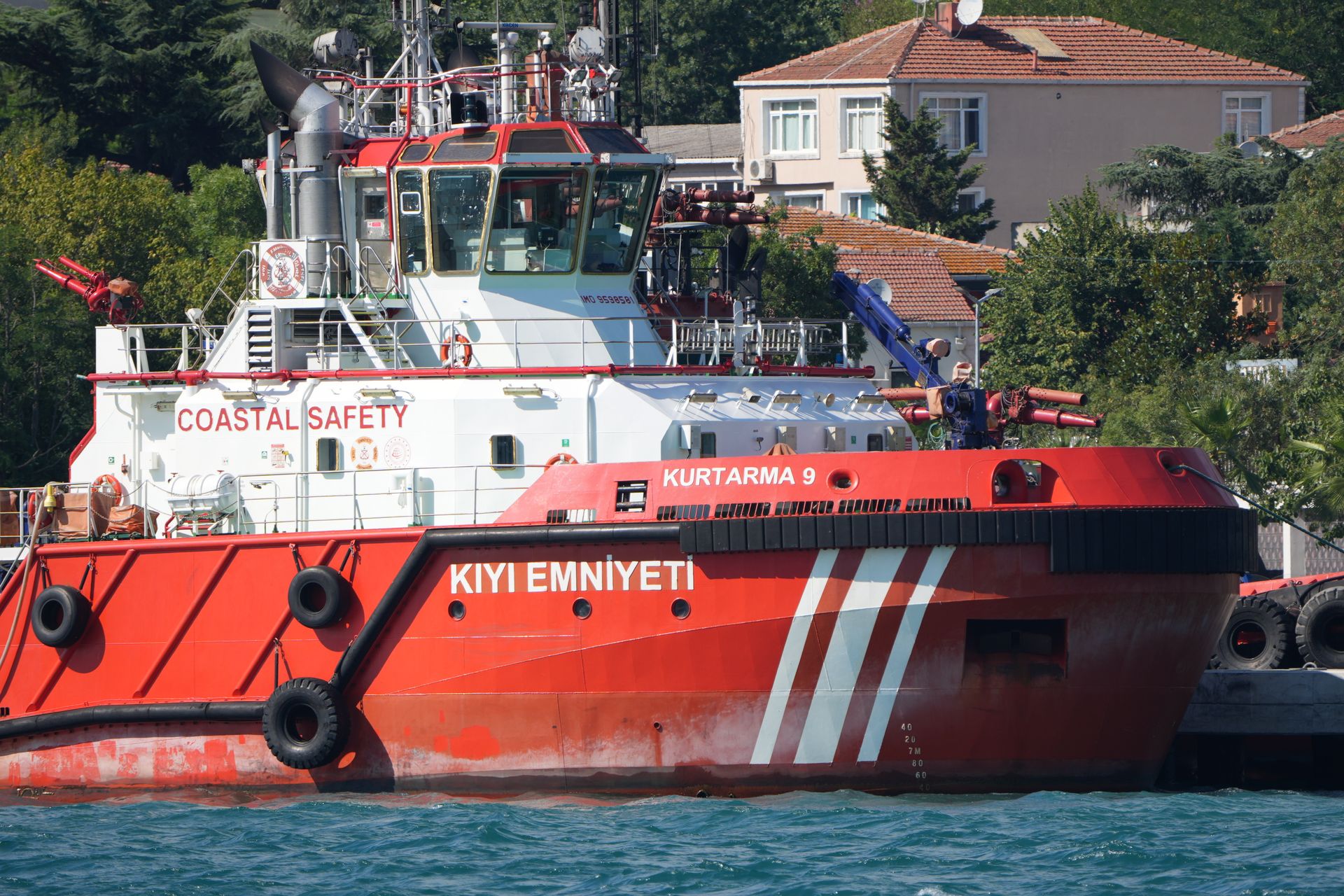
The ship owner, co-workers, equipment manufacturers, and regulatory bodies can be held liable if an investigation finds fault, negligence, or a violation of maritime laws on their part. This is because multiple P&I claims can be made in such a scenario, including compensation for the AB's loss of life, medical expenses, and potential legal costs.
The ship owner must always take necessary precautions and adhere to all safety regulations to avoid such incidents. P&I insurance plays a crucial role in providing coverage against the many risks that come with maritime operations.
An investigation into the incident may find fault with the ship owner's actions, leading to a P&I claim. P&I clubs operate on a mutual insurance model, where members should avoid actions that could lead to preventable damage or losses.
Broaden your view: S Buys a 50000 Whole Life Policy
Control Over Claims
Having control over claims is crucial for any business that operates on the water. You want to minimize downtime and get back to work as quickly as possible.
Our dedicated marine claims team is designed to do just that. They focus on mitigating loss and reducing downtime, so you can get back to operations.
You'll work with claims specialists who have deep maritime experience. They'll deliver expert support and service, and issue payments in a timely manner.
Their expertise goes beyond just processing claims. They can leverage our worldwide claims, legal, and subrogation networks to help resolve issues.
Here's what you can expect from our claims team:
- Expert support and service
- Prompt payments
- Access to a global network of claims, legal, and subrogation specialists
Liabilities and Risks
Comprehensive liability insurance is a key aspect of P&I insurance, covering liabilities that many marine insurance providers may not want to cover due to high risk or financial incapability.
P&I insurance can cover a wide range of liabilities, including personal injury or illness of passengers, crew, and third parties, loss or damage to cargo, wreck removals, pollution or environmental damage, and damage to floating objects.
P&I insurance primarily covers liabilities to third parties, including injuries to crew members and other third parties such as passengers, as well as damage to other ships or structures.
Here are some examples of complex risks that P&I insurance can help mitigate:
- Loss or damage to cargo
- Pollution or environmental damage
- Damage to floating objects
- Wreck removals
P&I insurers can also provide expert risk management and support, including specialized knowledge and claims handling, to help ship owners navigate complex regulations and liabilities associated with maritime operations.
Expertise and Solutions
P&I insurance can provide ship owners with specialized knowledge and support for risk assessment and risk management.
Many P&I providers have experienced claims handlers who work with P&I members to navigate claims and offer proactive advice to avoid or minimize losses.
P&I insurers can also provide legal support for navigating complex regulations and liabilities associated with maritime operations.
Some P&I clubs can even share tech tools that help avoid serious risks, like having crew members contract illness during recent pandemics.
Our marine hull, P&I, and builder’s risk solutions help safeguard shipyards, workboats, research or passenger vessels, tugs, coastal tankers, and more.
Our coverages include marine hull insurance, marine protection and indemnity insurance, and marine builder’s risk insurance.
Related reading: Help U Cover Pet Insurance
Here are some key features of our coverages:
- Marine hull insurance: helps cover physical loss or damage to vessels at the dock, during trips, or while operating.
- Marine protection and indemnity insurance: helps cover third-party liabilities arising out of the operations of the vessel.
- Marine builder’s risk insurance: provides coverage for the shipyard or vessel owner for loss or damage of vessels during the course of construction.
Our policies have a range of capacities, including $15M for hull, $1M for optional P&I, and $25M for marine builder’s risk.
We also offer policy forms and coverages tailored to specific needs, multiline capabilities, annual and multiyear policy options, and financial strength, security, and capacity of a Fortune 100 company.
Our integrated approach brings together in-house marine specialists from underwriting, risk engineering, and claims to deliver expertise that delivers.
Our dedicated marine underwriters have the industry expertise and local underwriting authority to tailor coverage to meet your needs.
Our marine risk engineering and surveying teams can help identify exposures, quantify costs, and recommend practical solutions.
Our local marine claims specialists are focused on helping your business recover.
We combine this expertise with a customer-centric service approach that keeps your risk-management goals at the forefront and helps lower your total cost of risk.
Readers also liked: Engineering Insurance Policies
Financial Protection
P&I insurance provides financial protection to ship owners through the collective strength of mutual P&I clubs. This allows them to cover significant claims, ensuring the financial stability of ship owners.
P&I insurance is also a form of license for ship owners, as they typically cannot operate in international waters without it.
Having P&I insurance can give ship owners better control over claims, thanks to the expertise and solutions provided by the P&I clubs.
P&I insurance covers fines and penalties levied against the shipowner for various infractions, such as pollution or immigration violations.
The benefits of P&I insurance include solutions for complex risks, expertise that delivers, and better control over claims.
You might enjoy: Medical Billing and Coding Software Solutions
Vessel Owners and Operators
As a vessel owner, you're likely aware that operating a ship comes with its own set of risks. Operational non-compliance can lead to a P&I insurance claim being rejected, so it's essential to stay on top of flag state requirements related to marine safety and environmental protection.
Flag state requirements are in place to ensure vessels are operated safely and responsibly, and non-compliance can affect liability coverage under a P&I policy.
For more insights, see: Protective Life Insurance for Non Citizens
Vessel owners and operators need to be mindful of these requirements to avoid potential issues down the line.
Insurance for vessel owners is designed to help protect against accidental loss or damage to vessels on the water or at the dock, and even ships under construction.
This type of insurance is crucial for vessel owners and shipbuilders, as it provides peace of mind and helps cover unexpected costs.
It's essential to review your policy, service contract, or program documentation to understand the actual terms, conditions, and exclusions that apply to your coverage.
Club Update 2024
The International Group of P&I Clubs has 13 major P&I clubs that provide insurance for approximately 90% of the world's ocean-going tonnage.
These clubs are independent, not-for-profit mutual insurance associations that share their large loss exposures and expertise on marine liabilities.
P&I clubs are non-profit cooperatives that finance their insurance through "calls" rather than premiums. Club members contribute to the common risk pool according to their Pooling Agreement's rules.
For another approach, see: Underwriting Profit
This practice is usually enough to finance club members' coverage for some of the most damaging risks or claims to the shipping industry.
If the risk pool cannot cover current claims, the club members will be asked to pay a further call. Thankfully, since the past year, claims and damages were moderate, so no further calls are needed so far.
Only ship owners with acceptable reputations are allowed to join a P&I club. Any P&I club member who causes reckless or avoidable losses may be asked to leave.
The P&I clubs have a system in place to manage their finances and make adjustments as needed.
Today
Today, P&I insurance has evolved to cater for a wide variety of people-related marine exposures.
It provides the financial security needed to ensure ships can trade in an environmentally sensitive world.
Pollution and wreck removal are top of the agenda, and P&I insurance helps to mitigate these risks.
Insurance is provided on a mutual basis and not for profit, which has remained constant throughout time.
Featured Images: pexels.com