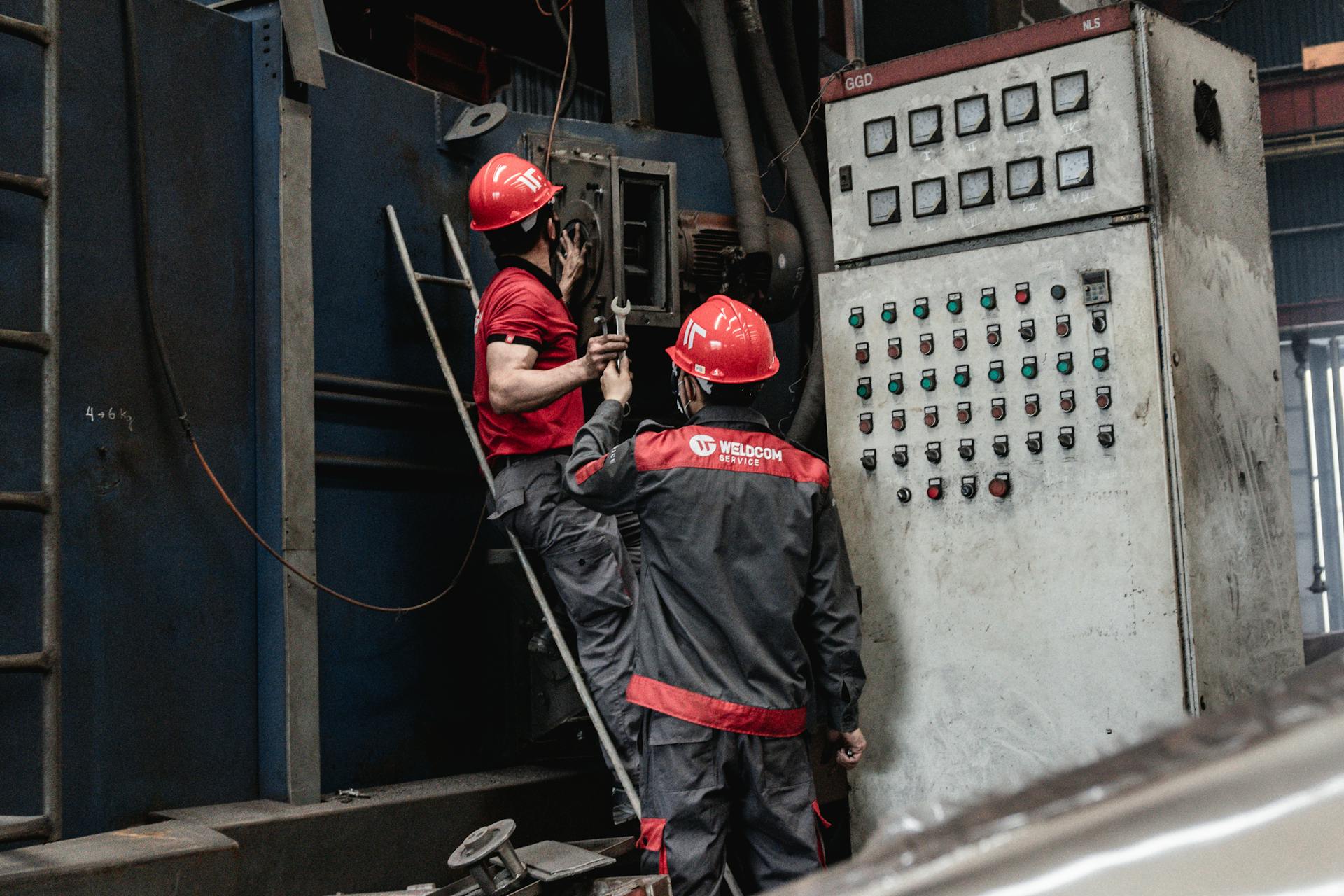
The Prevention of Major Industrial Accidents Convention 1993 is a crucial international agreement aimed at preventing major industrial accidents.
The Convention was adopted by the International Labour Organization (ILO) in 1993.
It sets out a framework for governments to develop and implement measures to prevent major industrial accidents, and to provide for the safety and health of workers.
The Convention requires governments to identify and assess hazards in the workplace, and to take steps to mitigate or eliminate them.
Governments must also establish procedures for reporting and investigating industrial accidents, and for taking corrective action.
Here's an interesting read: Car Accidents
Convention Details
The Prevention of Major Industrial Accidents Convention, 1993 was adopted by the International Labour Organization on June 26, 1993. It aims to prevent major industrial accidents by providing a framework for governments to develop and implement policies and regulations.
The Convention covers a wide range of industries, including chemical, petrochemical, and other high-risk sectors. This is because these industries have the potential to cause significant harm to workers, the public, and the environment.
You might enjoy: Car Accidents Happen
The Convention requires governments to establish a national authority responsible for the prevention of major industrial accidents. This authority will be responsible for developing and implementing policies, regulations, and procedures to prevent such accidents.
Governments must also establish a system for reporting and investigating major industrial accidents. This system will help identify the causes of accidents and prevent similar incidents from occurring in the future.
The Convention requires employers to take steps to prevent major industrial accidents, including conducting risk assessments and implementing safety measures. They must also provide training to workers on safety procedures and emergency response plans.
Employers must also establish a system for reporting and investigating near misses and accidents. This will help identify potential hazards and prevent accidents from occurring.
The Convention requires governments to provide assistance to employers in implementing the Convention's requirements. This includes providing training, technical assistance, and resources to help employers develop and implement safety policies and procedures.
The Convention also requires governments to establish a system for monitoring and reviewing the effectiveness of the Convention's implementation. This will help identify areas where improvements are needed and ensure that the Convention's goals are being met.
Check this out: Does Pet Insurance Cover Training
Frequently Asked Questions
What are the ILO conventions and recommendations for fire safety?
According to ILO conventions and recommendations, fire safety is ensured by separating ignition sources and flammable substances, and maintaining good housekeeping to prevent fires from starting or spreading
What is the ILO Convention for Hazardous Substances?
The ILO Convention for Hazardous Substances is Convention No. 170, which regulates the classification, labelling, and safety data of hazardous chemicals in the workplace. This convention aims to protect workers from the risks associated with hazardous substances.
What is the convention on the transboundary effects of industrial accidents?
The convention aims to prevent and mitigate industrial accidents that affect people and the environment across borders. It focuses on preventing accidents, reducing their impact, and minimizing harm to both people and the environment.
Featured Images: pexels.com