PITI is a crucial component of your mortgage payments, consisting of four main parts: Principal, Interest, Taxes, and Insurance.
The Principal portion of your PITI payment goes directly towards paying off the initial amount borrowed from the lender.
A typical PITI payment is 28% of your gross income, as recommended by the 28/36 rule.
This rule suggests that 28% of your income should go towards housing costs, while 36% should be the maximum for total debt payments.
By breaking down your PITI costs, you can better understand how much you're paying towards your home and make informed financial decisions.
A unique perspective: What Is a Balloon Loan
What is PITI?
PITI stands for principal, interest, taxes, and insurance, all of which make up your monthly mortgage payment.
The term "PITI" helps both the buyer and the lender determine the affordability of an individual mortgage. This is because it represents the total monthly mortgage payment.
PITI is broken down into four components: principal, interest, taxes, and insurance. Your monthly mortgage payment is a single figure that you're required to pay each month.
Intriguing read: Principal Reduction

Principal is the amount borrowed from the lender to purchase a home. This is the amount you'll pay back over time, minus interest.
Interest is the cost of borrowing money from the lender. It's calculated as a percentage of the principal amount.
Taxes are property taxes that are paid as part of your monthly mortgage payment. These taxes are usually paid through an escrow account.
Insurance is homeowners insurance that protects your home against damage or loss. This is also paid through an escrow account.
You might like: Mortgage Loans Based on Bank Statements Not Taxes
How to Calculate Mortgage Payments
Calculating your mortgage payments can be a straightforward process. You can use an online mortgage calculator to find the principal-and-interest portion of your payment by entering the home purchase price, down payment amount, mortgage interest rate, and loan term.
To get started, you'll need to know your monthly gross income and the home price you're interested in. Let's say you earn about $7,000 a month and you like a home that's going to need a $300,000 mortgage after your down payment.
Related reading: Does the Housing Industry Need More Correspondent Lending
PITI is typically quoted on a monthly basis and compared to your monthly gross income to determine the affordability of an individual mortgage. A lender will look at your PITI to determine if you represent a good risk for a home loan.
To calculate your PITI, you can follow four steps: 1) Determine your principal and interest, 2) Calculate your property taxes, 3) Calculate your insurance, and 4) Add all three components together.
Here's a breakdown of how to calculate your principal and interest:
- Home purchase price: $300,000
- Down payment amount: $60,000
- Mortgage interest rate: 4%
- Loan term: 30 years
Using an online mortgage calculator, you can plug in these numbers to find your principal-and-interest portion of your payment.
A portion of your mortgage payment goes toward principal, while the rest goes toward interest. In our example, a $320,000 mortgage at 7.5 percent interest would result in a payment around $2,237 a month.
By calculating your PITI, you can get a better understanding of your monthly housing expenses and make informed decisions about your home search.
Discover more: Principal Balance
Mortgage Affordability
Mortgage affordability is a crucial aspect of buying a home. Your lender will use your monthly gross income to determine how much you can afford to spend on a mortgage.
A good rule of thumb is that 28% of your gross income is the maximum monthly cash outflow for your housing costs. For example, if your gross monthly income is $7,500, then you can afford to pay about $2,100 for PITI. Another rule to consider is the 36%, which states that your housing payment (meaning PITI) and your other debt payments combined shouldn't exceed 36% of your gross income.
Most lenders prefer a housing expense ratio of 31% or less, but some may allow up to 40%. Your housing expense ratio is calculated by comparing your PITI to your gross monthly income.
Here's a breakdown of the different housing expense ratios:
Keep in mind that these are just guidelines, and you know your budget best. It's essential to get a firm grasp on your monthly cash flow to determine how much you can truly afford to spend each month on your housing expenses.
Taxes
Taxes are a crucial part of your mortgage payment, and it's essential to understand how they work.
Property taxes are usually due on an annual basis, but your mortgage lender breaks them down into monthly payments and sets them aside in an escrow account. This account is used to pay your tax bill on your behalf.
Taxes can vary from year to year, depending on your home's value and local property tax rate. As a general rule, you can expect to pay $1 for every $1,000 of your home's value every month in property taxes.
For example, if your home is worth $250,000, you'll pay around $250 per month in property taxes – or about $3,000 per year. Your mortgage lender usually includes the cost of an appraisal in their list of closing costs.
Some lenders allow you to pay property taxes on your own without an escrow account, but this is not always the case. Local property taxes are tax deductible on your federal income tax return.
In many cases, property taxes are included in your monthly mortgage payment, and a portion of it goes into an escrow account to be used to pay your tax bill.
For another approach, see: Which Credit Score Is Used for Mortgage Loans
Mortgage Payments and Escrow
You can expect to pay around $250 per month in property taxes if your home is worth $250,000, which is about $3,000 per year.
Mortgage insurance premiums can be challenging to calculate without speaking with a lender, but you can estimate based on your expected loan amount and down payment.
Your lender will put the portion of your payments for taxes and insurance into an escrow account, which is held by your lender to manage your monthly payments.
The money in your escrow account will remain there until the bill comes due, at which point your lender will pay the bill from the account.
In some cases, the money saved in your escrow account may be too much or too little to cover your tax and insurance payments, resulting in a refund or an additional payment.
Escrow accounts are required for many first-time homeowners and provide several key benefits, including easier payment management and financial stability.
You'll need to pay around $1 for every $1,000 of your home's value every month in property taxes, which can add up quickly, especially for expensive homes.
You might enjoy: Will Lender Accept If a Friend Gift Money Conventional Loan
Additional Costs and Considerations
PITI doesn't cover the entire cost of homeownership, so you'll need to budget for additional expenses.
You'll need to set aside money for repairs, utilities, and maintenance on top of your mortgage payments, taxes, and interest. Some costs you may encounter include home inspection fees, real estate attorney fees, home appraisal costs, title transfer costs, HOA fees, and utilities.
Here are some other costs to consider: HOA or condominium fees, utilities, and repairs and maintenance. HOA fees can range from a few hundred dollars per year to hundreds of dollars per month, and utilities may include electricity, gas, water, trash collection, internet, and more. Repairs and maintenance can be a significant expense, with experts recommending setting aside 1% of your home's value each year for maintenance and repairs.
Some costs associated with a mortgage are not automatically factored into PITI, including mortgage insurance premiums, HOA fees, and closing costs. Mortgage insurance premiums apply to many conventional loans with a down payment under 20 percent and all FHA loans. Closing costs aren't included in the calculation unless you financed them with your loan as a no-closing-cost mortgage.
For another approach, see: Fees for Reverse Mortgage
Not Included
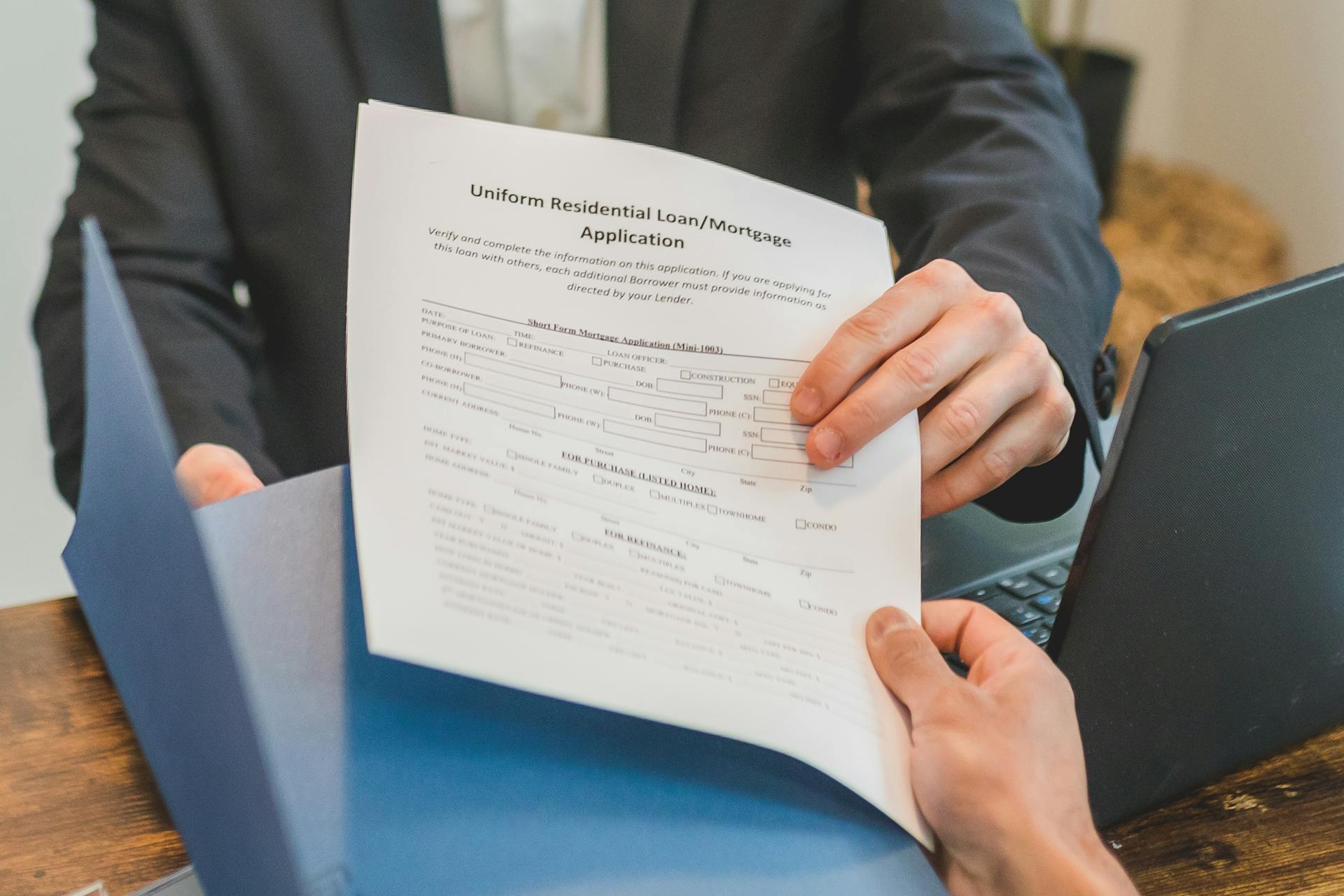
Mortgage insurance premiums aren't automatically factored into PITI. These premiums apply to many conventional loans with a down payment under 20 percent and all FHA loans.
HOA fees are another cost that's not included in PITI. You'll pay these monthly charges if you buy a property in a neighborhood with a homeowners association.
Closing costs aren't automatically included in PITI unless you financed them with your loan as a no-closing-cost mortgage. In this case, they'd be included in the principal and interest portion of your payment.
Worth a look: No Closing Cost Mortgage Loans
PMI
PMI typically costs between 0.2% and 2% of your loan amount each year if you have a conventional loan and put less than 20% down. You can ask to have it removed once you reach 20% equity in your home.
The cost of PMI is not the only factor to consider, as it's usually required for conventional loans with less than 20% down. This can add up quickly, but it's often a necessary cost of homeownership.
Expand your knowledge: Mortgage Broker Prices
Here's a breakdown of the PMI costs for different loan types:
Keep in mind that you'll typically need to pay PMI for the life of the loan if you put down less than 10% on an FHA loan.
Other Considerations
Other expenses can creep up on you when you're a homeowner, so it's essential to budget for them. HOA or condominium fees can range from a few hundred dollars per year to hundreds of dollars per month.
Your monthly utility costs may include electricity, gas, water, trash collection, internet, and more. You may see your utility bill increase if you're moving into a new home, especially if you're moving from an apartment or a smaller home.
Paying for repairs and maintenance is an inevitable part of homeownership. Experts recommend setting aside 1% of your home's value each year for maintenance and repairs.
Here are some estimated annual HOA fees to consider:
Special Considerations
Some mortgage payments don't include taxes and insurance, which means the homeowner pays these costs directly to the insurance company and tax assessor.
In these scenarios, the mortgage payment consists of only principal and interest. This is still the case even if taxes and insurance aren't escrowed, lenders will consider these costs when calculating debt ratios.
Most lenders will include additional mortgage-related monthly obligations, such as homeowners association (HOA) fees, in the PITI calculation to determine debt ratios.
These extra costs can add up quickly, so it's essential to factor them into your budget and debt calculations.
Readers also liked: No Closing Cost Equity Loan
Payment and Calculation
To calculate your PITI payment, you can use a mortgage calculator or follow a few simple steps.
At the beginning of your loan, most of your mortgage payments cover interest instead of principal. You can use an online mortgage calculator to find the principal-and-interest portion of your payment by entering the home purchase price, down payment amount, mortgage interest rate, and loan term.
The amount of interest you pay decreases as your loan matures and the principal decreases. This is why it's so important to choose a home within your price range.
To calculate your PITI on a 30-year fixed-rate loan, consider the following steps:
- Enter the home purchase price
- Enter the down payment amount
- Enter the mortgage interest rate
- Enter the loan term
You can also calculate your PITI payment by following these four steps:
Using an online mortgage calculator is a great way to find the principal-and-interest portion of your payment.
Understanding PITI
PITI stands for Principal, Interest, Taxes, and Insurance, the four components of a mortgage payment that can help determine whether or not you qualify for a loan.
The principal and interest on your loan usually make up the majority of your mortgage payment.
Mortgage lenders may require borrowers to buy homeowners insurance to protect the property from damage. You may also need to pay property taxes, depending on the state in which the home is located.
An escrow account is an account that's held by your lender to manage your monthly payments for taxes and insurance.
Each month, when you pay your mortgage payment, your lender puts the portion of your payments for taxes and insurance into an escrow account.
The money remains in that account until the bill comes due, at which point your lender will pay the bill from the escrow account.
You can expect to pay around $1 for every $1,000 of your home's value every month in property taxes.
For example, if your home is worth $250,000, you'll pay around $250 per month in property taxes – or about $3,000 per year.
Intriguing read: Home Equity to Pay off Credit Cards
Featured Images: pexels.com