
Filing for Chapter 7 bankruptcy can be a complex and intimidating process, but understanding the basics can help you navigate it with confidence. To start, you'll need to pass the bankruptcy means test, which determines whether you're eligible for Chapter 7 bankruptcy based on your income and expenses.
The means test is a crucial step in the Chapter 7 process, and it's calculated using your average monthly income over the past six months. If your income is below the median income for your state, you'll likely qualify for Chapter 7 bankruptcy.
You'll also need to gather financial documents, including pay stubs, bank statements, and tax returns, to complete the bankruptcy petition. This paperwork can be overwhelming, but it's essential for providing a clear picture of your financial situation.
The bankruptcy petition will list all of your debts, assets, and income, and it's a good idea to have an attorney review it to ensure everything is accurate and complete.
Explore further: Period of Financial Distress
What is Chapter 7 Bankruptcy?

Chapter 7 bankruptcy is a type of bankruptcy that allows individuals, partnerships, and corporations to discharge certain debts and get a fresh start.
To qualify for chapter 7 bankruptcy, the debtor must be an individual, a partnership, or a corporation or other business entity, and relief is available regardless of the amount of debts or whether the debtor is solvent or insolvent.
An individual debtor must have received credit counseling from an approved credit counseling agency within 180 days before filing, unless there are exceptions in emergency situations or where the U.S. trustee has determined that there are insufficient approved agencies.
A chapter 7 bankruptcy case involves the gathering and sale of the debtor's nonexempt assets to pay creditors, and the debtor may lose some of their property in the process.
The debtor can keep certain "exempt" property, but a trustee will liquidate the remaining assets to pay creditors, which can result in the loss of property.
For your interest: Credit Counseling Certificate Chapter 7 Free

A bankruptcy discharge is only available to individual debtors, not to partnerships or corporations, and some types of debts are not discharged, even with a bankruptcy discharge.
A bankruptcy discharge does not extinguish a lien on property, so the debtor may still be liable for debts that are not discharged.
On a similar theme: Bankruptcy Discharge
The Petition Process
The Voluntary Petition is the form that starts your Chapter 7 bankruptcy case.
It collects basic information about you, the type of bankruptcy you're filing, whether your debts are mostly consumer debts, and whether you have any non-exempt assets. You'll also need to explain your efforts to complete the pre-bankruptcy credit counseling course.
You can find the Voluntary Petition for Individuals Filing for Bankruptcy (Official Form 101) online, which is the form that starts your Chapter 7 or Chapter 13 bankruptcy case.
To complete the form, you'll need to provide your personal information, such as your name and address, and information about prior bankruptcies filed within the last eight years.
For your interest: Fast-track Voluntary Arrangement

Here are some of the required forms that are needed in every Chapter 7 bankruptcy case:
- Voluntary Petition for Individuals Filing for Bankruptcy
- Summary of Your Assets and Liabilities and Certain Statistical Information
- Schedule A/B: Property
- Schedule C: The Property You Claim as Exempt
- Schedule D: Secured Debts
- Schedule E/F: Unsecured Debts
- Schedule G: Executory Contracts and Unexpired Leases
- Schedule H: Your Codebtors
- Schedule I: Your Income
- Schedule J: Expenses
- Declaration About an Individual Debtor’s Schedules
- Statement of Financial Affairs
- Chapter 7 Statement of Current Monthly Income
- List of Creditors (Creditor Matrix)
Alternatives
Alternatives to bankruptcy can be a viable option for some debtors. Chapter 11 of the Bankruptcy Code may be considered for businesses, including corporations, partnerships, and sole proprietorships, to avoid liquidation.
Individual debtors with regular income may also seek relief under chapter 13. This can provide an opportunity to save homes from foreclosure by allowing debtors to "catch up" on past due payments through a payment plan.
A chapter 7 case may be dismissed if the court finds that granting relief would be an abuse of chapter 7. This is particularly true for individual debtors with primarily consumer rather than business debts.
The Bankruptcy Code requires a "means test" for debtors with current monthly income above the state median. This test determines whether a chapter 7 filing is presumptively abusive based on the debtor's income and debt.
Out-of-court agreements with creditors or debt counseling services may also provide an alternative to bankruptcy. These options can be explored before filing for bankruptcy.
A different take: Debtors Act 1869
Petition Contents

The petition process is a crucial step in filing for bankruptcy, and it's essential to understand what's included in the petition. The Voluntary Petition for Individuals Filing for Bankruptcy (Official Form 101) is the form that starts your Chapter 7 or Chapter 13 bankruptcy case.
The petition collects basic information about you, the type of bankruptcy you're filing, whether your debts are mostly consumer debts, and whether you have any non-exempt assets.
You'll also need to disclose your efforts to complete the pre-bankruptcy credit counseling course. You'll note either that you've completed the course and attached the certificate or that you qualify for a rare exemption.
The petition includes basic information about you, such as your name, address, and the type of bankruptcy you're filing. You'll also provide information about prior bankruptcies filed within the last eight years and whether you're operating a business.
The petition requires you to complete a credit counseling course with an approved agency within 180 days before filing and attach the completion certificate to the petition.
For another approach, see: The Weinstein Company Bankruptcy Petition

Here's a list of the required forms that are needed in every Chapter 7 bankruptcy case:
- Voluntary Petition for Individuals Filing for Bankruptcy
- Summary of Your Assets and Liabilities and Certain Statistical Information
- Schedule A/B: Property
- Schedule C: The Property You Claim as Exempt
- Schedule D: Secured Debts
- Schedule E/F: Unsecured Debts
- Schedule G: Executory Contracts and Unexpired Leases
- Schedule H: Your Codebtors
- Schedule I: Your Income
- Schedule J: Expenses
- Declaration About an Individual Debtor's Schedules
- Statement of Financial Affairs
- Chapter 7 Statement of Current Monthly Income
- List of Creditors (Creditor Matrix)
It's worth noting that while the forms packet you submit to file Chapter 7 is called your bankruptcy petition, it's actually a collection of 23 official forms, but some are several pages long.
Required Documents and Information
To file Chapter 7 bankruptcy, you'll need to submit a detailed packet of forms to the court. This packet is called your bankruptcy petition.
You'll need to fill out 23 official forms, which are the same across the U.S. because they're federal forms. You can download these forms for free from the U.S. Court's website.
In addition to the federal forms, you may also need to fill out local forms, which are specific to your district and can be found at your local courthouse.
Explore further: Contains Notice of a Proceeding in Bankruptcy Court
Schedule E/F: Creditors
Schedule E/F is where you list all of your remaining debts, such as credit card bills, personal loans, medical bills, and other debt that doesn't belong on Schedule D.
Check this out: What Percentage of Bankruptcy Is Due to Medical Bills

You'll also list claims that must be paid first when money is available, called "priority claims." Examples include certain taxes and domestic support obligations, such as alimony or child support.
If you forget to list a debt, it might not be discharged, so compare the debts listed to those in your credit report.
You'll list all remaining debts as general unsecured claims, including any "deficiency balance" after a foreclosure or repossession.
Some debts, like certain taxes and domestic support obligations, aren't dischargeable—you'll remain responsible for paying any balance remaining after bankruptcy.
Here's an interesting read: Paying Business Taxes on Bankrupt Business
Schedule G: Executory Contracts and Unexpired Leases
Schedule G is a crucial part of the bankruptcy process, listing all your executory contracts and unexpired leases.
Executory contracts are agreements where both parties are still obligated to perform, such as car leases or contracts to buy or sell real estate.
Personal property leases, like those for equipment or vehicles, are also considered executory contracts.
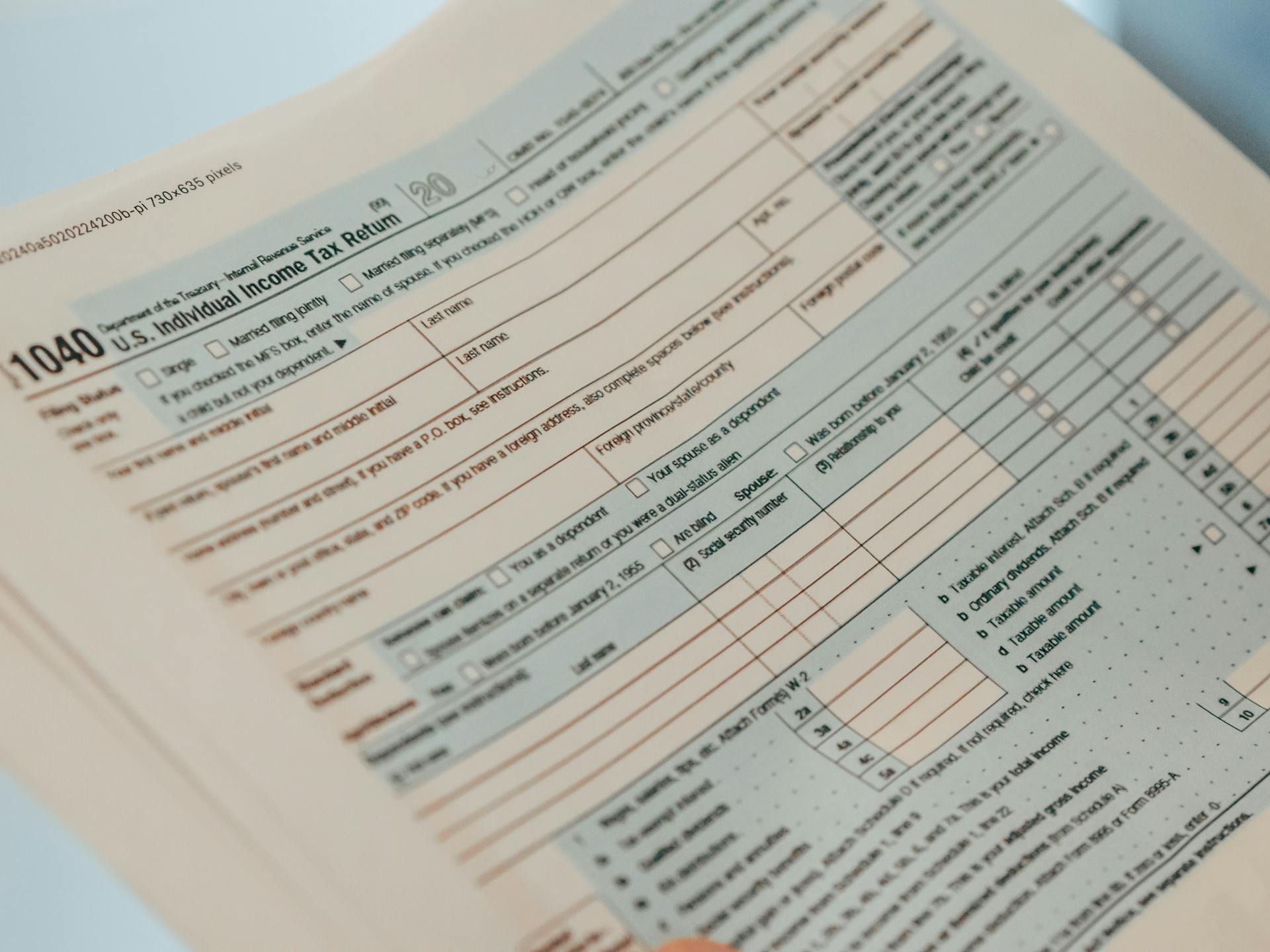
These contracts can be assumed by the trustee if they'll generate value for your creditors, but only if you're paying below market rates or the trustee can profit from it on their behalf.
The trustee won't assume a contract unless it's beneficial to your creditors, so it's essential to review your contracts carefully before filing for bankruptcy.
Car leases and license agreements are examples of executory contracts that may be assumed by the trustee.
The Chapter 7 Process
The Chapter 7 process is a straightforward and efficient way to get a fresh start. A debtor may be an individual, a partnership, or a corporation or other business entity to qualify for relief under chapter 7 of the Bankruptcy Code.
The process starts with a petition, which must be filed with the bankruptcy court within 180 days of receiving credit counseling from an approved credit counseling agency. This counseling is mandatory for individual debtors, unless there are emergency situations or insufficient approved agencies.
To qualify for a discharge, individual debtors must not have had a prior bankruptcy petition dismissed due to willful failure to appear before the court or comply with orders of the court, or voluntarily dismissed the previous case after creditors sought relief from the bankruptcy court.
Additional reading: How to Qualify for Medical Bankruptcies
How It Works

In a Chapter 7 bankruptcy, the trustee's job is to ensure your creditors get paid as much as possible, but many debtors give up little, if any, property. You can keep your property if your state's bankruptcy exemption laws allow you to "exempt" or protect it.
The property you can keep in Chapter 7 bankruptcy depends on your state's exemption laws and whether they allow you to use state or federal bankruptcy exemptions. You'll list the exemption law citation for all exempt items on Schedule C, which is part of the bankruptcy paperwork.
Most Chapter 7 bankruptcy cases take about four to five months to complete, during which time unnecessary luxury items are sold to pay creditors. In exchange, qualifying debts like credit card balances, medical debt, and personal loans are "discharged" or eliminated.
To keep a house or car in Chapter 7, you must be able to exempt all of the equity, and you must be current on loan payments. This is because mortgages and car loans are secured debts, and if you're behind on payments, the lender can take the collateral.
See what others are reading: Medical Bankruptcies by State

Here are the key steps to keep a house or car in Chapter 7:
The Chapter 7 trustee's primary duties include verifying the filer's identity and disclosures in the bankruptcy paperwork, as well as finding funds for creditors.
Codebtors Schedule
If you have codebtors on any of your debts, you must list them on Schedule H. Your creditors can still go after a codebtor even after you discharge the debt.
You'll list all your codebtors on Schedule H, even if you're not responsible for paying the debt. This is because your discharge eliminates your liability, not theirs.
Your codebtors can still be held responsible for the debt, and your creditors can pursue them for payment.
Filing and Filing Options
Filing for Chapter 7 bankruptcy involves gathering financial records and creating a list of debts, assets, income, property, liabilities, and costs. This includes researching forms of debt that cannot be discharged and categories of property that are exempt from bankruptcy in your state.

You'll need to attend credit counseling sessions within 180 days of declaring bankruptcy, or your petition will be rejected. A certificate of completion from these sessions is required.
Filing fees for Chapter 7 bankruptcy typically cost $335, and reopening a case after an error can cost an extra $260 or more.
To file for Chapter 7 bankruptcy, you must be aware of how to perform the means test and assess your resources and assets.
Not all states permit people to file for Chapter 7 bankruptcy without an attorney, so you'll need to check your state's legislation.
A different take: Bankrupcy Cost
Effects and Outcomes
Filing for Chapter 7 bankruptcy can have a significant impact on your financial situation. You'll be able to cancel a sizable portion of your debts.
One of the benefits of Chapter 7 bankruptcy is that it allows you to start fresh with a "clean slate" in terms of finances. This can be a huge relief for individuals who are struggling to pay off debt.

Collection actions and foreclosure procedures will be momentarily suspended, giving you some breathing room. This can help prevent further financial stress and allow you to focus on rebuilding your finances.
Here are some key effects and outcomes of filing for Chapter 7 bankruptcy:
- Cancellation of a sizable portion of the debtor’s obligations
- Any collection actions or foreclosure procedures will be momentarily suspended
- Allows for a “clean slate” in terms of finances
Frequently Asked Questions
Is it hard to get approved for chapter 7 bankruptcy?
Approval for Chapter 7 bankruptcy is possible for those with a median income above the California median, but requires meeting specific circumstances. Eligibility is determined on a case-by-case basis.
Featured Images: pexels.com