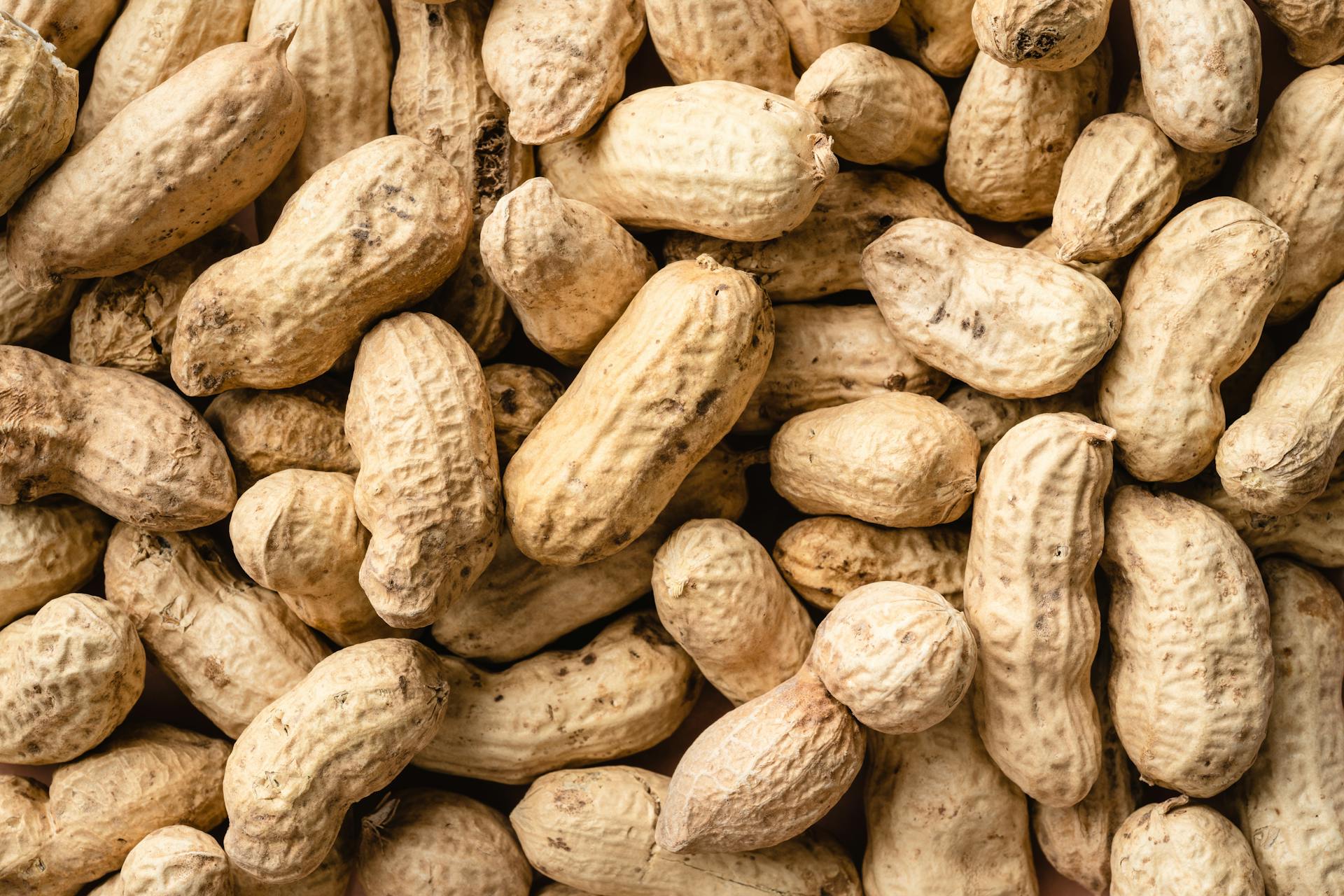
The Peanut Corporation of America's food safety crisis was a major scandal that made headlines in 2009. The company was at the center of a massive recall of peanut products due to contamination with salmonella.
The recall was initiated after a cluster of salmonella cases was reported in the United States, and the source was eventually traced back to PCA's plant in Georgia. The plant was found to have a history of contamination and lax safety protocols.
PCA's president, Stewart Parnell, was arrested and charged with conspiracy, obstruction of justice, and wire fraud related to the recall. He was accused of knowingly shipping contaminated peanuts to food manufacturers.
The outbreak ultimately led to the deaths of at least nine people and sickened over 700.
You might enjoy: Wakefern Food Corporation
Scope of Business
Peanut Corporation of America (PCA) was founded by Hugh Parnell Sr. in 1977 in Gorman, Texas.
The company initially sold peanuts to consumers, bakeries, and manufacturers, including those in the candy, ice cream, and snack industries.
PCA was sold in 1994-1995, and Hugh Parnell retired, with Stewart Parnell and others remaining as consultants.
In 2000, Stewart Parnell bought back PCA in a private sale, marking a significant shift in the company's ownership.
PCA operated processing facilities in Blakely, Georgia, Suffolk, Virginia, and Plainview, Texas, at the time of Stewart Parnell's buyback.
These facilities provided a range of peanut products, including peanuts, peanut butter, peanut meal, and peanut paste.
PCA's products were used in various institutional settings, such as schools, prisons, and nursing homes, as well as in low-budget retail outlets like dollar stores.
The company also supplied food manufacturers with peanuts and peanut products for use in products like cookies, snacks, ice cream, and dog treats.
At its peak, PCA manufactured roughly 2.5% of processed peanuts in the US.
In 2007, PCA had 90 employees and generated $25 million in annual sales.
Worth a look: Stewart Enterprises
Salmonella Outbreak and Investigation
In late 2008 and early 2009, nine people died and at least 714 people fell ill due to food poisoning from eating products containing contaminated peanuts supplied by the Peanut Corporation of America (PCA).
The Centers for Disease Control and Prevention (CDC) believed that the real numbers were much higher, with potentially another 30 or so cases going unreported for every reported case of salmonellosis.
A combination of epidemiological analysis and laboratory testing by state officials in Minnesota and Connecticut, the Food and Drug Administration (FDA), and the CDC confirmed that the sources of the outbreak of illnesses caused by Salmonella typhimurium were peanut butter, peanut paste, and peanut meal produced by the PCA at its Blakely, Georgia, processing plant.
The investigation was led by the CDC and the FDA, who launched an in-depth investigation following the alarming wave of illnesses.
The country's top epidemiologists were on the case, tracing the links between the cases and desperately searching for the source of the epidemic.
Initial clues suggested a common culprit: peanut butter.
Detailed interviews with the victims revealed that the majority of them had consumed peanut butter shortly before falling ill.
Inspectors discovered deplorable hygiene conditions, outdated infrastructure, and evidence of rodent and insect infestation at PCA's facilities.
Internal documents revealed that PCA was aware of the presence of Salmonella in their products, but chose to ship them despite positive tests.
Suggestion: Antidumping Case about Washing Machines
The revelation of this negligence triggered a national scandal.
The implications of this ethical and food safety failure were immense.
The president of the PCA seemed to have no difficulty relating to the concrete profits the company made by selling peanuts, but had more difficulty factoring in the potential injuries that could be suffered by consumers.
The potential plight of those consumers did not seem concrete, and the company owner chose to ship the contaminated peanuts, resulting in over 700 people being sickened and nine people dying.
Suggestion: Peanuts Character
PCA's Actions and Consequences
The Peanut Corporation of America's actions were a perfect storm of negligence and greed. They used a practice called "retests", where they would retest batches of products that had initially tested positive for Salmonella, rejecting the initial results for no particular reason.
This strategy allowed PCA to avoid destroying contaminated batches and instead ship them to consumers, putting people's lives at risk. As a result, nine people lost their lives, and 714 others suffered from illnesses related to the contamination.
PCA's executives were tried and convicted for their roles in the Salmonella contamination scandal, with charges including fraud, conspiracy, and introducing contaminated food products into interstate commerce. Stewart Parnell, the former CEO, was sentenced to a significant prison term, one of the most severe ever handed down for a food safety case in the US.
Here are the key charges against PCA's executives:
The consequences of PCA's actions were severe, with the company going bankrupt and ceasing operations. The closure of PCA serves as a stark reminder of the importance of prioritizing food safety and corporate responsibility towards consumers.
Food Safety and Lessons Learned
The PCA tragedy highlights the importance of prioritizing food safety above all else in the agri-food industry. Nine people lost their lives, and 714 others suffered from illnesses related to the contamination.
The PCA scandal raises critical questions about food safety practices in the industry and corporate responsibility towards consumers. The PCA was in possession of all US-FDA certificates and certification systems, but this did not prevent the contamination.
For more insights, see: Bell Food Group
Stricter regulations, increased oversight, and total transparency in the food production chain are crucial for preventing similar tragedies. Enacted by President Barack Obama on January 4, 2011, the FSMA represents the most significant reform of food safety laws in the United States in over 70 years.
The FSMA focuses on preventing food contaminations rather than simply responding to them after they occur, marking a paradigm shift from HACCP to HARPC. This shift emphasizes the importance of proactive measures in ensuring food safety.
Here's a brief overview of the key changes introduced by the FSMA:
- Shift from HACCP (Hazard Analysis and Critical Control Points) to HARPC (Hazard Analysis and Risk-Based Preventive Controls)
- Increased emphasis on prevention rather than response
- Stricter regulations and increased oversight to ensure food safety
The PCA scandal serves as a stark reminder of the importance of food safety. By learning from this tragedy, we can work towards creating a safer food supply chain for everyone.
Discover more: Juhayna Food Industries
Featured Images: pexels.com